Issue #1 — February 2026
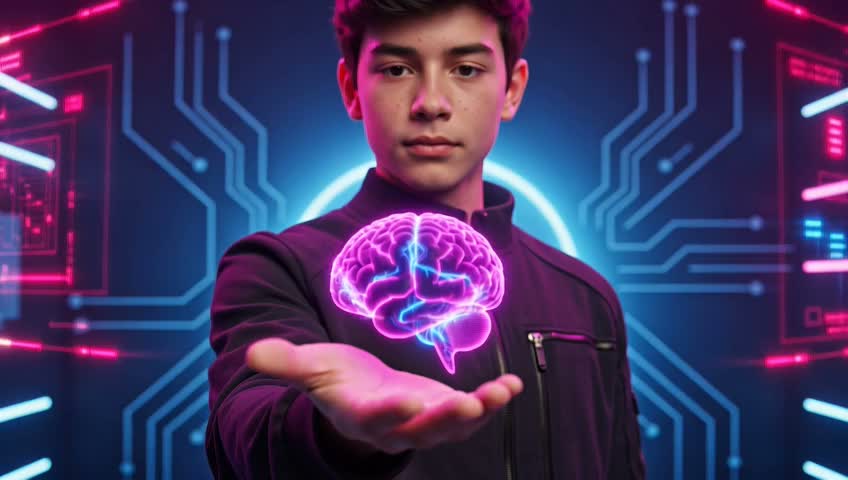
Your Brain on AI
How artificial intelligence is rewiring how you think, create, and connect
↓ scroll to explore ↓
How artificial intelligence is rewiring how you think, create, and connect
You use AI every day. But is it sharpening your mind — or turning it to mush? The truth is weirder than you think.
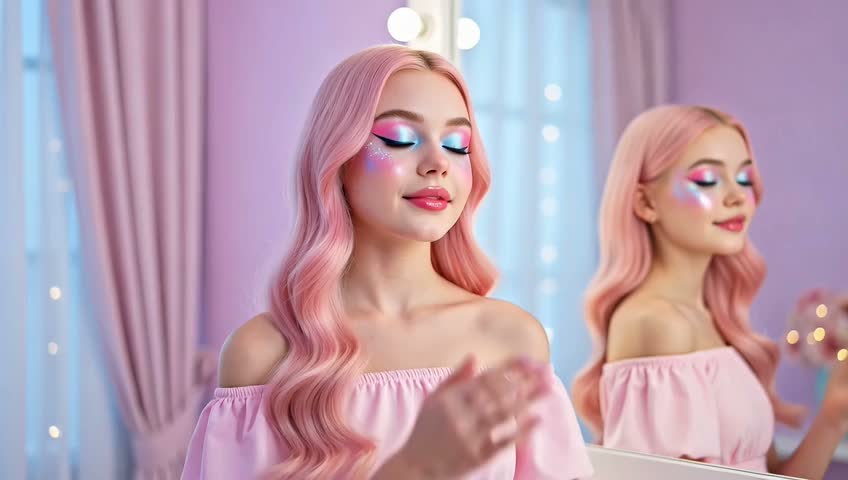
Forget one-size-fits-all beauty standards. AI is learning YOUR face — and that changes everything.
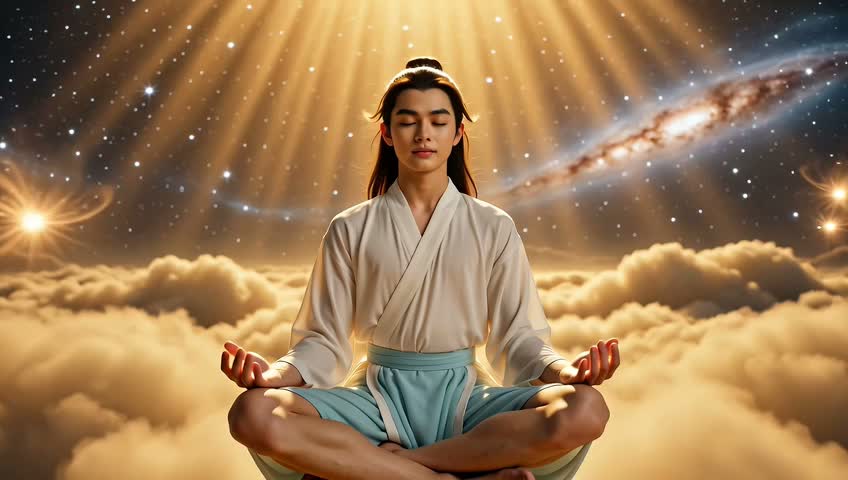
A non-cringe guide to mindfulness, manifestation, and why your gut feeling is actually science.

Mars missions, AI regulations, climate wins, and the one story everyone's ignoring.
Here's a weird experiment: try to remember the last time you solved a math problem without a calculator. Or wrote a full essay without asking ChatGPT to "make it sound better." Or looked up directions by actually reading a map.
Can't remember? Yeah. Same.
Scientists call it "cognitive offloading" — when you let a tool do the thinking your brain used to do. And it's not new. Humans have been doing this since we invented writing (why memorize everything when you can write it down?). But AI is different. It doesn't just store information — it processes it for you.
When you ask AI to summarize an article, you skip the part where your brain practices comprehension. When you ask it to write your caption, you skip creative thinking. It's like hiring someone to do your push-ups.
Here's the flip side: AI frees up your brain for bigger things. You don't need to memorize facts when you can focus on connecting ideas. Some researchers say AI users are actually becoming better at asking questions, thinking critically about outputs, and creative problem-solving.
The key is how you use it.
Try this for one week:
"The goal isn't to stop using AI. It's to make sure your brain stays in the driver's seat."
AI won't make you dumb. But using it without thinking definitely will. The smartest people in 2026 aren't the ones who avoid AI — they're the ones who use it like a gym for their mind, not a couch for their brain.
Your move. 🧠
Remember when everyone used the same three Instagram filters? Dog ears, flower crown, smooth skin? That era is officially over. Welcome to the age of AI-powered personalization.
In 2026, beauty apps don't just slap a filter on your face. They analyze your skin tone, face shape, undertones, and even the lighting in your room to suggest looks that actually work for you. Not for some model. For you.
Here's the thing: the best beauty tech isn't about looking like someone else. It's about understanding what works for you. And that's kind of revolutionary.
"Beauty isn't about fitting a standard. It's about knowing yourself well enough to break every rule that doesn't serve you."
Now go hydrate. Seriously. Drink water. 💧
Okay, let's get one thing straight: this isn't your grandma's horoscope column. We're not going to tell you that Mercury in retrograde is why you failed your math test. (You failed because you didn't study. Sorry.)
But here's what IS real: the connection between your mindset and your outcomes. And science is finally catching up to what spiritual traditions have said for thousands of years.
Your gut has 500 million neurons. It produces 95% of your body's serotonin. When you get a "gut feeling" about something, that's not woo-woo — that's a neural network processing information your conscious mind hasn't caught up to yet.
When everything feels chaotic, try this:
Visualization works not because of "universe energy" but because your brain literally can't tell the difference between vividly imagining something and experiencing it. When you visualize yourself acing a presentation, your brain builds the neural pathways as if you're practicing. Athletes have known this for decades.
"Your vibe isn't magic. It's your subconscious broadcasting what your conscious mind is too busy to notice."
Every night before bed, write down one thing that went well and WHY it went well. Not just "I had a good day" but "I had a good conversation with Maya because I actually listened instead of waiting for my turn to talk." After 7 days, you'll start noticing patterns. Those patterns? That's your vibe, decoded. ✨
Everything you need to sound smart at lunch, condensed into one article. You're welcome.
After years of delays, NASA and ESA confirmed the Mars Sample Return mission is back on track. The first batch of Martian soil collected by Perseverance will begin its journey home in late 2026. Scientists say these samples could contain evidence of ancient microbial life. No pressure.
Starting February 2026, the EU's AI Act is fully enforceable. Companies must disclose when content is AI-generated, high-risk AI systems need human oversight, and social scoring is officially banned. The US is watching closely (and taking notes very slowly).
Global renewable energy capacity hit 50% of total electricity generation for the first time ever. Solar alone grew 35% year-over-year. The bad news? It's still not fast enough. But progress is progress, and doomerism helps nobody.
Digital literacy in developing nations jumped 40% in the last two years, largely thanks to AI-powered education tools that work offline. Over 200 million students now have access to personalized learning in their native language. This might be the most important tech story of the decade, and it gets zero headlines because it doesn't involve a billionaire saying something dumb on social media.
"The world is getting better in ways we don't notice because good news doesn't get clicks."
Stay curious. Stay informed. And please, form your own opinions before checking what everyone else thinks. 🌍
Fresh magazine issues, CTRL & CLAW episodes, and whatever Claw cooked up today. No spam.
Unsubscribe anytime. We respect your inbox.