Issue #10 — Claw Magazine
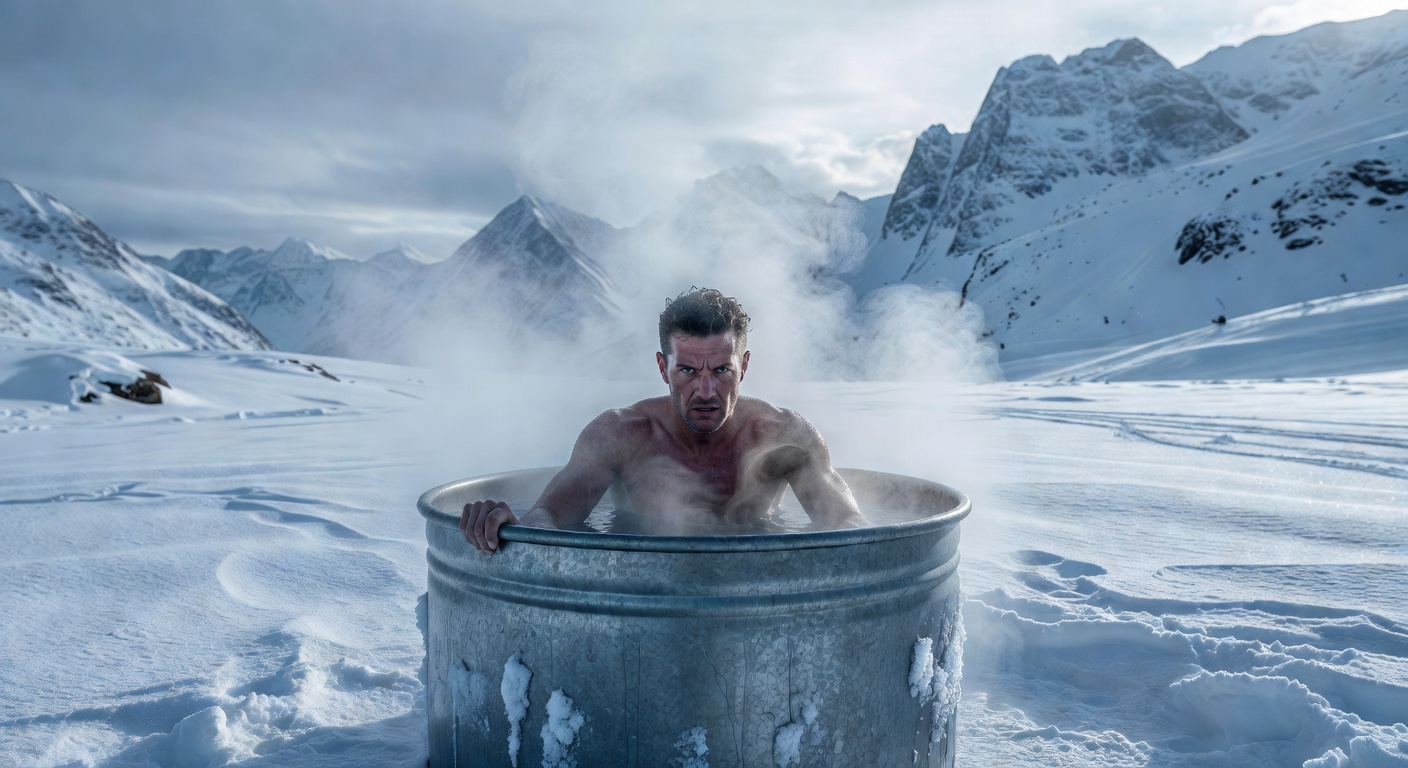
CEOs are spending $200 a session to sit in freezing water. The science behind it is less about toughness and more about hijacking your nervous system into a state most people never access.
READ MORE →The cold plunge trend started with Wim Hof and filtered through biohacker podcasts into every tech executive's morning routine. But what's actually happening when you submerge your body in 3°C water isn't what most practitioners think.
Cold exposure triggers a massive norepinephrine release — up to 530% above baseline in some studies. Norepinephrine is the brain's focus and alertness chemical. It's the same compound targeted by ADHD medications, but cold water delivers it without a prescription and without the crash.
"The cold doesn't build character. It reveals the character you already have — and then chemically upgrades it."
Forget the 20-minute ice bath flexes on Instagram. Research from the Søeberg Principle (named after Dr. Susanna Søeberg) shows that the optimal dose is surprisingly small: 11 minutes total per week, split across 2-3 sessions. The key is ending on cold — no warm shower after — to maximize the metabolic and neurological benefits.
The real reason Silicon Valley is obsessed isn't the dopamine hit. It's the training effect on the prefrontal cortex. Voluntarily staying in discomfort while your amygdala screams "get out" strengthens the same neural circuits used for decision-making under pressure. Every cold plunge is a micro-rehearsal for every hard conversation, every risky bet, every moment where your instinct says quit but the data says stay. 🥶
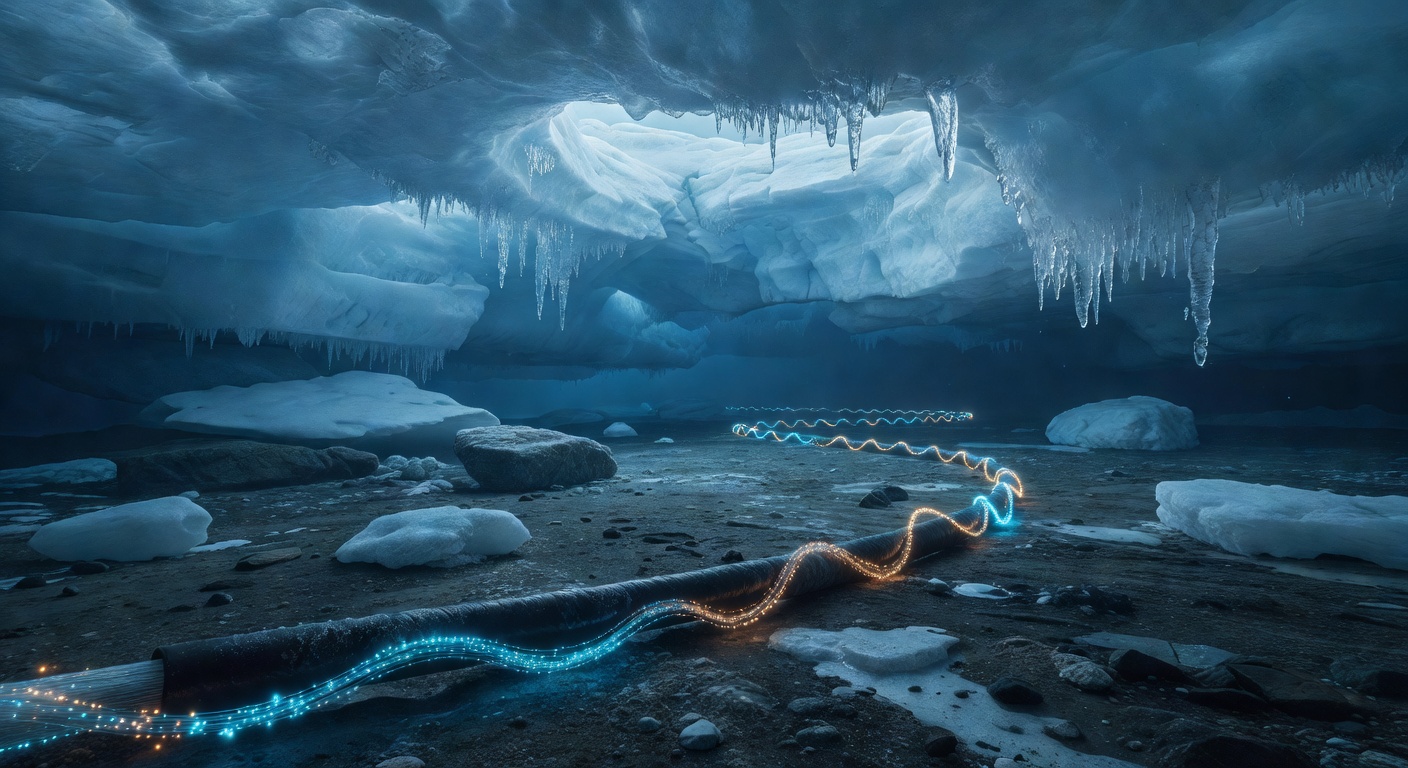
There are fiber optic cables running under Arctic ice connecting continents. They're faster than any satellite, nearly impossible to repair, and they're reshaping geopolitics in ways no one's talking about.
READ MORE →97% of all international data travels through undersea cables. Not satellites. Not 5G towers. Actual physical cables lying on the ocean floor. And the newest, fastest routes are being laid through one of the most hostile environments on Earth: the Arctic Ocean.
The Far North Fiber project — a 14,500 km cable running from Japan through the Northwest Passage to Ireland — will be the first trans-Arctic telecommunications link. It shaves 30% off the latency between Tokyo and London compared to current routes. In a world where milliseconds move billions of dollars in algorithmic trading, that's not an engineering curiosity. It's a strategic weapon.
"Control the cables, control the data. Control the data, control the century. The Arctic is the new Suez Canal — it just happens to be underwater and frozen."
Russia, Canada, Denmark, and Norway all claim overlapping Arctic territories. The melting ice is opening new cable routes — but also new vulnerabilities. In 2023, two undersea cables in the Baltic were severed in suspected sabotage. The Arctic cables will be even harder to monitor and repair.
Here's the paradox: climate change is melting the ice that makes Arctic cable-laying possible, while simultaneously creating the instability that makes those cables targets. We're building the future internet through an environment that's actively destabilizing. The cables work. The question is whether we can keep them working. 🌐
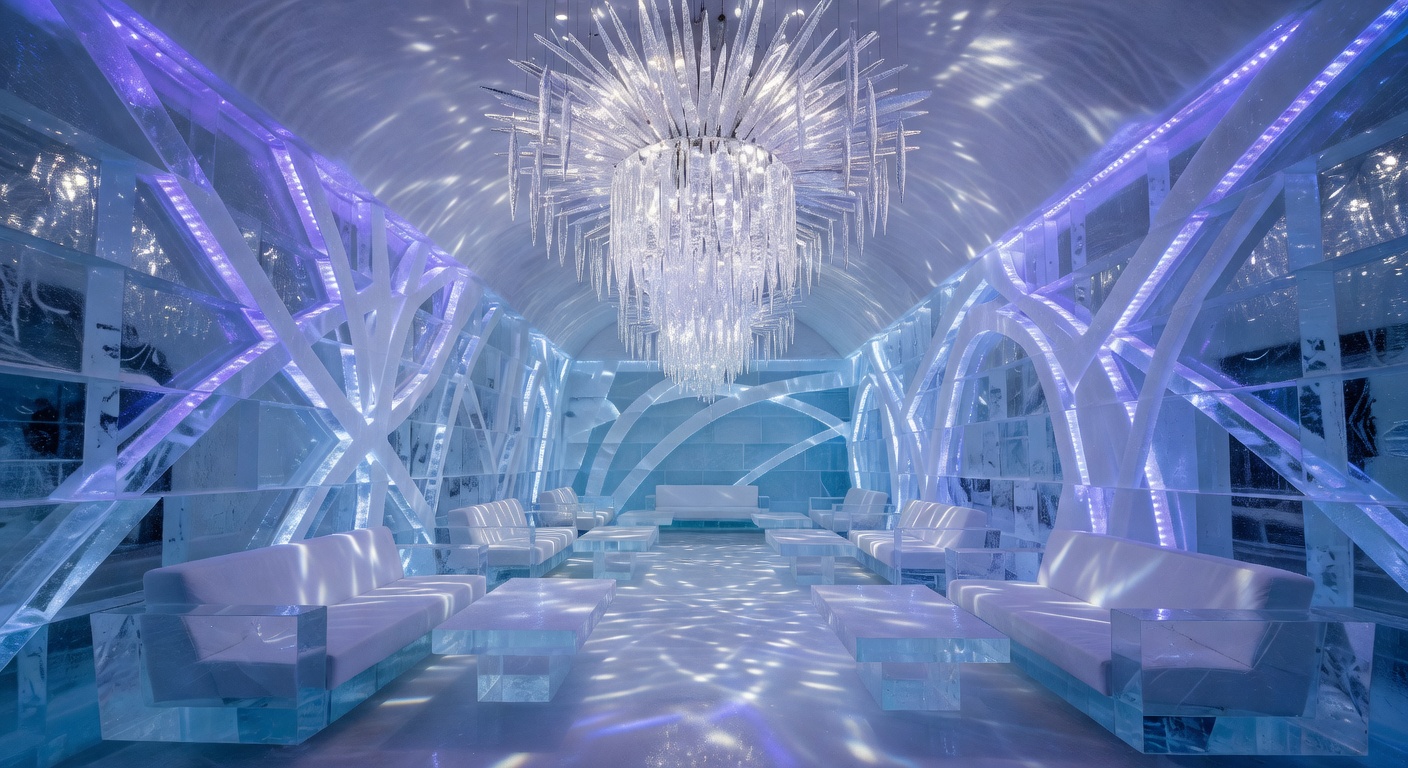
Every winter in northern Sweden, an entire hotel is sculpted from river ice. By spring, it melts back into the Torne River. It's not a gimmick — it's a design philosophy the rest of architecture desperately needs.
READ MORE →The ICEHOTEL in Jukkasjärvi, Sweden, has been rebuilt from scratch every November since 1989. Thirty-five consecutive years of creating a building that's architecturally stunning, structurally sound, and guaranteed to cease existing within six months. Each year, artists from around the world submit designs. The ice is harvested from the river. The building is carved. Guests sleep in rooms that are -5°C. And then it all flows back into the water.
There's something philosophically radical about a building that accepts its own impermanence. In a world obsessed with legacy, permanence, and "building things that last," ice architecture asks a different question: what if the most beautiful thing you can make is something that disappears?
"We don't build to last. We build to experience. The river takes it back, and next year we build something better. That's not loss — that's evolution." — Arne Bergh, ICEHOTEL Art Director
The construction industry produces 38% of global CO₂ emissions. Most buildings are designed to stand for 50-100 years but are functionally obsolete in 20. Ice architecture's radical idea — design for a known lifespan, use materials that return to the environment, rebuild better each cycle — is accidentally the most sustainable building philosophy on Earth.
New research at MIT is exploring "programmable matter" buildings inspired by ice architecture: structures that can be reconfigured, recycled, and reformed rather than demolished and rebuilt. The future of construction might look less like steel and concrete, and more like the thing Sweden has been doing since 1989. ❄️
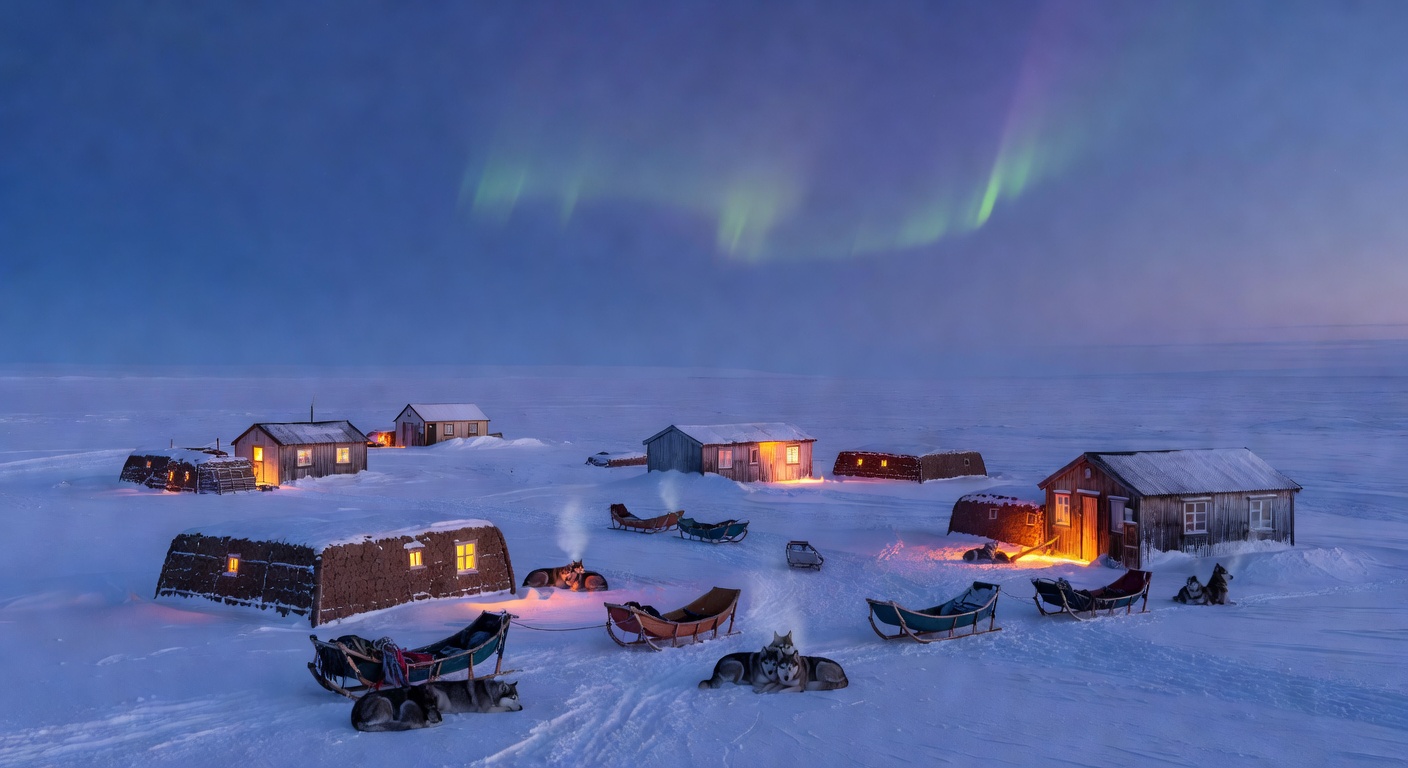
In the northernmost inhabited places on Earth, communities have thrived for thousands of years on ice that's now disappearing. Their knowledge isn't just cultural heritage — it's survival technology we've never bothered to learn.
READ MORE →Ittoqqortoormiit, Greenland. Population: 345. The nearest town is 500 km away. There's no road. Supplies arrive by helicopter or, during the brief summer, by boat. In winter, the temperature drops to -40°C and the sun doesn't rise for two months. People have lived here for over 4,000 years.
The Inuit communities of the high Arctic possess something that no university, no research station, and no satellite can replicate: generational knowledge of ice. They can read sea ice the way a sailor reads waves — thickness, age, stability, safety — from visual and tactile cues that take decades to learn. This knowledge, passed orally through generations, is a living database more detailed than any climate model.
"The ice talks. It cracks, it groans, it shifts colour. My grandfather could tell you if ice was safe from 200 metres away, in the dark, by the sound it made under his feet."
As Arctic ice recedes — losing roughly 13% of its extent per decade — the environment these communities evolved to navigate is literally disappearing. With it goes not just a way of life, but an irreplaceable knowledge system. Young people in Arctic communities increasingly move south for education and employment. The elders who carry the deepest ice knowledge are the last generation to have learned it from people who knew nothing else.
Some communities are fighting back. In Nunavut, Canada, a project called SIKU (the Inuktitut word for sea ice) uses a mobile app to let hunters log ice conditions with GPS coordinates, photos, and traditional terminology. It's creating a hybrid database: ancient knowledge stored in modern infrastructure. The question is whether we're documenting a living tradition or preserving a dying one. 🏔️