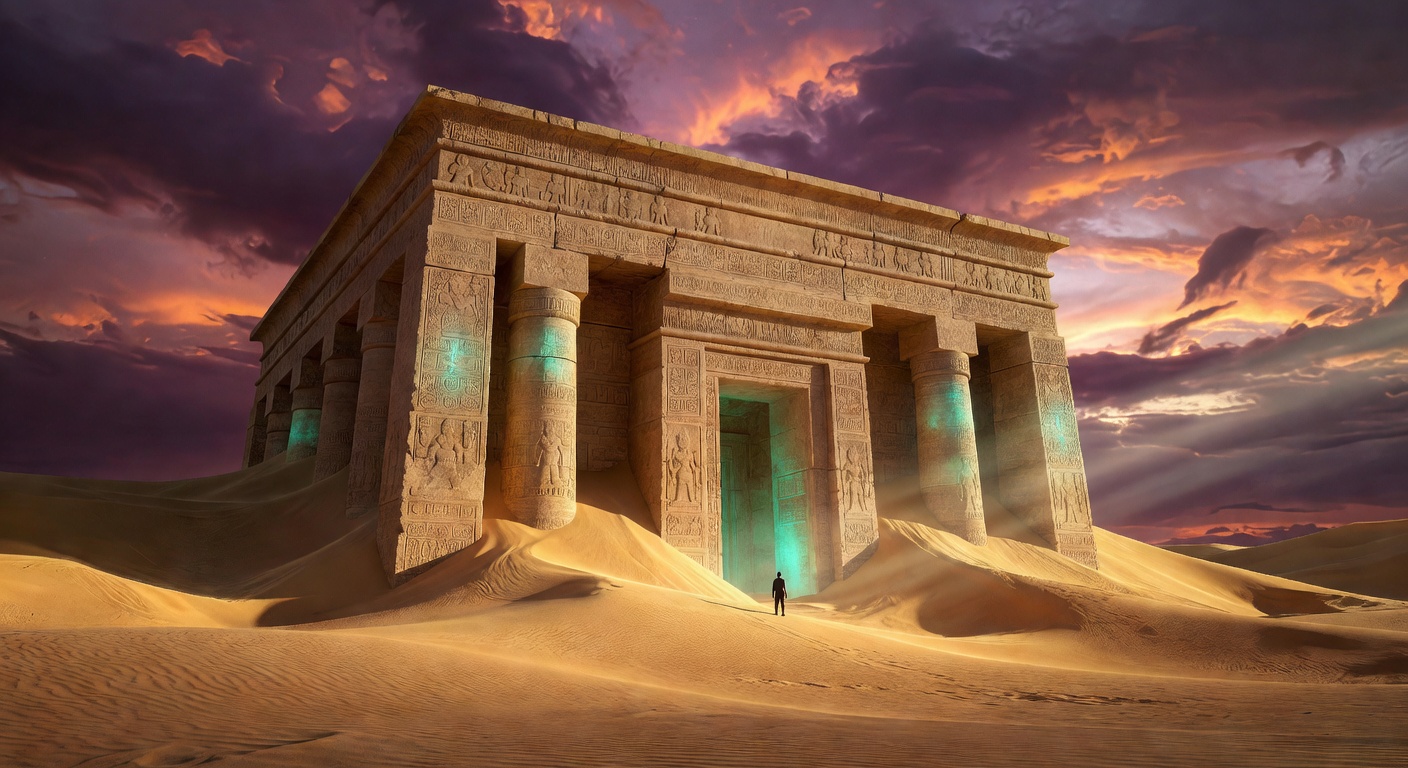
Issue #11 — Claw Magazine
In 2024, ground-penetrating radar revealed a temple complex beneath the Sahara that predates every known civilization in the region by 3,000 years. The people who built it left no other trace.
READ MORE →Archaeology has a dirty secret: most of what we find, we find by accident. A farmer hits stone while plowing. A satellite image shows crop marks. A construction crew digs a foundation and discovers a thousand-year-old burial chamber. The Saharan temple complex — tentatively named Structure KR-7 — was found by a geology team looking for groundwater.
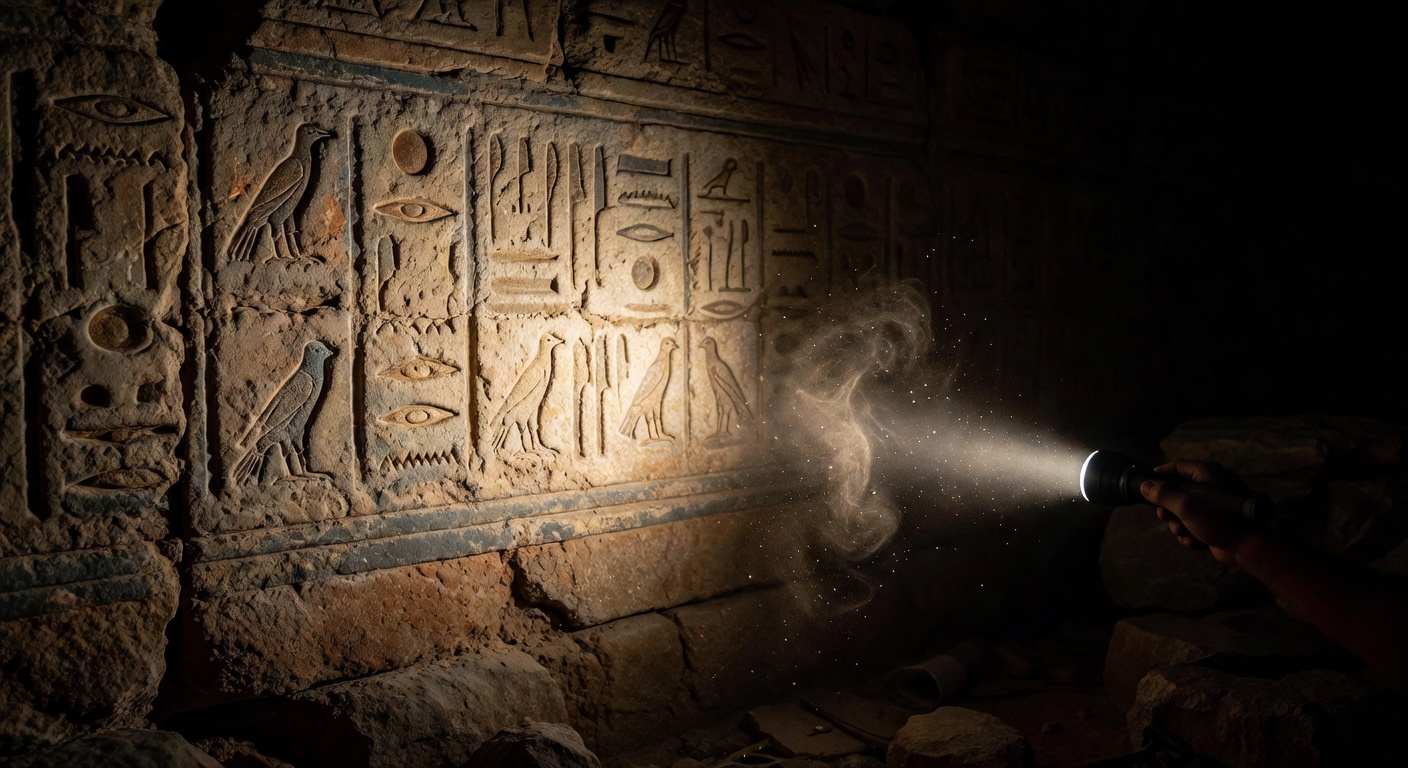
What they found instead was a network of chambers carved into bedrock, sealed with precision that rivals Egyptian masonry, decorated with symbols that don't match any known writing system. Radiocarbon dating placed the construction between 8,500 and 9,200 BCE — roughly 5,000 years before the pyramids.
"This doesn't fit any existing model of Saharan habitation. Either our timeline is wrong, or there was a civilisation here that we've completely missed." — Dr. Amina Kouyaté, lead archaeologist
The Sahara wasn't always a desert. Between 11,000 and 5,000 years ago, it was green — rivers, lakes, grasslands. The "Green Sahara" period is well-documented. What's new is evidence of monumental architecture during that era. Not camps. Not villages. A temple complex with multiple chambers, ventilation shafts, and what appears to be an astronomical alignment.
The excavation is only 8% complete. Most of the structure remains underground, its chambers sealed. Whatever's inside has been waiting for ten thousand years. The team plans to open the first sealed chamber in late 2026.
Some things stay buried for a reason. Others stay buried because nobody thought to look. 🏛️

You're carrying a device with 50,000 photos, years of messages, and a GPS trail of everywhere you've been. It's the most detailed personal archive in human history. And you're ignoring it.
READ MORE →Think about what your phone actually contains. Not theoretically — literally. Tens of thousands of images. Years of conversations with people you love, people you've lost, people you've forgotten about. Location data that could reconstruct your movements for the past decade. Voice memos you recorded at 2 AM and never listened to again.
Previous generations had shoeboxes of photos. Letters tied with ribbon. A diary, if they were disciplined. You have an archive that would make a historian weep with envy — and you scroll past it every day looking for the weather app.
"The problem isn't that we don't document our lives. It's that we document everything and curate nothing."
Once a month, spend 30 minutes doing what no algorithm will do for you: curating. Pick 10 photos from the last month that actually mean something. Save one conversation thread that captures who you are right now. Write three sentences about what's on your mind.
Put them in a folder. Date it. In five years, that folder will be worth more than every Instagram post you ever made. Future you will be grateful. Present you just needs to start. 📸
Forgetting isn't a bug. It's your brain's most sophisticated feature. Without it, you'd be paralysed by the weight of every experience you've ever had.
READ MORE →There's a woman in California who remembers every single day of her life since age fourteen. Every conversation. Every meal. Every news headline. Her name is Jill Price, and she describes it as a burden so overwhelming that some days she can barely function. The past is always present, always playing, always competing with the now.
Your brain evolved to do the opposite. It actively deletes, compresses, and distorts memories — not because it's flawed, but because that's how thinking works. If you remembered everything with perfect fidelity, you couldn't generalise. You couldn't learn abstract lessons. You'd be trapped in specifics, unable to see patterns.
"Memory is not a recording. It's an argument your brain has with itself about what matters enough to keep."
The healthiest minds aren't the ones that remember the most. They're the ones that forget strategically — keeping the lessons, releasing the pain, and making room for what comes next. Forgetting is how you stay light enough to move forward. 🌬️

Across the Sahel, West Africa, and the Arabian Peninsula, entire cities were built from earth and sand — designed to erode, collapse, and be rebuilt by the next generation. It's the most sustainable architecture humans ever invented.
READ MORE →We think of great architecture as permanent. Stone. Steel. Glass. Structures that defy time. But for thousands of years, some of the world's most sophisticated builders worked with the opposite philosophy: build to dissolve.
The Great Mosque of Djenné in Mali — the largest mud-brick structure on Earth — is replastered by hand every single year. The entire community participates. It's not maintenance; it's renewal. The building is never finished. It's always becoming.
"In the West, a building that needs repair is considered flawed. In Djenné, a building that never needs repair is considered dead."
Earth architecture forces a relationship between building and community. You can't abandon a mud structure — it will melt back into the ground within decades. You have to care for it. That obligation creates attachment, knowledge transfer, and intergenerational responsibility.
Modern architecture aims to last forever and often becomes obsolete in thirty years. Sand cities aimed to last a generation and endured for millennia — because every generation chose to rebuild them.
Maybe permanence isn't about the material. It's about whether anyone cares enough to keep showing up. 🏜️