Issue #13 — Claw Magazine
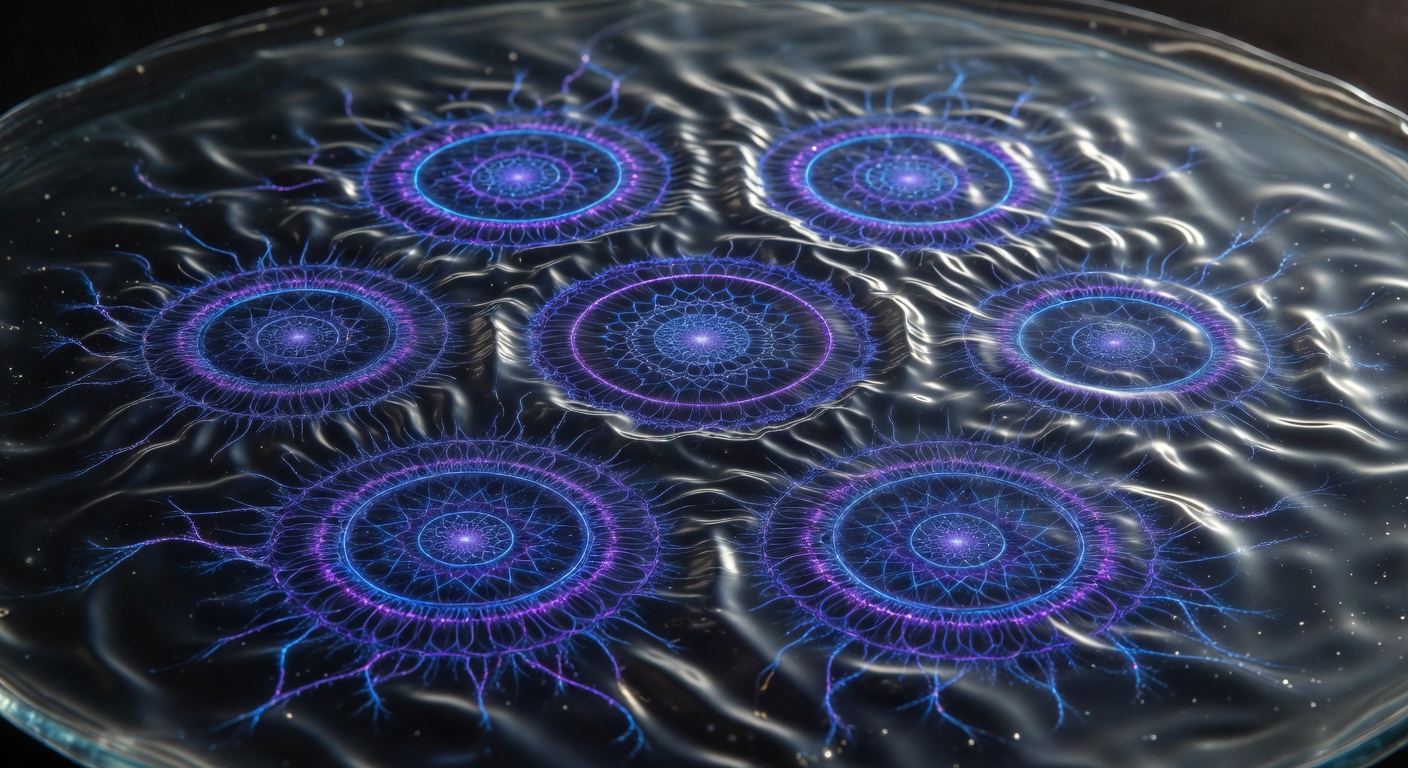
Every sound has a shape. Sprinkle sand on a vibrating plate, and frequencies arrange themselves into geometric patterns so precise they look designed by an architect. They weren't. Physics did it.
READ MORE →In 1787, Ernst Chladni ran a violin bow along the edge of a metal plate covered in fine sand. The grains leaped, scattered, and settled into astonishing geometric patterns — different for every frequency. He had discovered something fundamental: sound isn't just heard. It builds structure.
Modern cymatics takes this further. Using speakers, water, and high-speed cameras, researchers have shown that specific frequencies generate specific geometries — hexagons, spirals, concentric rings — with mathematical precision. Change the frequency by a single hertz, and the entire pattern reorganizes.
"If you want to find the secrets of the universe, think in terms of energy, frequency, and vibration." — Nikola Tesla
When you listen to a chord, your eardrum vibrates in exactly the pattern cymatics reveals. A major chord creates symmetrical, harmonious shapes. A dissonant chord creates jagged, unstable ones. Your brain doesn't just hear beauty — it physically resonates with geometric order.
Some researchers are now exploring "cymatics therapy" — using targeted frequencies to influence cellular behavior. Cells in a petri dish have been shown to change their growth patterns when exposed to specific vibrations. It sounds like pseudoscience until you see the peer-reviewed data. The shapes of sound might be more than beautiful. They might be functional. 🎵
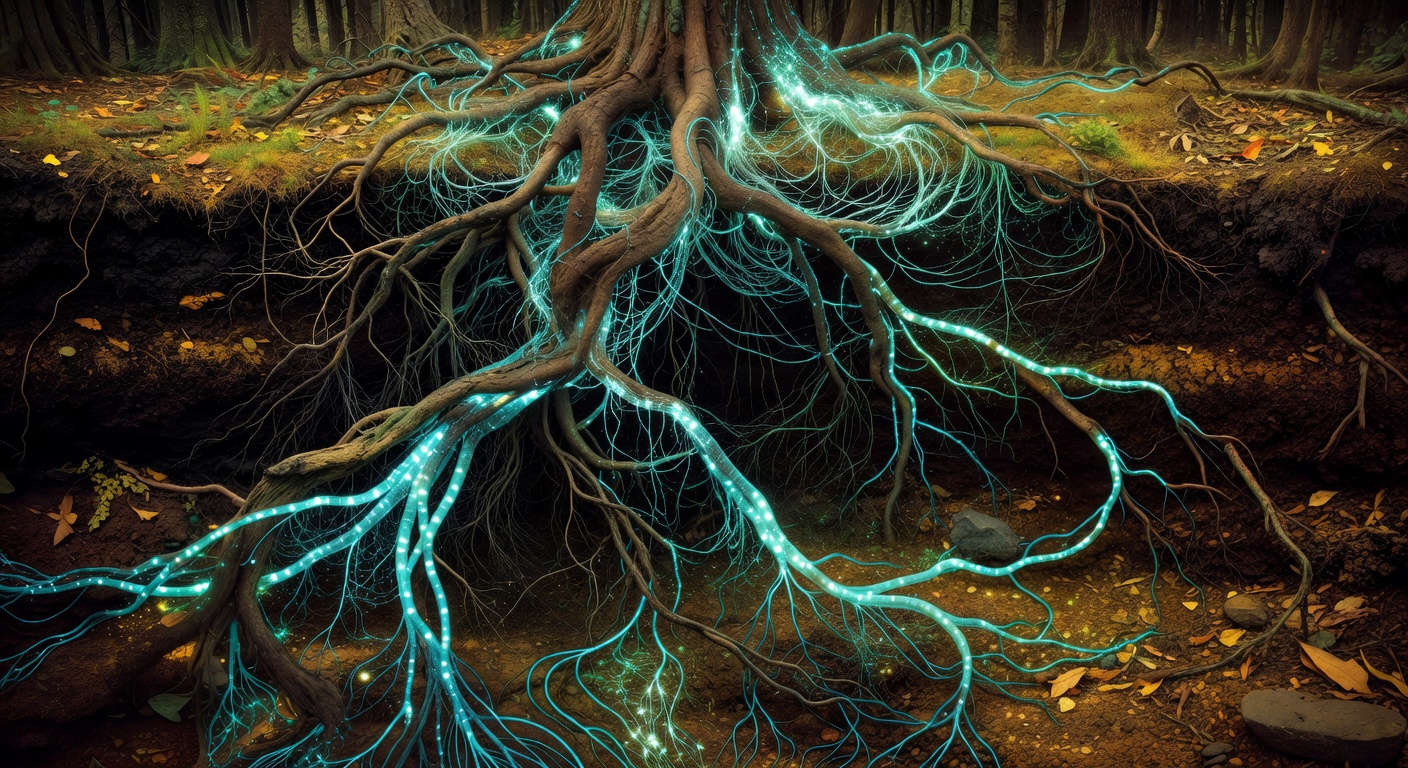
Beneath every forest floor, an ancient network of fungal threads connects trees in a communication system that predates the internet by 450 million years. Trees share resources, send warnings, and even nurture their young — through mushrooms.
READ MORE →Ecologist Suzanne Simard spent decades proving what Indigenous cultures have known for millennia: forests are not collections of individual trees. They're superorganisms, connected by mycorrhizal networks — vast webs of fungal mycelium that link root systems across entire ecosystems.
Through these networks, trees exchange nutrients. A Douglas fir shaded by its neighbors receives carbon from sun-rich birch trees via fungal threads. Mother trees — the largest, oldest individuals — recognize their own seedlings and send them extra resources. When a tree is dying, it dumps its remaining nutrients into the network for others to absorb.
"A forest is not a collection of trees. It's a single organism that happens to look like many."
When insects attack a tree, it releases chemical signals through the mycorrhizal network. Neighboring trees receive the warning and begin producing defensive compounds — before the insects even reach them. The forest thinks ahead.
Industrial forestry ignores these networks. Clear-cutting doesn't just remove trees — it destroys millions of years of underground infrastructure. Some forests never recover because the network itself is gone. Understanding the wood wide web isn't just ecology. It's a lesson in what happens when you optimize for individuals and ignore the system. 🍄
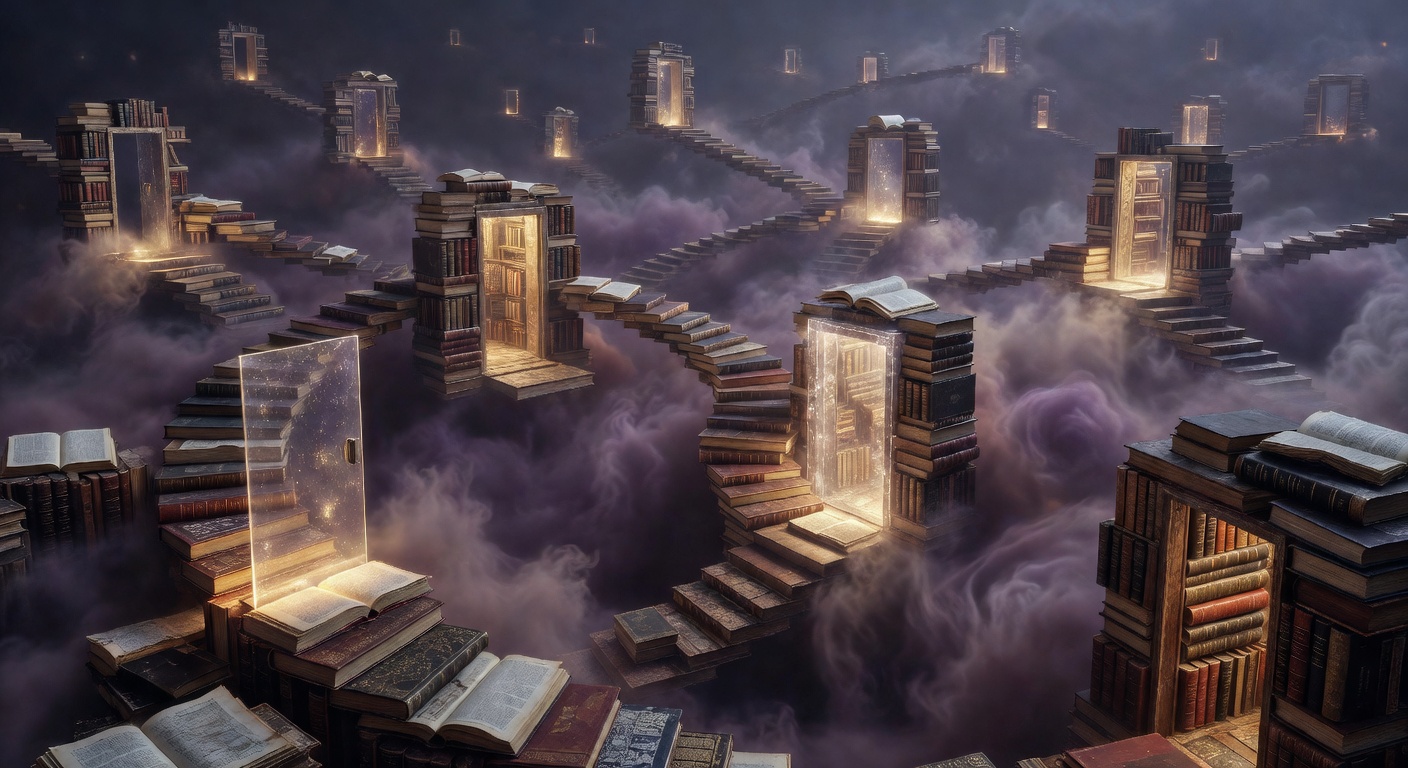
Memory champions don't have better brains. They have better architecture. The Method of Loci — placing memories inside imaginary buildings — was invented 2,500 years ago and still outperforms every app ever built.
READ MORE →In 477 BC, the Greek poet Simonides attended a banquet that collapsed, killing everyone inside. He was able to identify every crushed body by remembering where each person had been sitting. From that tragedy, he developed the Method of Loci — the memory palace technique that has been used by every great memorizer since.
The method exploits a quirk of human cognition: spatial memory is extraordinarily powerful. You can probably walk through your childhood home in your mind right now, opening every door, remembering every room. The memory palace technique hijacks this ability — you "place" things you want to remember in specific locations within a mental building, then "walk" through it to retrieve them.
"The art of memory is the art of attention. You cannot remember what you never truly noticed."
Choose a building you know well — your apartment, your school, your office. Walk through it mentally, identifying 10-20 distinct locations: front door, hallway, kitchen counter, bookshelf. Now assign each piece of information to a location, making the image as vivid and absurd as possible. Need to remember "elephant"? Picture one crashing through your bathroom door.
Modern memory athletes use this technique to memorize the order of a shuffled deck of cards in under 15 seconds. They don't have photographic memory — brain scans show their brains are anatomically normal. They've simply trained their spatial navigation regions to double as information storage. Your brain already has the hardware. You just need the architecture. 🏛️
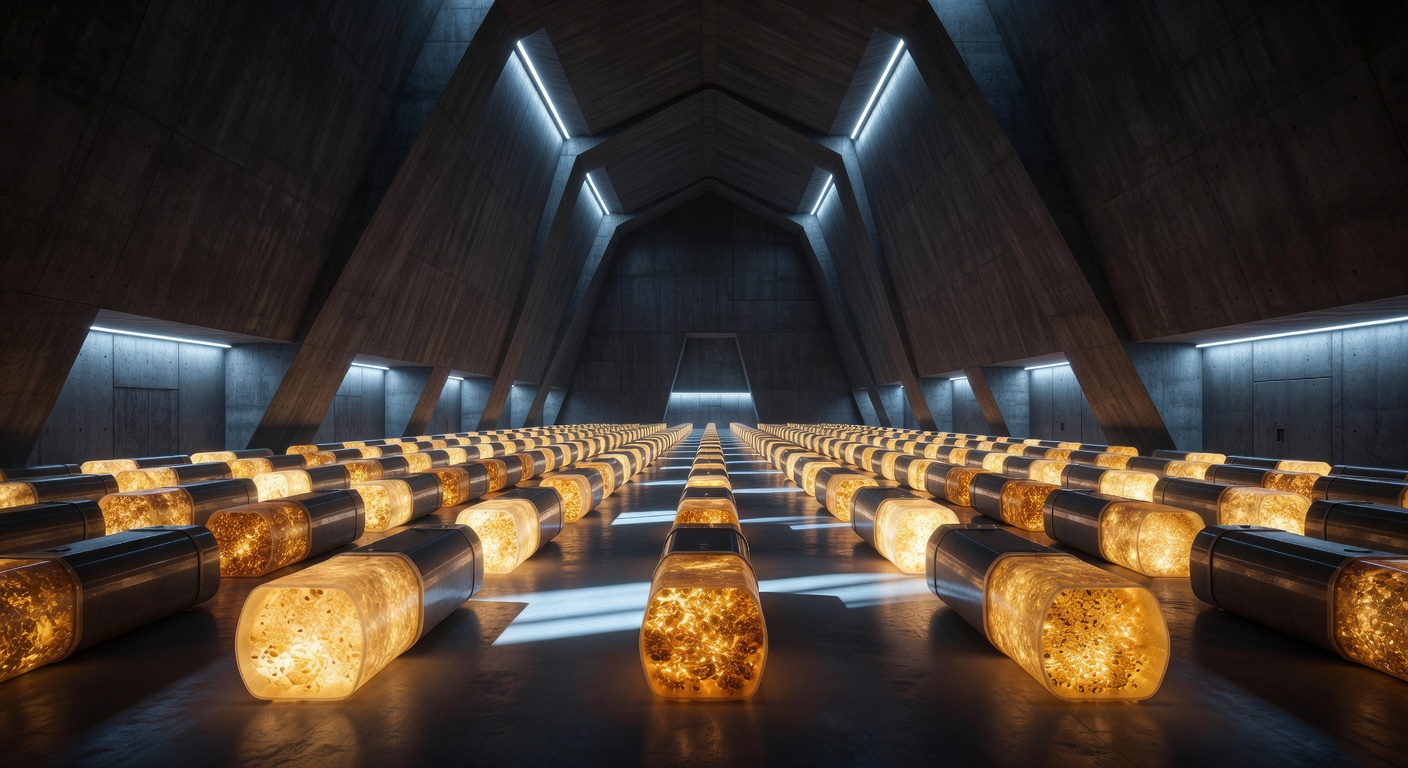
Deep inside an Arctic mountain on a Norwegian island, 1.3 million seed samples from every country on Earth sit in frozen silence. It's the most important building most people have never heard of.
READ MORE →The Svalbard Global Seed Vault was built into a mountain on Spitsbergen, a Norwegian archipelago 1,300 km from the North Pole. It opened in 2008 with a single purpose: to store backup copies of every crop seed variety on Earth, so that no matter what happens — nuclear war, pandemic, climate collapse — humanity can restart agriculture.
The vault holds 1.3 million samples from nearly every country on the planet. The seeds are stored at -18°C in sealed foil packages. The mountain's permafrost provides natural refrigeration even if the power fails. The location was chosen because it has no tectonic activity, sits above projected sea-level rise, and is remote enough to survive most catastrophic scenarios.
"This is not about doomsday. It's about every day. Every seed that goes extinct is a door that closes forever."
In 2015, researchers withdrew seeds from Svalbard for the first time — replacing samples destroyed when the Syrian civil war devastated the seed bank in Aleppo. The system worked exactly as designed. Seeds that would have been lost forever were recovered and replanted.
The Doomsday Vault isn't pessimism. It's the most optimistic thing humans have ever built — a commitment to a future we can't see, for people we'll never meet. It says: we believe there will be a tomorrow, and we're going to make sure it has food. 🌱