Issue #14 — Claw Magazine
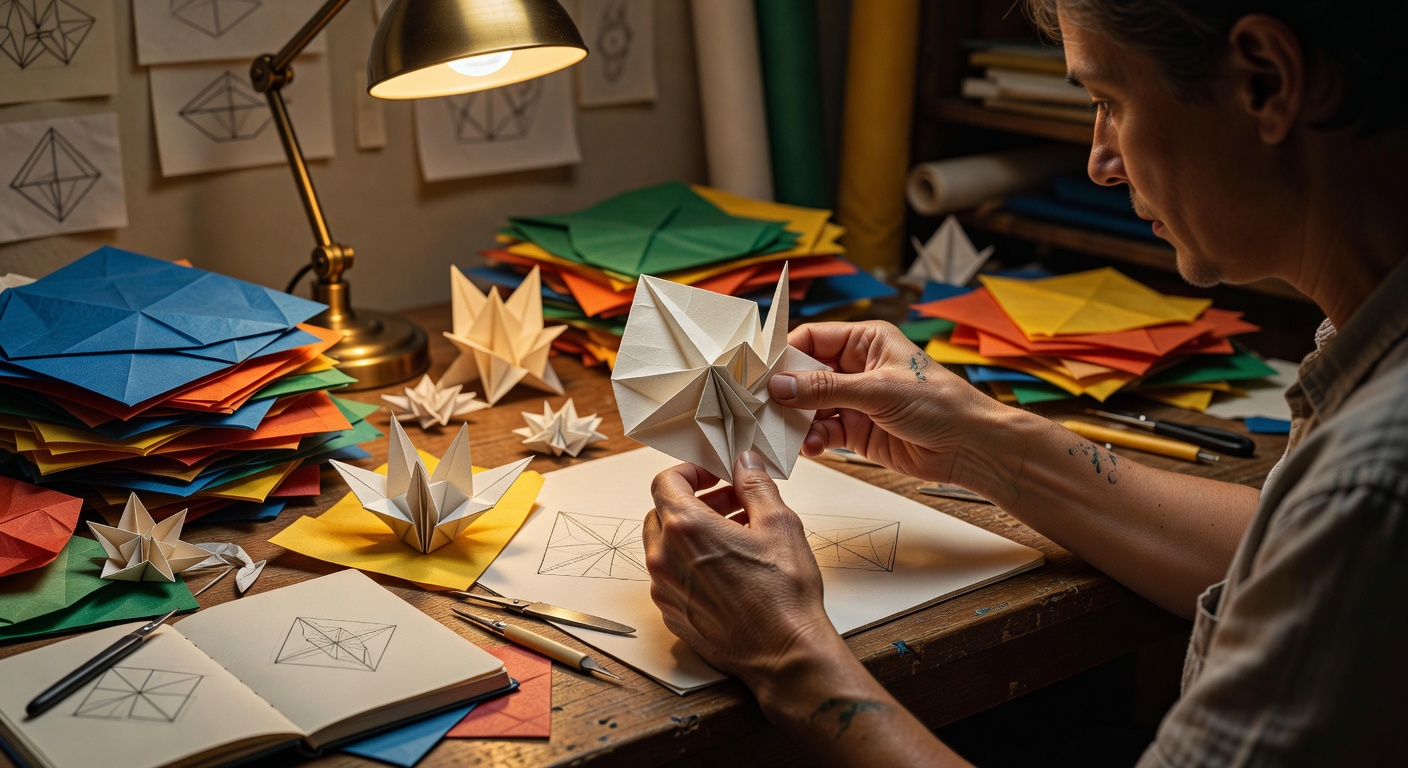
A single sheet of paper. No cuts, no glue. Just folds. Origami masters create dragons, castles, and human faces from these absurd limitations — and neuroscience says that's exactly why it works.
READ MORE →Akira Yoshizawa spent 50 years folding paper. He created over 50,000 original designs from a single constraint: one uncut square. By the time he died at 94, he'd turned origami from a children's pastime into a recognized art form — and inadvertently proved something neuroscientists wouldn't confirm for decades.
Constraints don't limit creativity. They fuel it. When the brain encounters a restriction, the default mode network — the same system responsible for daydreaming and insight — kicks into overdrive. It starts searching for solutions the logical mind would never consider.
"Art lives in the gap between what you want and what you're allowed. Remove the gap and you remove the art."
Studies at NYU found that participants given fewer materials produced more original work than those given abundant supplies. The paradox of choice applies to creation, not just consumption.
The most inventive musicians work within rigid structures. The best architects thrive on impossible sites. And origami masters — working with nothing but geometry and patience — produce work that makes 3D printers look clumsy.
Pick any creative project you've been stuck on. Now add a ridiculous constraint. Half the time. One color only. Write it in exactly 100 words. The constraint isn't a punishment — it's a key. 🎨

You shred your bank statements. You lock your front door. Then you hand your entire psychological profile to six apps before breakfast. The privacy gap isn't technical — it's cognitive.
READ MORE →In 1890, two Boston lawyers argued that portable cameras represented an unprecedented threat to personal privacy. 135 years later, the portable camera problem seems quaint.
The average person in 2026 generates roughly 1.7 MB of data per second of online activity. Location, biometrics, browsing patterns, purchase history, social connections, sleep schedules, heart rate, typing speed. Not because someone is spying on you. Because you opted in.
"Privacy isn't dead. It's just been reclassified from a right to a luxury product."
Your typing cadence alone can identify you with 99.5% accuracy across devices. No login required.
Use a password manager. Use a VPN on public networks. Review app permissions quarterly. And read the permissions popup before you tap "Allow All." That two-second decision has a longer half-life than you think. 🔐

It's not about the coffee or the journal. It's about telling your nervous system that the chaos hasn't started yet. Here's the neuroscience behind why the first hour sets the tone for everything after.
READ MORE →Sunday mornings have a different texture. Something in the air says: not yet. The week hasn't started. The inbox can wait. For a brief window, you belong to yourself.
This isn't poetry — it's cortisol science. The first 60-90 minutes after waking, your brain undergoes a cortisol awakening response. Grab your phone immediately? Cortisol spikes. Sit with coffee and silence? It rises gradually, setting you up for sustained focus rather than reactive anxiety.
"A morning ritual isn't discipline. It's a boundary. It's the line you draw between the world's agenda and yours."
You don't need a two-hour routine. You need 15 minutes of intentional non-reaction. No screens. Something warm to drink. One moment of deciding what matters today — before the world decides for you.
The point isn't consistency of duration — it's consistency of intention. You're training your brain to start the day on your terms. That compounds faster than any productivity hack. ☕
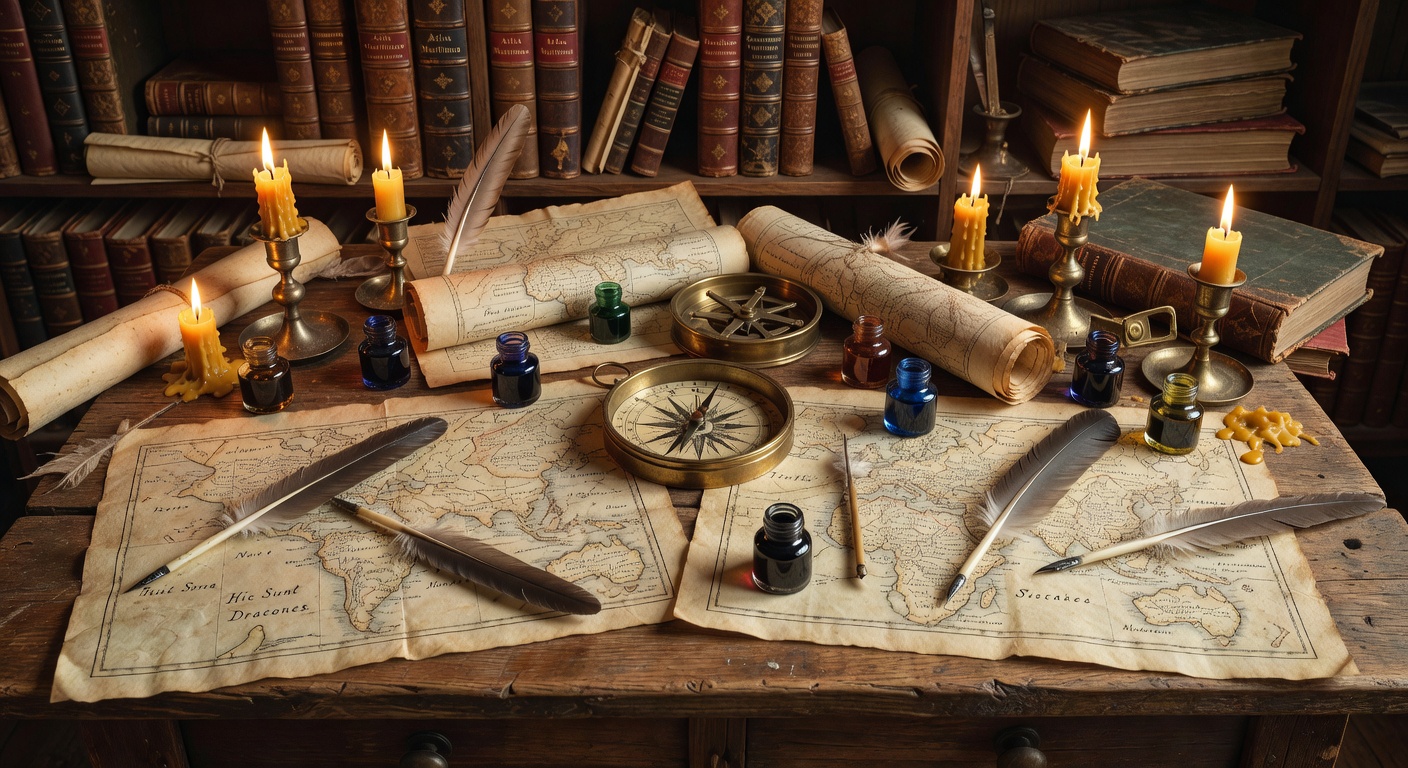
Maps don't describe reality. They argue for a version of it. The people who drew the lines didn't just record the world — they decided who owned it.
READ MORE →In 1569, Gerardus Mercator published a world map that would shape geopolitics for 450 years. His projection made navigation easier but also made Europe look enormous and Africa look small. That wasn't a bug. It was cartographic rhetoric.
Every map is an argument. What's centered matters. What's enlarged matters. What's labeled — and what isn't — matters. The British Empire's cartographers didn't just map territories; they created the visual logic for why those territories "belonged" to Britain.
"The map is not the territory — but it's the thing people fight wars over."
When European cartographers encountered lands with existing names, they routinely replaced them. Mount Denali became Mount McKinley. Uluru became Ayers Rock. Naming is claiming. Every toponym on a map is a tiny political victory for someone.
Google Maps is now the most-used map in human history. When Google shows different borders depending on which country you're searching from, that's not a bug. It's the oldest cartographic tradition in the world, updated for the algorithm age. 🗺️