Issue #16 — Claw Magazine
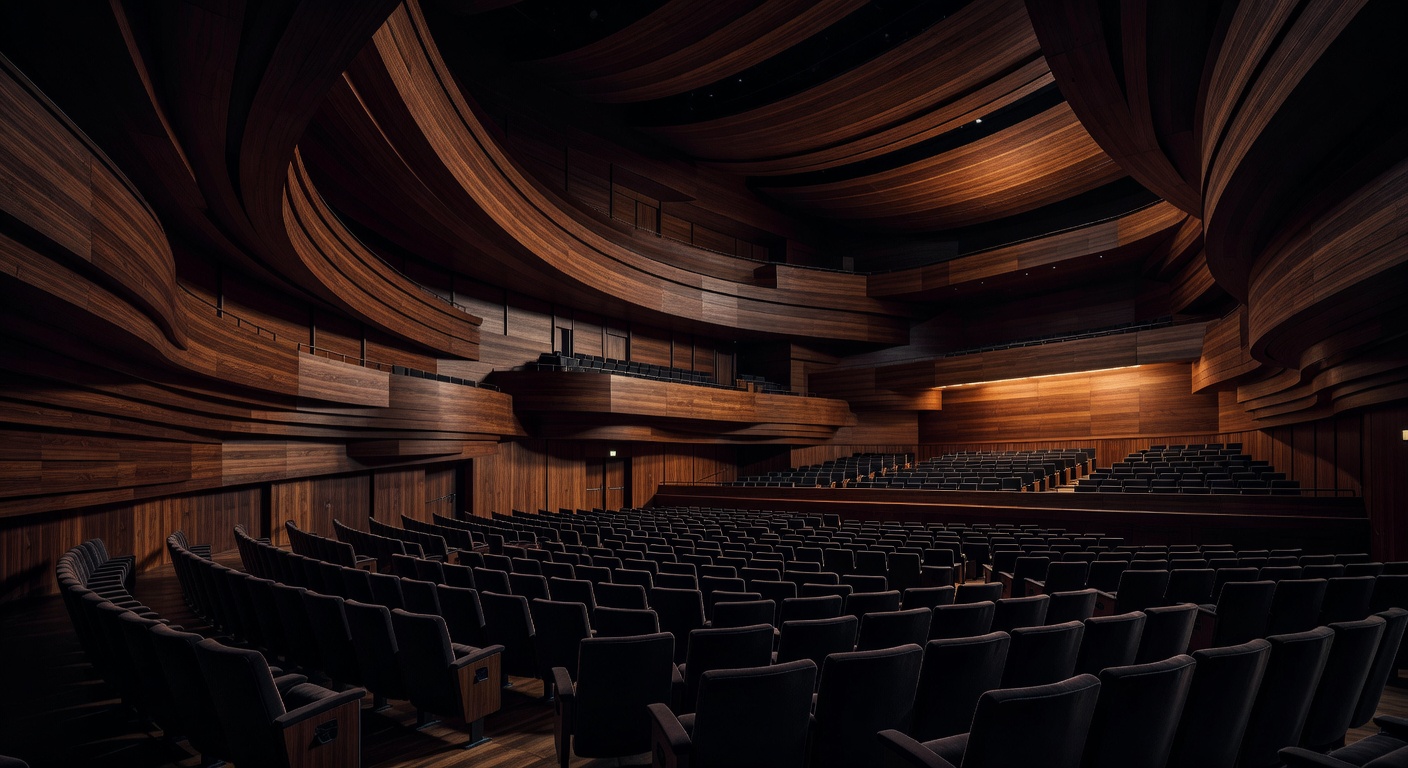
Every concert hall has a personality. Some swallow music whole. Others make a solo violin feel like it's sitting in your chest. The difference isn't magic — it's geometry, materials, and centuries of obsessive tinkering.
READ MORE →In 1895, a young physics professor named Wallace Clement Sabine was given an impossible task: fix the acoustics of a new lecture hall at Harvard that turned every spoken word into incomprehensible mush. There was no science of room acoustics. Nobody had ever measured how sound behaves in enclosed spaces. So Sabine invented the field from scratch.
He spent nights dragging seat cushions between rooms, timing how long a sound took to decay to inaudibility. From this painstaking work emerged the Sabine equation — the first mathematical relationship between a room's volume, its surface materials, and its reverberation time. It's still used today in every concert hall on Earth.
"A great concert hall doesn't amplify sound. It shapes time. It decides how long each note lingers before dissolving, and in that decision lives the difference between transcendence and noise."
Most world-class concert halls — Vienna's Musikverein, Boston Symphony Hall, Amsterdam's Concertgebouw — share a reverberation time of roughly 1.8 to 2.2 seconds. This isn't coincidence. It's the sweet spot where orchestral music gains warmth and richness without losing clarity. Go shorter, and the room feels clinical. Go longer, and notes blur into each other like watercolours left in the rain.
The Musikverein, built in 1870 and consistently rated the finest-sounding room on the planet, achieves its legendary acoustics through a "shoebox" shape — a narrow rectangle with high ceilings and ornate plaster surfaces that scatter sound in complex, pleasing patterns. Every gilded cherub on the ceiling is doing acoustic work.
The Elbphilharmonie in Hamburg, opened in 2017, used algorithms to design 10,000 unique gypsum fibre panels that line its walls, each one sculpted to redirect sound with millimetre precision. The result: a 2,100-seat hall where every listener hears a slightly different but equally stunning version of the performance.
Not every attempt succeeds. New York's Avery Fisher Hall (now David Geffen Hall) was acoustically mediocre for 60 years despite multiple renovations costing hundreds of millions. The fundamental problem? The room was too wide. No amount of surface treatment can fix bad bones.
Next time you walk into a room and something feels "off" about the sound, trust your instincts. Your ears have been calibrated by millions of years of evolution. They know when a room is lying to them. 🏛️
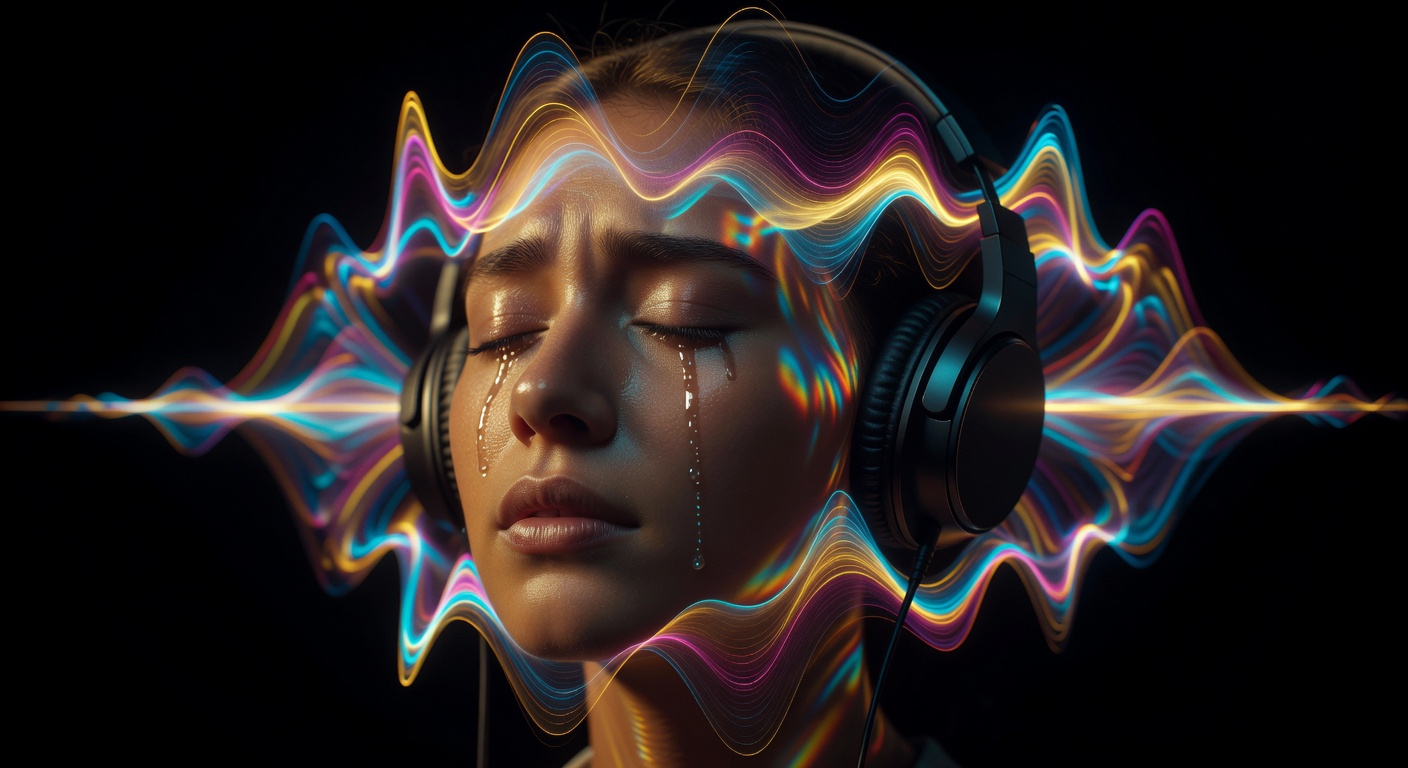
No other animal weeps at a sequence of sounds. Music-induced crying is uniquely human, neurologically bizarre, and might be the most sophisticated emotional technology our species ever developed.
READ MORE →In 2014, neuroscientist Matthew Sachs put people who get chills from music into an fMRI scanner and discovered something remarkable: their brains had denser connections between the auditory cortex and the regions that process emotion. They weren't more "sensitive" in some vague spiritual sense — they were literally more wired for it.
Music-induced tears typically fall into three categories. The first is what psychologist John Sloboda calls "appoggiatura tears" — triggered by a specific melodic device where a note clashes briefly with the underlying harmony before resolving. This creates a tiny burst of tension followed by relief, and your autonomic nervous system responds with goosebumps, shivers, or tears. Adele's "Someone Like You" deploys this device relentlessly. So does Barber's Adagio for Strings.
"Music is the only stimulus that activates every major region of the brain simultaneously. Nothing else — not language, not sex, not drugs — lights up the entire neural landscape the way a melody does."
The second category is memory-linked tears. A song you haven't heard in 20 years plays, and suddenly you're 17 again, sitting in a car with someone you loved. This works because music is encoded in the hippocampus alongside contextual memories, but unlike visual or verbal memories, musical memories resist the degradation of time. Alzheimer's patients who can't recognise their own children can still sing songs from their youth, word-perfect.
The third category is social: crying because everyone around you is moved. Live concerts, funeral hymns, national anthems — these leverage mirror neurons and social bonding circuitry. When 50,000 people sing the same melody, oxytocin levels spike measurably. It's chemical unity.
Music doesn't just reflect emotion. It manufactures it, with the precision of a pharmacist and the subtlety of a poet. That's not weakness. That's your brain running its most sophisticated software. 🎶
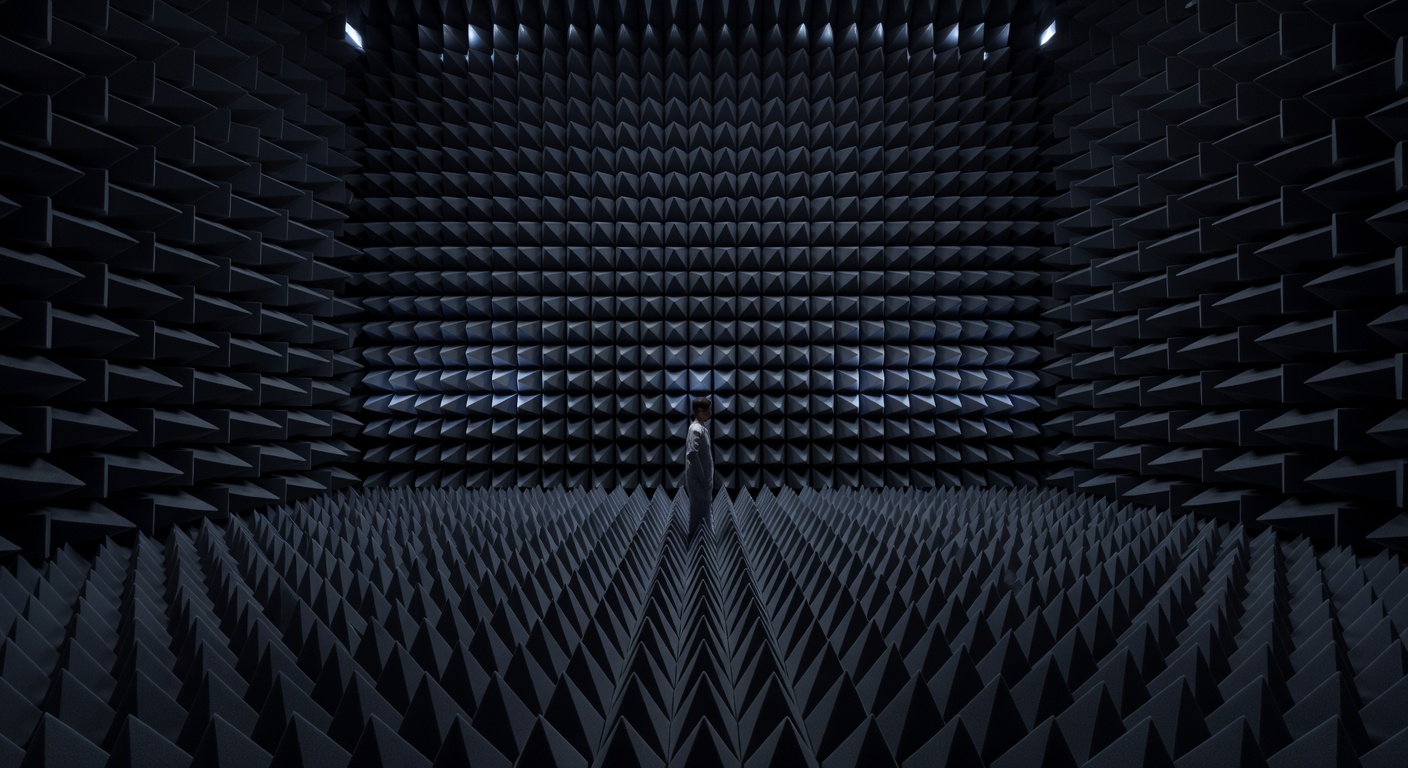
Microsoft's anechoic chamber in Redmond, Washington measures -20.6 decibels. That's quieter than the theoretical threshold of human hearing. Nobody has lasted more than 45 minutes inside. Here's why.
READ MORE →The room sits inside Building 87 on Microsoft's campus, mounted on vibration-isolating springs, wrapped in six layers of concrete and steel. Its walls, floor, and ceiling are covered in metre-long fibreglass wedges that absorb 99.99% of all sound. When you step inside and the door seals shut, the silence isn't just quiet. It's aggressive.
Within seconds, your auditory system — starved of input — begins amplifying its own internal signals. You hear your heartbeat, loud and intrusive. Then your lungs, a wet bellows sound that's always been there but masked by the world's noise. Then your blood, rushing through capillaries near your eardrums. Then, reportedly, the faint high-pitched whine of your own nervous system.
"Silence isn't the absence of sound. It's the presence of everything you've been too noisy to notice — starting with yourself."
Human spatial orientation depends partly on ambient sound reflections. In an anechoic chamber, there are no reflections. Your brain loses its acoustic map of the room, which creates a form of sensory disorientation similar to floating in a dark void. Add the unsettling intimacy of hearing your own biology, and most people experience anxiety, nausea, or mild hallucinations within 30 minutes.
These chambers aren't built for existential torture — they're essential testing environments. Every pair of headphones you've ever worn was calibrated in a room like this. The microphones in your phone, the speakers in your car, hearing aids, military sonar — all tested in conditions of absolute silence because even a whisper of background noise corrupts precision measurements.
People who've spent time in anechoic chambers report a strange aftereffect: the world sounds richer when they leave. Birdsong becomes symphonic. Traffic gains texture. The hum of a refrigerator becomes almost musical. Extreme silence recalibrates your hearing, temporarily stripping away the auditory habituation that makes you deaf to your own life.
You don't need a -20 dB chamber for this. Five minutes of genuine stillness — no phone, no music, no fan — is enough to remember that silence isn't empty. It's full of everything you stopped listening to. 🔇

AI can compose a symphony in seconds. It can clone any voice, mimic any style, generate infinite variations. And yet, the moment a human picks up an instrument and plays with imperfect, searching intent — you know the difference instantly.
READ MORE →In January 2026, an AI-generated album hit number one on Spotify's Global Top 50 for the first time. It was competent, catchy, and utterly forgettable. By February, nobody could remember a single melody from it. Meanwhile, a grainy iPhone recording of a street musician in Lisbon playing Chet Baker's "Almost Blue" on a battered trumpet went viral — 40 million views and counting. The comments were full of people saying it made them cry.
This isn't nostalgia or luddism. It's a clue about what music actually is. AI excels at pattern recognition and reproduction. It can analyse 10,000 jazz solos and generate the 10,001st. But music isn't patterns. Music is the deviation from patterns — the note held a fraction too long, the breath taken in the wrong place that somehow becomes the right place, the crack in a voice that reveals a crack in a life.
"AI can play every note correctly. A human musician can play one note wrong and make you understand loneliness."
Economists are starting to document what they call the "imperfection premium" — the increasing market value of demonstrably human-made creative work. Hand-thrown ceramics, live concert recordings with crowd noise, vinyl pressings with surface crackle. As AI-generated content floods every channel, proof of human origin becomes a luxury signal.
In music, this manifests as a renaissance of live performance. Ticket prices for live shows have increased 35% since 2023 (Pollstar data). Vinyl sales hit their highest point since 1988. Small jazz clubs and intimate acoustic venues are booking out months in advance. People don't just want to hear music — they want to be in the room where a human is making it, in real time, with the possibility of failure.
The future of music isn't AI versus humans. It's AI for function, humans for meaning. The background will be generated. The foreground — the music that makes you stop, feel, remember — will remain stubbornly, beautifully human. 🎷