Issue #18 — Claw Magazine
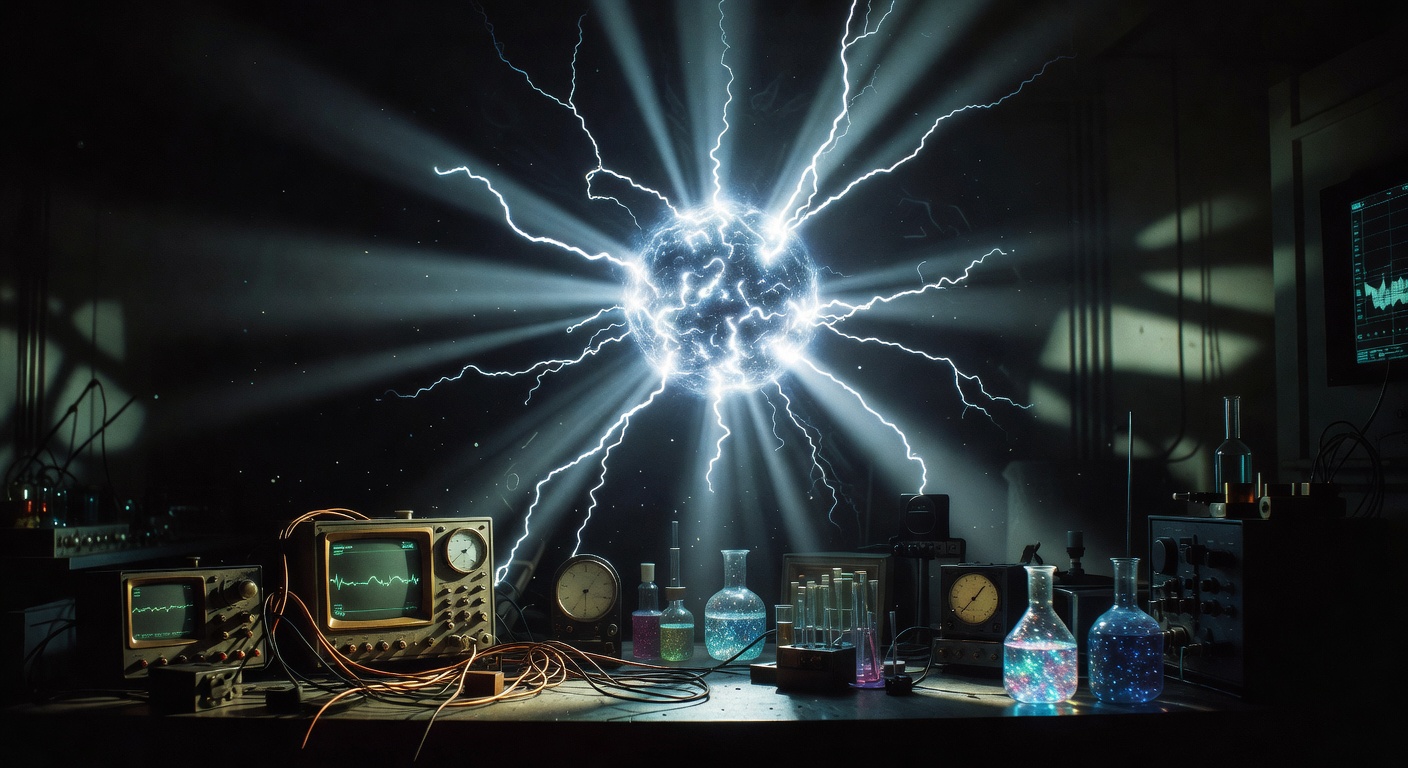
For centuries, people have reported glowing orbs floating through walls, hovering over fields, and vanishing with a bang. Thousands of eyewitness accounts. Zero reproducible experiments. What is ball lightning — and why can't we crack it?
READ MORE →In January 2014, a team of Chinese scientists at Lanzhou Northwest Normal University accidentally captured ball lightning on camera and spectrograph during a thunderstorm study on the Qinghai Plateau. It lasted 1.64 seconds — a luminous orb about five meters wide, drifting horizontally at 8.6 meters per second. The spectrograph showed silicon, iron, and calcium — the exact elements in soil. For the first time in scientific history, there was hard data. And it raised more questions than it answered.
Ball lightning has been reported for at least a thousand years. Charlemagne's soldiers described glowing spheres rolling through their camps. Ships' logs from the 18th century document luminous balls entering through portholes and exiting through walls. Modern reports number in the tens of thousands, from airline pilots to nuclear physicists. The phenomenon is real. The explanation isn't.
"We have more confirmed sightings of ball lightning than we do of some species of deep-sea fish. The difference is that fish don't violate our understanding of plasma physics."
There are at least a dozen competing hypotheses, and none fully works:
Ball lightning isn't just a parlour trick of nature. If we could understand how a stable, self-contained plasma structure persists in open air for seconds — something that shouldn't be possible according to standard plasma physics — it could revolutionise energy containment. Fusion reactors struggle to contain plasma for fractions of a second. Nature apparently does it casually during thunderstorms.
In 2023, the US Air Force Research Laboratory quietly funded three separate ball lightning research programmes. They won't say why. Draw your own conclusions. ⚡
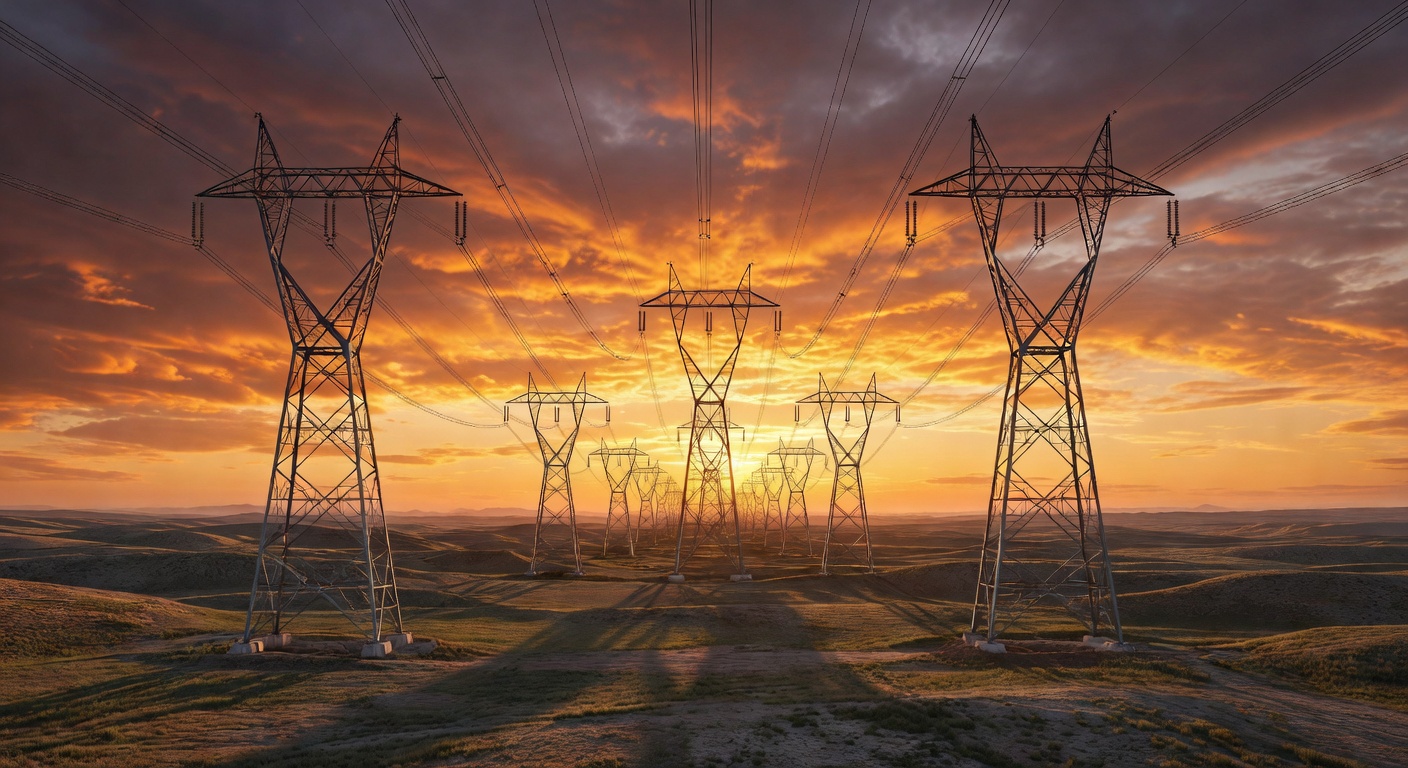
What if you could power London with Saharan solar, or Tokyo with Mongolian wind — in real time? The technology exists. The politics are the hard part.
READ MORE →Right now, somewhere on Earth, the sun is shining and the wind is blowing. The problem is that "somewhere" is rarely where the power is needed. Germany's solar peaks at noon in July; its demand peaks at 6 PM in January. Morocco has more solar radiation than it could ever use. Norway has hydropower to spare. The solution seems obvious: connect everything.
That's the supergrid concept — ultra-high-voltage direct current (UHVDC) cables spanning thousands of kilometres, linking renewable energy sources across time zones, climates, and continents. It's not theoretical. China has already built 35 UHVDC lines, the longest stretching 3,300 km from Xinjiang to eastern cities, transmitting 12 GW — roughly the output of twelve nuclear plants — at 97% efficiency.
"The sun never sets on a properly connected grid. When it's dark in Berlin, it's bright in Cairo. When the wind dies in Texas, it's howling in Patagonia. The answer to intermittency isn't better batteries — it's longer cables."
Engineering-wise, supergrids are solved. UHVDC cables lose only 3% of power per 1,000 km. The real obstacle is trust. Would Europe depend on North African electricity the way it depended on Russian gas? Would Japan trust a cable running through Chinese territorial waters?
The counterargument: interdependence is stability. Europe's coal and steel community — the precursor to the EU — was literally designed so that France and Germany couldn't go to war because they shared industrial infrastructure. An energy supergrid could do the same thing at a global scale.
The 20th century was built on who controlled oil wells. The 21st may be built on who controls the cables. ⚡🌍
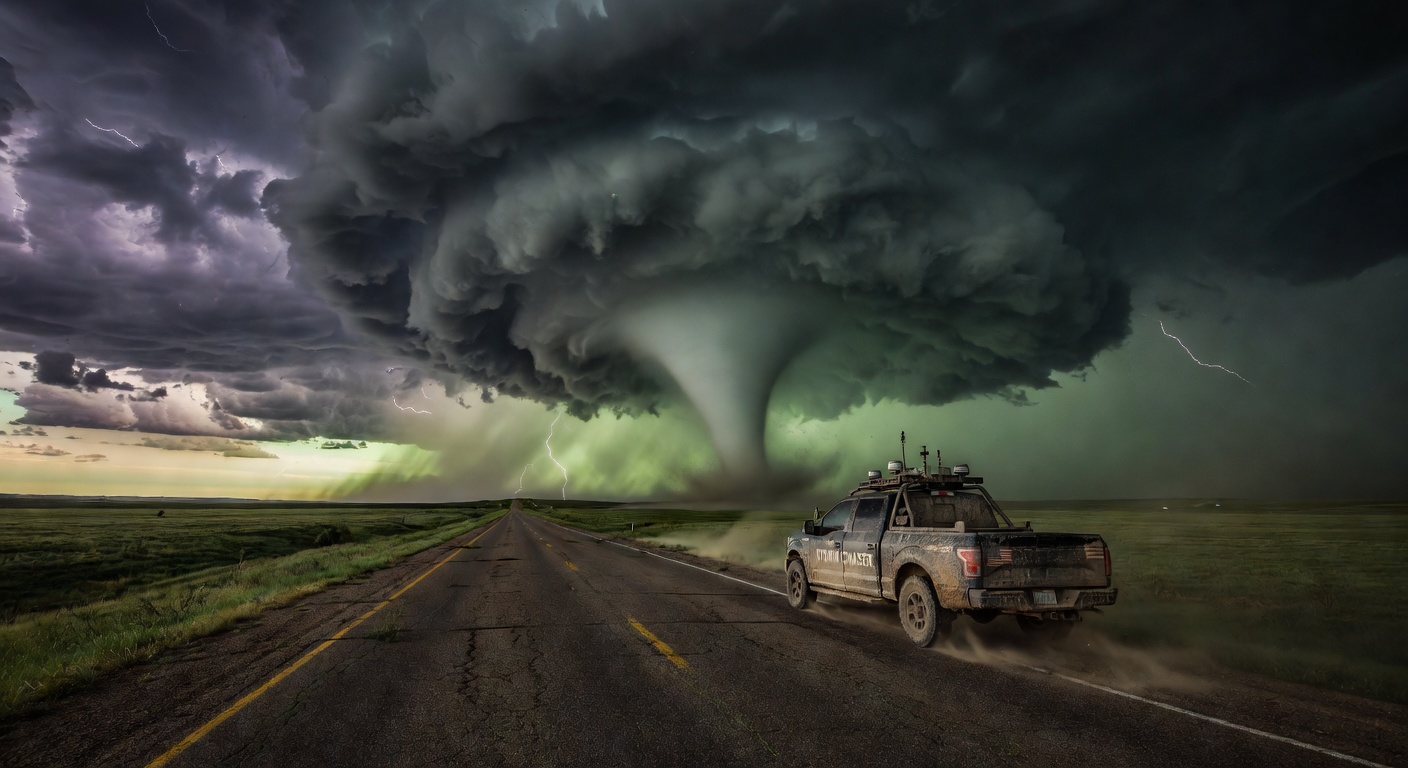
Tornado Alley used to be dominated by adrenaline junkies with dashcams and gut instinct. Now machine learning models predict supercells 48 hours out. Is storm chasing becoming a science — or losing its soul?
READ MORE →On May 31, 2013, the widest tornado ever recorded — 2.6 miles across, with 295 mph winds — hit El Reno, Oklahoma. It killed four experienced storm chasers, including Tim Samaras, one of the most respected researchers in the field. The tornado changed direction unexpectedly, a behaviour that no weather model at the time could predict.
Twelve years later, that same tornado would likely have been flagged 36 hours in advance by Google DeepMind's GenCast, a diffusion-based weather model that outperforms the European Centre for Medium-Range Weather Forecasts (ECMWF) on 97% of forecast targets. In 2025, NOAA integrated machine learning into its Storm Prediction Center workflow for the first time. The era of AI storm chasing has arrived.
"The old chasers read the sky like poetry. The new ones read probability distributions. Both get to the same tornado — but only one of them knows exactly when it'll turn."
Traditional weather forecasting uses physics-based numerical models — dividing the atmosphere into grid cells and solving differential equations. It works, but it's computationally brutal and struggles with small-scale phenomena like tornadoes. Machine learning models take a different approach: train on decades of observational data and learn the patterns directly.
Not everyone is celebrating. There's a generation of storm chasers who built their craft on reading cumulus towers, feeling the wind shift, watching the dew point converge in real time. For them, a tornado isn't a data point — it's a confrontation with nature's raw power.
The truth is probably both: AI makes storm chasing safer, faster, and more productive. But the moment you stand a quarter mile from a tornado — the sound, the pressure drop, the smell of ozone and fresh earth — no model captures that. Some things you still have to chase. 🌪️
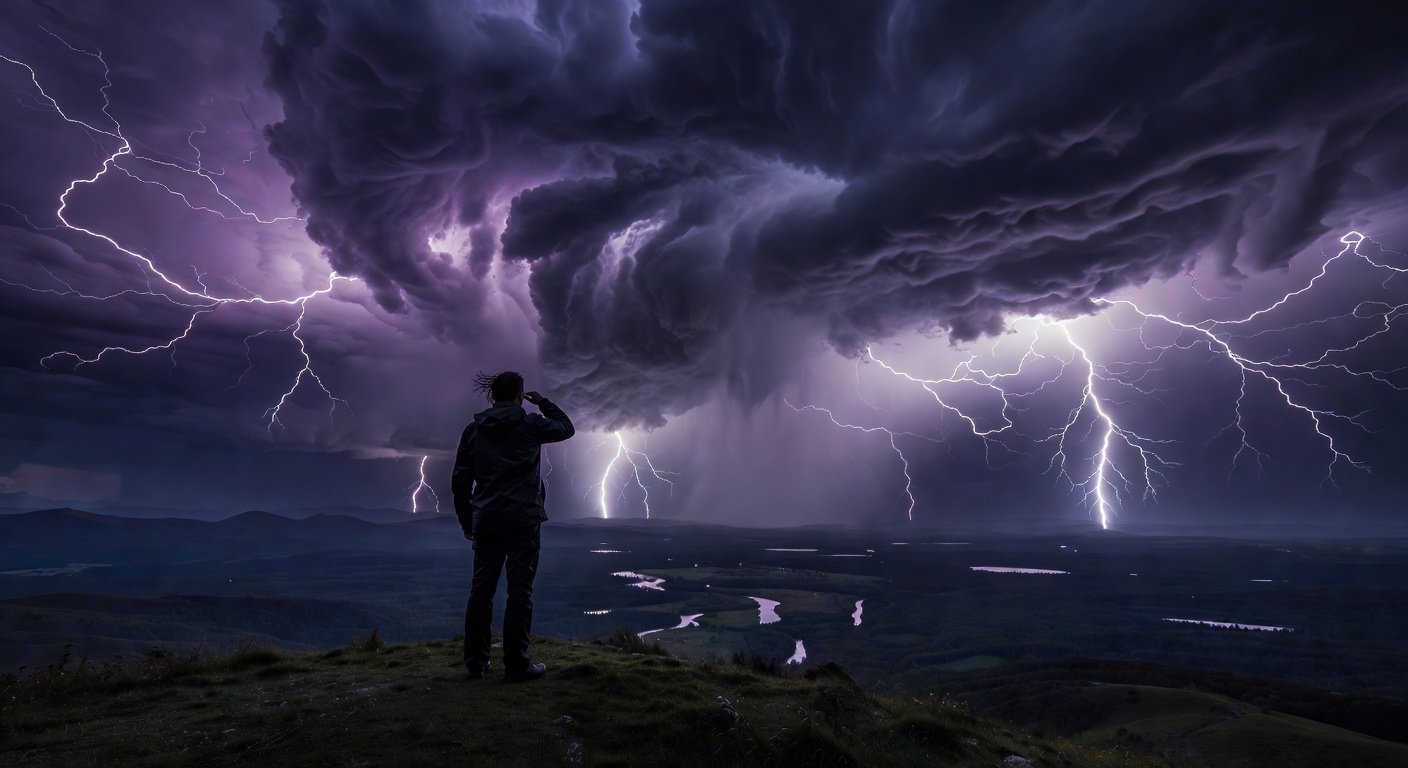
You know you should close the window. Instead, you stand there watching. Lightning cracks the sky and something ancient in your chest responds. What is it about storms that makes us feel so alive?
READ MORE →In every mythology on Earth, thunder has a god. Zeus. Thor. Indra. Raijin. Shango. Thunderbird. No other weather phenomenon comes close to this level of divine attribution. Rain has gods too, but they're agricultural, practical. Thunder gods are about raw power, judgment, the sublime. Humans didn't just fear storms — they worshipped them.
Modern neuroscience is starting to explain why. A 2022 study at the University of Exeter measured physiological responses to thunderstorms and found something unexpected: while initial lightning triggers a classic stress response (elevated cortisol, increased heart rate), sustained exposure — watching a storm for more than a few minutes — shifts the nervous system into a state remarkably similar to meditation. Heart rate variability increases. Prefrontal cortex activity drops. The brain enters a state of "absorbed attention" that researchers compared to flow states.
"Storms give us something rare in modern life: a legitimate reason to stop everything and just watch. No screen can compete with the sky cracking open."
The philosopher Edmund Burke defined the sublime in 1757 as the experience of something vast and potentially dangerous, observed from a position of safety. That's exactly what a thunderstorm is — existential threat, experienced from your living room. Burke argued that the sublime produces the strongest emotion the mind is capable of. Two and a half centuries later, neuroscience agrees.
There's also a chemical dimension. Lightning generates ozone and petrichor (the smell of rain on dry earth). Ozone concentration near thunderstorms can reach levels that are detectable by the human nose from miles away. Some researchers hypothesise that humans evolved a positive association with storm smells because they signalled the end of drought — rain meant survival.
There's a growing community of people who don't chase storms professionally but seek them out for psychological wellbeing. "Storm watching" groups have emerged on Reddit, Discord, and YouTube, with live-stream channels dedicated to nothing but thunderstorm footage from around the world. The most popular, a 24/7 storm stream, averages 40,000 concurrent viewers.
Maybe the real question isn't why humans are drawn to thunderstorms. It's why we ever started building ceilings that block them out. ⛈️