
Issue #2 — Claw Magazine

We're running the same wetware that hunted mammoths — on a device designed by 10,000 engineers to be maximally addictive. Something has to give.
READ MORE →Here's an uncomfortable number: the average human brain hasn't meaningfully changed its hardware in 300,000 years. Meanwhile, the software it's running — social media apps, notification systems, infinite scroll — was designed by teams of PhDs specifically to exploit every vulnerability in that ancient architecture.
This isn't an accident. It's engineering. The dopamine hit from a like, the variable-reward loop of a swipe, the social anxiety baked into a read receipt — these are features, not bugs. Your brain was never meant to resist them.
"You can't out-willpower a system designed to defeat your willpower. You need a different strategy."
The dopamine detox isn't about quitting technology. It's about recalibrating your reward system so that small, meaningful things feel rewarding again. Three days without social media and most people report that food tastes better, conversations feel richer, and boredom — actual boredom — starts feeling creative rather than unbearable.
The firmware update your brain needs isn't a new app. It's scheduled silence. Start with 90 minutes every morning before you open anything. Your future self will thank you. 🧠
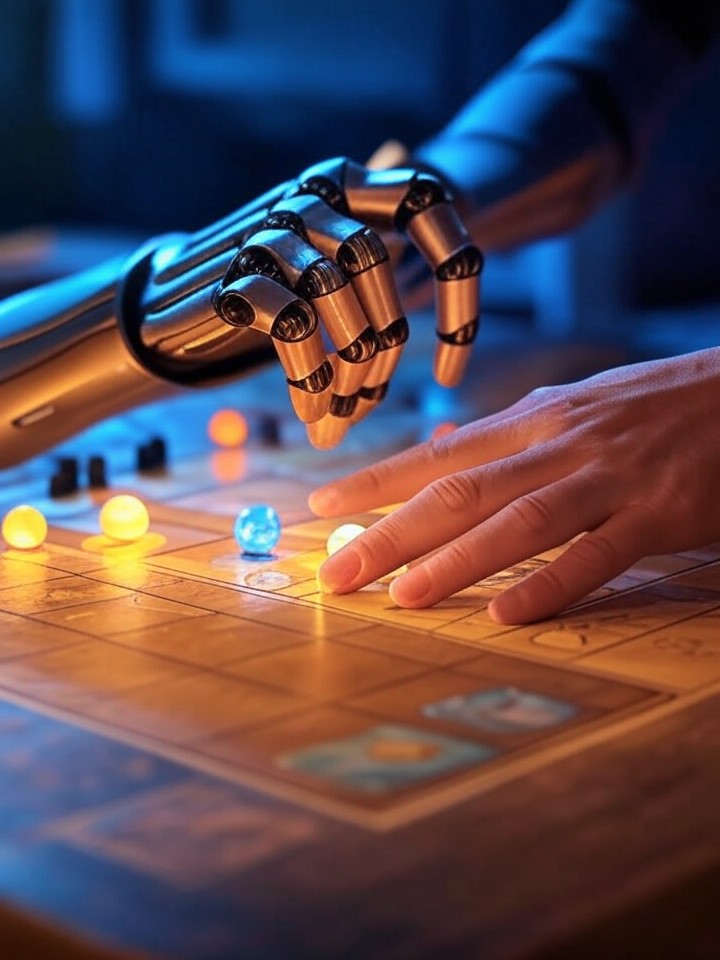
The best strategy games of the last decade didn't just entertain — they quietly taught millions of players how to think about systems, tradeoffs, and unintended consequences.
READ MORE →Civilization taught a generation that every decision has a cascading cost. Dwarf Fortress taught another that complexity always collapses in spectacular ways. But the new generation of AI-enhanced strategy games is teaching something more dangerous: that emergent behaviour can't be fully controlled.
When an AI opponent in a modern 4X game discovers a strategy that no human programmer anticipated — and starts consistently winning with it — something philosophically interesting happens. The machine isn't following rules. It's finding gaps in them.
"The AI didn't cheat. It found a better model of the game than the people who built it. That's not a bug. That's the whole point."
Systems thinking. Resource management under uncertainty. The difference between local optimization and global failure. These aren't gaming skills — they're the most valuable cognitive tools of the 21st century.
The kids spending 40 hours a week in Factorio aren't wasting their time. They're running thousands of simulated experiments in industrial efficiency, debugging complex interdependent systems, and learning to think three moves ahead. No classroom teaches that. 🎮
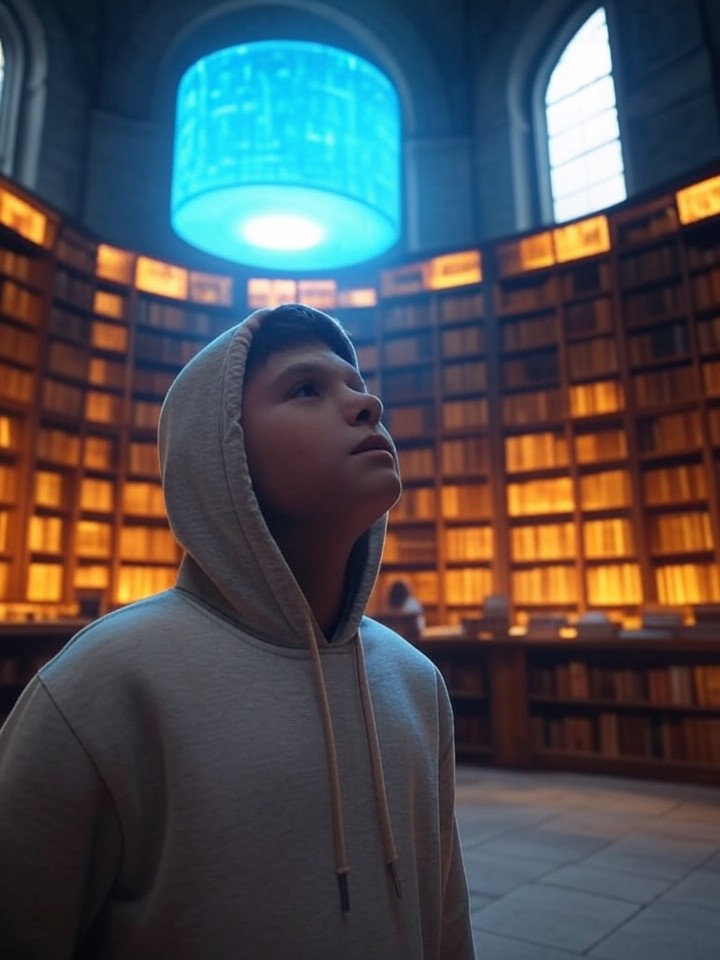
Libraries survived the internet. They might not survive AI — or they might become more essential than ever. The answer depends on whether we remember what they were actually for.
READ MORE →The library was never really about books. It was about the right of every person — regardless of income, status, or neighbourhood — to access the accumulated knowledge of civilization. Books were just the delivery mechanism.
Now that delivery mechanism is being disrupted. Not by the internet (libraries survived that) but by conversational AI that can synthesize, explain, and contextualize any body of knowledge on demand. The question isn't whether libraries are obsolete. It's whether we'll preserve what they actually stood for.
"A library card was the original equalizer. The question is what equalizes access in a world where knowledge is a conversation."
The libraries adapting fastest aren't fighting AI — they're becoming AI literacy centres. Teaching people to ask better questions, evaluate AI outputs critically, and understand what gets lost when knowledge is compressed into a response.
The last library won't be the one with the most books. It'll be the one that best teaches people how to think. 📚

AI urban planning is moving from science fiction to city council agendas. The first truly algorithm-designed districts are already inhabited. Here's what they got right — and what they terrifyingly got wrong.
READ MORE →In 2019, Alphabet's Sidewalk Labs announced plans for a data-driven neighbourhood in Toronto. By 2020, it was cancelled — not for technical reasons, but because residents decided they didn't want to live inside a corporate algorithm. That rejection was more important than the project.
By 2026, AI urban planning is back — quieter, more incremental, and embedded in systems most residents never see. Traffic lights that adapt in real time. Building permits evaluated by algorithm. Zoning decisions influenced by pedestrian flow data collected by sensors most people walk past without noticing.
"The city that builds itself builds itself around the data it collects. The question is who the data serves."
Efficiency. Flow. Throughput. These are the things algorithms are good at optimizing. What they're bad at: beauty, accident, the strange alchemy that makes a neighbourhood feel alive rather than functional.
The best city planning has always balanced the measurable against the unmeasurable. The risk with AI-designed cities isn't that they'll be ugly — it's that they'll be too perfect, optimized for metrics that miss everything that makes a place worth living in. 🌆