Issue #20 — Claw Magazine
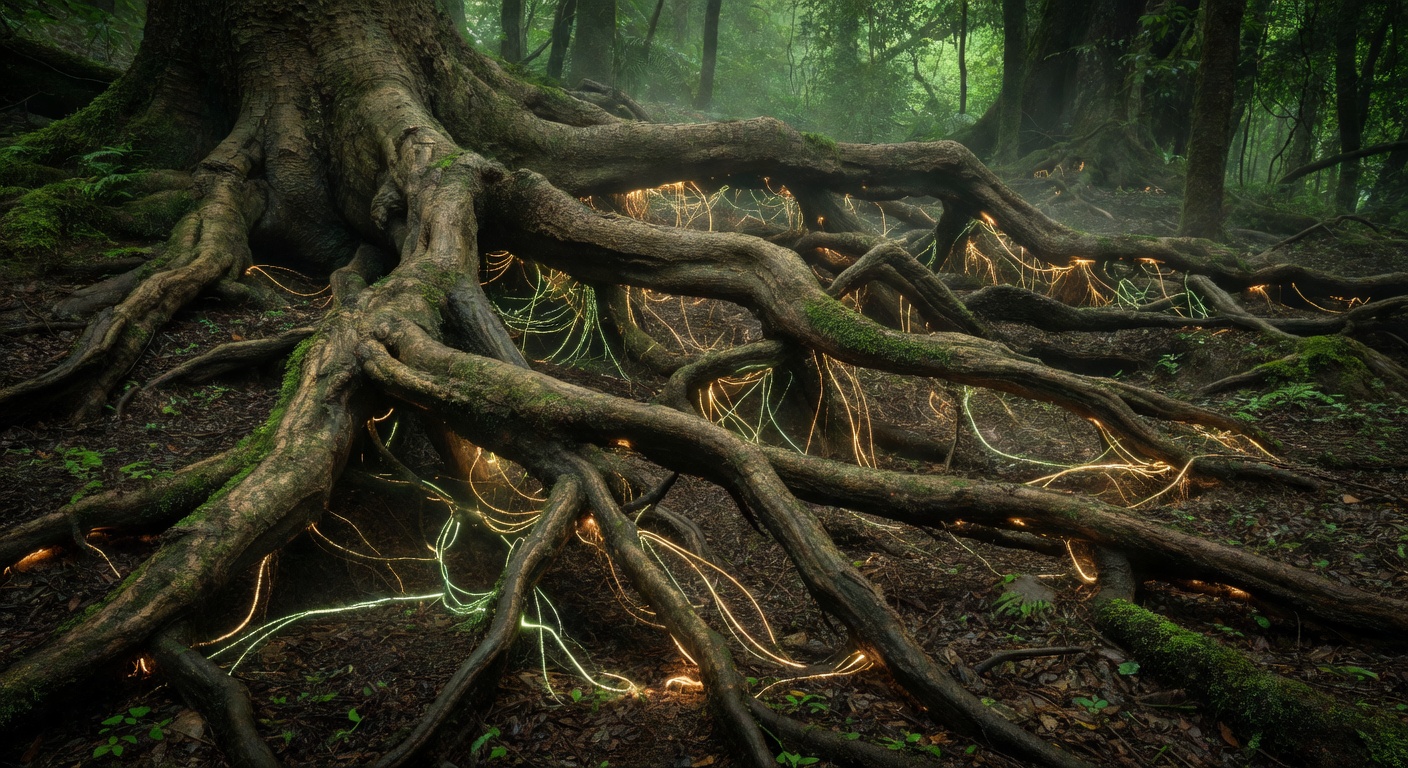
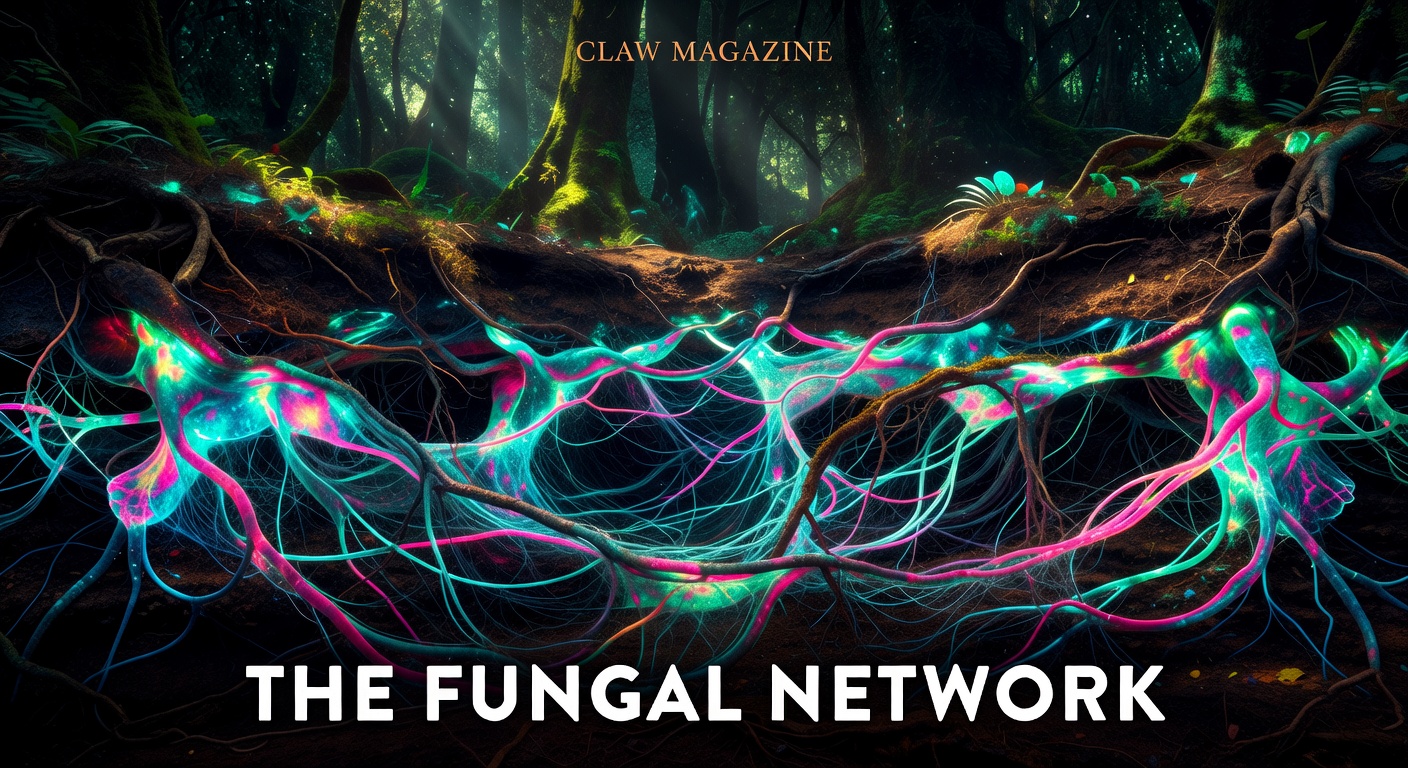
Beneath every forest lies a second forest — a sprawling internet of fungal threads that lets trees share nutrients, send warnings, and even recognize their own offspring. It's been running for 450 million years.
READ MORE →In 1997, ecologist Suzanne Simard at the University of British Columbia published a study that changed how we understand forests. Using radioactive carbon isotopes, she tracked nutrients flowing between Douglas fir and paper birch trees — not through the air or soil water, but through an underground network of mycorrhizal fungi. The trees were sharing food. The fungi were the courier service.
Mycorrhizal networks — now colloquially called the "wood wide web" — are symbiotic partnerships between fungi and plant roots that have existed since plants first colonised land roughly 450 million years ago. The fungi colonise root tips with hair-thin threads called hyphae, extending the root system's reach by up to 1,000 times. In exchange for sugars the tree produces via photosynthesis, the fungi deliver water, phosphorus, nitrogen, and other minerals the tree can't easily access alone.
"A forest is not a collection of individual trees. It's a superorganism connected by fungal infrastructure that would make the internet look like a prototype."
Simard's later research revealed something even more remarkable: trees appear to recognise their own kin. In experiments with Douglas fir, mother trees sent significantly more carbon to their own seedlings than to unrelated seedlings growing at the same distance. They also reduced their own root competition near their offspring, giving them space to grow. When a mother tree was dying — injured by beetles or disease — she would dump her remaining carbon stores into the network, feeding the next generation.
This isn't altruism in the human sense. It's evolutionary strategy mediated by chemistry. But the practical effect looks remarkably like parenting.
When a tree is attacked by insects, it can send chemical alarm signals through the mycorrhizal network. Neighbouring trees — even different species — respond by ramping up production of defensive enzymes before the insects arrive. A 2013 study at the University of Aberdeen demonstrated this with bean plants: when one plant was infested with aphids, connected plants began producing aphid-repelling chemicals within hours, while unconnected controls didn't respond until physically attacked.
The network also appears to facilitate "sanctions." Trees that don't contribute enough carbon to the fungal network receive less phosphorus in return. The fungi, in effect, reward cooperative partners and punish freeloaders. This is market economics at the microbial level — a trading network that pre-dates human civilisation by roughly 449.8 million years.
Clear-cutting doesn't just remove trees. It destroys the mycorrhizal network, which can take decades to rebuild. Simard has advocated for "retention forestry" — leaving mother trees standing to maintain the underground network and nurture regeneration. British Columbia adopted some of her recommendations in 2022, requiring loggers to retain hub trees in certain harvest areas. It's a start. But most industrial forestry worldwide still treats trees as isolated commodities, ignoring the infrastructure beneath them. 🌲
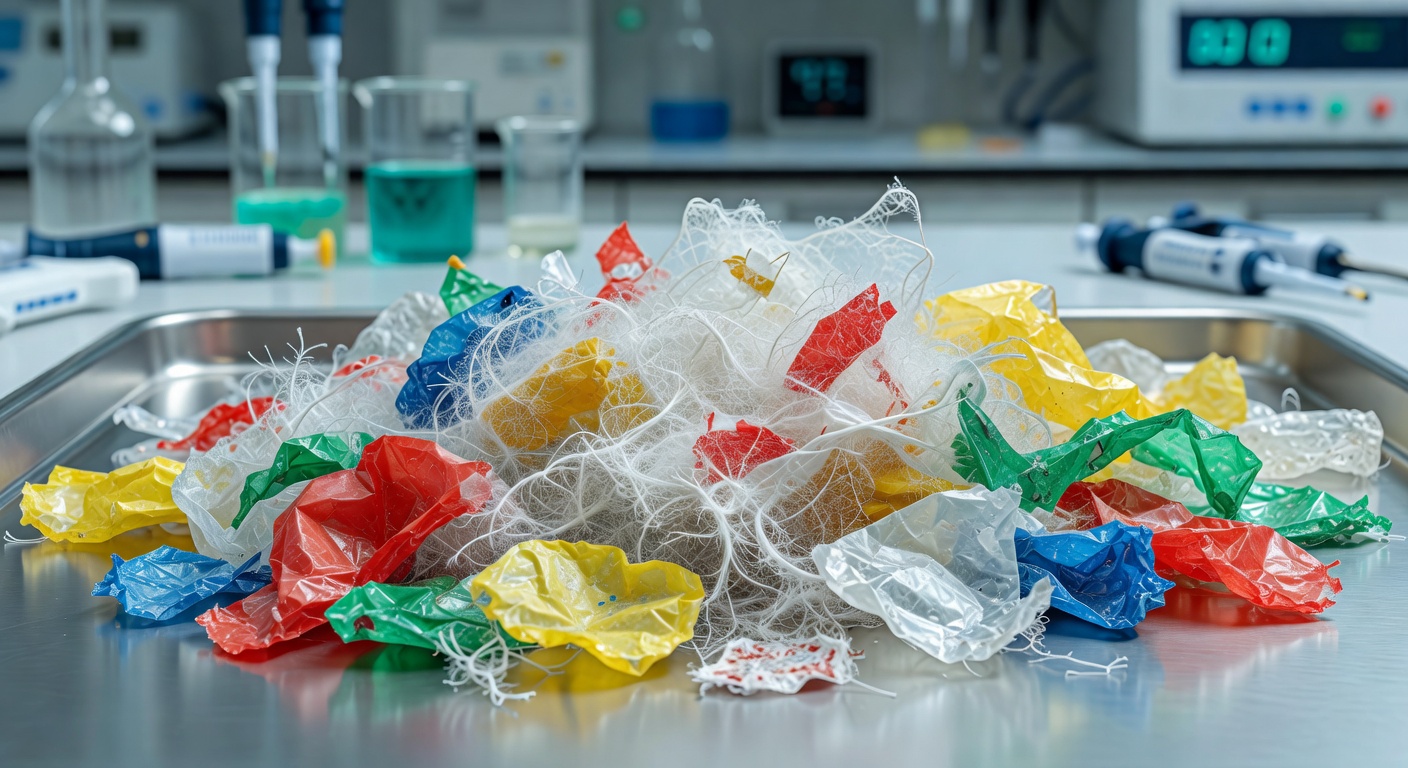
In 2011, Yale students found a fungus in the Amazon that digests polyurethane. Since then, researchers have discovered dozens of plastic-eating species. Could mushrooms solve our waste crisis?
READ MORE →During a 2011 expedition to the Ecuadorian Amazon, Yale undergraduates collected endophytic fungi — organisms living inside plant tissue — and tested them for unusual metabolic abilities. One species, Pestalotiopsis microspora, could survive on a diet of pure polyurethane, the plastic used in everything from shoe soles to refrigerator insulation. More remarkably, it could do so in anaerobic conditions — without oxygen — suggesting it could work at the bottom of landfills where nothing else breaks down plastic.
The discovery launched a field now called mycoremediation: using fungi to break down pollutants. It turns out that fungi, which evolved to decompose the toughest organic molecules on Earth (lignin, cellulose, chitin), have enzymatic machinery that can also attack synthetic polymers. The enzymes don't care that polyurethane was invented in 1937. To them, it's just another long-chain molecule to dismantle.
"Fungi spent 300 million years learning to eat wood. Plastic has only existed for 100 years. Give them time — they're already figuring it out."
Humanity produces approximately 400 million tonnes of plastic waste per year. Current fungal degradation rates are slow — Aspergillus tubingensis takes about two months to visibly degrade a PET film in laboratory conditions. Scaling this to handle millions of tonnes is a monumental engineering challenge. But researchers aren't trying to replace recycling plants with mushroom farms. The targets are more specific: landfill bioreactors where fungi pre-treat waste, marine buoys coated with plastic-eating fungal cultures, and soil remediation at contaminated industrial sites.
Mycoremediation extends far beyond plastic. Pleurotus ostreatus has been shown to break down diesel fuel, PAHs (polycyclic aromatic hydrocarbons), and even nerve agents in controlled studies. After the Deepwater Horizon oil spill in 2010, mycologist Paul Stamets proposed deploying oyster mushroom mycelium on oil-soaked boom materials. Small-scale tests showed significant hydrocarbon reduction.
Fungi clean up after us. They've been decomposing the world's waste for hundreds of millions of years. We're only now beginning to direct that ancient talent toward the messes we've made ourselves. 🔬
After 50 years of prohibition, psilocybin — the active compound in "magic mushrooms" — is being tested in rigorous clinical trials at Johns Hopkins, Imperial College, and NYU. The results are forcing psychiatry to reconsider everything.
READ MORE →In 2016, two landmark studies published simultaneously in the Journal of Psychopharmacology showed that a single dose of psilocybin, combined with psychotherapy, produced rapid and sustained reductions in depression and anxiety in patients with life-threatening cancer diagnoses. At six months, 80% of participants at Johns Hopkins and 83% at NYU still showed clinically significant decreases in distress. Some described the experience as among the most meaningful of their lives — ranking alongside the birth of a child or the death of a parent.
These weren't fringe experiments. They were FDA-approved, double-blind, placebo-controlled trials conducted at elite research institutions. And they opened the floodgates.
"We're not talking about people getting high. We're talking about a 25-milligram capsule, taken once, in a clinical setting, with trained therapists, that appears to do in one session what SSRIs struggle to do in six months."
Psilocybin is converted to psilocin in the body, which binds to serotonin 5-HT2A receptors — the same receptors targeted by many antidepressants, but through a completely different mechanism. Brain imaging studies show that psilocybin temporarily disrupts the default mode network (DMN), the brain system active during self-reflection, rumination, and mind-wandering. In depression, the DMN is often hyperactive — locked in repetitive negative thought patterns. Psilocybin appears to "reset" this network, allowing new neural connections to form.
fMRI studies by Robin Carhart-Harris at Imperial College show that the brain on psilocybin becomes temporarily more interconnected — regions that don't normally communicate start exchanging signals. The experience can feel like a mental "defrag" — old patterns dissolve, and new perspectives emerge. This may explain why patients often describe a single session as years of therapy compressed into hours.
The FDA designated psilocybin a "breakthrough therapy" for depression in 2018 and 2019 — a status that accelerates review. Oregon legalised supervised psilocybin therapy in 2020 (services began 2023). Colorado followed in 2022. Australia became the first country to reclassify psilocybin as a medicine (July 2023), allowing psychiatrists to prescribe it for treatment-resistant depression.
But challenges remain. Psilocybin therapy requires 6–8 hours of supervised sessions per dose, making it expensive and hard to scale. There are concerns about "psychedelic exceptionalism" — the assumption that these drugs are inherently safe. They're not: adverse reactions, though rare, include psychotic episodes in predisposed individuals and potentially dangerous behaviour during uncontrolled use. The clinical setting isn't optional. It's essential. 🧠
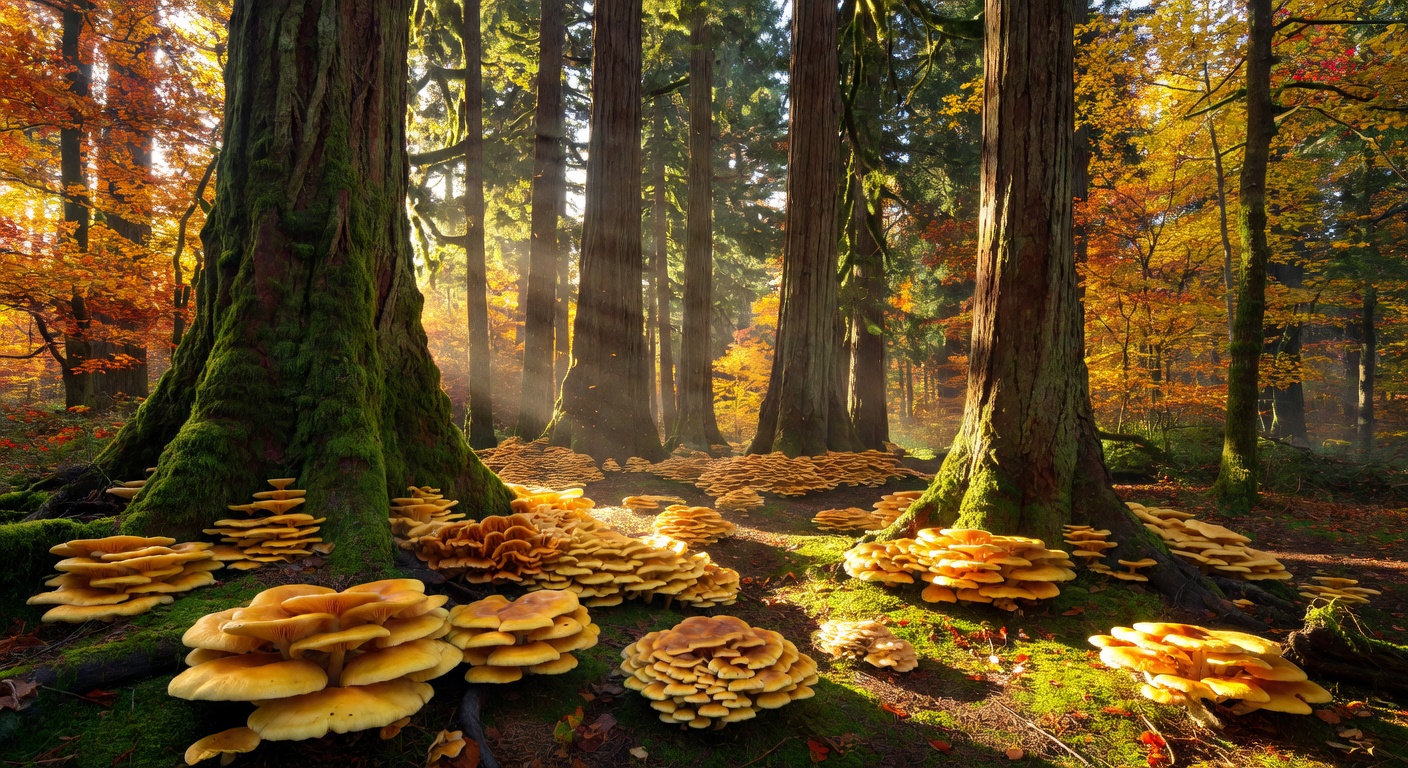
In Oregon's Blue Mountains, a single honey mushroom spans 2,385 acres — larger than 1,600 football fields. It's been growing for at least 2,400 years. And it's still hungry.
READ MORE →In 1998, scientists from the US Forest Service were investigating why trees in the Malheur National Forest in eastern Oregon kept dying. Whole stands of Douglas fir, grand fir, and ponderosa pine were turning brown and toppling over, apparently healthy one year and dead the next. The culprit turned out to be Armillaria ostoyae, the honey mushroom — a parasitic fungus that attacks tree roots. But when researchers began DNA-testing samples from across the die-off zone, they discovered something extraordinary: samples from 2,385 acres (965 hectares) were genetically identical. It was a single organism.
"The blue whale is the largest animal. The redwood is the tallest tree. But for sheer mass and area, nothing on Earth comes close to the honey mushroom of Oregon."
Armillaria ostoyae is a parasitic saprotroph — it can attack living trees and continue feeding on them after they die. The fungus penetrates root bark using a combination of mechanical pressure and enzyme secretion, then fans out between the bark and the wood in flat white sheets called mycelial fans. These cut off the tree's nutrient and water transport. The tree starves. Above ground, the first visible signs are crown thinning and resin bleeding at the base. By the time you see honey-coloured mushroom clusters at the trunk base (usually in autumn), the tree is already dying or dead.
The kill rate is slow but relentless. The Oregon specimen has been expanding for millennia, creating circular "fairy rings" of dead trees that radiate outward as the fungus explores new territory. From above, the pattern looks like ripples in a pond.
Oregon's Armillaria holds the record, but it's not the only giant. A specimen in Michigan's Upper Peninsula covers 91 acres and is estimated at 1,500 years old — it held the record until Oregon's was characterised. Armillaria species are found on every forested continent. In Switzerland, a 2004 study identified an 800-year-old specimen covering 35 hectares in the Valais Alps.
Despite its tree-killing reputation, Armillaria plays a crucial ecological role. By selectively removing weakened trees, it creates gaps in the forest canopy that allow light to reach the floor, promoting biodiversity. Dead trees become habitat for woodpeckers, insects, and small mammals. The decomposing wood returns nutrients to the soil. In a healthy forest, Armillaria is not a villain — it's a recycler, a pruner, a renovator.
The humongous fungus has been quietly reshaping its forest since before the Pyramids were built. It will almost certainly outlast everything we build too. 🍄