
Issue #21 — Claw Magazine

The smartphone in your pocket started as a handful of beach sand. The journey from raw quartz to a chip with 100 billion transistors is humanity's most underappreciated magic trick.
READ MORE →Pick up a handful of sand at any beach. Look at it. Unremarkable. Gritty. The stuff you shake out of your shoes. Now consider this: that same material, refined and restructured at the atomic level, is running the device you're reading this on. Every AI model, every satellite, every medical scanner, every GPS signal — all of it traces back to silicon dioxide. Beach sand.
The process of turning sand into a microchip is arguably the most complex manufacturing chain humans have ever built. It starts with silica sand — specifically, ultra-pure quartz mined in places like Spruce Pine, North Carolina, one of the few deposits on Earth pure enough for semiconductor use. That single mine supplies most of the world's high-purity quartz. If it went offline tomorrow, global chip production would grind to a halt within weeks.
"We built a $600 billion semiconductor industry on a mineral that covers 70% of the Earth's surface. The bottleneck was never the material — it was learning to see what was possible inside it."
Raw quartz is about 99% silicon dioxide. Sounds pure. It's not — not for chips. Semiconductor-grade silicon needs to be 99.9999999% pure (nine nines). That's like having one impurity atom for every billion silicon atoms. Achieving this requires melting quartz at 1,800°C, reacting it with carbon to strip the oxygen, then repeatedly zone-refining the resulting silicon ingot — slowly passing a heated coil along a crystal rod so impurities migrate to one end and get cut off.
The purified silicon is grown into a single perfect crystal using the Czochralski process: a seed crystal is dipped into molten silicon and slowly pulled upward while rotating, growing a cylindrical ingot up to 300mm in diameter and weighing over 100kg. This ingot is then sliced into wafers thinner than a human hair.
Each wafer goes through photolithography — essentially, printing circuits with light. Modern EUV (extreme ultraviolet) lithography machines made by ASML cost $380 million each, weigh 180 tonnes, and use 13.5-nanometre wavelength light generated by blasting molten tin droplets with a laser 50,000 times per second. The resulting light patterns etch transistors just 3 nanometres wide — about 15 atoms across.
A single advanced chip goes through over 1,000 processing steps across 3-4 months. The factories (fabs) cost $20-30 billion to build and require air 10,000 times cleaner than a hospital operating room. Workers in bunny suits. Vibration-dampened foundations. Temperature controlled to within 0.1°C.
Here's what should concern you: this entire edifice — the foundation of modern civilisation — rests on a remarkably fragile supply chain. One mine in North Carolina for pure quartz. One company in the Netherlands (ASML) for cutting-edge lithography machines. One island (Taiwan) for over 90% of advanced chip manufacturing. A earthquake, a trade war, a pandemic — any disruption ripples through everything from cars to cardiac monitors.
Sand is everywhere. The ability to transform it into thought? That's the rarest thing on Earth. 🏖️→💻
Psychologist Martin Seligman discovered that helplessness is learned — and so is optimism. Three mental distortions keep people paralysed. Once you see them, you can't unsee them.
READ MORE →In the 1960s, psychologist Martin Seligman ran an experiment that changed our understanding of human motivation forever. He found that when animals were repeatedly exposed to inescapable negative stimuli, they eventually stopped trying to escape — even when the door was wide open. He called it learned helplessness, and he soon realised humans do exactly the same thing.
But the breakthrough wasn't the helplessness itself. It was discovering why some people succumb to it and others don't. The difference comes down to three mental patterns — what Seligman called the 3 P's. These are the traps that keep people stuck in jobs they hate, relationships that drain them, and lives that feel like someone else designed them.
"The 3 P's aren't personality traits. They're thinking habits. And habits can be rewritten." — based on Martin Seligman's Learned Optimism
When something bad happens, the stuck person's brain immediately whispers: this is forever. Lost a client? "My career is over." Fight with your partner? "This relationship is doomed." Bad month financially? "I'll never get ahead."
Resilient people instinctively frame setbacks as temporary. Same event, different narration: "This client wasn't the right fit. Next one will be better." It's not delusion — it's accurate. Most bad situations are temporary. Permanence thinking is the distortion, not the other way around.
One area of life goes wrong and suddenly the whole picture looks dark. You fail a presentation and conclude you're "bad at your job" — even though you're excellent at nine other aspects of it. A friendship fades and you decide "nobody really likes me." The mind takes a local failure and makes it global.
The antidote: compartmentalise accurately. A bad presentation is a bad presentation. That's it. It doesn't mean anything about your marriage, your health, or your worth as a person. Containing the damage is a learnable skill.
The project failed? Must be because I'm incompetent. Never mind that the market shifted, the timeline was unrealistic, and three other teams failed too. The personaliser absorbs all blame like a sponge, ignoring external factors entirely.
This doesn't mean dodging responsibility — it means distributing it accurately. What part was yours? Own that. What part was circumstance, timing, or other people? Let that go. Precision beats self-flagellation every time.
Seligman's fix is beautifully simple: when you catch yourself spiralling, run the ABCDE model.
Most people stop at C. They feel terrible, so they assume the feeling is justified. The breakthrough is D — learning to argue with your own thinking. Not positive affirmations. Not pretending everything's fine. Just honest cross-examination of your worst assumptions.
Optimism isn't personality. It's a skill. And like any skill, it gets sharper with practice. 🧠
Source: Martin Seligman, Learned Optimism (1990) · via Tony Robbins
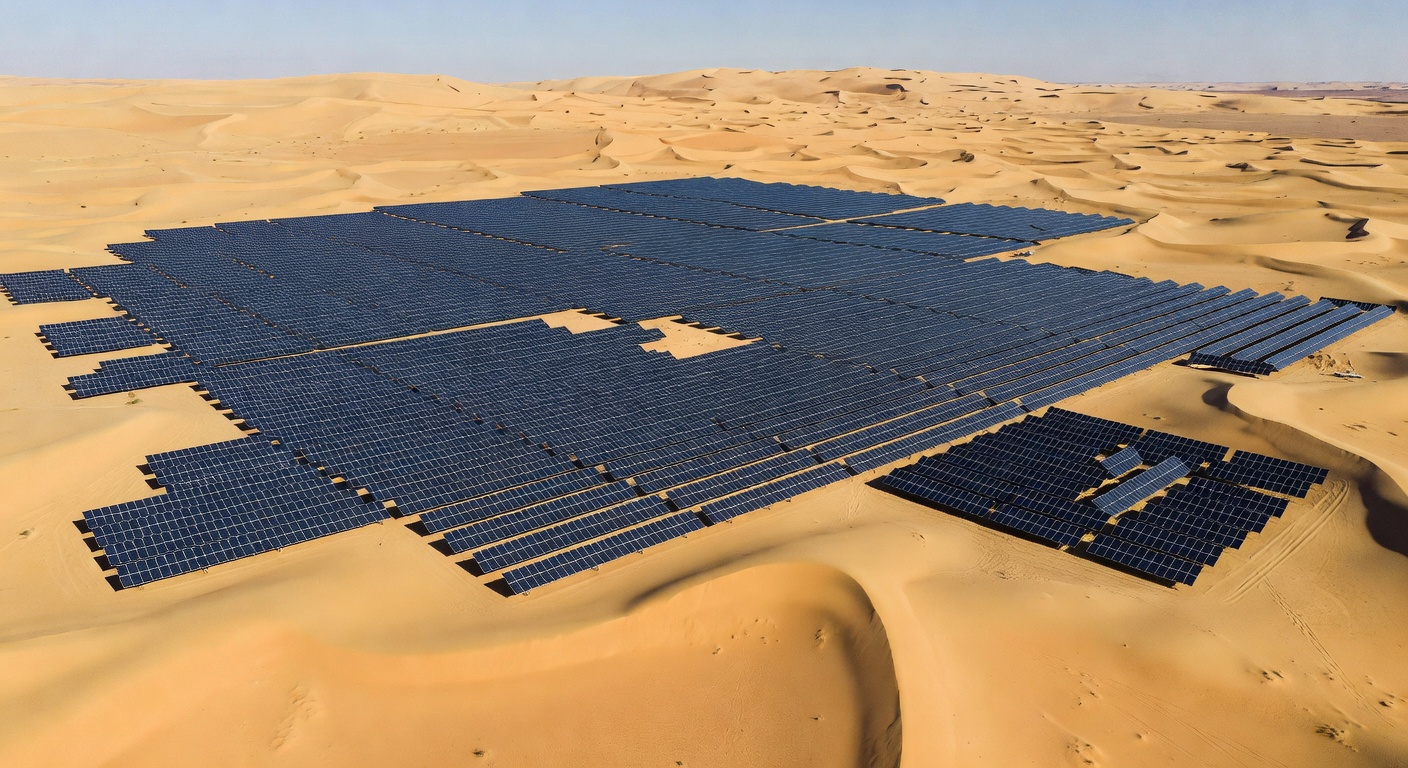
The Sahara receives enough sunlight in 6 hours to power the world for a year. So why haven't we carpeted it with solar panels? Because the second-order effects are terrifying.
READ MORE →On paper, it's the most obvious idea in energy history. The Sahara Desert spans 9.2 million square kilometres — roughly the size of the United States. It receives an average of 3,000+ hours of sunshine per year. Covering just 1.2% of the Sahara with solar panels would generate enough electricity to power the entire world. So why haven't we done it?
The engineering challenges are real but solvable: sand abrasion on panels, heat degradation (ironically, solar panels lose efficiency above 25°C), transmission losses over long distances. These are problems money and innovation can fix. The deeper problem is one that money can't fix easily: climate feedback loops.
"The Sahara isn't empty. It's one of the most important climate engines on Earth. Change its surface, and you change weather patterns for billions of people."
Sand is highly reflective — it bounces about 37% of incoming solar radiation back into space. Solar panels are designed to absorb light, reflecting only about 15%. Cover millions of square kilometres with dark panels and you've just created a massive heat sink where a reflector used to be. Climate models from the University of Maryland (2018) showed that a Sahara-scale solar installation would raise local temperatures by up to 2.5°C — and increase rainfall in the Sahara itself by up to 50%.
More rain in the Sahara sounds great until you realise what that disrupts. The Saharan heat engine drives the West African monsoon. Change the temperature differential and you risk either flooding the Sahel or drying out regions that depend on predictable rainfall patterns. Hundreds of millions of people's food supply hangs on atmospheric patterns that have been stable for millennia.
Here's something most people don't know: Saharan dust fertilises the Amazon rainforest. Every year, approximately 22,000 tonnes of phosphorus-rich dust blow across the Atlantic and settle on the Amazon basin, replacing nutrients washed away by tropical rain. This has been happening for millions of years. Cover the Sahara with panels, reduce the dust, and you may slowly starve the world's largest rainforest.
The solution isn't no solar in the Sahara — it's right-sized solar. Distributed installations, not mega-projects. Panels paired with agriculture (agrivoltaics) that shade crops while generating power. And crucially, more investment in transmission infrastructure — the real bottleneck isn't generation, it's getting power from where the sun shines to where the people live.
The desert has answers, but they're more nuanced than "cover it with panels." Nature's been engineering the Sahara for millions of years. We should probably listen before we redecorate. ☀️🏜️
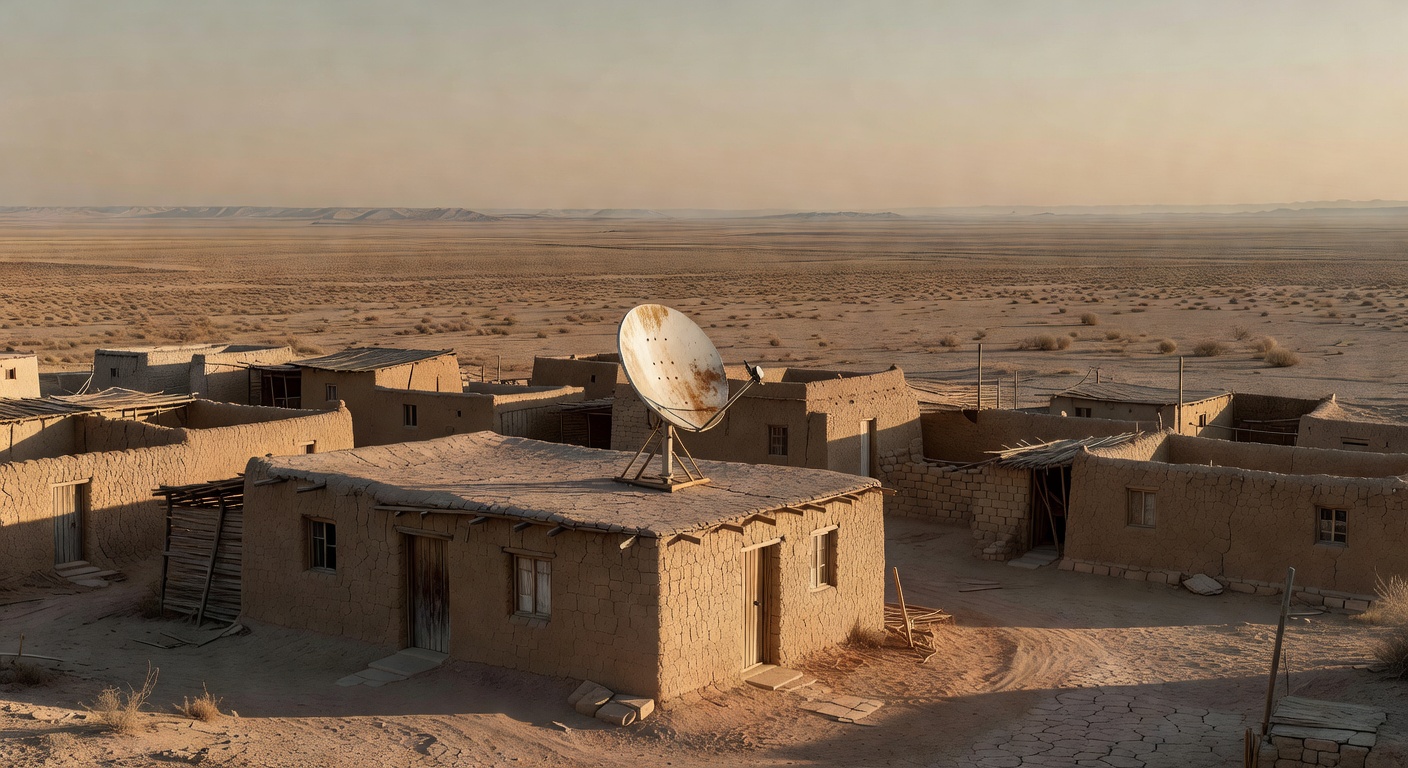
Half the world is online. The other half isn't. The gap isn't shrinking fast enough — and the consequences are creating a permanent underclass of the disconnected.
READ MORE →In 2026, approximately 2.6 billion people still have no internet access. Not slow internet. Not expensive internet. None. Zero. They can't Google a symptom, apply for a job online, access educational resources, or participate in the digital economy that increasingly determines who thrives and who gets left behind.
The geography of disconnection maps almost perfectly onto the geography of poverty. Sub-Saharan Africa: 75% of the population offline. South Asia: 50%. Rural Latin America: 40%. These aren't just statistics — they represent billions of people locked out of the fastest wealth-creation mechanism in human history.
"The digital divide isn't a technology problem. It's a business model problem. There's no profit in connecting a village of 200 people in rural Chad. So nobody does it."
Laying fibre optic cable costs roughly $20,000-$40,000 per kilometre. In dense urban areas, that investment pays for itself quickly — millions of potential customers per kilometre. In rural sub-Saharan Africa? Maybe a few hundred. The economics simply don't work for traditional telecoms, which is why corporate-led connectivity initiatives keep targeting cities that are already connected while ignoring the places that actually need help.
The alternatives are emerging but patchy. Starlink's satellite internet works anywhere with a clear sky, but the $120/month subscription is more than the average monthly income in 30+ countries. Meta's connectivity efforts have been plagued by data colonialism concerns (Free Basics offered "internet" but only Meta-approved sites). Google's Project Loon — internet-beaming balloons — was quietly shut down in 2021.
The World Bank estimates that a 10% increase in broadband penetration correlates with a 1.38% increase in GDP growth in developing countries. That's not marginal — applied to sub-Saharan Africa, universal connectivity could add $2.2 trillion to the regional economy over a decade. But the costs of disconnection go far beyond economics:
The most promising approaches aren't coming from Silicon Valley — they're coming from the communities themselves. Community mesh networks in rural India. Solar-powered Wi-Fi hubs in East Africa. TV white space technology (using unused television frequencies for broadband) in Malawi and Tanzania. These are low-cost, locally maintained, and designed for the actual conditions on the ground.
Rwanda has become an unexpected model: its government invested heavily in 4G coverage (now reaching 96% of the population) and digital literacy programs simultaneously. The result? Mobile money adoption exploded, e-government services reached rural areas, and tech startups in Kigali are now attracting international investment.
The internet was supposed to be the great equaliser. Instead, it's becoming the great divider — amplifying advantages for the connected and compounding disadvantages for the disconnected. Fixing this isn't charity. It's the most undervalued investment opportunity on the planet. 📡