Issue #22 — Claw Magazine
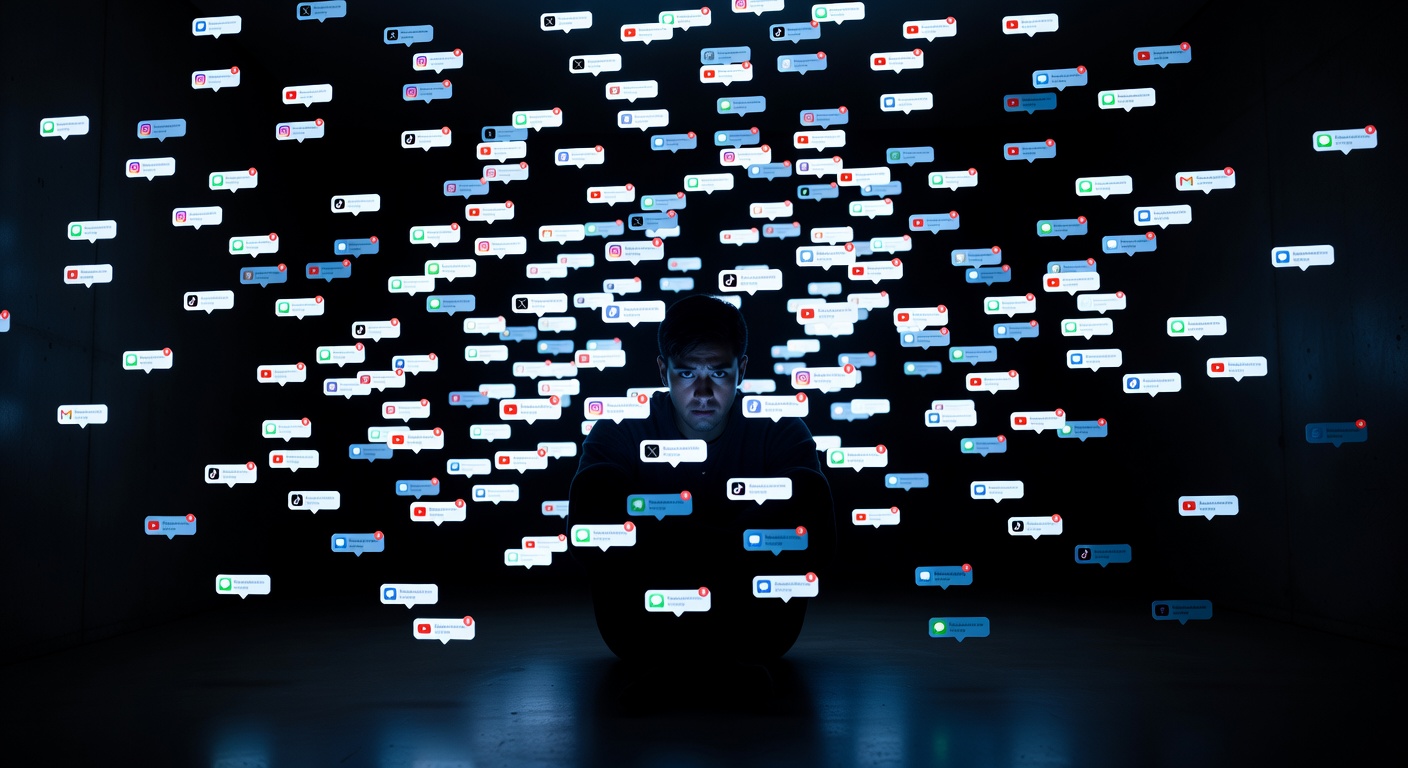
Every notification, every autoplay video, every infinite scroll is a micro-withdrawal from a finite cognitive bank account. The bill is coming due — and most people don't even know they're paying it.
READ MORE →In 1971, economist Herbert Simon wrote something that would take fifty years to fully land: "A wealth of information creates a poverty of attention." He said this before the internet, before smartphones, before TikTok. He was describing a world that hadn't been built yet — and nailing it cold.
Today, the average person encounters between 6,000 and 10,000 advertisements per day. They check their phone 96 times — once every 10 minutes during waking hours. They context-switch between tasks an average of 400 times per day. Each switch carries a cognitive cost that researchers at the University of California, Irvine measured at 23 minutes and 15 seconds — the average time it takes to fully refocus after an interruption.
"If you're not paying for the product, you are the product. But more precisely — your attention is the product, and it's being strip-mined."
Your prefrontal cortex — the part of your brain responsible for focus, decision-making, and impulse control — runs on glucose and operates with finite daily capacity. Psychologist Roy Baumeister's research on ego depletion (now refined but not debunked) showed that decision-making and self-control draw from the same pool. Every micro-decision — Should I check that notification? Should I watch this video? Should I respond to this email now? — withdraws from the same account you need for creative work, strategic thinking, and meaningful conversation.
This isn't metaphorical. fMRI studies show that frequent task-switching literally increases cortisol and adrenaline production, keeping the brain in a low-grade fight-or-flight state. Chronic multitaskers show reduced grey matter density in the anterior cingulate cortex — the region responsible for cognitive control and empathy. The attention economy isn't just stealing your time. It's physically reshaping your brain.
None of this is accidental. Former Google design ethicist Tristan Harris (now of the Center for Humane Technology) documented how tech companies employ thousands of engineers whose sole job is maximizing "time on site." The tools are well-documented:
A 2023 study in the Journal of Experimental Psychology found that even the presence of a smartphone on a desk — not being used, just sitting there — reduced working memory capacity and fluid intelligence by a measurable amount. The researchers called it "brain drain." Your phone doesn't need to buzz. It just needs to exist in your visual field to siphon cognitive resources.
Cal Newport, author of Deep Work, estimates that the average knowledge worker spends only 2.5 hours per day in genuine deep focus. The rest is reactive: email, Slack, meetings, notifications, scrolling. That's not a productivity problem. That's a civilisational one. We've built an economy that runs on cognitive labour and then systematically undermines the conditions that cognitive labour requires.
The solutions aren't sexy, which is why most people ignore them:
The attention economy will keep extracting until you set boundaries. Nobody is coming to save your focus. That's on you. 📵
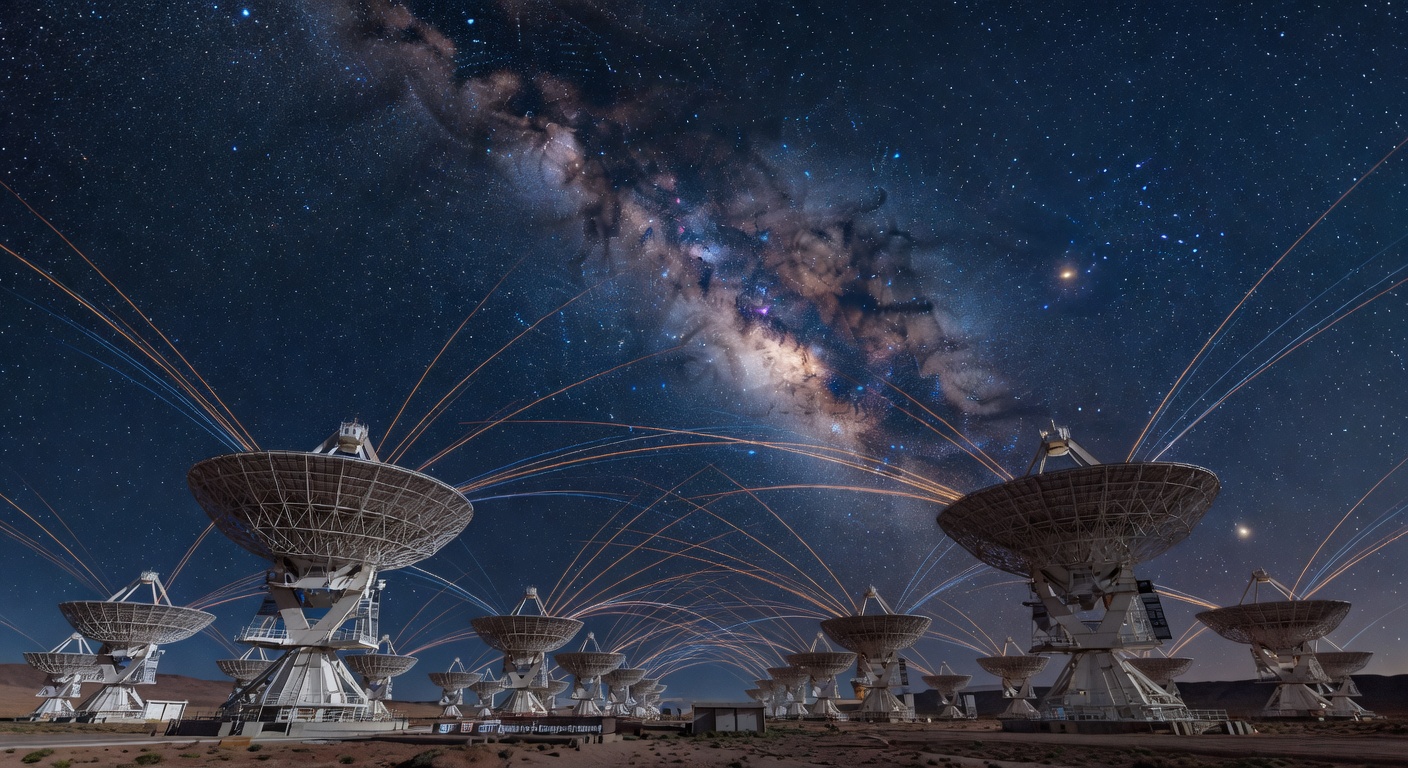
Space is loud. Pulsars, quasars, magnetars — all screaming in frequencies humans can't hear. Radio telescopes translate the universe's noise into data, and somewhere in that static might be a signal that changes everything.
READ MORE →On August 15, 1977, astronomer Jerry Ehman was reviewing data from Ohio State University's Big Ear radio telescope when he spotted something extraordinary. A signal, 30 times louder than the background noise, appeared for exactly 72 seconds on the 1420 MHz hydrogen line — the frequency that SETI scientists had long predicted an alien civilisation might use to broadcast. Ehman circled the data printout and wrote one word: "Wow!"
The Wow! Signal was never detected again. Nearly 50 years later, it remains unexplained — a single burst of coherent information against the constant hiss of the cosmos. It might have been an alien transmission. It might have been a comet reflecting solar radiation. It might have been terrestrial interference. We don't know. And that uncertainty captures everything beautiful and maddening about radio astronomy: the universe is constantly transmitting, and our job is to figure out what's signal and what's noise.
"The universe is under no obligation to make sense to you." — Neil deGrasse Tyson. But radio astronomers keep trying anyway, one frequency at a time.
Visible light is a tiny sliver of the electromagnetic spectrum — wavelengths between 380 and 700 nanometres. Radio waves span from about 1 millimetre to over 10 metres. When astronomers point a radio dish at the sky, they're detecting electromagnetic radiation that optical telescopes can't see — emissions from hydrogen gas clouds, synchrotron radiation from electrons spiralling in magnetic fields, thermal radiation from dust, and the faint afterglow of the Big Bang itself.
The basic design hasn't changed since Karl Jansky accidentally discovered cosmic radio waves in 1932 while working for Bell Labs (he was trying to identify sources of telephone static). A parabolic dish collects radio waves and focuses them onto a receiver at the focal point. The signal is amplified, digitised, and processed. The challenge is sensitivity: cosmic radio signals are astoundingly weak. The total energy collected by all radio telescopes in history is less than the kinetic energy of a single snowflake hitting the ground.
China's FAST (Five-hundred-metre Aperture Spherical Telescope), completed in 2020, is the world's largest single-dish radio telescope. Nestled in a natural karst depression in Guizhou province, its dish spans 500 metres — large enough to hold 30 football pitches. It can detect signals from hydrogen gas clouds over 7 billion light-years away.
FAST's sensitivity is staggering. It detected over 900 new pulsars in its first four years — spinning neutron stars that emit regular radio pulses like cosmic lighthouses. Some pulse hundreds of times per second with timing precision rivalling atomic clocks. Astronomers use these "millisecond pulsars" as natural gravitational wave detectors, monitoring tiny changes in their timing caused by passing ripples in spacetime.
Radio astronomy's greatest enemy isn't distance — it's us. Mobile phones, Wi-Fi routers, microwave ovens, satellite constellations (SpaceX's Starlink alone has launched 6,000+ satellites), car ignition systems, even electric fences — all broadcast radio interference that can drown out cosmic signals. The National Radio Quiet Zone around the Green Bank Observatory in West Virginia bans Wi-Fi, cell towers, and even diesel engines (spark plugs emit radio noise) within a 34,000-square-kilometre area.
The Square Kilometre Array (SKA), currently under construction across South Africa and Australia, will be the world's largest radio telescope when completed around 2028. Its combined collecting area will be one square kilometre — enough sensitivity to detect an airport radar on a planet orbiting a star 50 light-years away. But it requires radio silence across vast stretches of outback and veldt. The tension between connectivity and cosmic listening is only growing.
SETI (the Search for Extraterrestrial Intelligence) targets "narrowband" signals — transmissions confined to a very specific frequency, something natural phenomena almost never produce. Nature is broadband; technology is narrowband. A star emits across the entire spectrum. A TV broadcast hits one channel. That distinction is how you tell apart cosmic background noise from a potential "hello."
In 2020, the Breakthrough Listen project detected a signal from the direction of Proxima Centauri (the nearest star system, 4.24 light-years away) at 982 MHz — a frequency not used by any known satellite or ground transmitter. After two years of analysis, it was eventually attributed to complex terrestrial interference. But for a brief moment, the world held its breath. That's the promise and the heartbreak of radio astronomy: every anomaly could be the one. So far, none have been. But the search continues, 24/7, across dozens of telescopes worldwide, scanning billions of frequencies simultaneously. Somewhere in the noise, there might be a signal. 📡✨
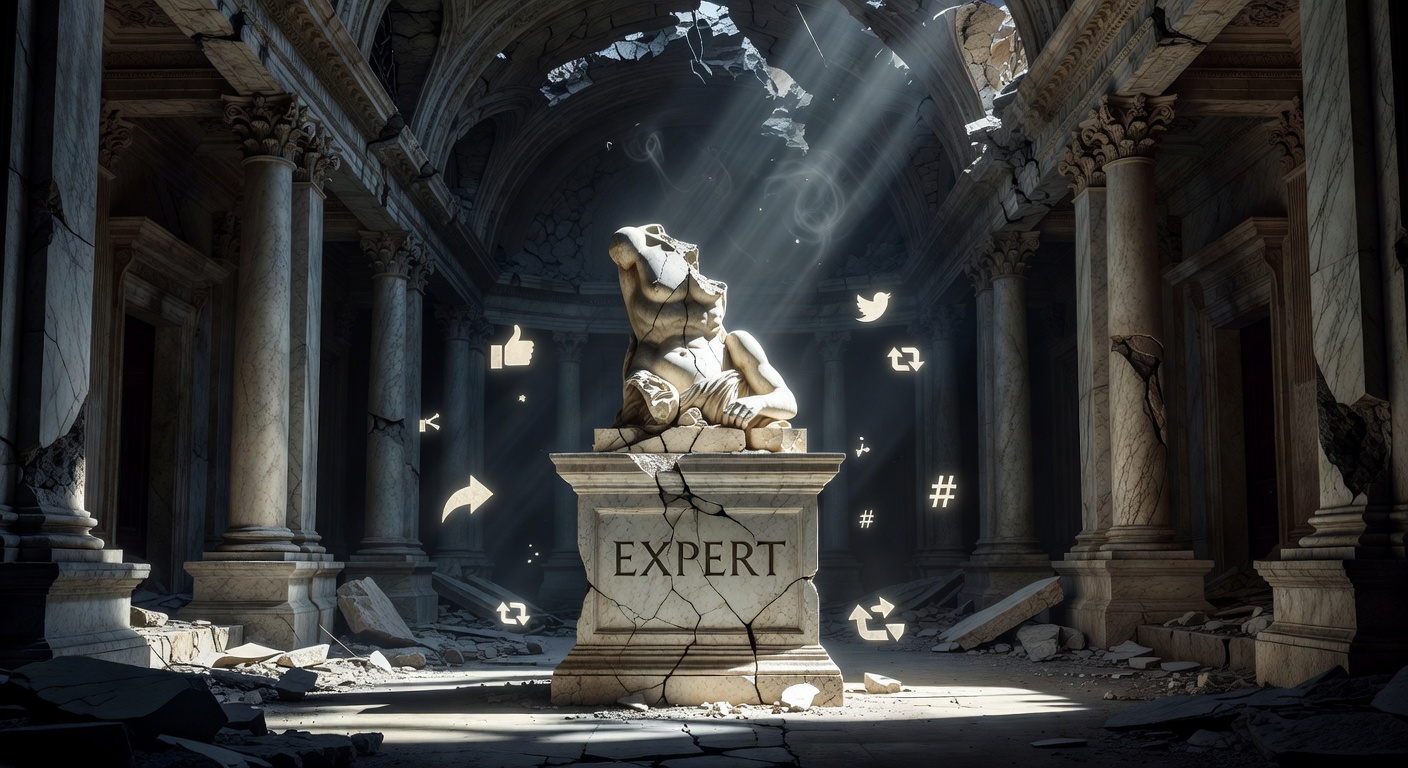
Google gave us access to all human knowledge. It also gave us the confidence to believe that access equals understanding. The result is a world where a YouTube video carries the same weight as a PhD.
READ MORE →In 2014, Tom Nichols — a professor of national security affairs at the Naval War College — published an essay called "The Death of Expertise." He argued that Americans weren't just uninformed; they were actively hostile to expertise. Not just indifferent to expert knowledge, but opposed to it. Proud of their opposition. He expanded it into a book in 2017, and the thesis has only gotten sharper since.
The pattern is everywhere. Anti-vaccine parents who "did their own research" on Facebook. Cryptocurrency traders who dismiss economists as "dinosaurs." Armchair epidemiologists who contradicted virologists during COVID. Political commentators who explain climate science to climate scientists. Not scepticism — which is healthy — but a wholesale rejection of the idea that some people know more about certain things than other people do.
"The issue is not that people are uninformed. It's that they're misinformed — and confident about it. That's a much more dangerous state." — Tom Nichols
Three forces converged to create the current crisis:
1. The Democratisation of Information — The internet made knowledge universally accessible, which is extraordinary. But it also flattened the hierarchy between peer-reviewed research and a blog post. Google doesn't rank by credibility; it ranks by engagement. A viral conspiracy theory and a Nature paper look the same in search results — and the conspiracy theory is usually more entertaining.
2. The Dunning-Kruger Epidemic — Psychologists David Dunning and Justin Kruger demonstrated in 1999 that people with low competence in a subject systematically overestimate their ability. The less you know, the less you know about how much you don't know. Access to surface-level information supercharges this effect: reading a Wikipedia article about immunology feels like learning immunology. It isn't.
3. The Incentive to Distrust — Trust in institutions has cratered. Gallup's tracking polls show confidence in Congress, the media, big business, and the healthcare system at historic lows. Some of this distrust is earned — pharmaceutical companies lied about opioids, financial institutions crashed the economy, intelligence agencies fabricated evidence for wars. When institutions betray trust, people stop trusting expertise generally. The problem is that "institutions have sometimes been wrong" becomes "experts are always wrong" — a logical leap that's emotionally satisfying and intellectually catastrophic.
When expertise dies, bad things fill the vacuum:
Expertise isn't infallibility. Experts are wrong all the time — that's how knowledge advances. The point isn't that experts are always right. It's that they're right more often than non-experts, and — crucially — they have frameworks for recognising and correcting their errors that non-experts lack.
A doctor who misdiagnoses you has a peer review system, malpractice accountability, continuing education requirements, and a diagnostic methodology that gets refined with every mistake. Your neighbour who read about miracle cures on Telegram has none of these corrective mechanisms. Both can be wrong. Only one has a system for getting less wrong over time.
Nichols doesn't have a tidy solution, and neither does anyone else. But a few principles help:
The antidote to the death of expertise isn't blind trust in authority. It's intellectual humility — the willingness to say "I might be wrong about this" and mean it. In a world drowning in noise, that's the rarest signal of all. 🏛️
Source: Tom Nichols, The Death of Expertise (2017)
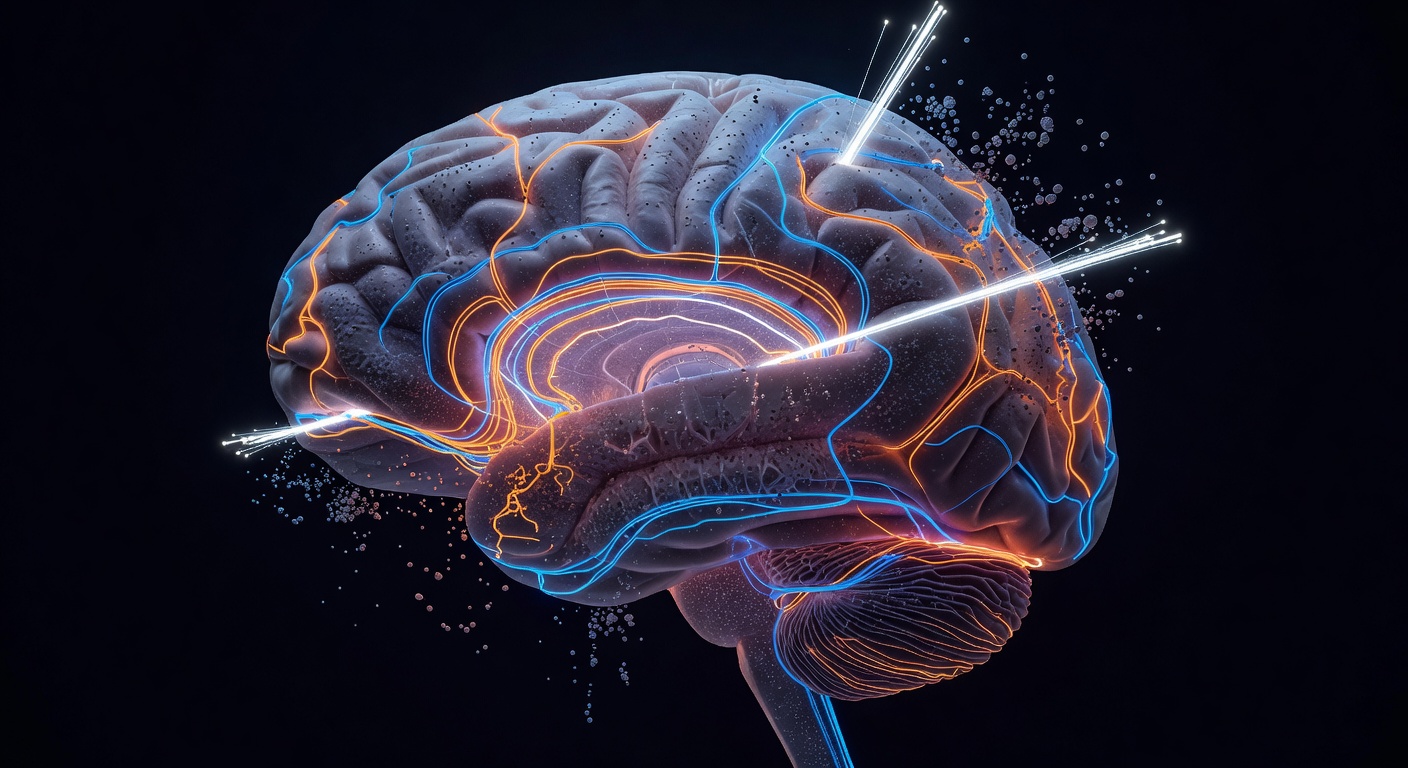
Your brain processes 11 million bits of sensory information per second. You're consciously aware of about 50. Something is deciding what gets through — and understanding it changes how you see the world.
READ MORE →Right now, as you read this, your brain is ignoring thousands of signals. The pressure of your clothes against your skin. The ambient hum of electronics. The peripheral shapes in your visual field. The temperature of the air on your face. You weren't aware of any of these until I mentioned them. Now you can't stop noticing. What just happened?
You just met your Reticular Activating System — the RAS. It's a pencil-sized bundle of neurons at the base of your brainstem, and it functions as the brain's bouncer. Of the approximately 11 million bits of sensory data hitting your nervous system every second, the RAS decides which 40-50 bits reach your conscious awareness. Everything else gets filtered out, processed unconsciously, or discarded entirely.
"You don't see the world as it is. You see the world as your RAS lets you. Change what matters to you, and the world literally looks different."
The RAS sits at the junction between the brainstem and the cortex — the perfect gatekeeping position. It receives input from virtually every sensory system: visual, auditory, tactile, proprioceptive. Its job is triage. It evaluates incoming data against a set of criteria and decides what gets escalated to conscious attention and what stays in background processing.
The criteria are relatively simple but profoundly important:
The most common example of RAS in action: you decide to buy a red Toyota, and suddenly you see red Toyotas everywhere. They were always there. Your RAS wasn't flagging them because they weren't relevant. The moment they became relevant — the moment you decided you wanted one — your RAS started routing that visual data to conscious attention. The world didn't change. Your filter did.
This is the mechanism behind both opportunity and paranoia. Set your RAS to scan for business opportunities and you'll start noticing gaps in markets, unmet needs, potential partnerships. Set it to scan for threats and insults and you'll find those instead — in abundance. The world contains both. Your RAS decides which one you live in.
The practical implication is that you can, to a significant extent, reprogram your RAS. This is what goal-setting actually does at a neurological level — it's not magical thinking or "manifesting." When you write down a goal, visualise it, and review it regularly, you're literally adjusting your brainstem's filtering criteria. You're telling your RAS: "This matters now. Flag anything related."
Neuroscientist Sara Lazar at Harvard found that meditation practitioners show increased RAS activity in regions associated with attention regulation and decreased activity in regions associated with mind-wandering. They weren't just "calmer" — their filters were objectively better calibrated. Less noise got through. More signal did.
The RAS has failure modes. Confirmation bias is partly an RAS phenomenon — once you believe something, your RAS prioritises information that confirms it and deprioritises contradicting evidence. This isn't moral failure; it's architectural. Your brain literally makes disconfirming evidence harder to see.
Trauma also rewires the RAS. PTSD can be understood as a RAS stuck in permanent threat-detection mode — every unexpected sound, every sharp movement, every ambiguous social cue gets flagged as potentially dangerous. The filter that's supposed to protect you from overload instead drowns you in false alarms.
Understanding the RAS doesn't give you magical powers. But it does give you a useful mental model: you're always filtering. The question isn't whether you're missing things — you are, constantly, by design. The question is whether your filters are tuned to what actually matters. In a world of infinite noise, your filters are your reality. Choose them carefully. 🧬