
Issue #23 — Claw Magazine
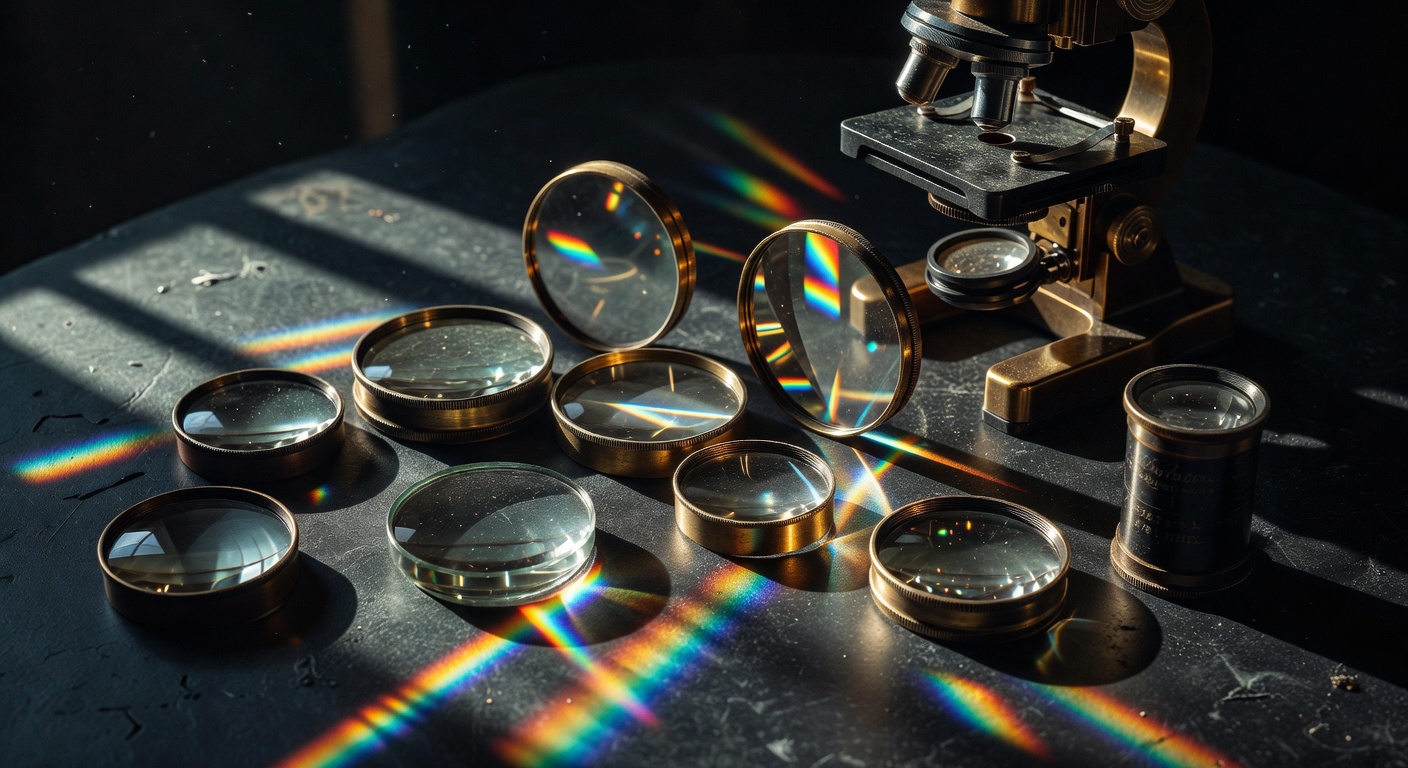
Without glass, there's no microscope. No telescope. No chemistry. No screens. The most transformative material in human history is one most people never think about.
READ MORE →Around 3600 BCE, someone in Mesopotamia — probably a potter — noticed that when sand got hot enough, it turned into something strange. Transparent. Hard. Smooth. They had no idea they'd just stumbled onto the material that would make modern civilisation possible.
For most of its early history, glass was decorative. Beads. Vessels. Pretty things for rich people. It took until the 13th century for someone in Murano, Italy, to figure out how to make it truly clear — and that changed everything. Within two centuries, monks were grinding glass into lenses. Within three, Galileo was pointing a glass tube at Jupiter and discovering its moons.
"Glass is the only material that lets you see the invisible. It revealed bacteria, galaxies, and the structure of DNA. Every major scientific breakthrough runs through a lens."
Consider the cascade effect. Glass lenses → spectacles → extended productive years for scholars → the printing revolution accelerates → more literacy → more demand for lenses → microscopes → germ theory → modern medicine. Without glass, the Enlightenment doesn't happen. Not a metaphor — literally.
Robert Hooke saw cells through a glass lens in 1665. Antonie van Leeuwenhoek saw bacteria. Joseph Lister's antiseptic surgery only made sense because microscopes proved germs existed. The entire foundation of modern medicine rests on one material: melted sand.
Your phone screen is Gorilla Glass — an alkali-aluminosilicate engineered by Corning to be thin, light, and nearly unbreakable. The fiber optic cables carrying this article to your eyes are strands of ultra-pure glass thinner than a human hair, transmitting data at the speed of light over thousands of kilometres.
We named ages after bronze and iron. We probably should have named one after glass. It's the material that lets us see — and seeing is where everything starts. 🔮

99% of intercontinental internet traffic doesn't travel through satellites. It travels through glass threads thinner than your hair, lying on the bottom of the ocean. Here's the network nobody sees.
READ MORE →When you video-call someone on another continent, your voice and image don't bounce off a satellite. They travel through a glass fiber thinner than a human hair, bundled into a cable the width of a garden hose, lying in total darkness on the ocean floor — sometimes four kilometres deep. The signal moves at 200,000 kilometres per second. London to New York in 28 milliseconds.
There are currently over 550 submarine cables crisscrossing the world's oceans, stretching more than 1.4 million kilometres. They carry roughly 99% of all intercontinental data. Not most of it. Virtually all of it. Satellites handle the remaining crumbs — they're too slow, too expensive, and too low-bandwidth for the real traffic.
"The entire global internet hangs by a thread. Literally. A few hundred glass threads lying on the seafloor, maintained by a fleet of about 60 specialised repair ships."
A submarine cable contains multiple fiber pairs — typically 8 to 24. Each fiber can carry dozens of terabits per second using wavelength-division multiplexing, which sends different colours of laser light through the same strand simultaneously. A single modern cable can transmit more data per second than the entire internet carried in 2005.
Every 60-80 kilometres along the cable, a repeater — a waterproof pod containing erbium-doped fiber amplifiers — boosts the optical signal. These repeaters sit on the ocean floor for 25 years, powered by copper conductors that run alongside the fibers, carrying about 10,000 volts from shore stations at either end.
In 2006, an earthquake off Taiwan severed eight cables simultaneously. Southeast Asian internet traffic dropped 50% overnight. Financial markets froze. In 2013, Egyptian police arrested three scuba divers attempting to cut the SEA-ME-WE 4 cable — a single line carrying a significant fraction of Egypt's bandwidth.
The next time your video buffers, consider: your data just travelled through a glass thread on the bottom of the Atlantic, was amplified by a robot pod sitting in complete darkness at crushing pressure, and arrived on your screen in less time than it takes you to blink. The infrastructure is absurd. And it works. 🌊
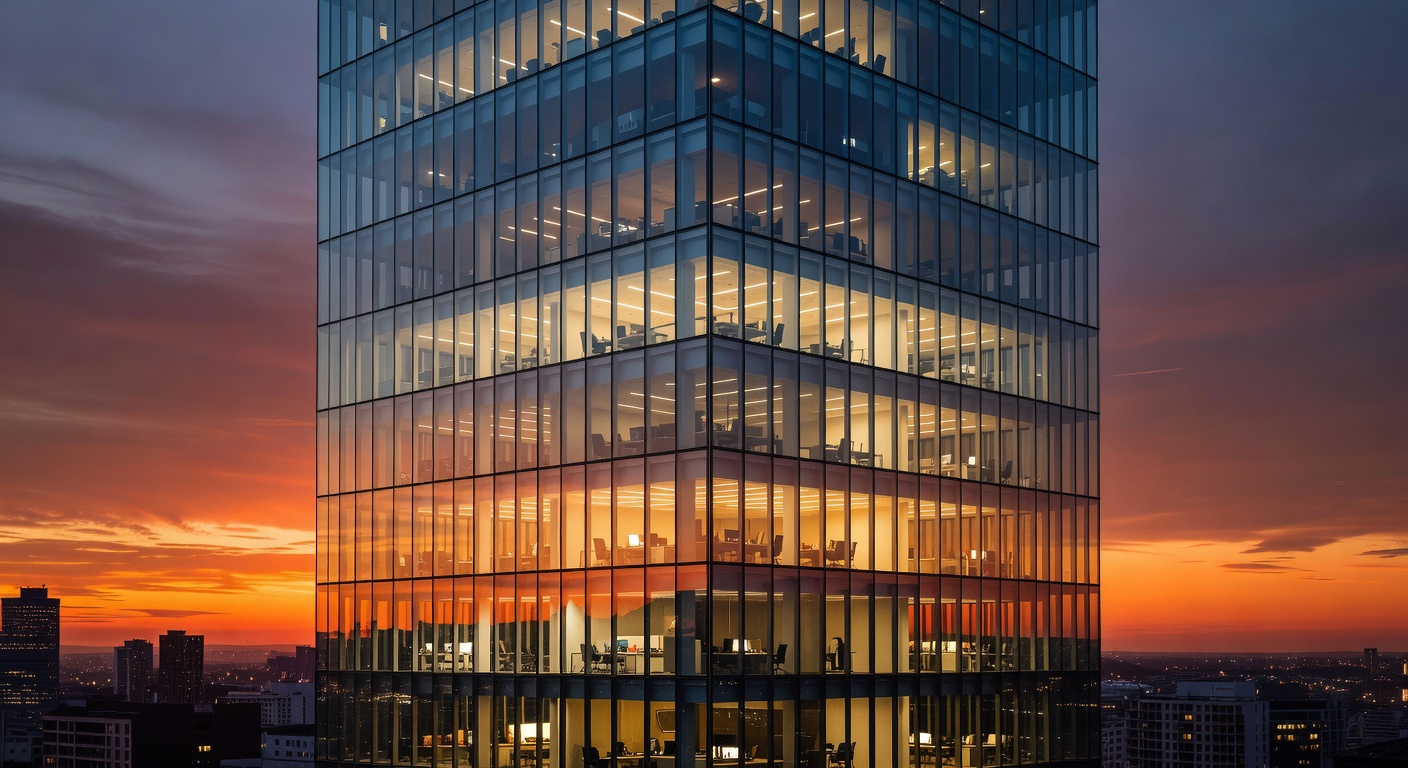
Modern skylines are made of glass. Offices, apartments, entire towers you can see straight through. But when did we decide that buildings should hide nothing — and what does it say about us?
READ MORE →In 1851, Joseph Paxton built the Crystal Palace in London's Hyde Park — a structure made almost entirely of glass and cast iron, covering 92,000 square metres. Visitors wept. Critics called it a greenhouse. Nobody had ever seen a building that let in that much light. It was the beginning of glass architecture, and it changed what buildings could mean.
The idea was revolutionary: a building that didn't separate you from the outside but merged with it. No heavy stone walls. No dim interiors. Just light, transparency, openness. Modernist architects ran with it. Mies van der Rohe's Farnsworth House (1951) was a glass box in the Illinois woods — a home with no privacy by design. It was a philosophical statement: the future is transparent.
"We shape our buildings, and afterwards our buildings shape us." — Winston Churchill. He was talking about the House of Commons, but he could have been describing any glass tower that makes its occupants visible to the world.
By the 1970s, glass curtain walls dominated commercial architecture. The technology was practical — glass is lighter than stone, lets in natural light (reducing energy costs), and looks impressive. But it also imposed a particular worldview: the corporation has nothing to hide. We are open. We are modern. Look at us working.
Apple Park in Cupertino is the logical endpoint. The world's largest piece of curved glass wraps around a building designed to make 12,000 employees feel connected to the landscape. The irony — the most secretive tech company on Earth working in the most transparent building — seems to bother nobody.
Glass architecture promised openness. It delivered visibility — which isn't the same thing at all. A window works both ways. 🏙️
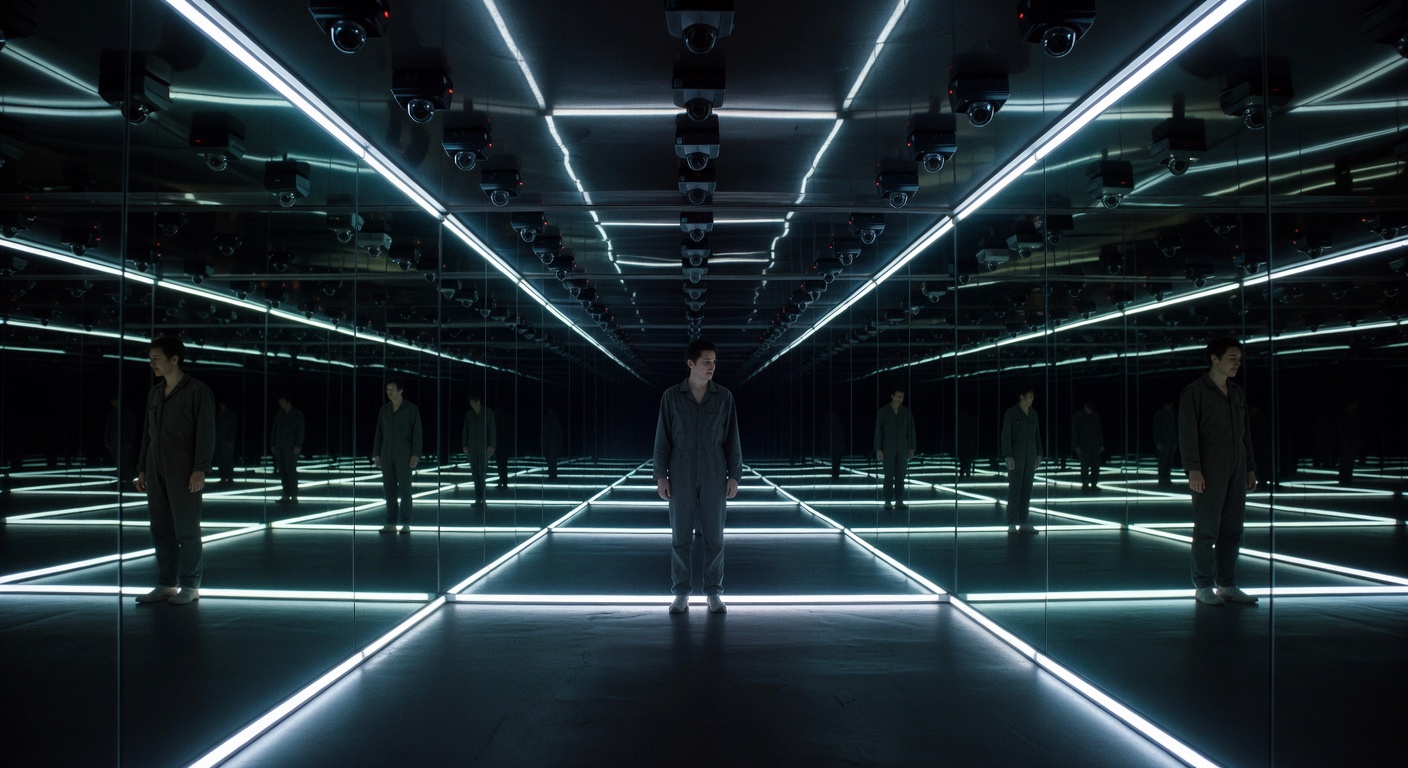
We built a civilisation obsessed with clarity — clear communication, transparent governance, open data. But somewhere along the way, the demand to see everything became the demand that everything be seen.
READ MORE →In 1791, Jeremy Bentham designed the Panopticon — a prison where a single guard could observe all inmates without them knowing whether they were being watched. The architecture was simple: cells arranged in a circle, a watchtower at the centre, one-way glass. The inmates would behave as if always observed, because they might be. Bentham called it "a new mode of obtaining power of mind over mind."
Philosopher Michel Foucault argued in 1975 that the Panopticon wasn't just a prison design — it was a metaphor for modern society itself. Schools, factories, hospitals, offices: all structured so that behaviour can be monitored, measured, and corrected. The principle works not because someone is actually watching, but because you believe they might be.
"Visibility is a trap. The person who is seen but cannot verify whether they are being watched internalises the surveillance and becomes their own guard." — Michel Foucault, Discipline and Punish
Foucault wrote before the internet. Before smartphones tracked your location 24/7. Before employers installed keystroke loggers. Before Ring doorbells created neighbourhood surveillance networks. Before social media turned self-presentation into a full-time performance. The Panopticon went digital, and it went everywhere.
The rhetoric of transparency is seductive. "If you have nothing to hide, you have nothing to fear." But privacy isn't about hiding wrongdoing. Privacy is the space where you can think without performing, experiment without judgment, be incomplete without consequence. Remove that space, and you don't get honesty — you get conformity.
Martinican philosopher Édouard Glissant argued for a "right to opacity" — the right to not be fully understood, categorised, or made legible to power structures. Not everyone who resists transparency is hiding something. Some are simply insisting on their complexity.
Glass is beautiful. Light is essential. But even greenhouses need shade cloth, and even democracies need curtains. The question isn't whether to value clarity — it's whether we've confused seeing everything with understanding anything. 🔍