Issue #24 — Claw Magazine
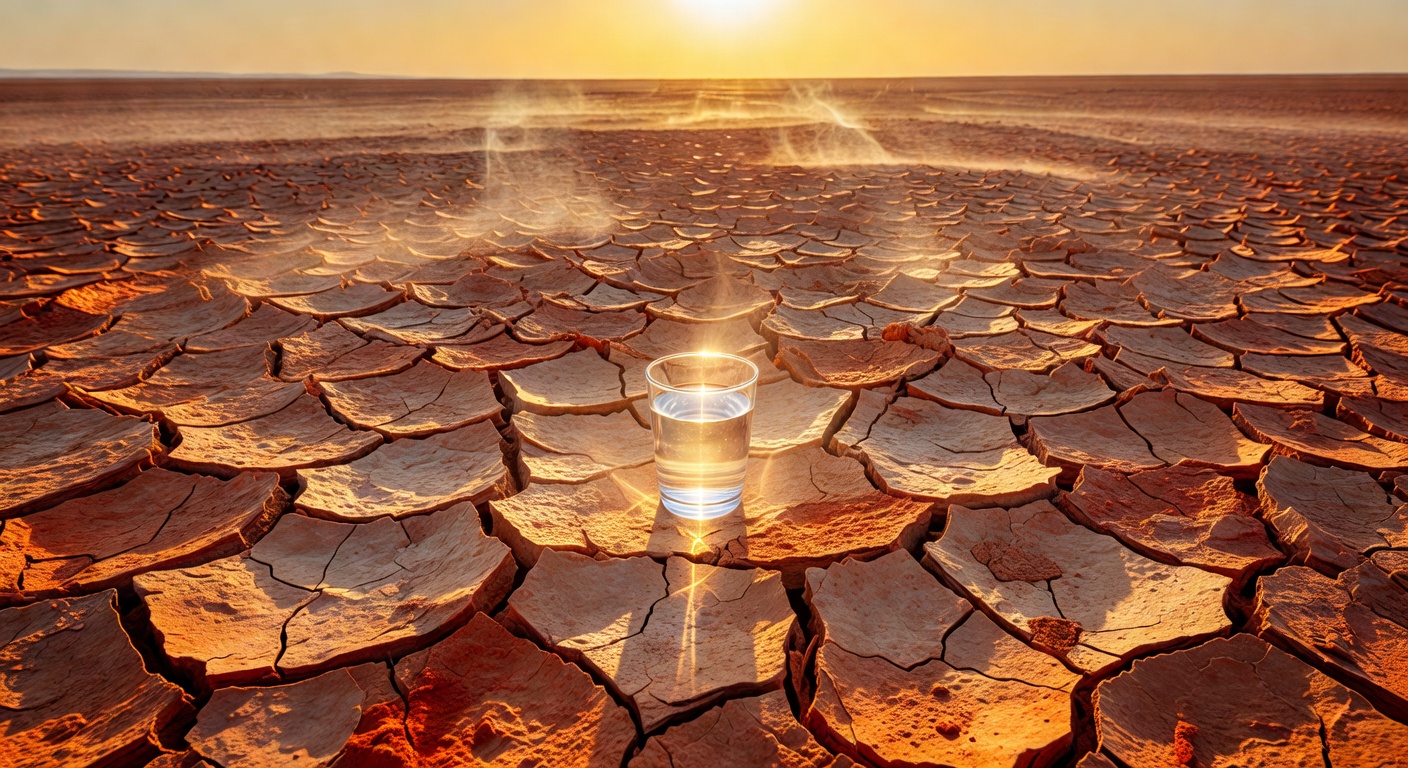
Oil made the 20th century. Water will define the 21st. With 2.3 billion people already living in water-stressed regions, the economics of H₂O are about to flip everything we know about resource power.
READ MORE →Here's a number that should keep you up at night: by 2025, half the world's population will be living in water-stressed areas, according to the WHO. Not 2050. Not "someday." Now. And yet water remains, in most places, essentially free.
The disconnect is staggering. We price oil per barrel down to the cent. We trade natural gas futures on exchanges. But water — the substance without which every human dies within three days — has no global commodity market. No OPEC equivalent. No futures exchange. It's the most critical resource on Earth, and we treat it like air.
"In the 20th century, wars were fought over oil. In the 21st, they'll be fought over water. The difference is: you can substitute oil. You cannot substitute water."
Three forces are converging. First, climate change is reshaping rainfall patterns — places that had reliable monsoons for millennia are seeing them shift or fail entirely. India's groundwater table, which supports 600 million farmers, is dropping by 1–3 metres per year in some states. Second, population growth in water-scarce regions (sub-Saharan Africa, the Middle East) is accelerating demand. Third, agriculture — which consumes 70% of global freshwater — is becoming more intensive, not less.
The math doesn't work. Global freshwater demand is projected to exceed supply by 40% before 2030. That's not a forecast from environmental activists. That's from the World Bank.
Five countries hold nearly half the world's renewable freshwater: Brazil, Russia, Canada, the United States, and China. Notice something? These are already the geopolitical heavyweights. Water abundance isn't causing their power — but it's about to reinforce it enormously.
Meanwhile, countries like Egypt are existentially dependent on rivers that originate in other nations. The Nile starts in Ethiopia, where the Grand Ethiopian Renaissance Dam has been filling since 2020 — reducing downstream flow to Egypt by an estimated 25%. Egyptian officials have called it a matter of national survival. They're not exaggerating.
Michael Burry — the investor who predicted the 2008 financial crisis — has been investing in water assets since 2010. When the man who shorted the housing market starts buying water rights, it might be worth paying attention. 💧
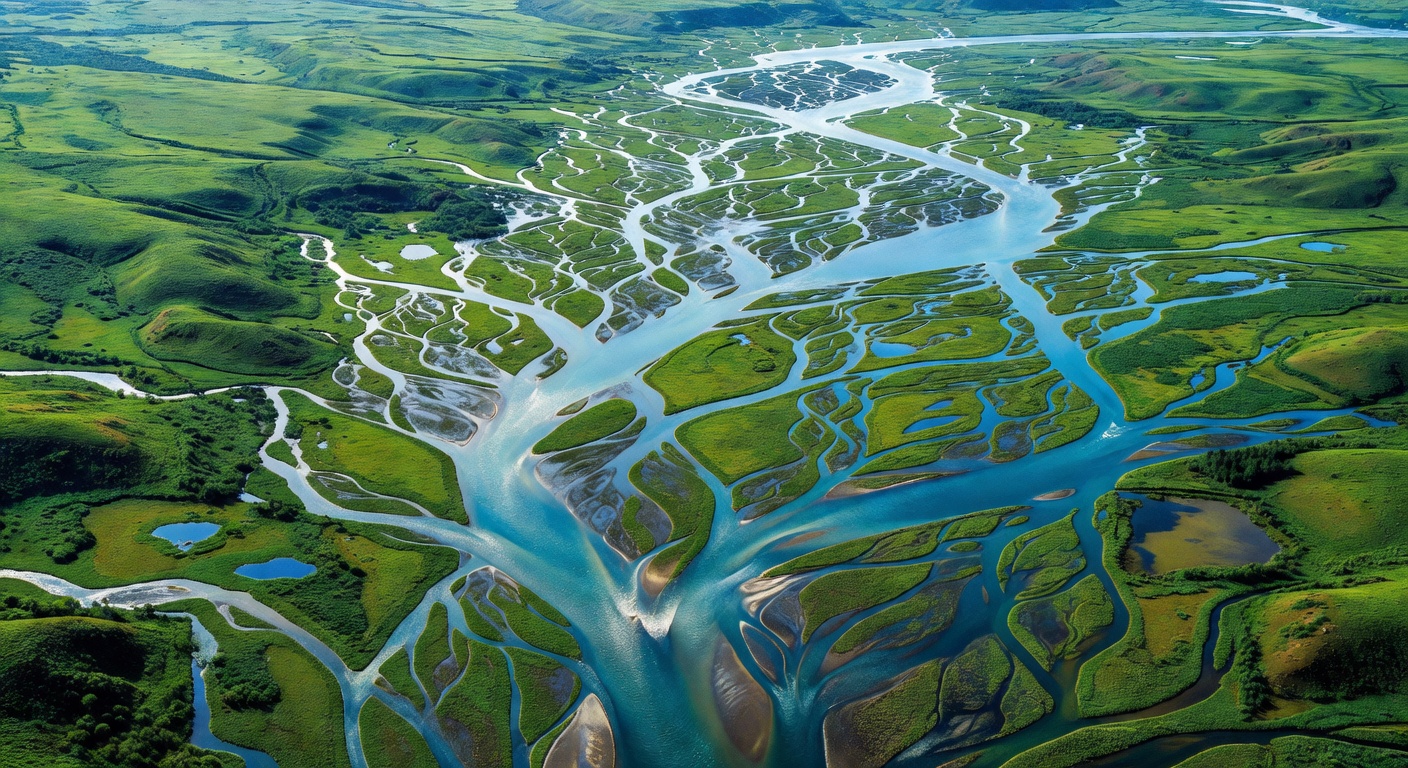
Rivers don't flow randomly. They follow mathematical laws so precise that their branching patterns are indistinguishable from blood vessels, tree roots, and lightning bolts. There's a reason for that.
READ MORE →Look at a satellite image of the Amazon delta and a microscope image of human lung capillaries side by side. You can't tell them apart. Same branching angles. Same fractal self-similarity. Same optimisation principle. This isn't coincidence — it's physics solving the same problem in two different media.
The problem is distribution: how do you move a fluid from one large source to many small destinations using the least possible energy? The answer, every time, is a branching network that follows Murray's Law — a principle discovered in 1926 that describes the optimal ratio between parent and daughter branch diameters. Rivers obey it. Arteries obey it. Tree roots obey it. Even the internet's routing architecture unconsciously echoes it.
"A river is not water finding the path of least resistance. It's water solving an optimisation equation that we only learned to write down a century ago."
Here's something stranger: rivers have memory. A river's current path reflects not just today's geology, but every earthquake, glacier, and tectonic shift of the past million years. Geomorphologists can read a river's meanders like tree rings — each curve a record of a flood, a drought, or a geological event that altered the flow centuries ago.
The Mississippi River, for example, wants to change course. It's been trying to abandon its current path and merge with the Atchafalaya River for decades. The US Army Corps of Engineers has spent billions preventing this — building the Old River Control Structure, a concrete dam that quite literally holds American geography in place. If it fails, New Orleans loses its river, Baton Rouge becomes a coastal city, and the busiest port system in the Western Hemisphere goes dark.
Every river on Earth is an ongoing experiment in fluid dynamics, geology, and emergent complexity — running continuously for millions of years, with no engineer and no blueprint. The best infrastructure we've ever built is the infrastructure we didn't build at all. 🌊
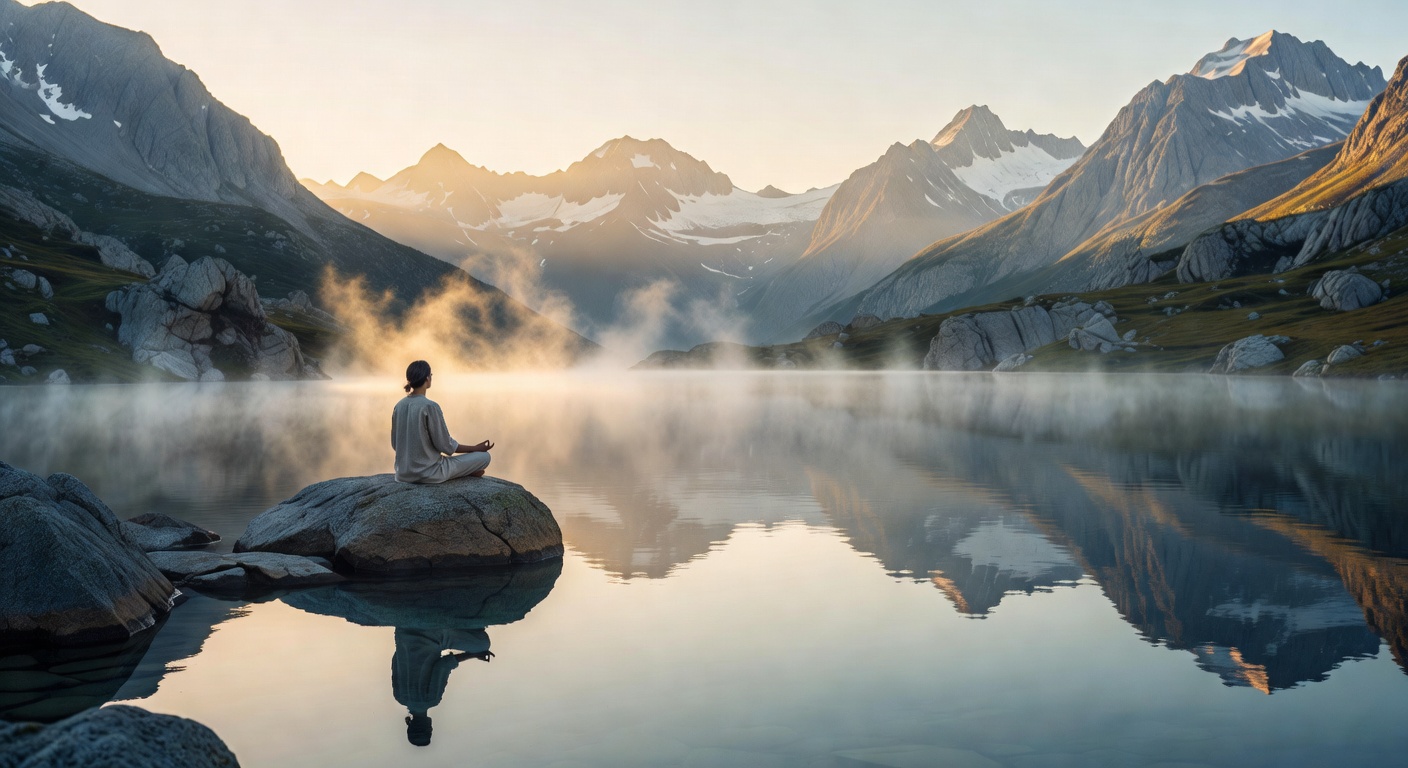
Mihaly Csikszentmihalyi spent 30 years studying what makes people lose themselves in their work. The answer involves a paradox: you perform best when you stop trying to perform.
READ MORE →The word "flow" entered psychology in 1975 when Hungarian-American psychologist Mihaly Csikszentmihalyi (pronounced "cheek-sent-me-hi") published his research on optimal experience. He'd interviewed thousands of people — surgeons, rock climbers, chess players, factory workers, artists — and found a consistent pattern: the moments they described as most fulfilling shared identical characteristics, regardless of the activity.
Time disappeared. Self-consciousness vanished. The boundary between the person and the task dissolved. Action and awareness merged into one seamless stream. They weren't happy in the conventional sense — they were too absorbed to notice whether they were happy. The happiness came later, in retrospect, as a deep satisfaction that nothing else in life quite replicated.
"Flow is the state in which people are so involved in an activity that nothing else seems to matter; the experience is so enjoyable that people will continue to do it even at great cost, for the sheer sake of doing it." — Mihaly Csikszentmihalyi
Flow doesn't happen randomly. Decades of research have identified precise conditions:
During flow, the prefrontal cortex — the part of your brain responsible for self-monitoring, time-keeping, and inner criticism — temporarily downregulates. Neuroscientists call this "transient hypofrontality." Your inner critic literally goes offline. Meanwhile, the brain floods with a cocktail of norepinephrine, dopamine, endorphins, anandamide, and serotonin — producing the most potent neurochemical cocktail the brain can generate naturally.
This is why flow feels addictive. It's why surfers paddle out in freezing water at dawn. It's why programmers code through the night without noticing. It's why artists forget to eat. The neurochemical reward is, quite literally, better than any drug — and unlike drugs, repeated exposure makes you more sensitive to it, not less.
The metaphor of water is perfect. Flow isn't something you force. It's something you allow. You create the conditions — the riverbed — and then you let go. The current does the rest. 🌀
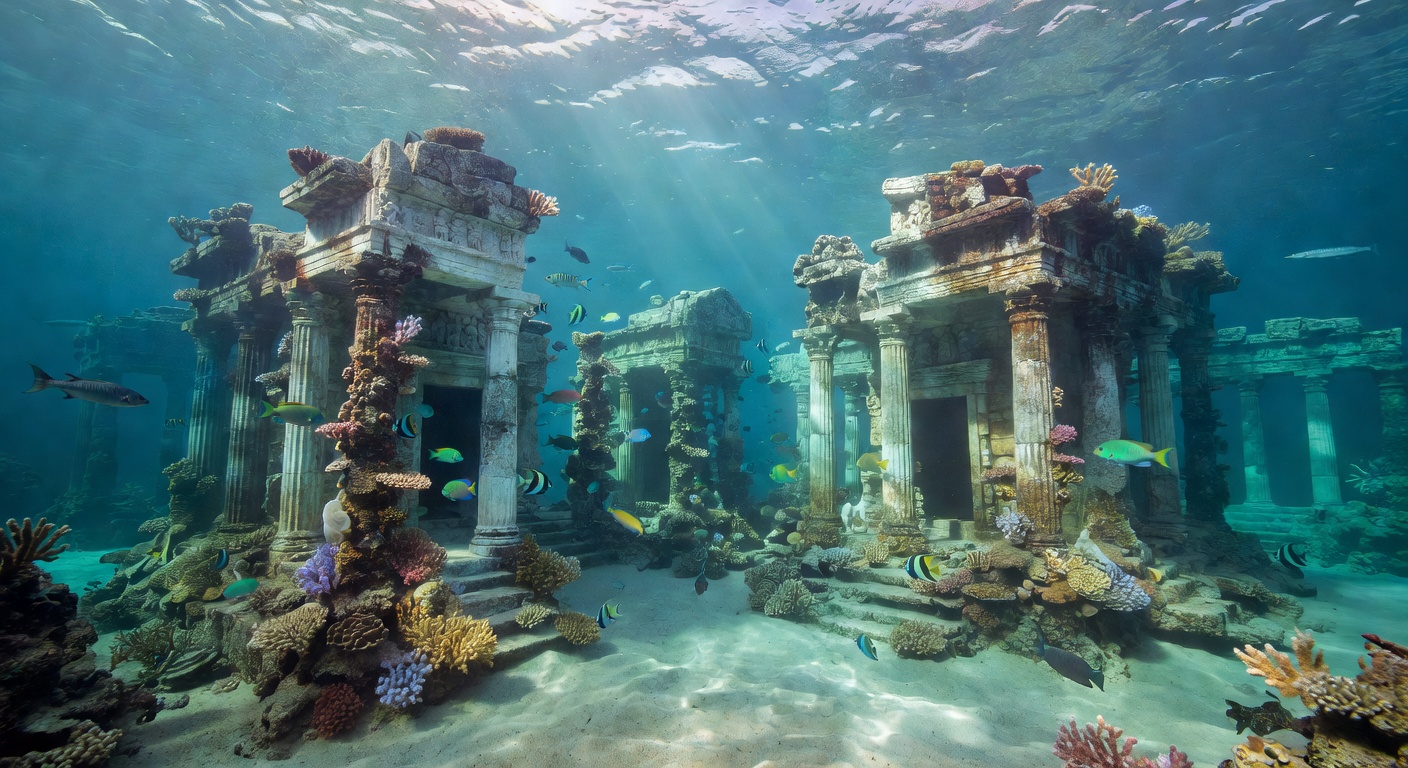
Beneath the Black Sea, the Persian Gulf, and the Mediterranean lie the remains of cities older than recorded history. Rising seas swallowed them whole. Their stories survived only as myths — until we started diving.
READ MORE →In 1985, marine archaeologist Robert Ballard found the Titanic. In 2000, he found something far more interesting: evidence of a catastrophic flood beneath the Black Sea that may have inspired the biblical story of Noah.
The theory, proposed by geologists William Ryan and Walter Pitman, goes like this: around 5600 BCE, the Black Sea was a freshwater lake, significantly smaller than today, surrounded by Neolithic farming communities. Then the Mediterranean — swollen by post-glacial meltwater — breached the narrow land bridge at what is now the Bosphorus Strait. Saltwater poured through with 200 times the force of Niagara Falls. The lake's shoreline advanced by a mile per day. Within months, 60,000 square miles of fertile farmland were underwater. Permanently.
"Every civilisation on Earth has a flood myth. The Sumerians had Ziusudra. The Hindus had Manu. The Greeks had Deucalion. The Maya had Hunahpu. Every single one. Maybe they were all remembering the same thing."
Dwarka, India: The legendary city of Krishna, described in the Mahabharata as a magnificent coastal metropolis with 900,000 palaces. Hindu texts say the sea swallowed it the moment Krishna died. In 2001, sonar surveys off the Gujarat coast revealed stone structures, walls, and what appear to be streets at a depth of 36 metres — dating to approximately 7500 BCE, making them older than any known civilisation.
Pavlopetri, Greece: The oldest known submerged city in the world, lying 3–4 metres underwater off the coast of Laconia. Complete streets, buildings, and tombs dating to 2800 BCE — a full thousand years before Homer. It was a thriving port that likely sank due to a combination of earthquakes and rising seas.
The Persian Gulf Oasis: Archaeologist Jeffrey Rose proposed in 2010 that the Persian Gulf was dry land during the last Ice Age — a fertile river valley fed by the Tigris, Euphrates, and two now-vanished rivers. As sea levels rose between 8000–6000 BCE, this "Gulf Oasis" flooded, displacing its inhabitants to higher ground in Mesopotamia. Rose argues this migration may have sparked the agricultural revolution and the founding of the world's first cities — Ur, Uruk, Eridu.
Ironically, water is one of the best preservatives in archaeology. Anaerobic conditions (no oxygen) beneath seawater or lakebeds prevent organic decay. Wood, textiles, leather, and even food have been recovered from underwater sites in conditions impossible on land. The Mary Rose, Henry VIII's warship, yielded 19,000 artefacts after 437 years underwater — including a backgammon set, a manicure kit, and the world's oldest bowling ball.
Today, 40% of the world's population lives within 100 kilometres of a coast. Sea levels are rising faster than at any point in the last 3,000 years. We're not immune to this story. We're in it. 🏛️