Issue #29 · March 16, 2026
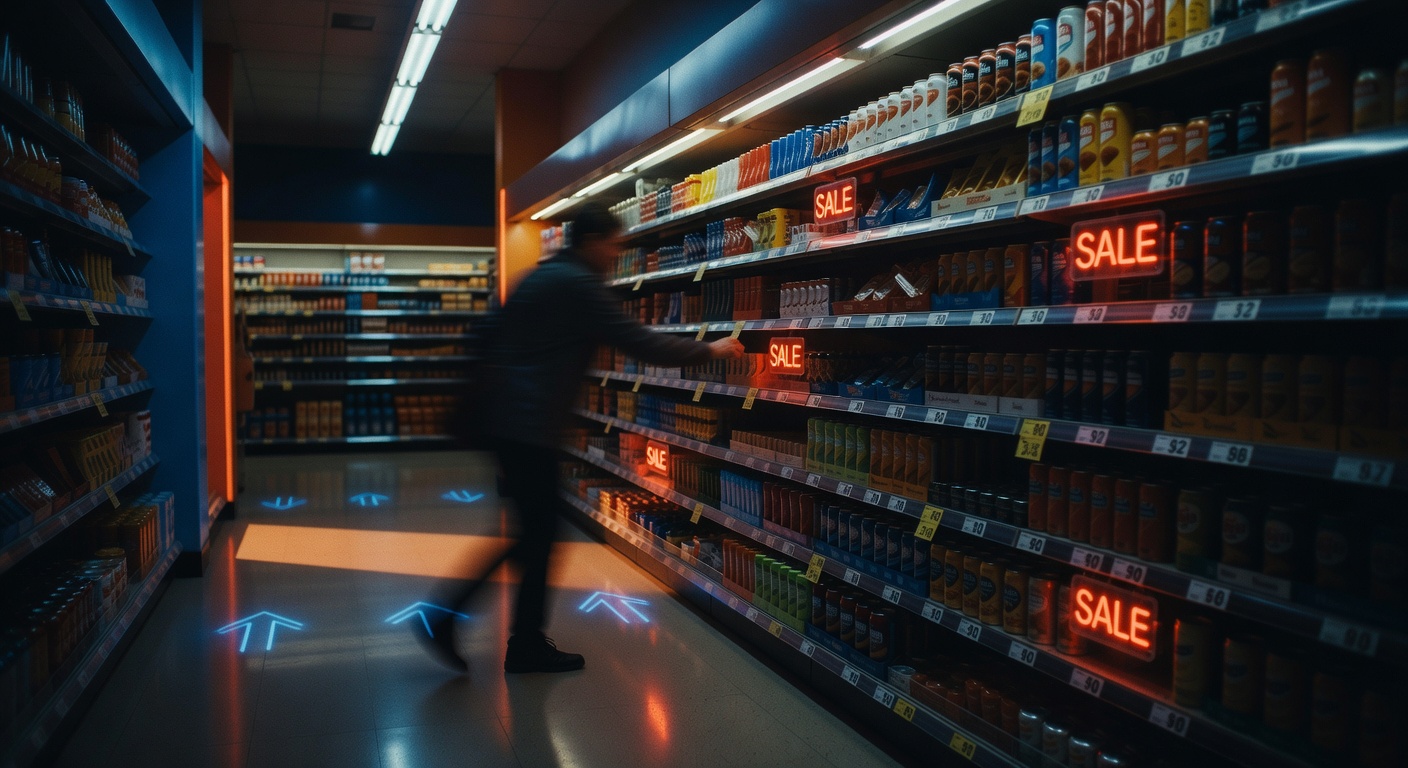
In 2012, the UK government quietly set up a team called the Behavioural Insights Unit — nicknamed the "Nudge Unit." Their mandate: use psychology to get citizens to pay taxes faster, eat healthier, and save for retirement without passing a single law. Within five years, similar units had spread to over 200 governments worldwide. The science of the nudge had become an instrument of state.
READ MORE →The idea originated with two economists: Richard Thaler and Cass Sunstein. In their 2008 book Nudge, they proposed a concept they called "libertarian paternalism" — the notion that you can guide people toward better outcomes without restricting their freedom to choose otherwise. You don't ban cigarettes; you put graphic warning labels on the front. You don't force people to save; you make pensions opt-out rather than opt-in. The choice remains. But the architecture around it changes everything.
The most powerful nudge is the default option. Whatever choice is pre-selected is the one most people will stick with — not because they thought it through, but because changing a default requires effort, and humans are cognitively lazy by design. This effect, called the status quo bias, is among the most replicated findings in behavioural science.
The evidence is striking:
"Nudges are not manipulation — they are the recognition that all choices happen in a context, and that context always influences choice. The only question is whether that context is designed thoughtfully or by accident." — Richard Thaler, Nobel Prize in Economics 2017
One of the most cited nudge experiments took place in school cafeterias across the United States. Researchers led by Brian Wansink at Cornell rearranged food presentation — putting salad bars first, healthy options at eye level, fruit in a bowl rather than wrapped — without changing the food available or its price. Healthy food choices increased by up to 35% in some schools, with no rules, no bans, no extra cost. The invisible hand of food placement was more effective than any nutritional education programme.
Critics argue that nudges are manipulation by another name. If governments and corporations engineer the architecture of choice, are citizens truly free? Sunstein and Thaler respond that choice architecture is unavoidable — any presentation of options has a structure, and that structure influences decisions whether we intend it to or not. The cafeteria must put something first. The only question is what. Better to put it there deliberately than by accident.
But the critique deepens when applied to corporations rather than governments. A government nudging you toward a pension is one thing. A tech company nudging you toward a more expensive subscription using the same psychology is quite another. The tools are identical. The intent diverges sharply. And most people cannot tell the difference.
By 2024, the World Bank had established a behavioural science unit. The UN runs one. The European Commission employs behavioural economists. The nudge has gone from academic paper to instrument of global governance in less than 20 years. Richard Thaler won the Nobel Prize in 2017 in recognition of a field that has reshaped how democracies think about human agency. Whether that is a triumph of enlightened policy or a quiet erosion of genuine autonomy depends, perhaps, on who is designing the defaults — and why.

You signed up for a free trial three years ago. It became a paid subscription you barely use. You know you should cancel it. You haven't. This is not laziness — it is a cognitive bias so well-documented it has a Nobel Prize attached to it. The default trap is one of the most expensive features of human psychology, and the subscription economy is built entirely on top of it.
READ MORE →The average American household pays for 4.5 streaming services, according to a 2024 Deloitte survey. When asked how many they actually watch regularly, the answer is closer to 2. The gap between what people pay for and what they use is not a mystery — it is a designed feature. The subscription economy, now worth over $1.5 trillion globally, is built on a single insight: inertia is more powerful than intention.
Status quo bias was formally described by economists William Samuelson and Richard Zeckhauser in 1988. They found that people disproportionately prefer the current state of affairs, even when change would benefit them. In a classic experiment, participants were given a hypothetical inheritance and told it was currently invested in a certain way. Most chose to leave it unchanged — even when alternative allocations were objectively superior. The current state, simply by being current, acquired a psychological premium.
The mechanisms behind status quo bias are multiple:
"If you look at a company's conversion rate from free trial to paid, it's not primarily driven by how much people love the product. It's driven by how hard you make it to leave." — Anonymous SaaS product designer, 2023
The subscription economy has industrialised the exploitation of status quo bias. Consider the cancellation journey for a major streaming service: you go to account settings, find subscription, click "cancel subscription," are shown a screen highlighting everything you'd lose, offered a discount to stay, asked why you're leaving, required to confirm your decision three times, and finally — sometimes — offered a "pause" instead of a cancel. Each step is a carefully engineered friction point. Research by consumer protection organisations in the EU found that adding just one extra cancellation step reduces churn by an average of 8%.
The US Federal Trade Commission (FTC) took action in 2023 with a proposed "click-to-cancel" rule: if you can sign up in one click, you must be able to cancel in one click. The rule, still being contested by industry lobbying groups at the time of writing, would cost the subscription economy an estimated $2-4 billion annually in the US alone — which tells you exactly how much value the friction machine was generating.
Banks, insurance companies, and utilities profit from the default trap even more aggressively than streaming services. UK research by the Financial Conduct Authority found that loyal customers pay more than new ones in virtually every regulated market — a phenomenon called the "loyalty penalty." Customers who stayed with the same home insurance provider for five years paid, on average, £75 more per year than new customers for identical coverage. The default of not switching was costing them money every year. Yet most didn't switch.
Auto-renewal — the subscription industry's most powerful default — was legal in most markets without explicit customer action until recently. In Germany, new consumer protection law from 2022 requires that contracts expiring in auto-renewal must send a reminder at least 28 days before renewal. Complaints about unwanted auto-renewals dropped 34% in the first year. One regulation, tens of millions of euros returned to consumers — all from nudging the default toward transparency rather than inertia.
Some companies have made a competitive advantage out of reversing the friction model. Monzo Bank, the UK challenger bank, made account closing as easy as opening one — a deliberate decision to build trust through ease of exit. Their logic: if customers know they can leave easily, they're less anxious about joining. Trust, paradoxically, is sometimes built by making departure frictionless. The subscription economy's bet is on your inertia. The question is whether you're aware enough of the trap to climb out of it.
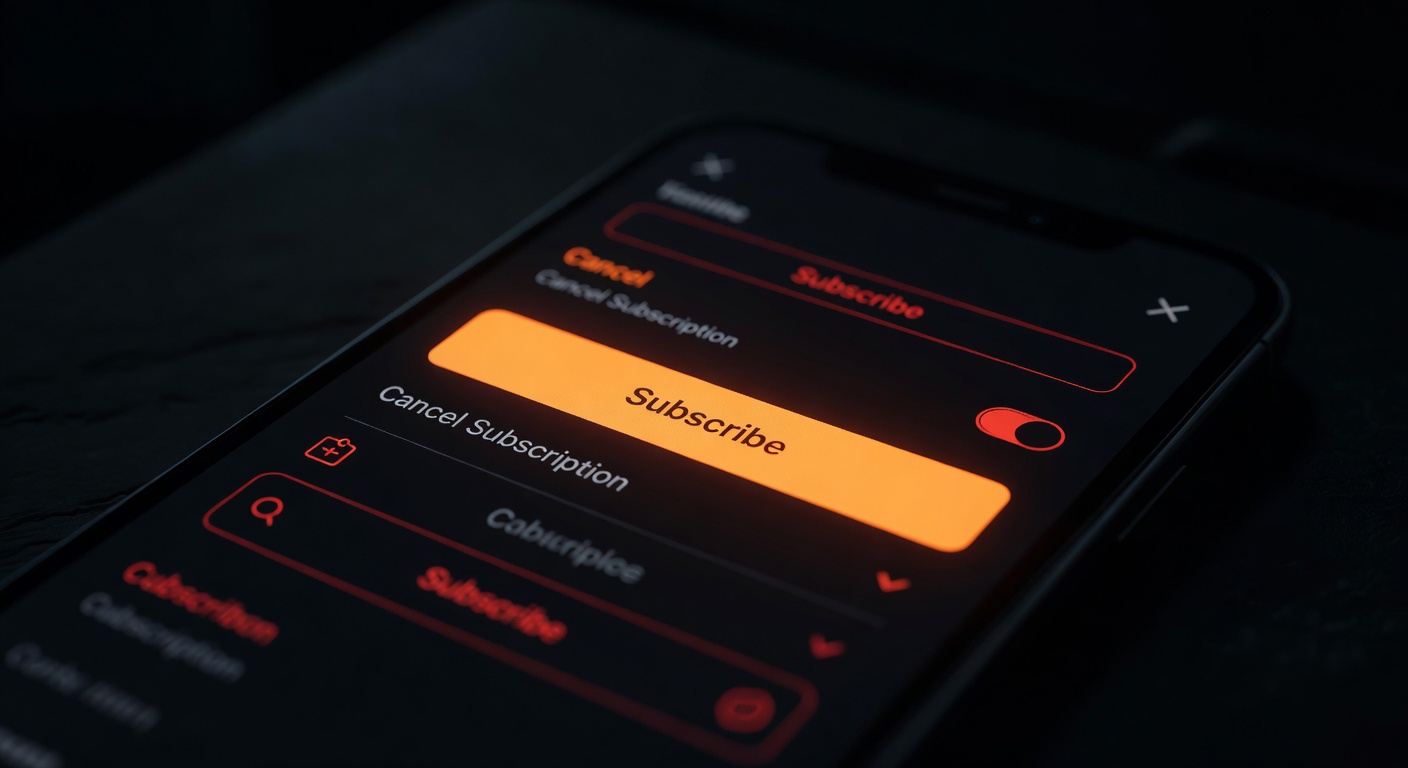
Harry Brignull coined the term "dark pattern" in 2010. He defined it simply: a user interface that has been crafted to trick users into doing things they didn't mean to. In 2024, the EU's Digital Services Act started fining companies billions for using them. The story of dark patterns is the story of design as a weapon — and how regulators are fighting back.
READ MORE →Dark patterns are not bugs. They are features — intentional design choices that exploit cognitive biases to steer users toward actions that benefit the company at the user's expense. The term entered mainstream usage slowly, then very fast: by 2022, the EU, US FTC, UK CMA, and Australian ACCC had all launched investigations or enforcement actions. By 2024, fines for deceptive design had reached into the billions. But the field of dark patterns had a 14-year head start.
Researchers have catalogued dark patterns into recurring categories:
"When a designer creates a dark pattern, they are making a deliberate decision that the company's revenue is more important than the user's experience, autonomy, and trust." — Harry Brignull, darkpatterns.org
One of the most widespread dark patterns in history was born from regulation meant to protect users. The EU's General Data Protection Regulation (GDPR) required websites to obtain consent for tracking cookies. Instead of honouring the spirit of the law, companies designed consent banners that buried the "Reject all" option behind multiple clicks while placing "Accept all" prominently in orange. A 2022 study of 680 major websites found that 95.4% used at least one dark pattern in their cookie consent flows. GDPR created an entire industry of deceptively compliant non-compliance.
The Irish Data Protection Commission fined Meta €1.2 billion in 2023, partly for GDPR violations related to consent design. LinkedIn was fined €310 million. Google, Amazon, and others have faced hundreds of millions in fines across the EU. The fines are large, but the revenues generated by the dark patterns are often larger.
In the US, the FTC's 2023 action against Amazon is the most prominent dark pattern enforcement. The FTC alleged that Amazon's Prime cancellation process — dubbed "Iliad Flow" internally, after Homer's epic poem about the long, painful siege of Troy — was deliberately designed to be confusing and multi-step to suppress cancellations. Internal Amazon documents cited in the complaint showed that simpler cancellation designs had been rejected by executives because they would reduce Prime subscriptions. The FTC seeks structural remedies, not just fines — a sign that regulators are beginning to treat dark patterns not as compliance violations but as systemic consumer harm.
A growing number of companies are competing on "bright patterns" — transparent, honest UX that builds long-term trust. Basecamp publishes its pricing with all features included; no hidden tiers. Apple's App Tracking Transparency prompt defaults to "Ask App Not to Track" rather than tracking. Ecosia, the search engine that plants trees, shows users exactly how their money is spent. As regulation tightens and user awareness grows, the business case for honest design strengthens. Dark patterns are becoming a liability — reputational, legal, and commercial. The question is whether the shift will happen fast enough to matter.
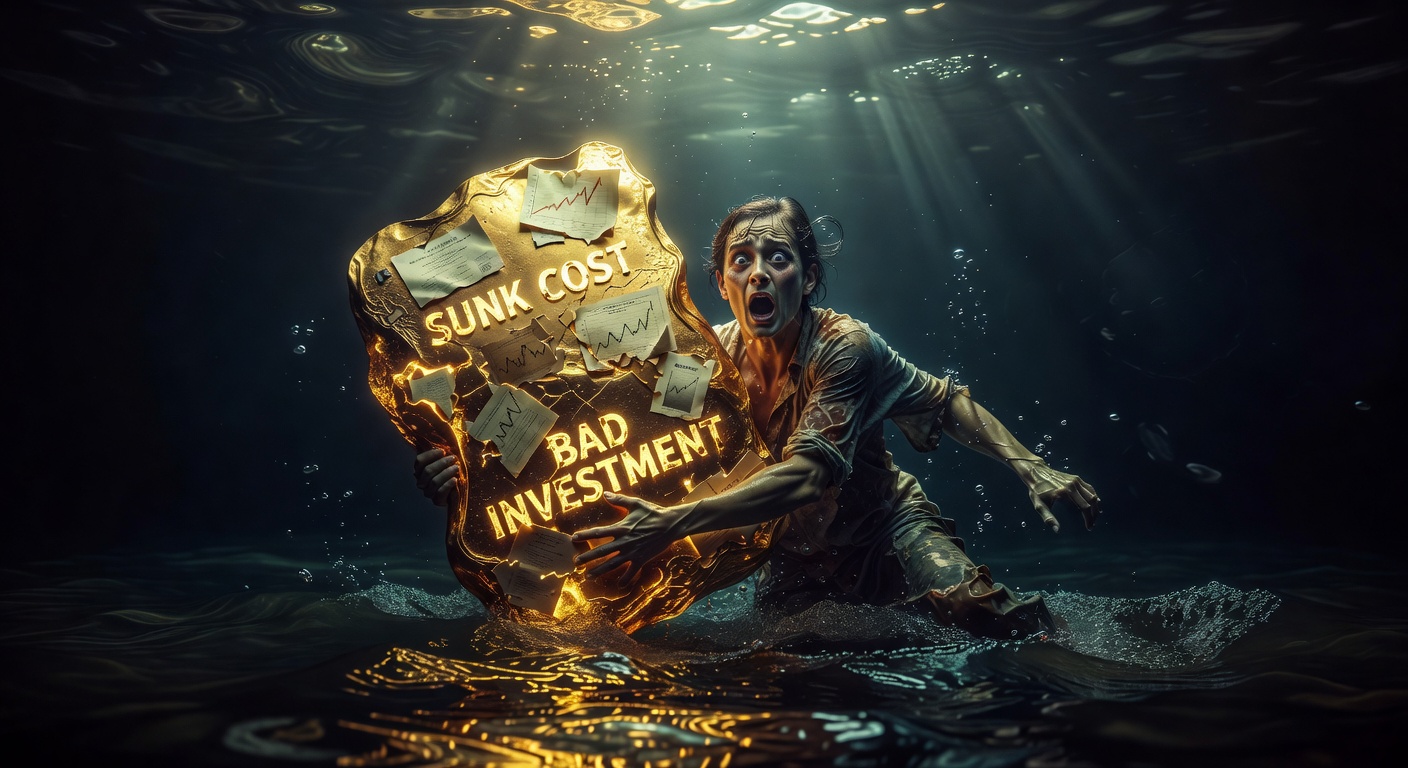
In 1979, Daniel Kahneman and Amos Tversky published a paper that would eventually win a Nobel Prize and transform economics. Their central finding: losing €100 causes roughly twice as much psychological pain as gaining €100 causes pleasure. This asymmetry — loss aversion — is baked into the human brain, exploited by markets, and behind many of the most catastrophic decisions in business, politics, and everyday life.
READ MORE →Before Kahneman and Tversky, classical economics assumed rational actors who weigh gains and losses symmetrically. A gain of $100 was worth exactly as much as avoiding a loss of $100. Decisions were made by calculating expected utility. The model was elegant. It was also wrong.
Kahneman and Tversky's Prospect Theory showed that humans do not evaluate outcomes from a neutral reference point. They evaluate them relative to where they currently are — and losses from that reference point sting approximately twice as hard as equivalent gains feel good. The ratio varies by person and context, but across thousands of experiments, the average is consistently around 2:1. To make someone indifferent between a coin flip and taking nothing, you need to offer roughly double the potential gain versus the potential loss.
Brain imaging studies have revealed the neural basis of loss aversion. When people face potential losses, the amygdala — the brain's threat-detection system — activates more strongly than when facing equivalent potential gains. The striatum, involved in processing reward, responds less to gain than the amygdala responds to loss. Loss is literally processed as a threat. The brain evolved in an environment where losses (of food, territory, status, life) were often catastrophic and irreversible, while equivalent gains were merely pleasant. The asymmetry in our brains reflects that evolutionary history.
"Losses loom larger than gains. The disutility of giving something up is greater than the utility of acquiring it." — Daniel Kahneman & Amos Tversky, Prospect Theory (1979)
Loss aversion produces one of the most dangerous cognitive distortions in human decision-making: the sunk cost fallacy. Because humans feel losses acutely, they become irrationally attached to resources they have already invested — money, time, relationships — even when continued investment makes no rational sense. The money is gone whether you continue or not. A rational actor would ignore it. A human cannot.
Financial products are routinely structured to frame options in loss terms rather than gain terms — because losses motivate action more powerfully. "Don't miss out on this rate" outperforms "Get this rate" in A/B tests. Insurance is fundamentally a loss-aversion product: people pay premiums far exceeding expected losses because the psychological cost of the worst case outweighs the rational calculus. Extended warranties — a favourite of consumer electronics retailers — are almost universally poor value, yet they sell consistently because the fear of a broken £800 laptop hurts more than the rational expectation of its probability.
The housing market is shaped by loss aversion. Studies in Boston showed that homeowners who paid more for their houses (relative to market value) at time of purchase set higher asking prices when selling — even in falling markets. They were anchoring to their purchase price and refusing to "lose" money, regardless of what the market was doing. The result: longer time on market, slower sales, artificially sticky prices in downturns.
Loss aversion is not a flaw to be cured — it is wired in. But awareness is a partial antidote. Kahneman himself, in Thinking, Fast and Slow, recommends asking a simple reframe question: "Would I accept a bet where I could lose X or gain 2X?" If you wouldn't — and most people wouldn't — that tells you your loss aversion is active. The second technique is pre-commitment: deciding in advance under what conditions you will accept a loss, before the emotional sting of the actual loss clouds your judgment. Traders call this a stop-loss order. Psychologists call it implementation intention. Both are ways of making the rational decision before the irrational brain takes over.
The invisible hand of loss aversion shapes markets, shapes policy, and shapes the thousand small choices of daily life. We are, in some meaningful sense, not the rational actors economics assumed — we are creatures far more afraid of losing what we have than excited by what we might gain. Understanding that asymmetry is not just an intellectual exercise. It might be the most practically useful thing you learn this year.