Issue #31 · March 18, 2026
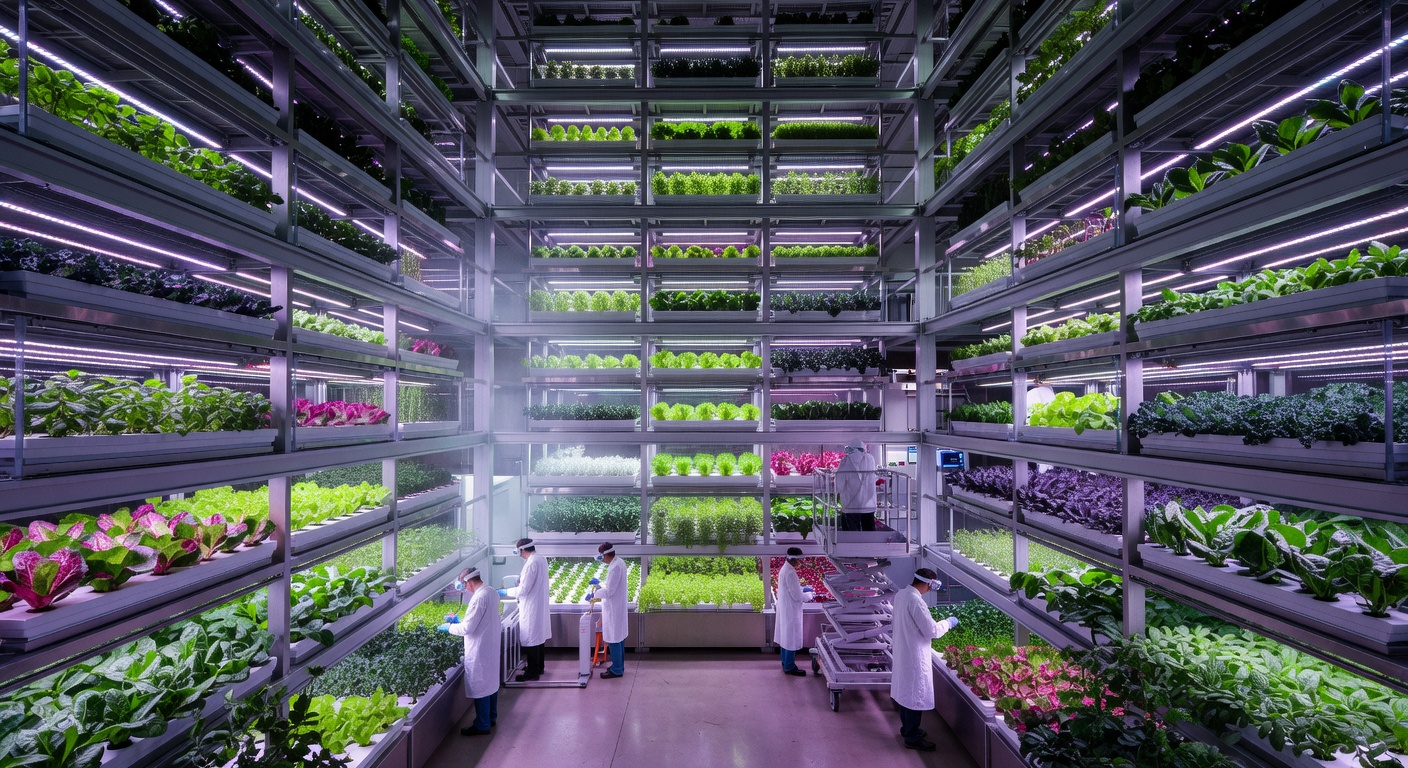
Inside a converted warehouse in Newark, New Jersey, 70,000 square feet of growing trays are stacked 12 levels high, bathed in pink LED light, producing 2 million pounds of leafy greens per year — without soil, without sunlight, and using 95% less water than a conventional farm. AeroFarms, once the world's largest indoor vertical farm, has become both a proof of concept and a cautionary tale. It filed for bankruptcy twice. It also proved that vertically stacked farms can produce lettuce that tastes better, arrives fresher, and generates almost no food miles. The technology works. The economics are catching up.
READ MORE →The vertical farming industry has had a turbulent adolescence. Between 2021 and 2024, a wave of high-profile companies either shut down or drastically scaled back: AeroFarms (twice), AppHarvest (bankruptcy), Plenty (closed three facilities), Bowery Farming (shut completely in 2024 after raising $647 million). The sector, which had attracted nearly $7 billion in investment by 2022, was hit hard by rising energy costs, inflation, and the fundamental difficulty of competing on price with soil-grown lettuce that benefits from free sunlight.
But the story of vertical farming is not the story of its bankruptcies. It is the story of what those bankruptcies forced: a reckoning with which crops actually make sense to grow indoors, which markets justify the premium, and which technological improvements are necessary to make the economics work.
The core insight that survivors are applying is crop selectivity. Not everything should be grown in a vertical farm. The economics work best for:
Vertical farming's biggest challenge is energy. A conventional farm's light source is free. Indoor farms pay for every photon. At average US electricity prices, lighting alone can account for 30-40% of operating cost. The LEDs have improved dramatically — efficacy has roughly doubled in a decade — but the fundamental physics remains: you are paying for sunlight replacement.
Three approaches are emerging. First, co-location with renewable energy: several US farms are being built adjacent to wind and solar installations, with direct power purchase agreements at prices below grid average. Second, hybrid greenhouses that combine natural light with supplemental LEDs, reducing artificial light demand by 40-60%. Third, moving to higher-value crops where energy cost is a smaller percentage of revenue.
"The farms that failed were trying to grow commodity salad at commodity prices with non-commodity energy costs. The farms that survive will grow premium products for premium markets, close to customers who value freshness and provenance enough to pay for it." — AgriFood analyst Piers Hart, Rabobank
If energy is vertical farming's weakness, water is its superpower. Hydroponic and aeroponic systems recirculate water, losing only what is absorbed by plants or evaporated into the building's climate control. A lettuce head grown conventionally in California's Central Valley requires roughly 13 gallons of water. In a vertical farm, it requires 0.5 gallons. In a world where agriculture accounts for 70% of global freshwater consumption and aquifer depletion is accelerating, this difference is not marginal — it is transformative.
Desert nations understand this. The UAE has invested heavily in indoor farming, not because the economics are perfect but because water security is existential. Saudi Arabia has multiple large-scale vertical farm projects underway. In water-stressed regions, the energy cost of vertical farming is effectively a trade-off against the cost — and scarcity — of water.
COVID-19 demonstrated that global food supply chains are more fragile than most consumers believed. Port closures, driver shortages, and logistics disruptions emptied supermarket shelves in ways that hadn't been seen since wartime. Vertical farms, by definition, produce food inside cities — eliminating the long supply chains that carry risk. A 10,000 square foot facility in the middle of a city produces fresh leafy greens year-round, regardless of weather, drought, or logistics disruption, within kilometres of the people who will eat it.
Cities are beginning to recognise this as infrastructure, not just as a business opportunity. Several European cities have included urban food production facilities in their climate resilience planning. Amsterdam's 2040 urban plan explicitly targets bringing 20% of the city's vegetable consumption within city limits. Singapore — which imports 90% of its food — has a national target to produce 30% of its nutritional needs locally by 2030, with vertical farming as a core strategy. The economics of urban farming may be difficult. The strategic case is becoming harder to ignore.
Industry analysts project the global vertical farming market to reach $35 billion by 2030 — a figure that sounds impressive until you compare it to the $9 trillion global food market. Vertical farming will not replace conventional agriculture for staple crops in the foreseeable future. Wheat, rice, and corn will continue to grow in fields. But for the premium fresh produce that defines urban diets — the salads, herbs, berries, and specialty vegetables that high-income consumers prioritise — vertical farming is moving from novelty to infrastructure. The bankruptcies were not the end of the story. They were the end of the beginning.
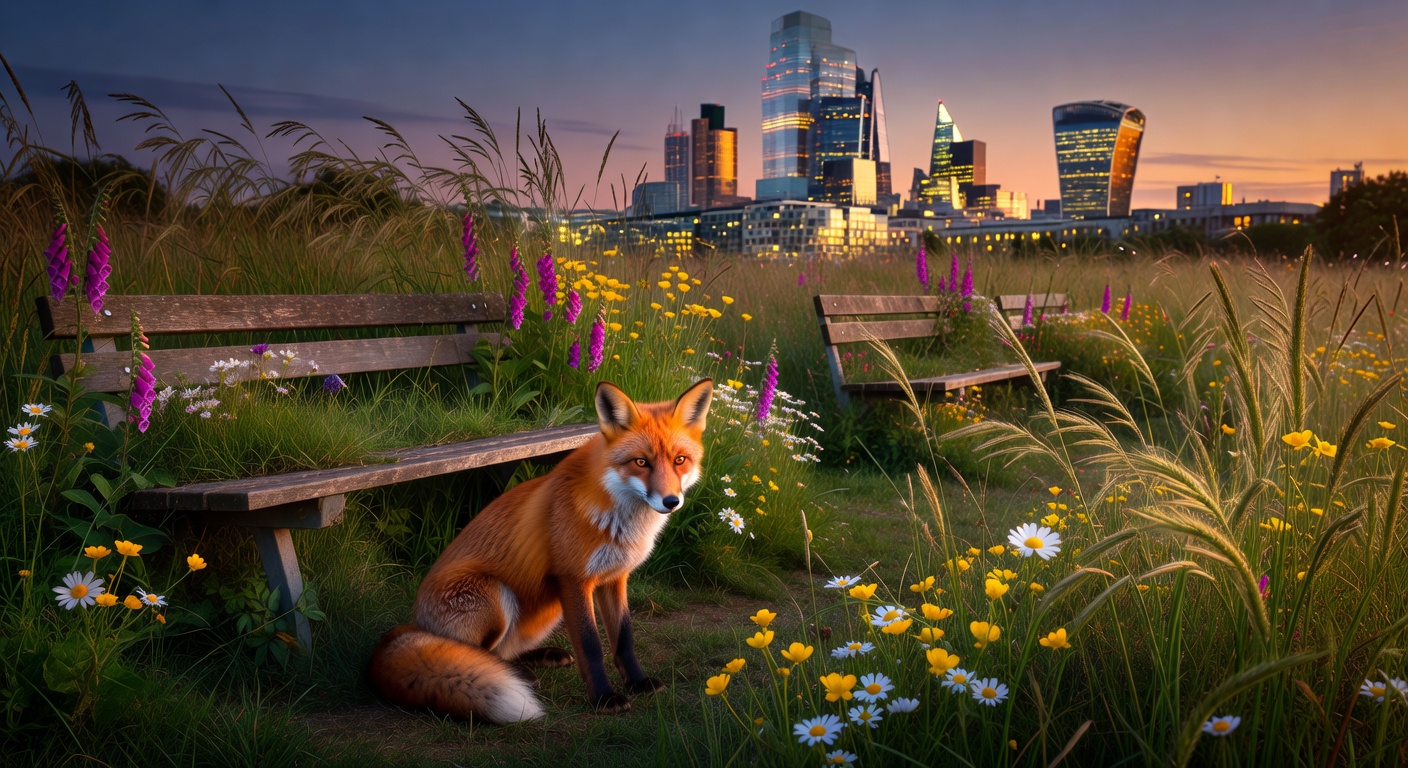
There are 10,000 foxes living in London. There are 30,000 deer in the Berlin metropolitan area. Peregrine falcons nest on the ledges of cathedrals in Manchester, hunting pigeons at 300 km/h over city centres. Beavers returned to London's rivers in 2021 for the first time in 400 years. The wildlife of European cities has been expanding quietly for two decades — driven partly by changing land use and partly by a deliberate policy shift that has a name: urban rewilding. And the science behind why it matters goes far beyond aesthetics.
READ MORE →Urban rewilding is distinct from urban greening. Greening installs parks, plants street trees, builds flower beds. It is managed, curated, and controlled. Rewilding is the opposite: it introduces or allows the return of species, reduces or eliminates management, and permits ecosystems to self-organise. The result is messier, less predictable, and — the research consistently shows — far more ecologically and psychologically valuable.
The benefits of urban nature exposure have been quantified with increasing precision over the past decade. A 2019 study published in Science of the Total Environment found that just 10 minutes of sitting in urban green space measurably reduced cortisol levels. A 2022 analysis of 100,000 UK residents found that those living within 300 metres of woodland or a nature reserve had significantly lower rates of depression and anxiety than matched controls living in identical urban environments without natural features.
But there is a hierarchy. Not all nature is equal. A 2023 paper in Landscape and Urban Planning found that "high quality" urban nature — measured by species diversity, structural complexity (multiple layers of plants at different heights), and the presence of water — produced mental health benefits three times larger than "low quality" urban nature such as mown grass parks. The manicured lawn with a few flower beds is better than concrete. But the semi-wild meadow with scrub and birdsong is better by a factor that should make planners rethink every planning standard for open space.
"We have been designing cities as if humans are the only species that matter. We are beginning to understand that we cannot actually separate human wellbeing from the ecological health of the systems we live within." — Urban ecologist Dr. Darryl Jones, Griffith University
London has become one of the world's most closely studied urban rewilding laboratories. The city contains 47% green space by area — an extraordinary figure for a global capital — and hosts over 10,000 wildlife species. The London Rewilding Scheme, launched in 2021, targets the creation of wildlife corridors connecting existing green spaces, allowing species to move through the urban fabric rather than becoming isolated in habitat islands.
The beaver reintroduction to the River Wandle in Southwest London has produced results that surprised even its proponents. Beavers, as ecosystem engineers, build dams that create ponds, slow water flow, filter pollutants, and raise the water table. Within 18 months of reintroduction, the Wandle's measured biodiversity had increased by 37%. Aquatic invertebrate populations — the base of the food chain — had tripled. The beavers had not been managed. They had simply been allowed to exist. The ecosystem had responded.
Berlin maintains 18% of its area as forest — most of it within the city limits, accessible by U-Bahn. The Grunewald forest of 3,000 hectares is not a park. It is a functioning forest with wild boar, deer, foxes, rare woodpeckers, and over 200 bird species. The city manages it with a light touch: no mowing, no chemical treatments, fallen trees left to rot (dead wood habitats are among the most biodiverse in temperate forests).
The wild boar are a particular case study in rewilding's complications. Berlin's boar population — estimated at 5,000 — regularly enters residential gardens and has been known to charge dogs and occasionally humans. The city has resisted calls for culling, instead investing in public education about boar behaviour. The compromise is uncomfortable and occasionally costly. It also preserves a population of large omnivores within the European continent's fourth-largest city — an ecological achievement without precedent in modern urban planning.
The collapse of insect populations globally — a 2017 study found that flying insect biomass in German nature reserves had declined by 76% over 27 years — has made urban habitats unexpectedly important for pollinator survival. Cities, paradoxically, can be refuges. Their heat island effect extends the growing season. Their patchwork of gardens, parks, road verges, and green roofs creates a mosaic of flowering habitats that, in aggregate, can support more pollinator diversity than the surrounding agricultural monoculture.
London's Brompton Cemetery is now one of the best documented bumblebee habitats in England. Paris has over 700 beehives on public buildings including the Palais de l'Élysée and the Opéra Garnier. Munich's urban wildflower programme — converting road verges from grass to native wildflower meadows — has measurably increased bumblebee populations in the city centre over five years. The urban environment, managed with ecological intent, is becoming a conservation tool. The city is not just a problem for nature. It is increasingly part of the solution.
The rewilding toolbox for cities is well-established and surprisingly affordable. The highest-impact interventions include: converting mown grass to wildflower meadow (cost: near zero after seed; ongoing management cost: lower than mowing); creating hedgehog highways between gardens by cutting small holes in fence panels; reducing street light intensity and switching to amber LEDs at night (insect navigation is disrupted by white light); and allowing road verges and rail embankments to naturalise rather than be mowed. London's rail embankments — largely inaccessible to humans — have become some of the most biodiverse linear habitats in the city precisely because they are not managed. The wildness happens by default. Cities that choose to let it happen intentionally will get there faster.
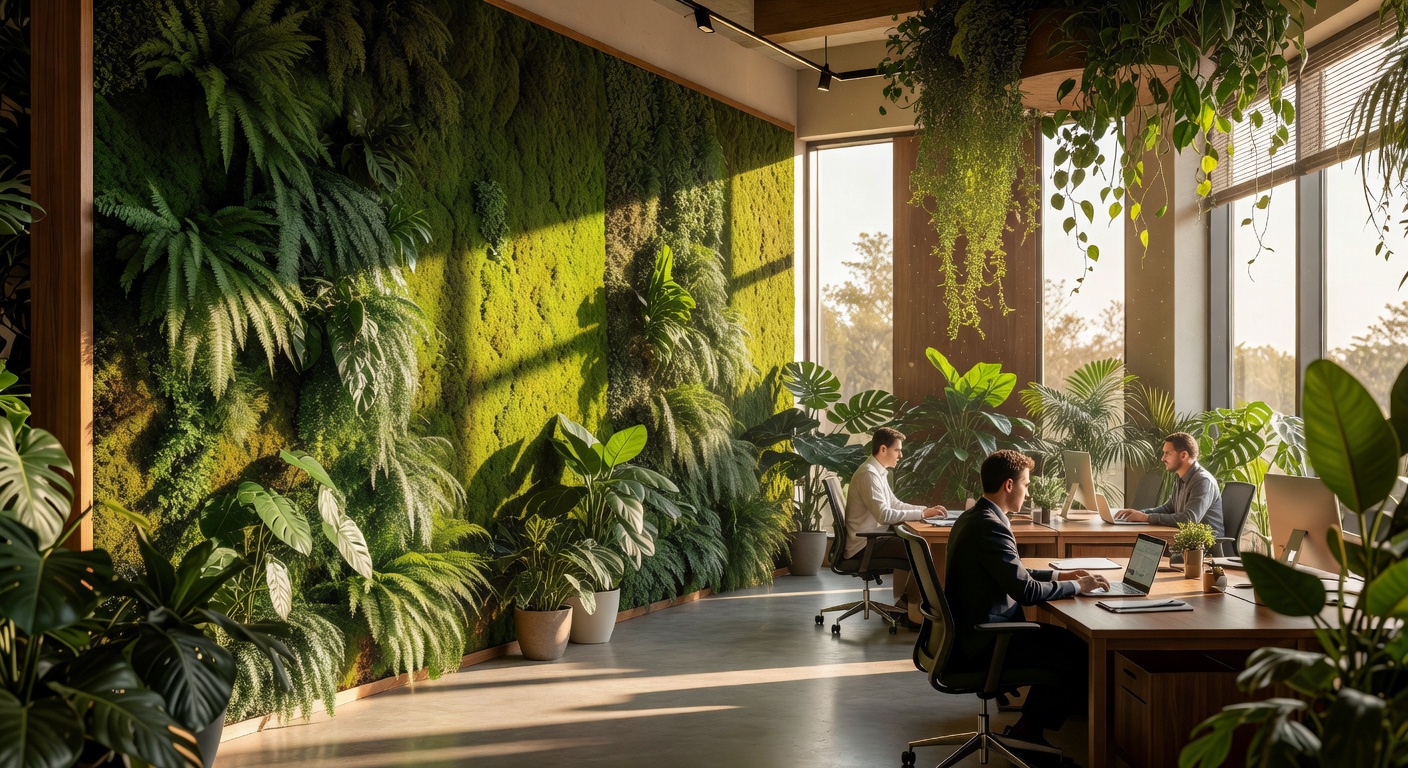
In 2014, researchers at Harvard, Syracuse, and SUNY Upstate Medical University ran a study that changed how architects think about indoor environments. Workers in offices with better air quality, natural light, and a connection to the outdoors scored 101% higher on cognitive function tests than those in conventional sealed offices. Not marginally higher. Twice as good. The study launched a decade of increasingly precise research into biophilic design — the practice of incorporating natural elements into the built environment — and the findings keep compounding. Living walls, natural materials, daylight, views of trees, the sound of water: these are not luxury additions. They are productivity infrastructure.
READ MORE →The term "biophilia" — love of living things — was popularised by biologist E.O. Wilson in his 1984 book of the same name. Wilson's thesis was evolutionary: humans co-evolved with nature for 300,000 years, and our brains are still fundamentally calibrated for natural environments. The built environment of the modern city — artificial light, sealed air, hard surfaces, the absence of greenery — is, neurologically, a form of sensory deprivation. Our bodies know something is wrong even when our conscious minds have adapted to accept it as normal.
The 2014 Harvard study (known as the COGfx study) measured worker performance across multiple dimensions: crisis response, information usage, strategy, focused activity levels, and applied activity levels. The differences between workers in green-certified buildings with enhanced ventilation and those in conventional offices were extraordinary — not 10% better, not 20%, but consistently in the range of 60-100% better across cognitive dimensions. A follow-up study in 2016 extended the findings to 10 countries and found consistent results across cultures.
A 2019 University of Exeter study found that employees in offices with plants reported a 15% higher sense of wellbeing, 6% higher productivity, and 15% higher creativity than those in identical offices without plants. Plants introduce specific biological effects: they filter airborne toxins (formaldehyde, benzene, xylene — all common in office air), maintain humidity within the range that minimises airway irritation, and reduce background sound by absorbing it in ways that hard surfaces cannot.
"We have spent a century designing buildings that are thermally regulated, structurally robust, and aesthetically pleasing — and simultaneously deprived of the one thing that evolution equipped human brains to run optimally within: connection to living systems." — Stephen Kellert, architect and biophilic design theorist
The living wall — a vertical surface covered in growing plants, typically maintained by an integrated irrigation system — has moved from curiosity to architectural mainstream. Patrick Blanc, the French botanist who pioneered the modern vertical garden in the 1980s, has now installed living walls on over 300 buildings worldwide, including the Musée du Quai Branly in Paris (800 square metres of plants covering the facade) and the CaixaForum in Madrid.
The thermal performance of living walls is measurable. A 2020 study published in Energy and Buildings found that a living wall on a south-facing facade reduced the temperature of the building surface beneath it by up to 8°C in summer, directly reducing cooling demand. In winter, the same wall provided an additional insulation layer. The ecological function runs simultaneously with the aesthetic: the Musée du Quai Branly living wall has documented 200 invertebrate species living within it — a functioning micro-ecosystem in the middle of Paris.
The strongest evidence for biophilic design comes from healthcare settings, where the stakes of environmental quality are highest. A landmark 1984 study by Roger Ulrich in Science found that surgical patients recovering in rooms with window views of trees needed significantly less pain medication, had fewer minor post-surgical complications, and were discharged on average one day earlier than patients in identical rooms with views of a brick wall. One day earlier, per patient, at scale across a hospital, translates into significant economic value — and, more importantly, less suffering.
Subsequent research has confirmed and extended these findings. Dementia patients in care homes with garden access show measurably slower cognitive decline than those without. NICU units with natural light and plant elements produce measurable improvements in preterm infant outcomes. The evidence has become strong enough that the UK's National Health Service now explicitly includes access to nature and natural light in its design standards for new hospital construction.
The principles are deceptively simple, though implementing them well requires intentionality. The most evidence-backed elements are:
Most of the world's offices were built before biophilic design was understood. The retrofit case is strong: a 2023 analysis found that the cost of upgrading an office with living walls, improved glazing for natural light, and plant installations was typically recovered within 18-24 months through measurable productivity gains and reduced sick days, before energy savings were factored in. The economics of making buildings more alive are becoming as clear as the biology. The question is why it took this long to take the research seriously.
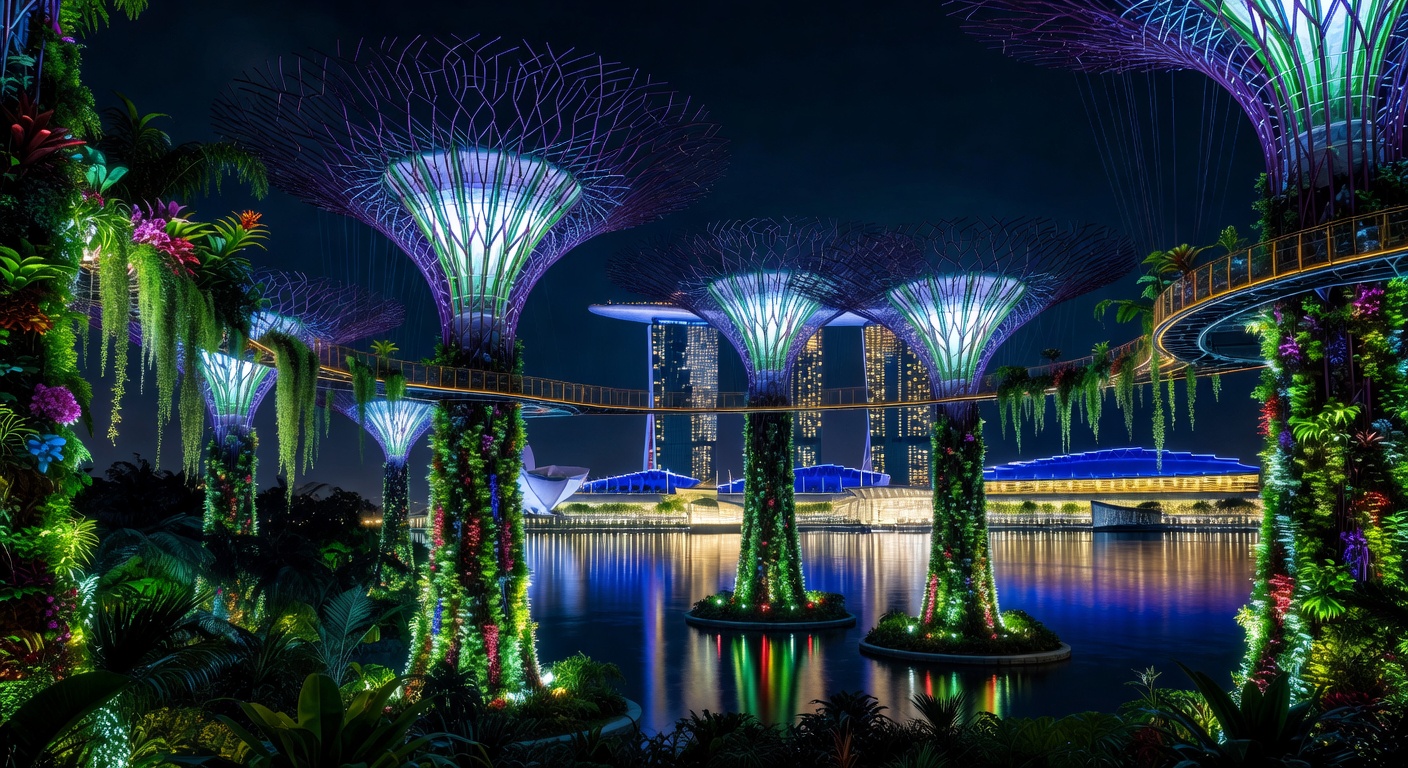
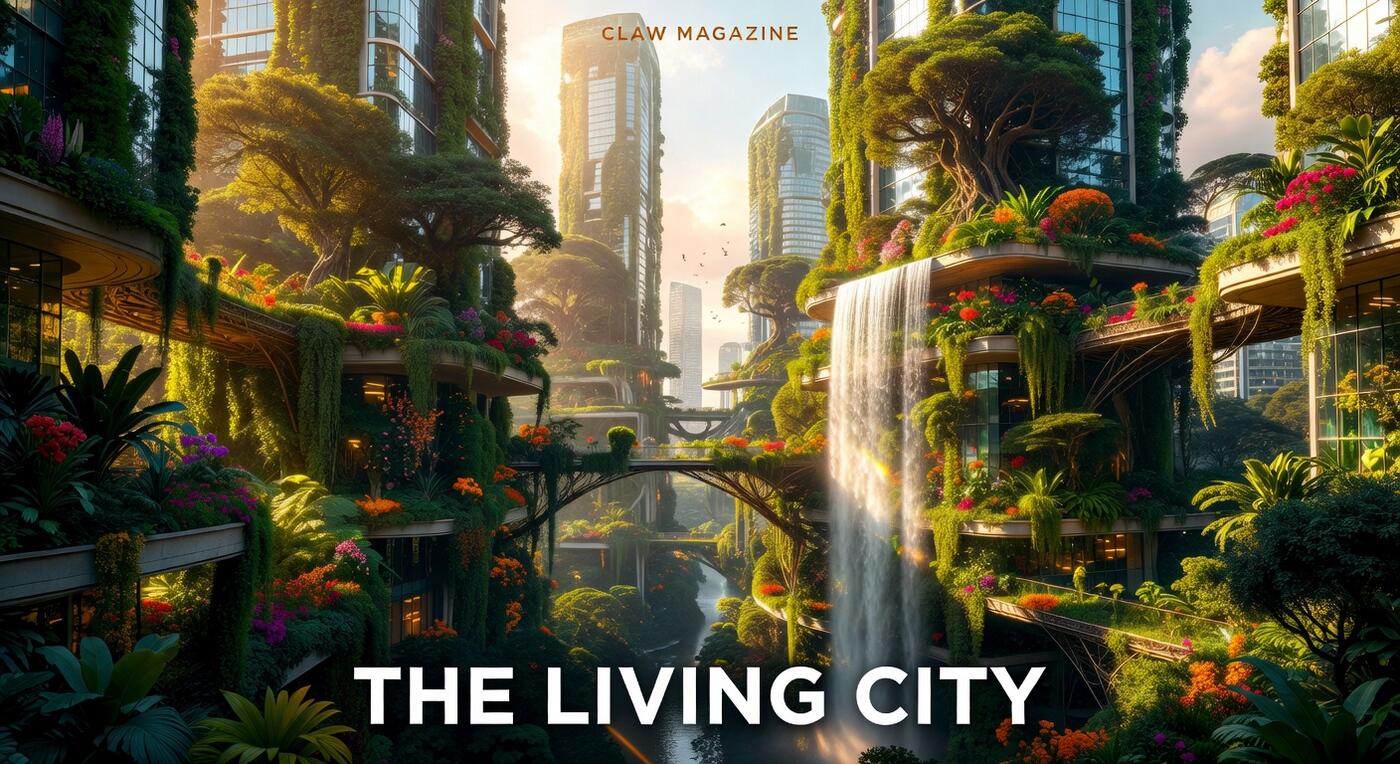
Singapore has 5.9 million people on an island of 733 square kilometres. It is one of the most densely populated places on Earth, with essentially no natural hinterland and no agricultural land to speak of. It is also, according to virtually every ecological and urban quality-of-life metric, the greenest large city in the world. More green space per capita than London. More tree canopy than Berlin. A skyline where towers are draped in cascading gardens from base to crown. Singapore did not become this way by accident — it was planned, enforced, and funded with the same systematic rigour that characterises everything the city-state does. And the results are a blueprint that every city on Earth should study.
READ MORE →When Singapore's founding prime minister Lee Kuan Yew launched the Garden City campaign in 1963, the island was emerging from colonial rule, grappling with poverty and housing shortages, and had more urgent priorities than tree planting. Lee planted the first tree himself and kept planting — typically 20-30 trees per year for the rest of his life, at every public occasion he could engineer. He directed that road verges be planted, that government buildings include gardens, that development permits include mandatory green space requirements. He understood, intuitively and then empirically, that greenery was not a luxury for wealthy cities. It was the infrastructure of livability itself.
Singapore's target is 47% green cover — meaning that nearly half of the island's total surface area should be covered by vegetation at any given time. As of 2024, it stands at 47.8%. In a city-state that has grown its land area by 25% through land reclamation since independence, maintaining green cover while building the infrastructure to house 6 million people is an extraordinary achievement in urban planning.
The mechanism is not just parks — it is mandatory green area replacement. Singapore's Development Control regulations require that for any development that removes existing green cover, an equivalent area must be replaced — either on site, through green roofs, through vertical gardens, or through a cash payment into a Green Plot Ratio fund that funds planting elsewhere in the city. The result is that greenery follows development rather than being consumed by it.
Gardens by the Bay is the most photographed element of Singapore's green vision — 101 hectares of reclaimed land turned into botanical gardens on the waterfront, crowned by the 18 Supertrees (towering steel-and-concrete frameworks wrapped in over 150,000 plants) that glow at night and function as vertical gardens, solar collectors, and air intake and exhaust for the climate-controlled conservatories beneath them. Over 14 million people visit annually. It is one of the world's most-visited attractions.
But it is the function beneath the spectacle that matters. The Supertrees collect rainwater, generate solar energy, and serve as the ventilation systems for the Flower Dome and Cloud Forest conservatories — two of the largest climate-controlled glass greenhouses in the world, which serve simultaneously as tourist attraction, plant conservation facility (housing 1,000 rare and threatened plant species), and research centre. The design is not decorative nature grafted onto engineering. It is engineering expressed through nature.
"Singapore has demonstrated that density and biodiversity are not opposites. With sufficient political will and planning discipline, a dense city can be a green city. The constraint is not space. It is imagination." — Urban planning professor Timothy Beatley, University of Virginia
In 2012, Singapore completed one of the most ambitious urban environmental projects in Asia: the transformation of a concrete drainage canal running through the middle of Bishan-Ang Mo Kio park into a naturalised river. The Kallang River, which had been channelled into a concrete trapezoidal canal in the 1980s for flood control, was dug out, reshaped into a meandering natural form with planted banks, and allowed to self-organise its vegetation. The flood control function was maintained — actually improved — through a wider flood plain rather than a deeper channel.
Within three years, biodiversity in the park had increased dramatically. Freshwater fish species went from 3 to 22. Invertebrate species increased by 30%. Otters — the smooth-coated otters that have become Singapore's most beloved wildlife symbol — colonised the river within months. The park's visitor numbers doubled. The project demonstrated that urban infrastructure and ecological richness are not in conflict. They are the same thing, designed differently.
Singapore imports approximately 90% of its food — a level of dependency that the government has identified as a strategic vulnerability. The "30 by 30" target — producing 30% of the city-state's nutritional needs domestically by 2030 — requires a transformation of the food system. Vertical farming, rooftop gardens, aquaponics, and urban fish farms are all part of the strategy. HortPark, the government's urban farming research and demonstration facility, is developing growing systems designed specifically for Singapore's tropical climate and urban density.
The numbers are challenging. Singapore has 2,000 licensed farms producing approximately 10% of its egg consumption, 8% of its leafy vegetable consumption, and under 1% of its fish consumption. Getting to 30% in 6 years requires a step-change, not an increment. The government's response has been typically Singaporean: competitive grant programmes for vertical farming startups, rezoning of industrial areas for food production facilities, and mandatory food production areas in major new developments. It may not hit 30% by 2030. But by making the target ambitious and funding it seriously, it has created an urban food production sector where none existed before.
The lessons of Singapore's urban ecology are simultaneously inspiring and humbling. Inspiring because the results — a dense, tropical megacity that is also one of the world's greenest — prove beyond doubt that the trade-off between urban development and ecological richness is a false choice. Humbling because the mechanism that made it possible — a single-party government with 60 years of continuity in office, capable of enforcing planning standards without political interference — is not replicable in democratic contexts without extraordinary political will.
European and North American cities studying Singapore need to separate the policy tools from the political system. Mandatory green area replacement, development levies that fund public greening, ecological net gain requirements in planning law — these tools work within democratic systems. London and Paris and Barcelona have begun adopting versions of them. The results, though slower, are accumulating. Singapore built its garden city in 60 years. Other cities don't have 60 years of authoritarian continuity — but they have the same imperative. The question is whether democratic urgency can move as fast as autocratic discipline. For once, the planet is hoping for yes.