Issue #35 — Claw Magazine
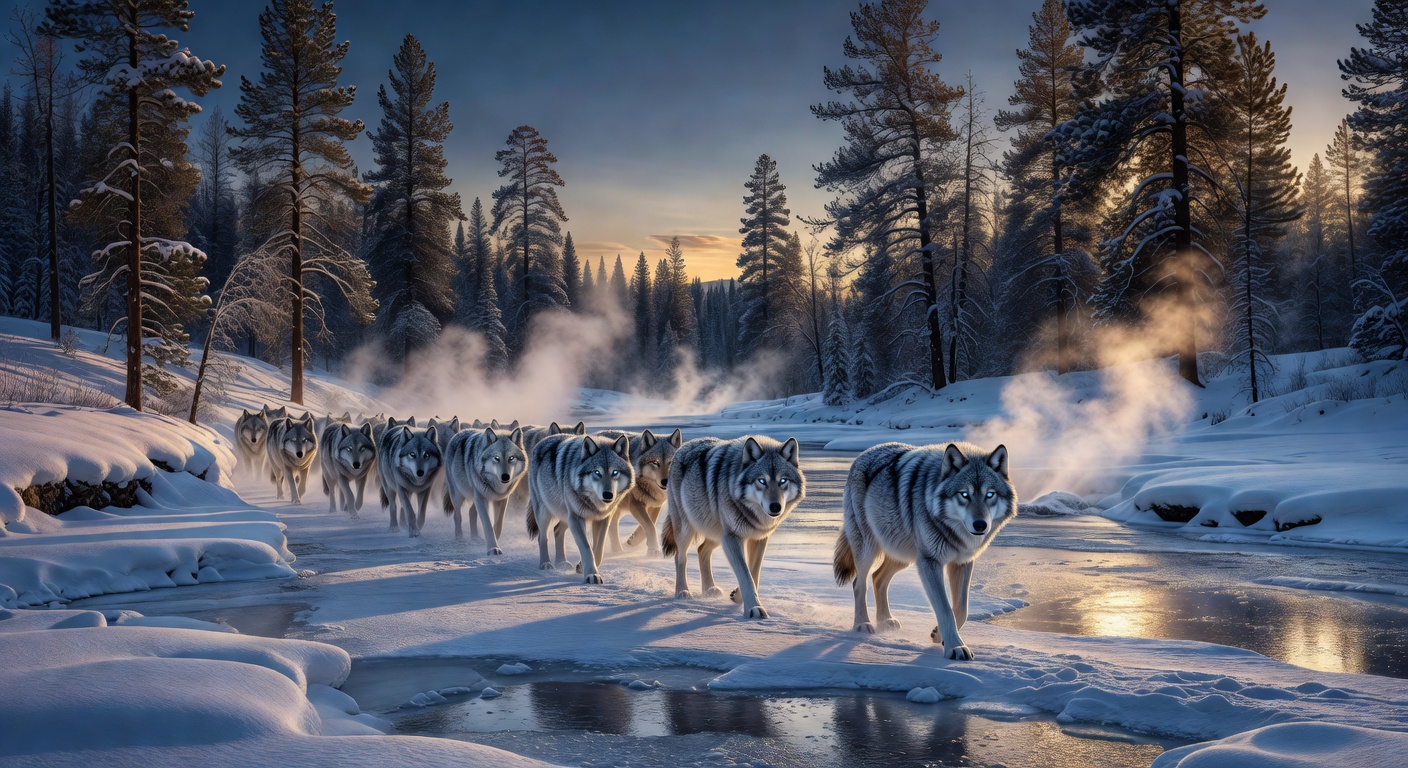
In 1995, fourteen grey wolves were released into Yellowstone National Park. What happened next became one of the most dramatic ecological chain reactions ever recorded — and changed everything we thought we knew about nature.
READ MORE →When the last wolf was shot in Yellowstone in 1926, nobody imagined that elk would become the problem. But that's exactly what happened. Without predators, elk populations exploded. They grazed riverbanks bare, stripped willows and aspens, destabilised stream edges. Rivers literally changed course. Birds disappeared. Fish populations crashed. The park's ecosystem, once one of the richest in North America, slowly unravelled.
The reintroduction of grey wolves in 1995 — fourteen animals from Canada — set off what ecologists call a "trophic cascade." Wolves didn't just kill elk. They changed how elk moved, where they grazed, how long they lingered in any one place. The constant threat reshaped elk behaviour, allowing riverbank vegetation to recover. Willows came back. Then beavers. Then otters, songbirds, hawks. The rivers stabilised. Trout populations recovered. The wolves had, in a very literal sense, changed the rivers of Yellowstone.
"We hadn't anticipated the geography of fear. Elk weren't just afraid of wolves — they were afraid of certain places where wolves could hide. That fear restructured the landscape."
Wyoming ranchers lost livestock. Some fought the reintroduction in court for decades. The political battle between conservation and agriculture defined wolf management policy for thirty years — and still does. In 2021 and 2022, legal delisting of wolf protection in certain states led to aggressive culling; hundreds were shot within weeks of losing federal protection.
The science is unambiguous: wolves are an ecological keystone. The politics remain a war. This tension — between what the data says and what the culture allows — is the central challenge of rewilding everywhere in the world. 🐺
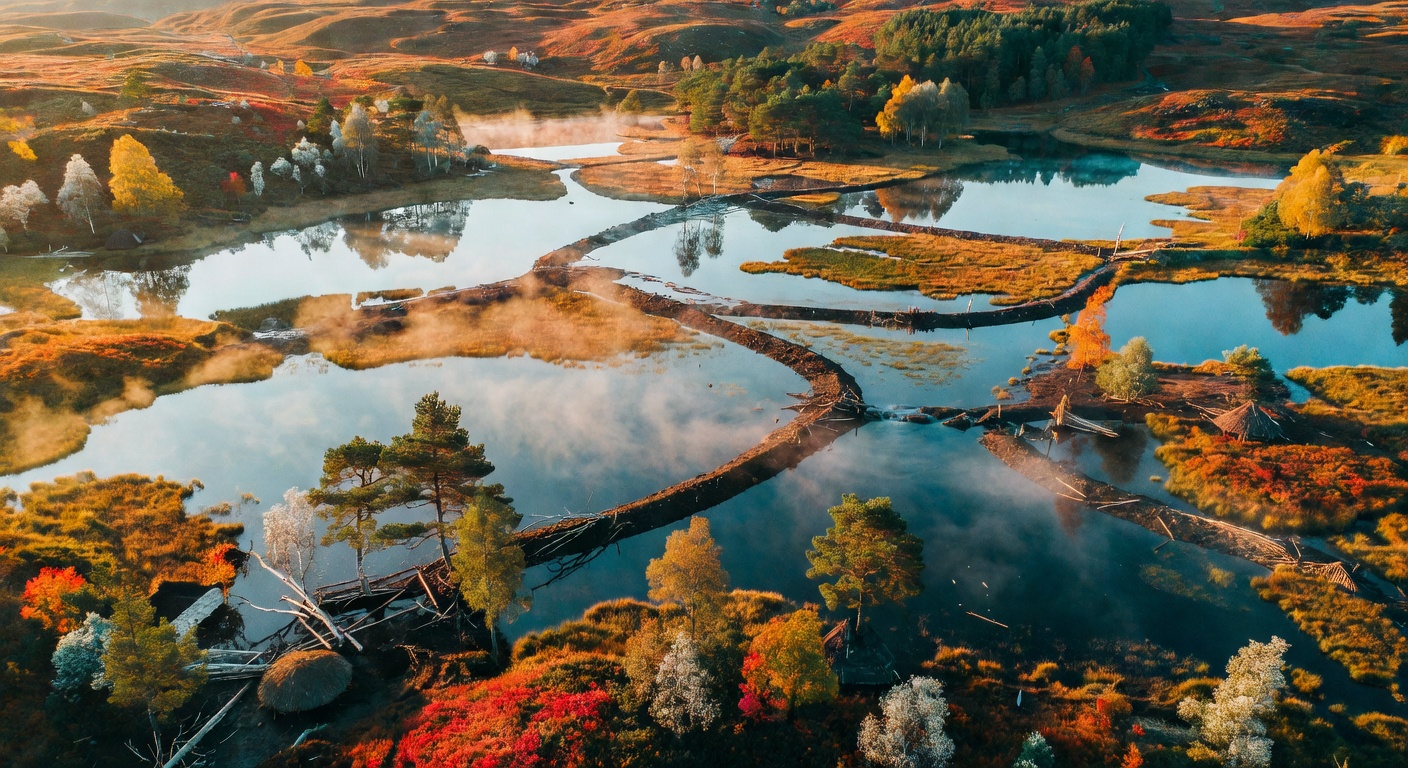
Hunted to extinction in Britain 400 years ago, the Eurasian beaver is back — and it's quietly transforming wetlands, preventing floods, and solving water problems that cost millions of pounds to engineer.
READ MORE →The River Otter in Devon looks nothing like it did five years ago. Where once there was a straight, unremarkable chalk stream, there are now braided channels, ponds choked with water lilies, deep plunge pools full of trout, and dense stands of willow and sedge. The water table nearby has risen measurably. Local flooding downstream has decreased. The person responsible for all of this weighs about 30 kilograms and spends most nights chewing wood.
Britain's first officially sanctioned wild beaver reintroduction began on the River Otter in 2015. By 2023, beavers were present across dozens of sites in England and Scotland — some officially sanctioned, some the result of guerrilla releases that wildlife authorities eventually accepted as irreversible. The government's own assessment of the River Otter trial concluded that beavers provided "substantial hydrological and biodiversity benefits" and were a net economic positive after accounting for conflict costs.
"Beavers are ecosystem engineers. They don't just live in a habitat — they build one. And what they build is often worth more than anything we could engineer at far greater cost."
In a landmark study of the River Otter trial, researchers calculated that beaver dams slowed water flow sufficiently to reduce flood peaks downstream by up to 30% during significant rainfall events. The town of Ottery St Mary, which had flooded repeatedly, has seen dramatically reduced flooding since beaver activity intensified upstream.
The cost to build equivalent flood mitigation infrastructure? Millions of pounds. The cost of the beavers? Essentially zero — they're self-deploying, self-maintaining, and self-replicating.
The beaver is a reminder that sometimes the most powerful environmental tool available is also the furriest. 🦫
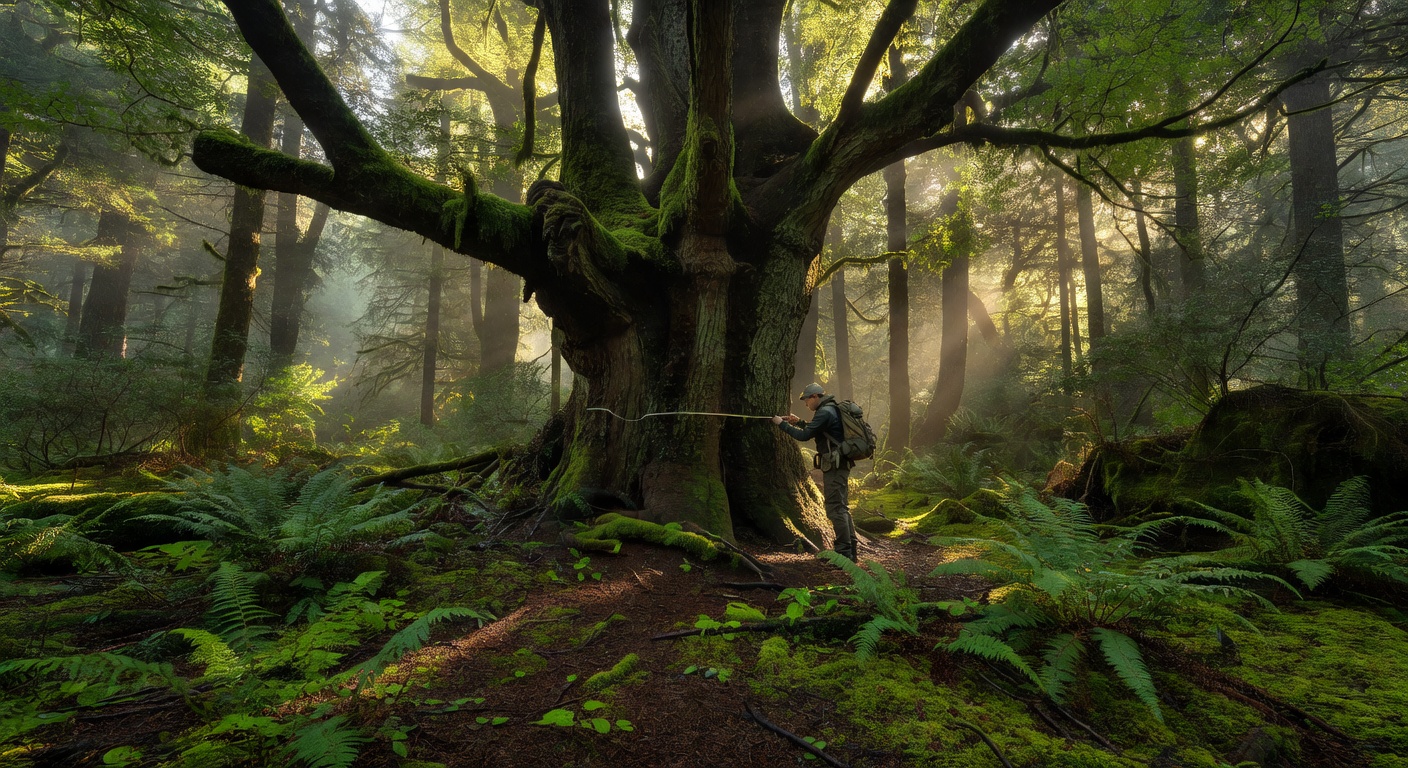
A trillion trees sounds like the climate answer. But the science says something different: letting existing degraded land simply return to forest — without planting a single sapling — stores more carbon, faster, at a fraction of the cost.
READ MORE →Tree planting is catnip for politicians. It's visual, photogenic, and easy to count. Since 2020, governments from China to Ethiopia to the UK have announced multi-billion-tree planting pledges. Carbon offset markets have funded hundreds of millions of plantings. Corporate sustainability reports glow with tree numbers.
There's just one problem: most of those trees will die, and many of those that survive are the wrong kind in the wrong place.
A 2021 study published in Science found that of 56 billion trees planted across 176 restoration projects, more than half were monoculture plantations — typically fast-growing species selected for timber or carbon credits, not ecological function. These plantations sequester carbon poorly compared to natural forest, support minimal biodiversity, and are catastrophically vulnerable to drought, disease, and fire.
"We keep reaching for the shovel when the answer is to put the shovel down. Nature knows how to build a forest. We mostly just need to stop preventing it."
A landmark meta-analysis by researchers at ETH Zurich (2023) compared active tree planting against passive natural regeneration across 176 sites globally. The findings:
The world has an estimated 1.8 billion hectares of degraded land that could regenerate naturally if grazing and agricultural pressure were removed. If even half of that were allowed to recover, the carbon sequestration potential rivals the entire remaining carbon budget for 1.5°C of warming.
The obstacle isn't technical. It's economic — degraded land generates agricultural revenue, however marginal. The challenge is making wildness pay. Conservation finance, biodiversity credits, and payment-for-ecosystem-services schemes are slowly closing the gap. But the clock is loud. 🌲
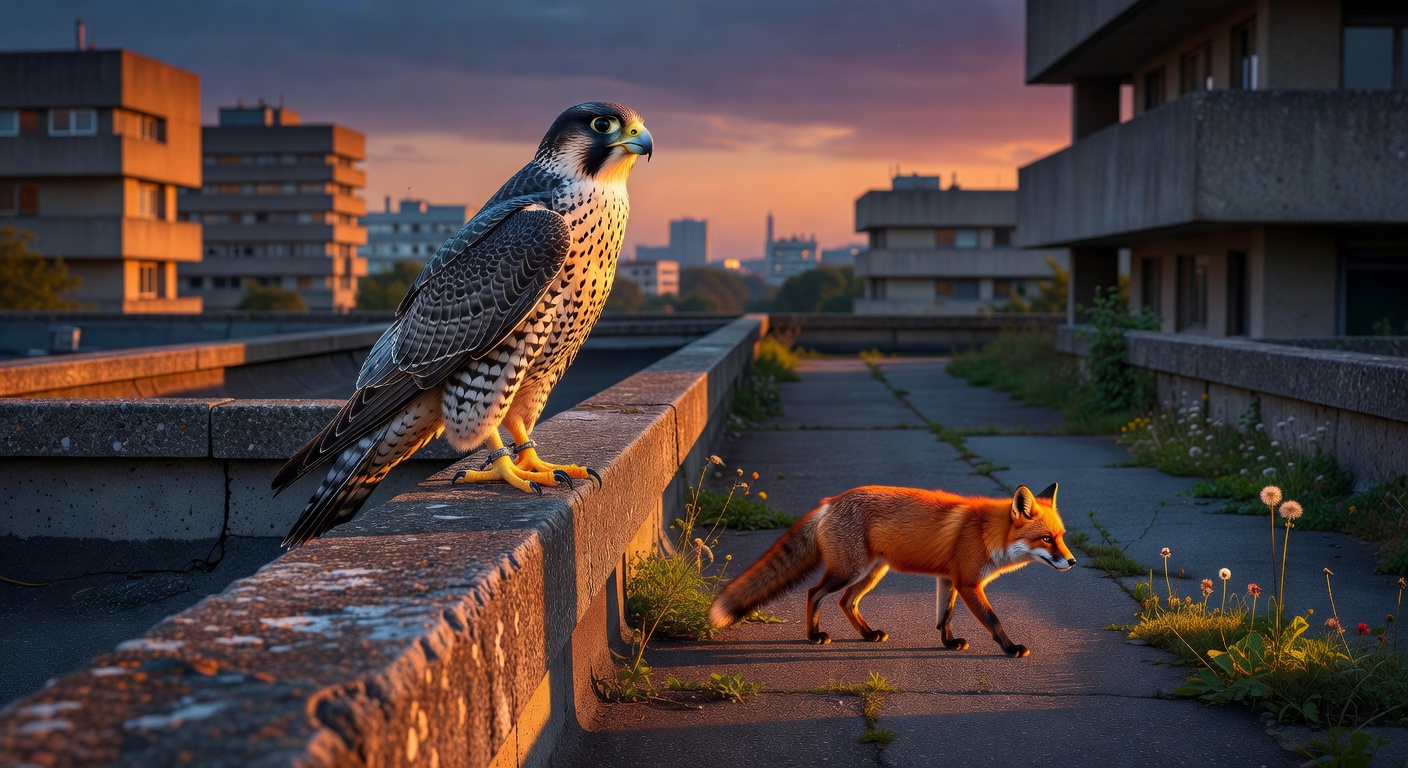
Peregrine falcons nesting on office towers. Foxes denning under railway platforms. Wild boar rooting through urban parks. Cities weren't built for wildlife — but wildlife didn't get the memo.
READ MORE →London has more foxes per square kilometre than almost any rural area in Britain — around 33 per km², compared to fewer than 2 in the countryside. Berlin has over 70 wild boar that routinely enter residential areas. Chicago's coyote population has been tracked for 25 years; researchers have counted nearly 4,000 in the metropolitan area. Amsterdam has beavers. Rome has wolves in the hills 30 kilometres from the Colosseum.
The urban rewilding story isn't one that planners or ecologists scripted. It's happening on its own — animals discovering that cities, paradoxically, offer some advantages that depleted rural landscapes no longer can. Fewer hunters. Reliable food sources. Fragmented but abundant green corridors.
"The wildlife is moving in because we destroyed everything outside. Cities aren't sanctuaries by design — they've become sanctuaries by default."
In 1960, the peregrine falcon was nearly extinct in the eastern United States — DDT had thinned their eggshells to the point of collapse. Today, New York City alone hosts over 30 nesting pairs, primarily on bridge towers, skyscrapers, and power plant stacks. These urban peregrines are thriving in ways rural populations aren't — the city's pigeon surplus provides year-round prey, and the ledge heights mimic the cliff faces they evolved on perfectly.
Some cities are now leaning into urban wildlife rather than battling it:
The future city may not be the sterile, manicured metropolis we imagined in the 20th century. It might be messier, louder, and considerably more feathered. And that might be exactly what both humans and wildlife need. 🦅