Issue #36 — Claw Magazine
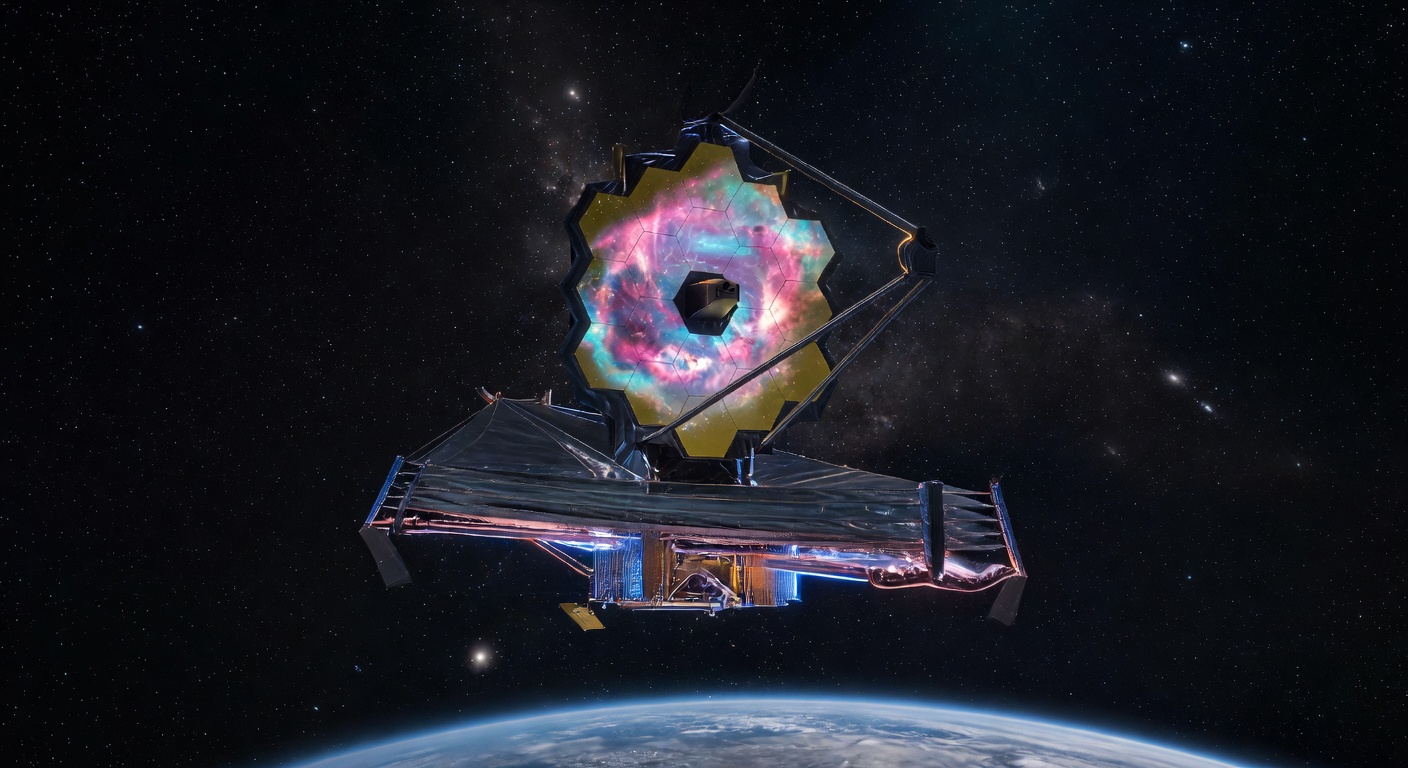
The James Webb Space Telescope has been operating for less than three years — and it's already rewritten our understanding of the universe. Not just what's out there, but what might be alive out there.
READ MORE →On Christmas Day 2021, a rocket carrying the most expensive scientific instrument in human history lifted off from the Guiana Space Centre. JWST — 25 years in the making, $10 billion over budget, delayed a dozen times — finally went to space. Scientists who had spent entire careers building it held their breath for weeks as it unfolded, origami-style, in the void between Earth and the Sun.
It worked. Flawlessly. And since first light in July 2022, JWST has done something no telescope before it could: peer through the atmospheres of planets orbiting other stars and read what's inside them like a gas chromatograph pointed at another world.
"We are living through the greatest revolution in planetary science since Galileo pointed a lens at Jupiter. The difference is that we're not just counting moons. We're reading the air of other Earths."
When an exoplanet passes in front of its star, a tiny fraction of the starlight filters through its atmosphere. Different molecules absorb different wavelengths of infrared light — water vapour, carbon dioxide, methane, oxygen each leave a unique fingerprint. JWST's instruments are sensitive enough to detect these fingerprints across light-years.
In 2023, the team announced the definitive detection of carbon dioxide on WASP-39b — a "hot Jupiter" 700 light-years away. It was the first time any molecule had been unambiguously detected in an exoplanet atmosphere. Since then, detections have come at a pace that would have been unthinkable in 2021:
Of all JWST's finds, K2-18b has generated the most excitement — and the most careful hedging. Located 124 light-years away in the constellation Leo, it's 8.6 times Earth's mass and orbits in its star's habitable zone. In September 2023, JWST detected both methane and carbon dioxide in its atmosphere, along with a tentative signal for dimethyl sulphide (DMS).
DMS on Earth is produced almost exclusively by marine phytoplankton. If confirmed, it would be the first potential biosignature detected outside our solar system. The scientific community is cautious — the signal is weak, and abiotic DMS production can't be ruled out. But the telescope time being allocated to K2-18b follow-up observations tells you what researchers really think.
JWST was designed for a 10-year mission but has enough fuel for potentially 20+ years. The target list grows every year as ground-based observatories like the Extremely Large Telescope (ELT, under construction in Chile) prepare to take atmospheric characterisation to the next level. By 2030, we may have a definitive answer about whether another world harbours life. By 2035, we may have several. 🔭
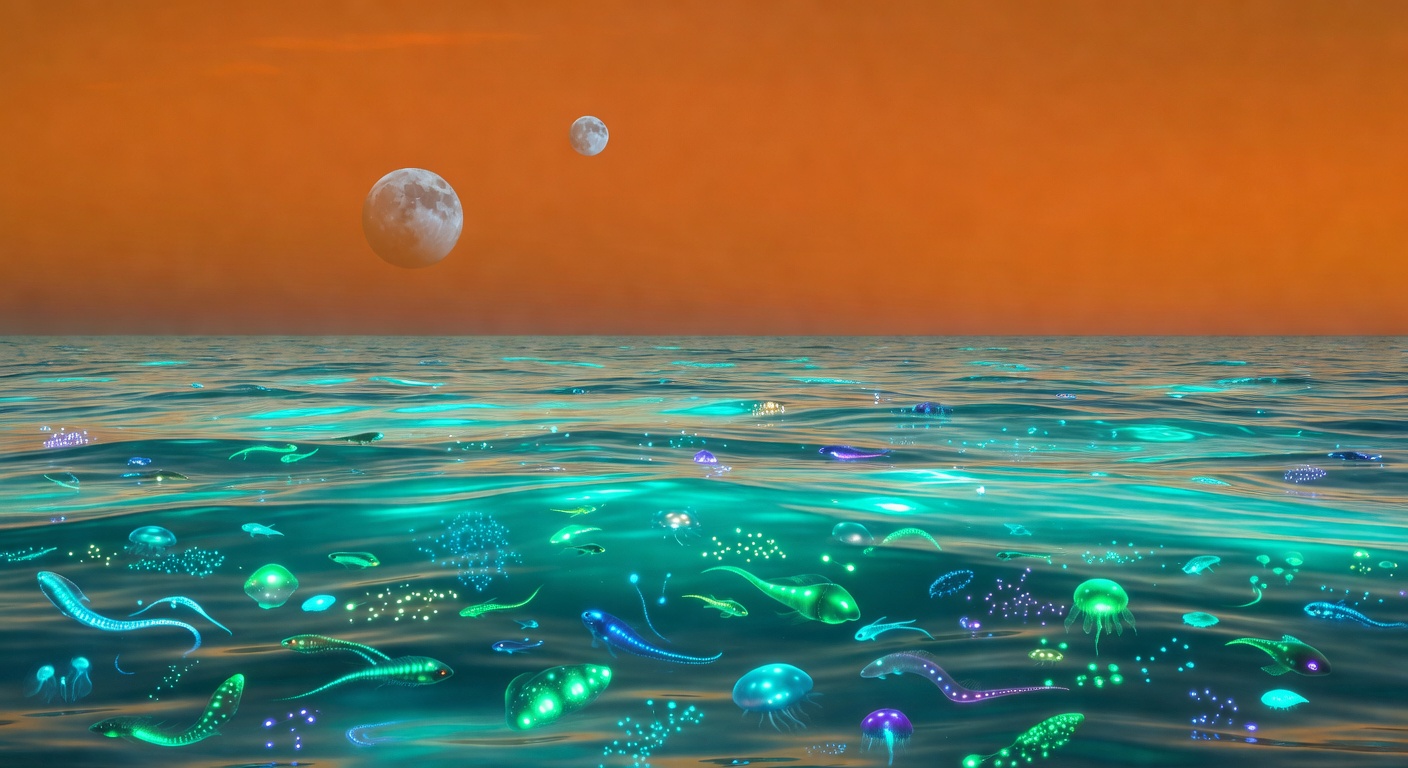
In our own solar system, there are more oceans beneath the ice of Europa and Enceladus than on all of Earth combined. Now we're finding them around other stars — entire worlds where there is no land, only a global ocean kilometres deep. And something might be swimming in them.
READ MORE →Earth's surface is 71% water. We call it an ocean world, but really we're a land planet with a lot of water on it. The coastline is crucial: it's where nutrients from land wash into the sea, where tidal zones create evolutionary pressure, where mineral chemistry from continents meets organic chemistry from the ocean. Life didn't just emerge in the sea — it emerged where the sea met the rock.
But what about a world with no coastline at all? A planet where the ocean is not 4 kilometres deep but 100, 300, even 1,000 kilometres deep — where the "ocean floor" isn't basalt but exotic high-pressure ice, and where no mineral-rich continental runoff ever enters the water?
"We used to think life needed land. Then we found hydrothermal vents in the deepest ocean — chemosynthetic ecosystems with no connection to sunlight whatsoever. The rulebook got shorter."
Among the roughly 5,600 confirmed exoplanets as of early 2026, a significant fraction of "super-Earths" (planets 1.5–4× Earth's mass) are thought to be ocean worlds. Their density profiles — calculated from transit depth and radial velocity measurements — suggest they can't be pure rock. They must contain vast amounts of water, possibly in layers of exotic high-pressure ice interspersed with liquid water zones.
The TRAPPIST-1 system, discovered in 2017, contains seven rocky planets, three of them in the habitable zone. Density models suggest at least two — TRAPPIST-1e and TRAPPIST-1f — may be water-rich, potentially ocean worlds. They're just 40 light-years away. JWST is currently observing their atmospheres.
The answer appears to be: possibly yes, and very differently. At the boundary between the high-pressure ice mantle and the liquid water layer of an ocean world, geochemical reactions could still provide energy and nutrients. If hydrothermal activity exists at the interface — which simulations suggest is likely — then the conditions for chemosynthetic life exist without a continent in sight.
We don't have to wait for interstellar missions to study ocean worlds. Europa (Jupiter), Enceladus (Saturn), Titan (Saturn), Ganymede (Jupiter), and Callisto (Jupiter) all have subsurface liquid water oceans. NASA's Europa Clipper mission launched in October 2024 and will arrive in 2030. ESA's JUICE mission is en route to Ganymede. We are, for the first time in history, about to find out if life can exist in a global ocean without a single beach. 🌊

Frank Drake wrote his famous equation in 1961 with almost no data to fill it. Today, after Kepler, TESS, and JWST, we actually know several of the terms. The answer isn't what anyone expected.
READ MORE →On November 1, 1961, Frank Drake stood at a blackboard at the Green Bank Observatory in West Virginia and wrote an equation that would define the search for extraterrestrial intelligence for the next six decades. The Drake Equation wasn't designed to calculate a precise number — Drake himself said it was a way to organise ignorance, to list what we didn't know and guess at the range of possibilities.
N = R* × f_p × n_e × f_l × f_i × f_c × L
Where N is the number of communicating civilisations in our galaxy, and the terms represent: the star formation rate, the fraction with planets, the number of habitable planets per star, the fraction where life emerges, the fraction that develops intelligence, the fraction that communicates, and the lifetime of that communicating phase.
"In 1961, Drake filled his equation with guesses. In 2026, we can fill in the first three terms with actual data. And the first three terms say: the universe is absolutely drowning in potentially habitable real estate."
R* (star formation rate): ~3 new stars per year in the Milky Way. Well established from observations.
f_p (fraction of stars with planets): ~1.0. The Kepler Space Telescope revolutionised this. Its 2018 final data release confirmed that essentially every star has planets. The universe is a planet factory.
n_e (habitable planets per star): ~0.4. This is where it gets interesting. The TESS mission and Kepler data together suggest roughly 40% of Sun-like stars have at least one rocky planet in the habitable zone. For red dwarfs — which make up 70% of all stars — the fraction is even higher. Apply these numbers to the 200–400 billion stars in the Milky Way and you get: roughly 40 billion potentially habitable planets in our galaxy alone.
The rest of the equation — f_l, f_i, f_c, and L — remains pure speculation, ranging over many orders of magnitude depending on who you ask. The pessimists invoke the Great Filter: perhaps life is extraordinarily rare, or intelligence almost never evolves, or civilisations destroy themselves quickly (see: us). The optimists note that we found the signatures of amino acid precursors in a meteorite that fell on Canada in 2000, and that complex organic chemistry seems to be a default state of the universe, not an exception.
Here's the uncomfortable conclusion: given 40 billion habitable planets in our galaxy, and a galaxy that is 13.6 billion years old, if life is even moderately common, the universe should be teeming with civilisations far older than ours. Even at a fraction of light speed, a sufficiently motivated civilisation could colonise the entire galaxy in 10 million years — an eyeblink in cosmic time.
JWST won't resolve the Fermi Paradox. But it will, within a decade, tell us whether life can exist elsewhere in our cosmic neighbourhood. If it finds biosignatures on K2-18b or the TRAPPIST worlds, Option B suddenly becomes a lot more terrifying. 🧮
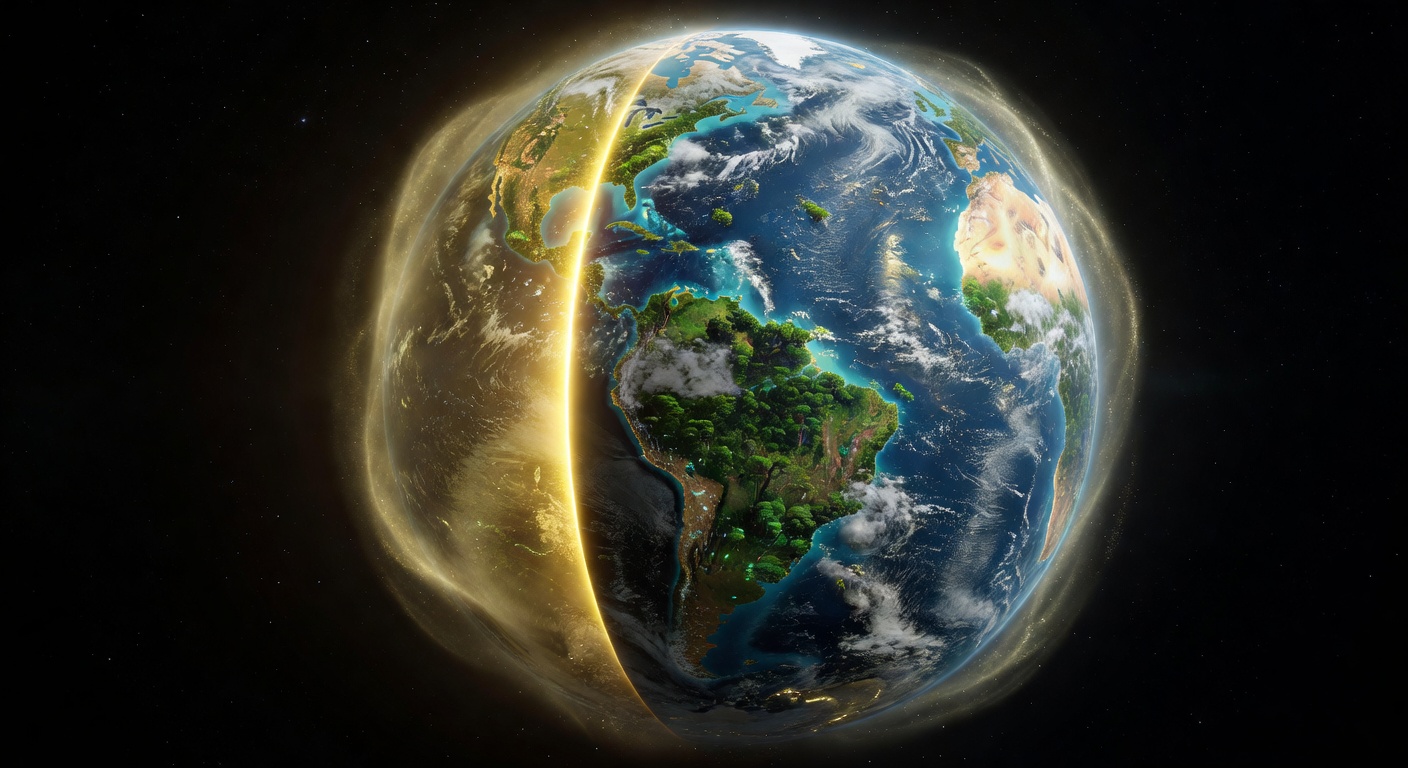
The habitable zone around a star is where liquid water can exist on a planet's surface. Simple enough. Except it isn't: tidal locking, atmospheric pressure, axial tilt, and magnetic fields all complicate the picture dramatically. Life might be possible in places we never imagined.
READ MORE →The concept seems straightforward: every star has a ring-shaped zone at a certain distance where the temperature is "just right" for liquid water to exist on a rocky planet's surface. Too close and you bake. Too far and you freeze. Earth sits comfortably in the Sun's habitable zone, and so the search for life has focused on finding similar sweet spots around other stars.
But three decades of exoplanet science have complicated the picture considerably. The habitable zone, it turns out, is more of a rough guideline than a law of nature — and some of the most intriguing candidates for life are technically outside it.
"The habitable zone is defined by liquid water on the surface. But most of Earth's biosphere is not on the surface. The deep ocean, the crust, the clouds — life found every niche. Why would other planets be different?"
Red dwarf stars — the most common type, comprising 70% of all stars — have habitable zones so close to the star that planets in those zones are likely tidally locked: one face permanently toward the star, one face in eternal darkness. The dayside could be blistering hot, the nightside frozen, with a narrow terminator zone in between experiencing permanent twilight.
This sounds hostile to life. But models suggest that with a thick enough atmosphere, heat could be distributed around the planet. The TRAPPIST-1 planets — orbiting a red dwarf 40 light-years away — are our best current test case. Early JWST observations of TRAPPIST-1c (on the hot end of the habitable zone) detected no significant atmosphere, suggesting it may be a bare rock. TRAPPIST-1e and 1f observations are ongoing.
The traditional habitable zone only considers surface liquid water. But Europa and Enceladus — both well outside the Sun's habitable zone — have vast subsurface liquid water oceans kept warm by tidal heating. This "extended habitable zone" includes worlds that internal heat, rather than starlight, keeps habitable. Rogue planets (ejected from their systems, drifting in the dark between stars) could theoretically maintain subsurface oceans for billions of years.
Water's boiling point depends on atmospheric pressure. On Mars (0.6% of Earth's atmospheric pressure), water would instantly boil at room temperature. But on a super-Earth with a thick atmosphere, liquid water could exist at temperatures far above 100°C. This means the habitable zone for high-pressure worlds extends significantly further from their star than the classical calculation suggests.
Every time we've thought we understood where life could exist on Earth, we've found it somewhere else. Hydrothermal vents. Hyperacidic lakes. Frozen Antarctic rock. Stratospheric clouds. Radioactive mine water. Life has proven to be a far more stubborn and inventive chemical process than we assumed.
The lesson for exoplanet science is humbling: when we search for "habitable" worlds, we may be searching for a far smaller set than actually exists. The universe may be full of life in places we'd call uninhabitable — because we're using ourselves as the definition of life. 🌍