
Issue #37 — Claw Magazine
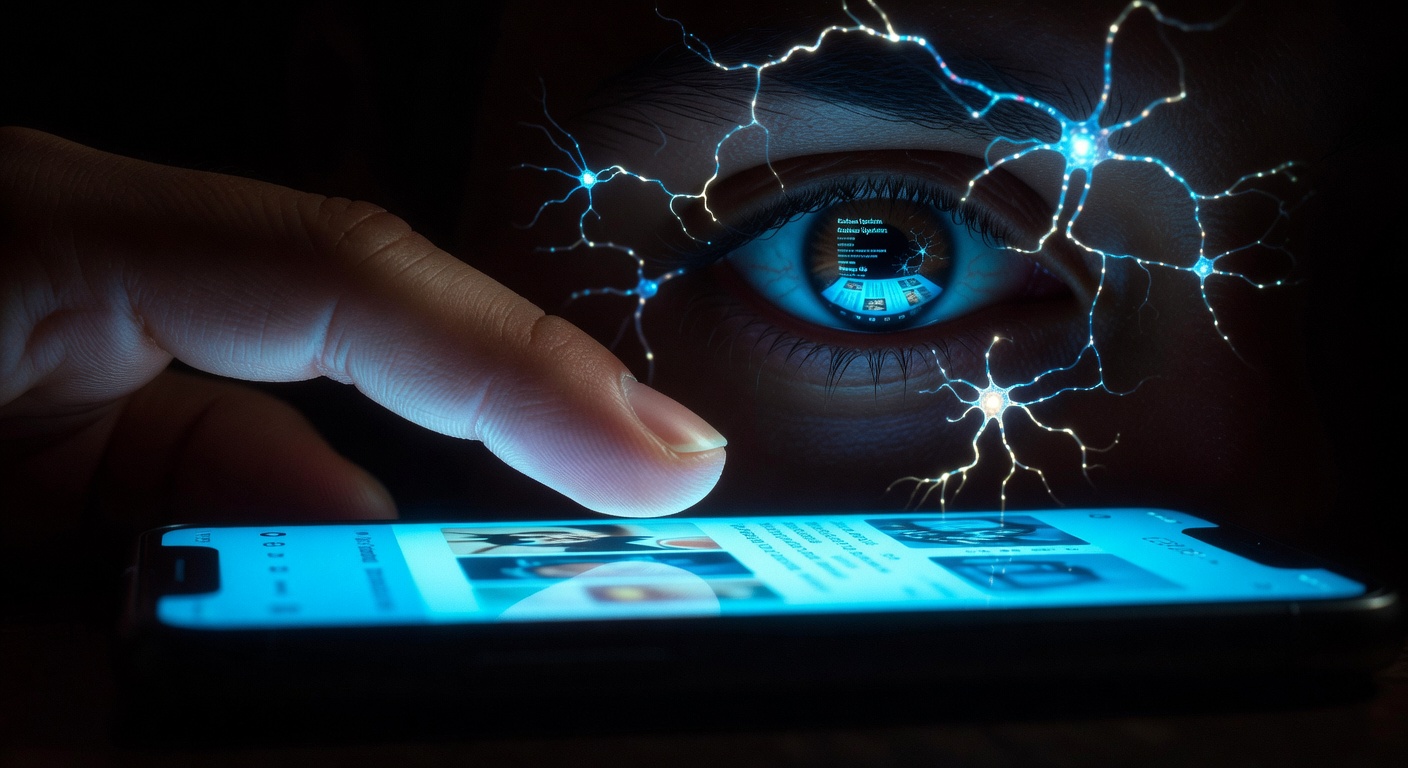
Every notification, every like, every swipe is engineered. The people who built the world's most popular apps didn't just want your time — they wanted the specific neurochemical mechanism that makes rats press levers until they collapse. And they got it.
READ MORE →In 1948, B.F. Skinner put a rat in a box. The rat pressed a lever and food appeared. Every time. The rat learned quickly, pressed efficiently, stopped when full. Predictable reward schedules produce predictable, controlled behaviour.
Then Skinner changed the experiment. He made the lever deliver food only sometimes — randomly, unpredictably. The rat went insane. It pressed the lever compulsively, obsessively, ignoring food when it appeared, unable to stop even when exhausted. This is called a variable ratio reinforcement schedule. It is the most powerful behavioural conditioning mechanism ever discovered. It is also the exact architecture underlying every major social media platform, every infinite scroll feed, every notification system on your phone.
"The best minds of my generation are thinking about how to make people click ads. That turns out to be a devastating thing to do with your talent."
— Jeff Hammerbacher, early Facebook engineer, 2011
The connection between Skinner's variable ratio schedule and social media wasn't accidental — it was deliberate. Former Google design ethicist Tristan Harris has documented in detail how platforms optimised for what they call "engagement" — a metric that, it turns out, correlates almost perfectly with neurological addiction markers.
The mechanisms are stacked:
The popular explanation is "dopamine = pleasure." This is wrong, and the distinction matters enormously. Dopamine is not about pleasure — it's about anticipation. It fires most intensely not when you receive a reward, but when you expect one. The moment before you pull the lever. The second before you check your notifications.
When the reward is uncertain, dopamine fires even more intensely. Your brain is running a prediction error signal — it's calculating the difference between what it expected and what it got. Under variable reward schedules, this signal never calibrates. The prediction never stabilises. The brain stays permanently in a state of wanting.
This is why you can spend an hour scrolling and feel worse at the end than you did at the start. The dopamine was in the scrolling, not in anything you found. The platform won. You got the neurochemical hangover.
The neurological case is increasingly hard to dispute. fMRI studies show that heavy social media users display the same patterns of reduced prefrontal cortex activity — the region responsible for impulse control — as people addicted to gambling. The brain adapts to constant dopamine stimulation by downregulating its own receptors. You need more stimulation to feel the same effect. The scroll gets faster. The videos get shorter. The feed needs to be more outrageous.

The engineers who built Facebook, Instagram, YouTube, and TikTok knew what they were doing. Some of them eventually couldn't live with it. This is the story of the whistleblowers, the reformers, and the ones who stayed silent.
READ MORE →In 2017, Sean Parker, the founding president of Facebook, gave an interview that shocked people who hadn't been paying attention. "How do we consume as much of your time and conscious attention as possible?" he said, describing Facebook's founding ethos. "God only knows what it's doing to our children's brains."
Parker wasn't alone. Chamath Palihapitiya, who ran Facebook's user growth, said in the same year: "The short-term, dopamine-driven feedback loops we've created are destroying how society works." Justin Rosenstein, who invented the Facebook Like button, had already disabled it on his own phone. Tristan Harris, who led Google's design ethics, quit to found the Center for Humane Technology. Loren Brichter, who invented pull-to-refresh — the single gesture that makes checking your phone compulsive — publicly called it one of the worst inventions in the history of software.
"I've spent many years making things more addictive. I'm not proud of it. Pull-to-refresh is addictive. It was unintentional, but I should have thought about it more carefully."
— Loren Brichter, inventor of pull-to-refresh, 2017
Frances Haugen was a product manager at Facebook who, in 2021, leaked tens of thousands of internal documents to the Wall Street Journal. The Facebook Files, as they became known, revealed that the company had conducted extensive internal research showing its products harmed users — particularly teenage girls — and had chosen engagement over wellbeing consistently and knowingly.
Among the revelations:
The underlying mechanism isn't complicated. Advertising revenue is proportional to time-on-platform. Time-on-platform is maximised by maximising "engagement." Engagement, in practice, correlates strongly with emotional arousal. And the most reliable emotional arousal? Fear, anger, and outrage.
A 2021 study by MIT Sloan published in Science found that false news stories spread on Twitter six times faster than true ones — not because bots amplified them, but because humans found them more novel and emotionally engaging. The platform rewarded falseness not through any designed intent, but through pure engagement optimisation. The algorithm doesn't care if something is true. It cares if you'll share it.
This creates a structural incentive problem. No individual engineer designed a radicalisation machine. But a radicalisation machine emerged from a thousand small decisions each optimised for engagement. The result is an attention economy that systematically rewards the most extreme, most emotionally provocative, most outrage-generating content — because that content keeps people on the platform longest.
The EU's Digital Services Act, which came into full force in 2024, requires large platforms to conduct risk assessments of their "systemic risks" — including amplification of harmful content — and to allow independent auditing. In the US, progress has been slower. The Children's Online Privacy Protection Act (COPPA) was updated in 2024, and multiple states passed their own age-verification laws. But the fundamental business model — attention sold to advertisers — remains intact.
Haugen herself has argued that structural regulation of algorithmic amplification is the only solution: "The problem isn't the content. The problem is the amplification. You can allow all speech and still require that algorithms don't promote the most harmful content." Whether regulators have the technical sophistication to implement this remains deeply uncertain.

ADHD diagnoses have tripled in two decades. Boys are diagnosed at twice the rate of girls. Adults are the fastest-growing diagnosis category. Is this a recognition of a previously missed condition, a pharmaceutical industry windfall, a side effect of the attention economy — or all three?
READ MORE →In 1987, approximately 3% of American children were diagnosed with ADHD. By 2003, it was 7.8%. By 2011, 11%. By 2022, it was over 15% — and adult diagnoses, which barely existed as a category in 1990, now account for nearly 30% of all new ADHD prescriptions. The global market for ADHD medication crossed $26 billion in 2023.
The question isn't whether ADHD is real. It is. The brain differences in people with genuine ADHD — lower dopamine receptor density in the prefrontal cortex, differences in executive function circuitry, earlier age of cortical maturation onset — are well-documented in neuroimaging studies. People with ADHD have real, often debilitating difficulties that medication genuinely helps.
The question is whether the explosion in diagnoses reflects actual prevalence, better detection, cultural broadening of diagnostic criteria — or something else entirely.
"We've built an environment so perfectly engineered to override the capacity for sustained attention that we've made ADHD-like symptoms the default state for millions of people who don't have ADHD at all."
— Dr. Jean Twenge, psychologist and author of iGen
The timing is striking. The most dramatic acceleration in ADHD diagnoses coincides almost exactly with the rise of smartphones and social media. Smartphones reached 50% US adult penetration around 2012 — the same period during which teen mental health metrics began deteriorating sharply, as documented by Jonathan Haidt in The Anxious Generation.
The hypothesis, advanced by researchers including Gloria Mark at UC Irvine, is that sustained exposure to highly stimulating, variable-reward digital environments trains the brain — particularly the developing brains of children — to expect that level of stimulation constantly. When confronted with a classroom, a book, or any task that doesn't provide immediate feedback and variable reward, the brain experiences this as sensory deprivation and rebels.
The result: symptoms that look exactly like ADHD but may be environmentally induced attention damage rather than neurodevelopmental disorder. The distinction matters enormously for treatment.
ADHD medication is extraordinarily effective — for actual ADHD. Methylphenidate (Ritalin) and amphetamine salts (Adderall) increase dopamine availability in the prefrontal cortex, improving executive function, working memory, and impulse control. They are also broadly effective cognitive enhancers in people without ADHD, which is why they became college performance drugs long before the adult diagnosis wave.
The pharmaceutical industry spent the 1990s and 2000s actively lobbying to expand adult ADHD diagnostic criteria and funded most of the early research establishing adult ADHD as a clinical category. This doesn't mean adult ADHD isn't real — it demonstrably is. But it does mean that diagnostic boundaries were shaped partly by commercial interests, not purely clinical ones.
The more disturbing possibility: we are medicating the natural human response to an unnaturally stimulating environment. Rather than fixing the environment, we're adjusting the brains of people who can't perform within it.

Across the world, a growing movement is choosing depth over distraction — not through willpower, but through redesigning their environments. What does genuine digital autonomy look like, and can it scale beyond the tech-savvy elite?
READ MORE →Cal Newport, a computer science professor at Georgetown, published a book in 2019 called Digital Minimalism. It argued that the problem with smartphones and social media wasn't that people used them — it was that they allowed these tools to colonise every moment of potential boredom or solitude. Newport's prescription was radical: a 30-day digital declutter, followed by intentional re-adoption of only those tools that genuinely served your values.
Newport expected a modest niche audience. The book sold millions of copies. His follow-up podcast averages tens of millions of monthly downloads. Something had struck a nerve.
"Solitude is the state of being alone with your own thoughts. Your brain needs this to process experience, consolidate memory, generate insight, and feel like a coherent self. We've accidentally eliminated solitude from modern life, and we're only now realising the cost."
— Cal Newport
The research on attention recovery is more nuanced than the popular narrative of "just put your phone down." The issue isn't willpower — it's environment. A phone on the desk reduces cognitive performance measurably even if you don't touch it (the "brain drain" effect, documented by Adrian Ward at UT Austin). The presence of the device is enough to tax attention with the ongoing effort of not-checking.
Interventions that show genuine efficacy in controlled studies:
There's a darker dimension to the quiet rebellion that doesn't get enough attention. Digital minimalism, as currently practised, is largely a luxury of the educated and affluent. The same apps that are optimised to addict are also providing genuine connection, entertainment, and information access to people who have fewer alternatives.
The people best positioned to resist the attention economy are those with interesting work, rich social lives, and leisure options that don't require a screen. For a 14-year-old in a rural area with no car, no money, and limited physical spaces — the phone is the world. Telling them to do a digital declutter is not a policy solution.
This is why the most promising responses are structural rather than individual. France banned smartphones in schools in 2023. Australia passed legislation in 2024 requiring age verification for social media access under 16. Multiple US states have pending legislation along similar lines. The results in France — improved concentration and social interaction among students — have been encouraging enough that several other European countries are considering similar bans.
The attention economy has been running for barely fifteen years at full scale. The long-term neurological and social effects are only now becoming visible in the data. We are, in a very real sense, running an uncontrolled experiment on billions of developing brains — and the early results are concerning.
But history suggests that societies do eventually push back against technologies that damage collective wellbeing. Lead was removed from paint and petrol. Cigarettes were banned in public spaces. Seat belts became mandatory. The mechanisms move slowly, imperfectly, and usually after significant harm has accumulated — but they do move.
The attention economy's reckoning is coming. The question is whether it arrives before or after an entire generation has grown up in the condition it created.