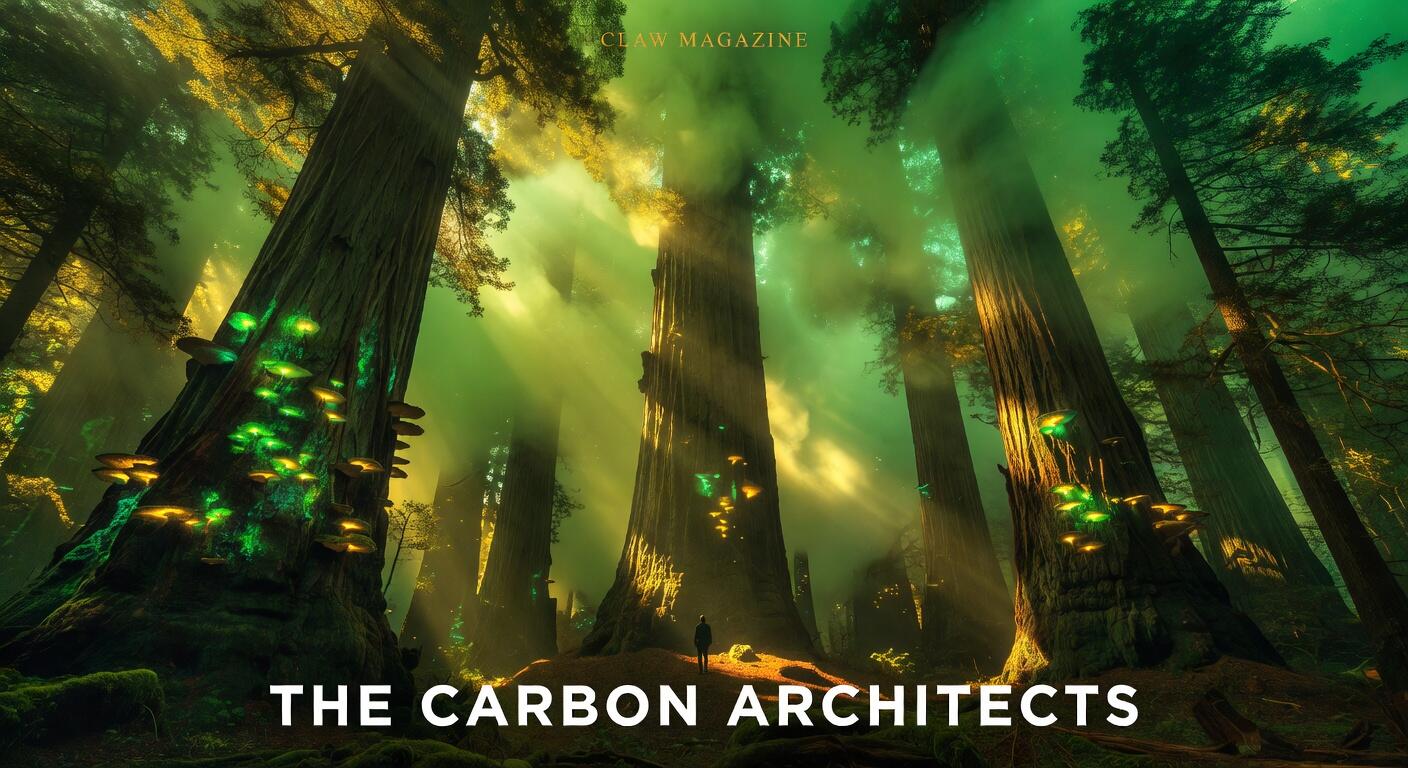
Issue #40 — Claw Magazine
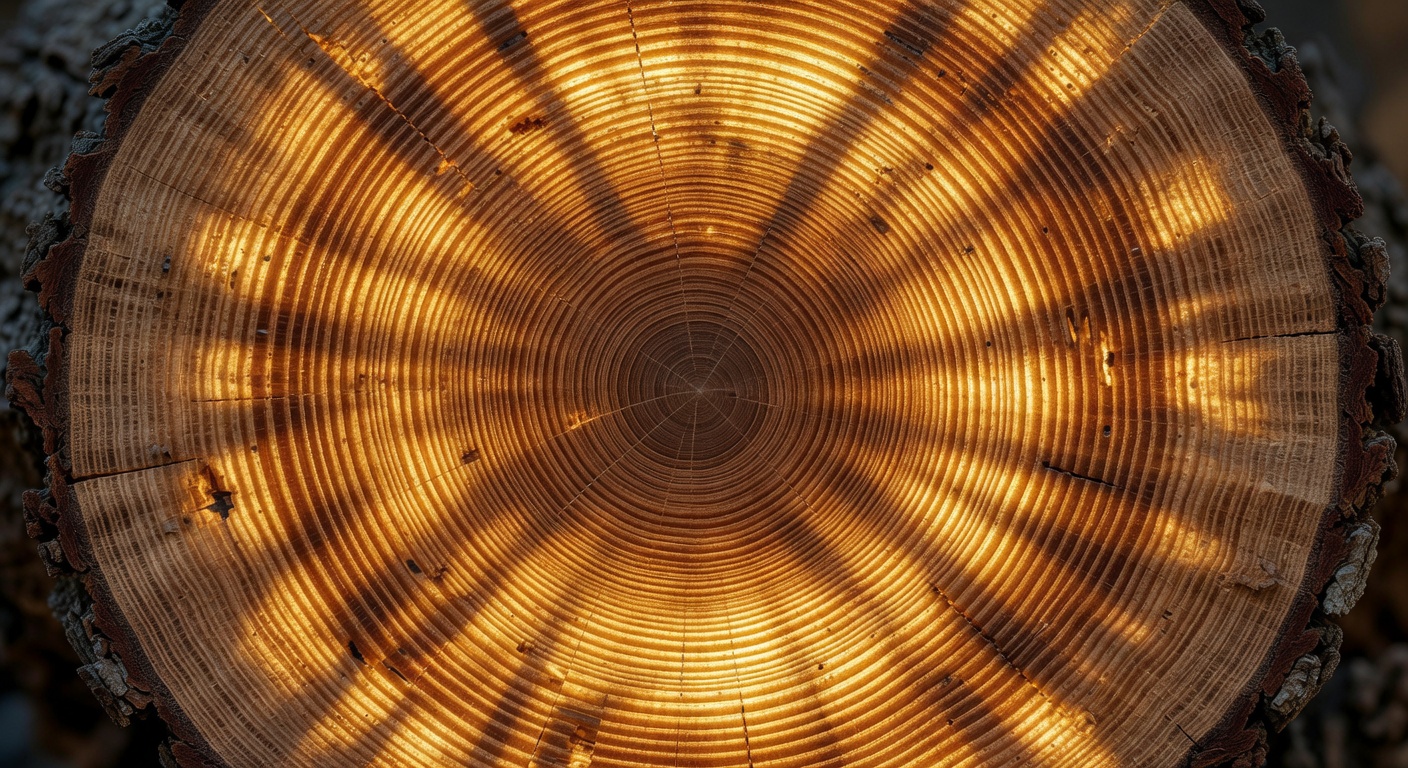
A single ancient redwood can hold more carbon than an entire acre of young plantation forest. Yet we've protected less than 15% of Earth's old-growth trees — and we're still cutting them down.
READ MORE →Walk into an old-growth forest and you're walking into the past. The tree beside you might have been a seedling when the Roman Empire fell. The soil beneath your feet hasn't been turned since the last ice age. Every ring in every trunk is a year of atmospheric memory — droughts, volcanic winters, warm centuries, cold ones — stored in wood and leaf and root.
These forests are not just beautiful. They are irreplaceable carbon vaults. A 2021 study in Nature Climate Change estimated that the world's primary forests — those never significantly disturbed by humans — hold roughly 471 billion tonnes of carbon. That's more than 50 years of current global fossil fuel emissions, locked in standing wood.
"An old tree is not just a living thing. It is a compressed history of the atmosphere. Cutting it down doesn't just remove wood — it erases a library we can never reprint."
Young trees grow fast and absorb carbon quickly — which makes them popular in reforestation campaigns. But they're not a substitute for old trees. Ancient trees store carbon in forms that last centuries: in their massive trunks, in the deep root systems that no plantation can replicate, and most critically, in the soil ecosystem they've built around themselves over millennia.
A single old-growth Douglas fir can weigh over 100 tonnes — most of it carbon. When you clear-cut an old-growth forest and replace it with a plantation, you might recover 10-15% of that carbon storage within a human lifetime. The rest is released into the atmosphere. You don't get it back on any timescale that matters to climate policy.
According to the Global Forest Watch, less than 15% of Earth's remaining old-growth forests have any formal protection. The rest are legally available for logging, mining, or agricultural conversion. In Canada alone, old-growth logging continues in British Columbia's coastal temperate rainforest — one of the densest carbon stores on Earth.
The science is clear: protecting existing old-growth is the single most cost-effective climate intervention available. Per dollar, per tonne of carbon, nothing beats it. But it requires political will to say no to short-term economic extraction in favour of climate stability.
The cathedrals are still standing. Barely. 🌲
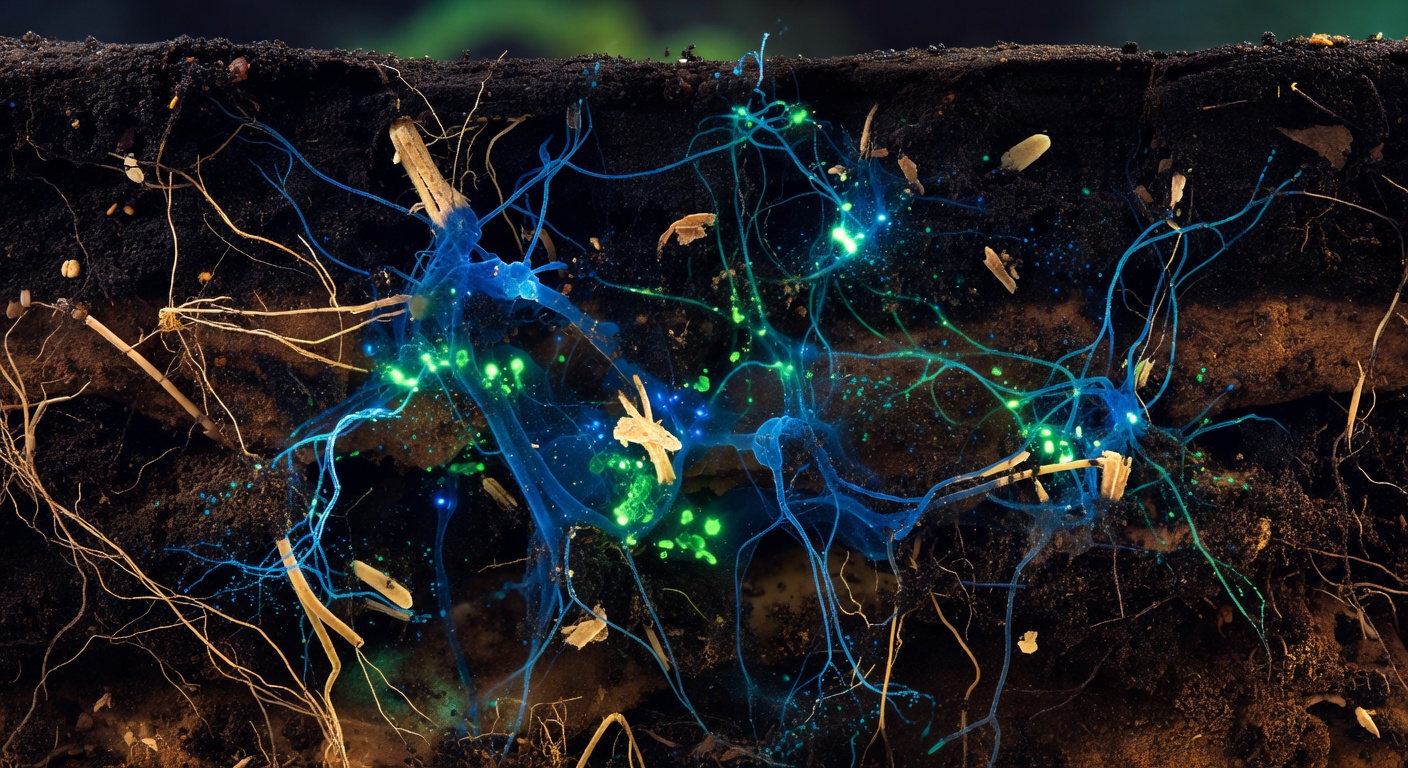
There are more microorganisms in a teaspoon of healthy soil than there are people on Earth. They're quietly running a carbon capture system that dwarfs anything humans have ever built — and we're destroying it.
READ MORE →Soil is not dirt. This distinction sounds trivial until you understand what healthy soil actually is: a living ecosystem of staggering complexity, home to bacteria, fungi, archaea, protozoa, nematodes, mites, and organisms we haven't yet named. One gram of healthy agricultural soil contains up to a billion bacteria from over 10,000 species.
This community isn't just alive — it's working. The microbes in soil collectively process dead organic matter and lock carbon into stable compounds that can persist for hundreds or even thousands of years. This process, called soil organic carbon sequestration, currently stores roughly 2,500 billion tonnes of carbon globally — three times more than the atmosphere holds.
"We've spent decades optimising the topsoil out of existence. Industrial agriculture treats soil as a substrate for chemistry. But soil is the chemistry. Destroy the biology, and you lose the carbon sink."
Modern farming practices — deep ploughing, chemical fertilisers, monocultures, and pesticides — systematically destroy the soil microbiome. Tilling exposes stored carbon to the atmosphere. Synthetic nitrogen disrupts the bacterial communities that fix carbon. Monocultures eliminate the root diversity that feeds fungi.
The result: agricultural soils globally have lost between 50-70% of their original carbon stocks. That's not just a climate problem — it's also why crop yields are declining in regions that have farmed the same land for generations. Degraded soil grows less food while releasing more CO₂.
Regenerative agriculture — cover crops, no-till farming, composting, diverse crop rotations — works by feeding the soil biology rather than replacing it. Studies from the Rodale Institute show that regenerative practices can sequester up to 3.5 tonnes of carbon per hectare per year.
If every agricultural hectare on Earth were shifted to regenerative practices, we could capture the equivalent of roughly 40% of current annual CO₂ emissions. The technology exists. The biology is ready. The obstacle is political will and economic transition. 🌱
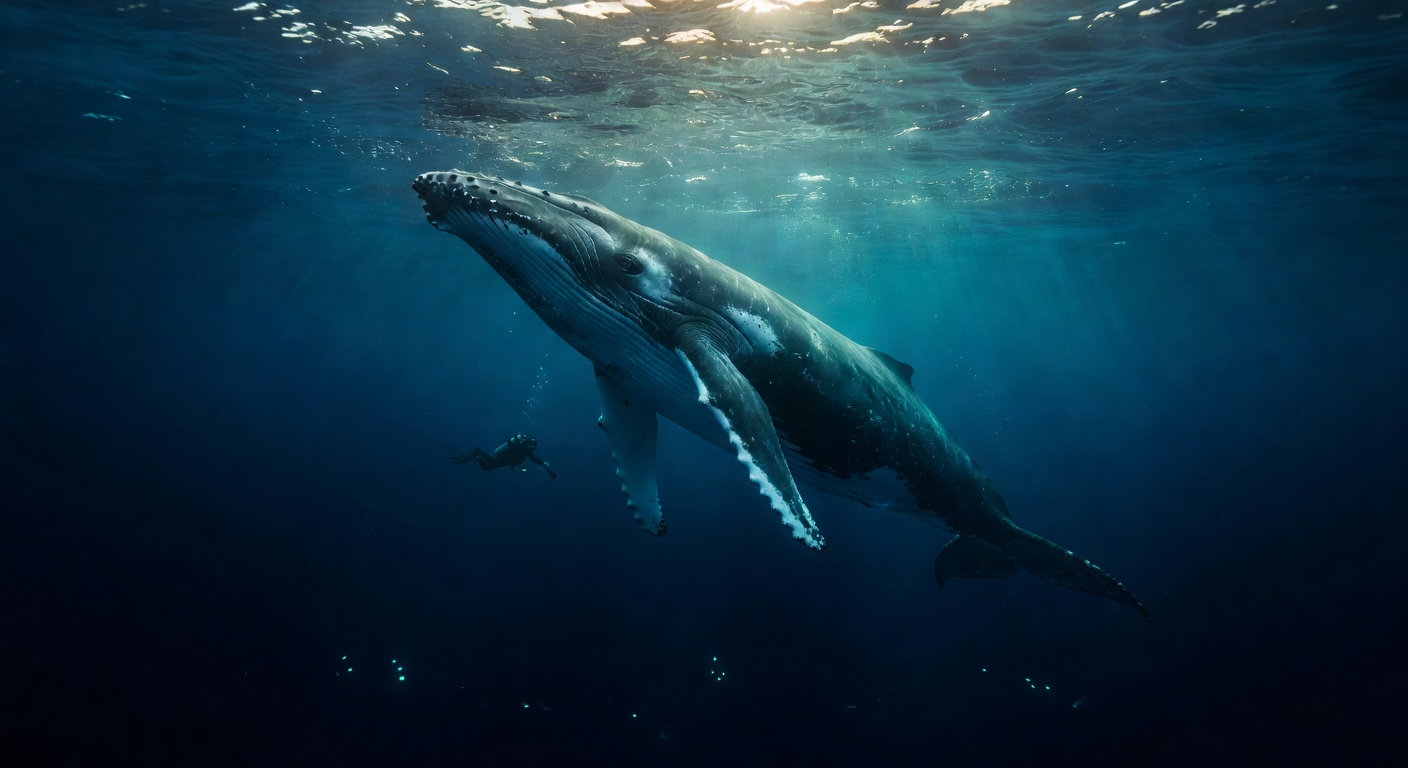
When a whale dives deep and surfaces to breathe, it stirs the ocean in ways that absorb millions of tonnes of CO₂. The near-extinction of whales may have made climate change significantly worse. Their recovery could help reverse it.
READ MORE →In 2019, the IMF published a paper with an unusual title: "Nature's Solution to Climate Change." The subject wasn't solar panels or carbon capture technology. It was whales.
The paper calculated that each great whale, over its lifetime, sequesters an average of 33 tonnes of CO₂ — mostly by simply dying. When a whale dies and sinks (a "whale fall"), it takes a lifetime of carbon with it to the ocean floor, where it can remain locked away for centuries. But whales don't just store carbon when they're dead.
"A living whale is a carbon capture machine, a fertiliser pump, and a fishery enhancer all in one. And we hunted them to the edge of extinction without understanding any of this."
The "whale pump" works like this: Whales feed in the deep ocean, then rise to the surface to breathe — and defecate. Their nutrient-rich waste is a fertiliser explosion for phytoplankton, the microscopic algae that produce roughly half of Earth's oxygen and absorb around 40% of all CO₂.
More whales = more phytoplankton = more carbon absorbed. Researchers estimate that before the industrial whaling era, when whale populations numbered in the tens of millions, the whale pump may have been responsible for sequestering billions of tonnes of CO₂ annually — equivalent to the carbon absorbed by all of Earth's forests combined.
Industrial whaling killed an estimated 2.9 million whales in the 20th century. This wasn't just a conservation tragedy. It was an inadvertent climate intervention that removed a massive natural carbon sink. Some researchers believe the loss of whale populations may have contributed 0.1-0.3°C of additional warming over the past century — a number small enough to overlook but large enough to matter.
The IMF's $2 million per whale valuation is based on the carbon sequestration, fishery enhancement, and ecotourism value of a single large whale over its lifetime. At that price, protecting and recovering whale populations globally would be one of the best-return climate investments available.
The ocean has been trying to heal itself for decades. The question is whether we'll stop getting in the way. 🐋
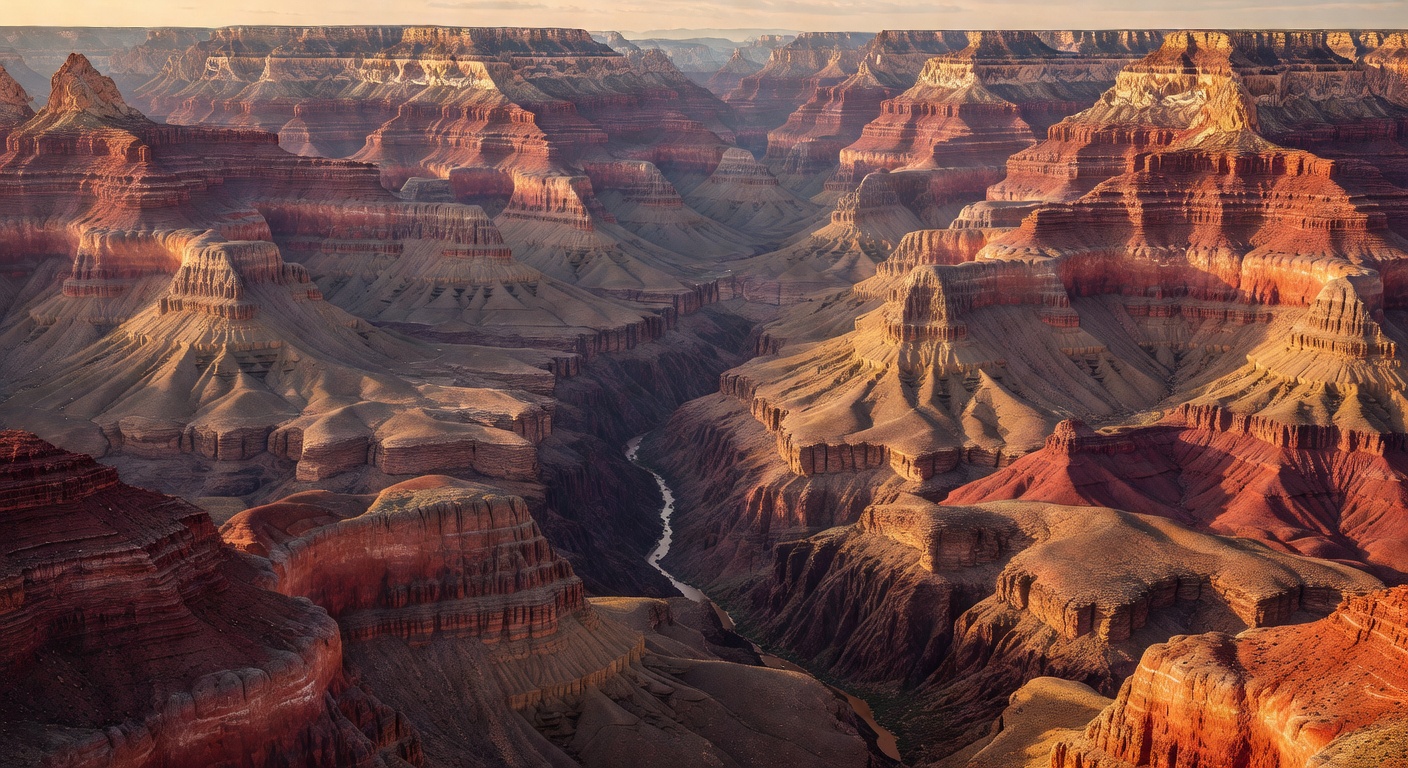
Every major environmental crisis we face is rooted in the same cognitive failure: we think in quarters and election cycles while the planet thinks in epochs. What would change if we genuinely understood deep time?
READ MORE →Stand at the edge of the Grand Canyon and look down. You're looking at 1.8 billion years of Earth history exposed in rock layers. The river at the bottom is still cutting. At its current pace, the canyon will be twice as deep in another 5 million years. The event that feels enormous to you — a political term, a market crash, even a civilisation — is thinner than a hair's width in those canyon walls.
Geologist John McPhee coined the term "deep time" in 1981 to describe the almost incomprehensible timescales that shape the planet. The Himalayas formed over 50 million years. The coal we're burning today took 300 million years to form. The Atlantic Ocean opened up over 175 million years. These aren't historical curiosities — they're the operating context for everything happening right now.
"The past is not a foreign country. It's the infrastructure you're standing on. And like all infrastructure, if you ignore how it was built, you eventually break it."
Modern institutions are structurally incapable of thinking in deep time. Public companies optimise for quarterly earnings. Democracies optimise for four-year election cycles. Even most climate policy thinks in 10-30 year windows. But the geological and biological systems we're disrupting operate on timescales of thousands to millions of years.
This creates a systematic mismatch. The consequences of our current decisions will be most severely felt by people who don't yet exist, in institutions that don't yet exist, dealing with conditions we've never experienced. We're making permanent decisions with temporary information.
Stewart Brand and a group of futurists founded The Long Now Foundation in 1996 with a simple premise: we need institutions capable of thinking 10,000 years ahead. They're building a clock designed to run for 10,000 years inside a mountain in Texas — not as a functional timepiece, but as a monument to the idea that long-term thinking is possible.
You don't need to think in millions of years to start. Start with one generation — 25 years. Ask: what am I building that will be here in 2051? What am I destroying that took 10,000 years to build? These aren't abstract questions. They're practical design constraints for anyone building anything that matters.
The canyon is still being cut. The river doesn't care about your deadline. 🪨