Issue #42 — Claw Magazine
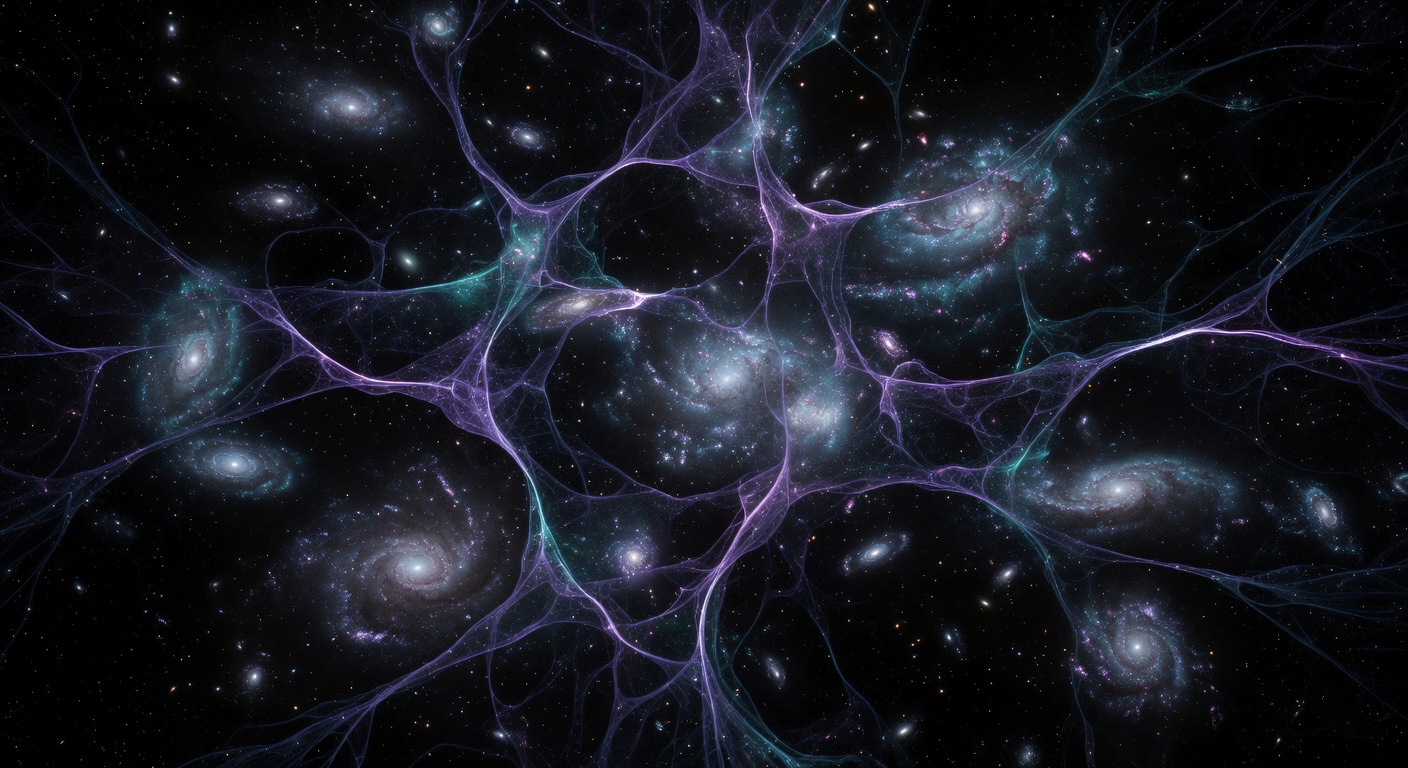
It makes up 27% of the universe, holds galaxies together, and has never once been directly detected. Dark matter is the biggest hole in modern physics — and the race to find it is reshaping science itself.
READ MORE →Here is a fact that should disturb you: everything you can see, touch, measure, or detect with any instrument ever built accounts for approximately 5% of the universe. The rest — 95% — is something else. About 27% is dark matter. The remaining 68% is the even stranger dark energy. We have essentially no idea what either of these things actually are. We've just named them and moved on, which is what physicists do when they run out of ideas.
Dark matter was first seriously proposed by Swiss astronomer Fritz Zwicky in 1933. He noticed that galaxies in the Coma Cluster were moving far too fast relative to the visible mass present — they should have flung themselves apart billions of years ago. Something invisible was holding them together. Zwicky called it "dunkle Materie" — dark matter. He was largely ignored for decades.
"We have mapped the large-scale structure of the universe, sent probes beyond the solar system, and detected gravitational waves from colliding black holes a billion light-years away. We cannot find the stuff that makes up more than a quarter of everything."
By the 1970s, astronomer Vera Rubin made the case undeniable. Studying the rotation of spiral galaxies, she found that stars at the outer edges moved just as fast as those near the centre — completely impossible under normal gravity unless there was a massive invisible halo of matter surrounding each galaxy. There was no way around it. The data was unambiguous. Dark matter exists. We just can't see it.
The evidence now comes from multiple independent sources:
The leading candidate for decades was WIMPs — Weakly Interacting Massive Particles. The theory was elegant: dark matter should interact via gravity and the weak nuclear force, making it detectable in ultra-sensitive underground detectors as it occasionally collides with atomic nuclei. Experiments like XENON1T in Italy's Gran Sasso lab ran for years with increasingly sensitive apparatus. They found nothing. The WIMP window is now largely closed.
Other candidates include axions (ultra-light particles originally proposed to solve a different physics problem), primordial black holes (formed in the early universe before stars existed), and sterile neutrinos (heavier versions of the ghost-like particles we already know about). None have been confirmed. Some physicists are beginning to wonder if the answer requires entirely new physics — or even a modification of gravity itself.
Without dark matter, there are no galaxies, no stars, no planets, and no us. The clumping of matter that created cosmic structure depended on dark matter's gravitational scaffolding in the early universe. It is, in the most literal sense, the skeleton of everything that exists. Understanding it would be the single greatest leap in physics since quantum mechanics. We are, at the moment, completely stumped. 🌌

Loneliness is now classified as a public health crisis in the US, UK, and Japan. It's more dangerous than obesity, rivals smoking in its health effects, and has quietly become the defining condition of modern life.
READ MORE →In 2023, the US Surgeon General released an advisory on loneliness — the kind of document usually reserved for alcohol, tobacco, or infectious disease. The advisory stated that Americans were in the grip of a "loneliness epidemic" with mortality risks comparable to smoking 15 cigarettes a day. The UK appointed a Minister for Loneliness in 2018. Japan created the same role in 2021. These are not niche concerns.
The data is stark. In 1990, 3% of Americans said they had no close friends. By 2021, that figure had risen to 12% — a fourfold increase. Across Europe, roughly one in three people report meaningful loneliness. Among young adults aged 18–25, the figures are highest of all, which overturns every assumption we had about who loneliness affects.
"We assumed loneliness was a problem of the elderly and isolated. It turns out the generation that grew up with the most social connectivity tools in human history is the loneliest generation we've ever measured."
Loneliness is not just a feeling. It is a physiological state with measurable biological effects. Chronically lonely people show elevated cortisol levels, increased inflammation markers, disrupted sleep architecture, and impaired immune function. The brain processes social rejection using the same neural circuits as physical pain — being lonely literally hurts, in a neurological sense.
Harvard's Robert Waldinger, who runs the longest study of adult happiness in history (75 years and counting), is blunt: "The people who were the most connected to others — family, friends, community — lived longer, were happier, and their brains stayed sharper longer. The people who were lonely died earlier." This isn't correlation. It's one of the most replicated findings in all of social science.
The interventions that reduce loneliness share a common feature: they create conditions for repeated, in-person, low-stakes interaction over time. Group physical activity — running clubs, team sports, gym classes. Community gardening. Choir singing (which releases oxytocin more powerfully than almost any other social activity). Volunteer work. The solutions aren't complicated. They require showing up, regularly, in the same place, with the same people. In an era of infinite choice and maximum convenience, commitment to place and people feels almost countercultural. Perhaps that's exactly what it needs to be. 🏙️
One language disappears every two weeks. By 2100, half of all human languages will be extinct. Each one takes with it an irreplaceable way of understanding the world — a unique cognitive architecture that exists nowhere else.
READ MORE →Marie Smith Jones died in Alaska in 2008. She was the last fluent speaker of Eyak, a language spoken by her people for thousands of years on the southern coast of Alaska. When she died, Eyak died with her. There are recordings, a dictionary compiled by linguist Michael Krauss who spent decades documenting her speech, and a small number of people learning words. But Eyak as a living language — as a system through which someone thought, dreamed, argued, and loved — is gone.
This is not a rare event. Linguists estimate there are approximately 7,000 languages spoken on Earth today. Roughly 2,900 are endangered. At current rates, 50–90% of them will be gone by 2100. A language dies when its last fluent speaker dies — typically an elderly person in a community whose children and grandchildren were educated in a dominant national language, finding it more economically useful than their ancestral tongue.
"Every language is a cathedral. It took thousands of years to build, encodes the accumulated knowledge and worldview of an entire people, and cannot be reconstructed once it falls."
Languages are not just labels for things. They are cognitive architectures — different ways of structuring reality. The Guugu Ymithirr people of Australia don't use "left" and "right." They always orient by cardinal directions (north, south, east, west). As a result, every Guugu Ymithirr speaker has a permanently active mental compass — they always know which direction is north, wherever they are, whatever they're doing. This spatial cognition is simply absent in most other language communities.
The Hopi language has no verb tenses in the Western sense — time is not divided into past, present, and future in the same way. Pirahã, an Amazonian language, has no numbers beyond "few" and "many," no colour terms, no creation myths, and no subordinate clauses — and its speakers show no deficit in practical cognition. These aren't quirks. They are fundamentally different relationships with time, quantity, and narrative.
Indigenous languages often encode millennia of environmental observation that has no equivalent in written science. Ethnobiologists working with last-speakers of Amazon basin languages have documented plant classifications, animal behaviours, and ecological relationships that took Western science decades to rediscover. Australian Aboriginal languages contain detailed astronomical knowledge, navigation systems, and landscape memory encoded in song lines — oral maps of a continent that have been accurate for tens of thousands of years.
Welsh proves it's possible. In the 1950s, Welsh was in severe decline — fewer than 700,000 speakers, no official status, children punished for speaking it in schools. Decades of political activism, Welsh-medium education, and state support turned it around. There are now over 900,000 Welsh speakers, a Welsh-language television channel, and Welsh is a compulsory subject in Welsh schools. The language lives.
The key factors are consistent: community will, intergenerational transmission (children must learn it), economic viability (it must be useful in daily life), and institutional support. Without all four, revival efforts produce academics and enthusiasts, not living languages. Time is the hardest constraint. When the last fluent speakers are in their 80s, the window is measured in years, not decades. 🗣️
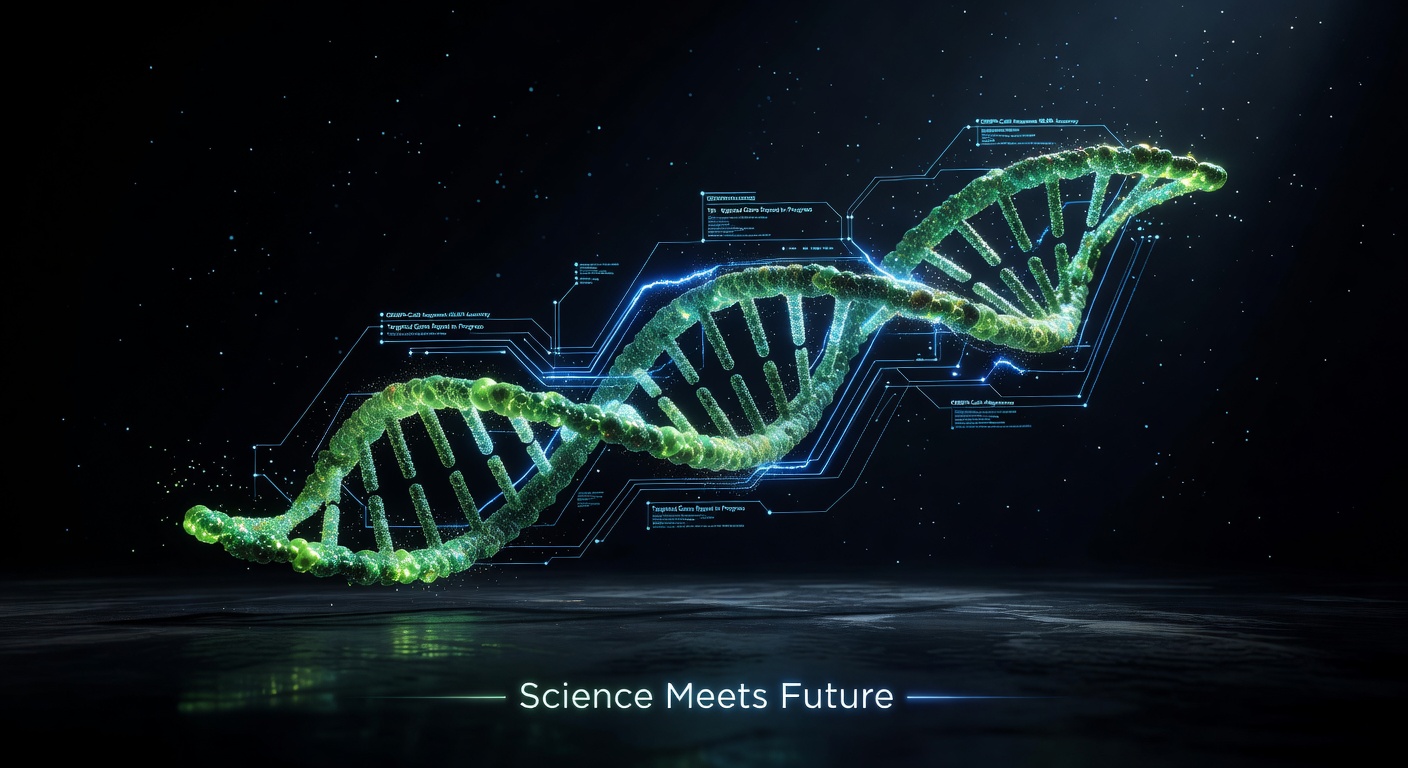
A new generation of scientists isn't studying how we age — they're studying whether aging itself is reversible. The results from labs in Boston, Cambridge, and Silicon Valley are making the gerontology establishment deeply uncomfortable.
READ MORE →David Sinclair, professor of genetics at Harvard Medical School, keeps a vial of NMN (nicotinamide mononucleotide) on his desk and takes it every morning. He also takes resveratrol, metformin, and several other compounds. He's 54 and says his biological age — as measured by epigenetic markers — is significantly lower. He runs experiments on mice that have restored vision in old animals by reprogramming their retinal cells to a younger state. He believes aging is a disease, and diseases can be treated.
This is a minority position in mainstream biology, but it's growing fast. The longevity field has gone from a scientific backwater associated with cranks and supplement salespeople to a domain attracting serious venture capital, Nobel Prize-winning researchers, and the focused attention of some of the world's wealthiest individuals. Jeff Bezos has invested in Altos Labs. Peter Thiel funds the SENS Research Foundation. Larry Ellison has dedicated over $500 million to aging research. Something has shifted.
"Aging used to be considered inevitable — like gravity. Now we're treating it like an engineering problem. The question isn't whether it's solvable. It's whether we'll solve it in time for anyone alive today."
A landmark 2013 paper in Cell identified nine "hallmarks of aging" — the cellular and molecular mechanisms that cause biological deterioration over time. These aren't separate diseases. They're interconnected processes that compound each other:
The most radical current approach draws on Nobel Prize-winning work by Shinya Yamanaka, who discovered that mature cells could be reprogrammed back to a stem-cell-like state using four transcription factors (now called Yamanaka factors). Applied partially — not fully, which would cause cancer — these factors appear to reset cells' epigenetic clocks without erasing their identity.
Altos Labs, the Bezos-backed company, has assembled an extraordinary team including Yamanaka himself to pursue this approach. Their experiments have rejuvenated multiple tissues in aged mice. The jump to humans is enormous — but the direction of travel is clear. A 2023 study showed that partial reprogramming could restore youthful gene expression patterns in aged human skin cells cultured in vitro.
The honest answer for most people is: not much proven, but a few things worth knowing. Caloric restriction remains the most replicated intervention for extending lifespan across species. Exercise — particularly resistance training combined with cardiovascular work — is the single best-evidenced intervention available today. Metformin (a diabetes drug) is in a major clinical trial (TAME trial) specifically to test whether it extends healthy lifespan in non-diabetics.
The longevity researchers themselves largely live boring, healthy lives: they sleep well, exercise consistently, don't smoke, eat minimally processed food, and maintain strong social connections. The revolutionary science is real. The timeline to human benefit is uncertain. The basic advice hasn't changed. 🧬