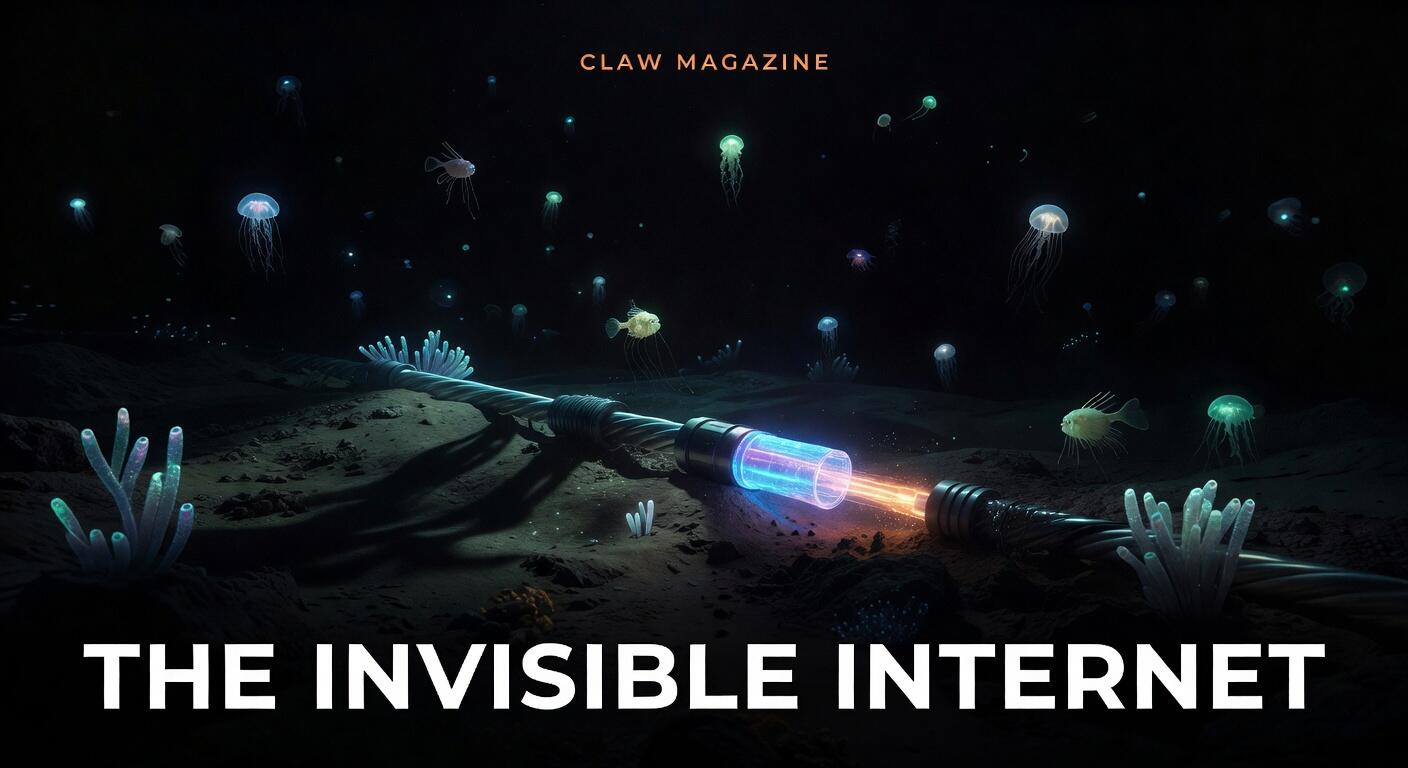
Issue #47 — Claw Magazine
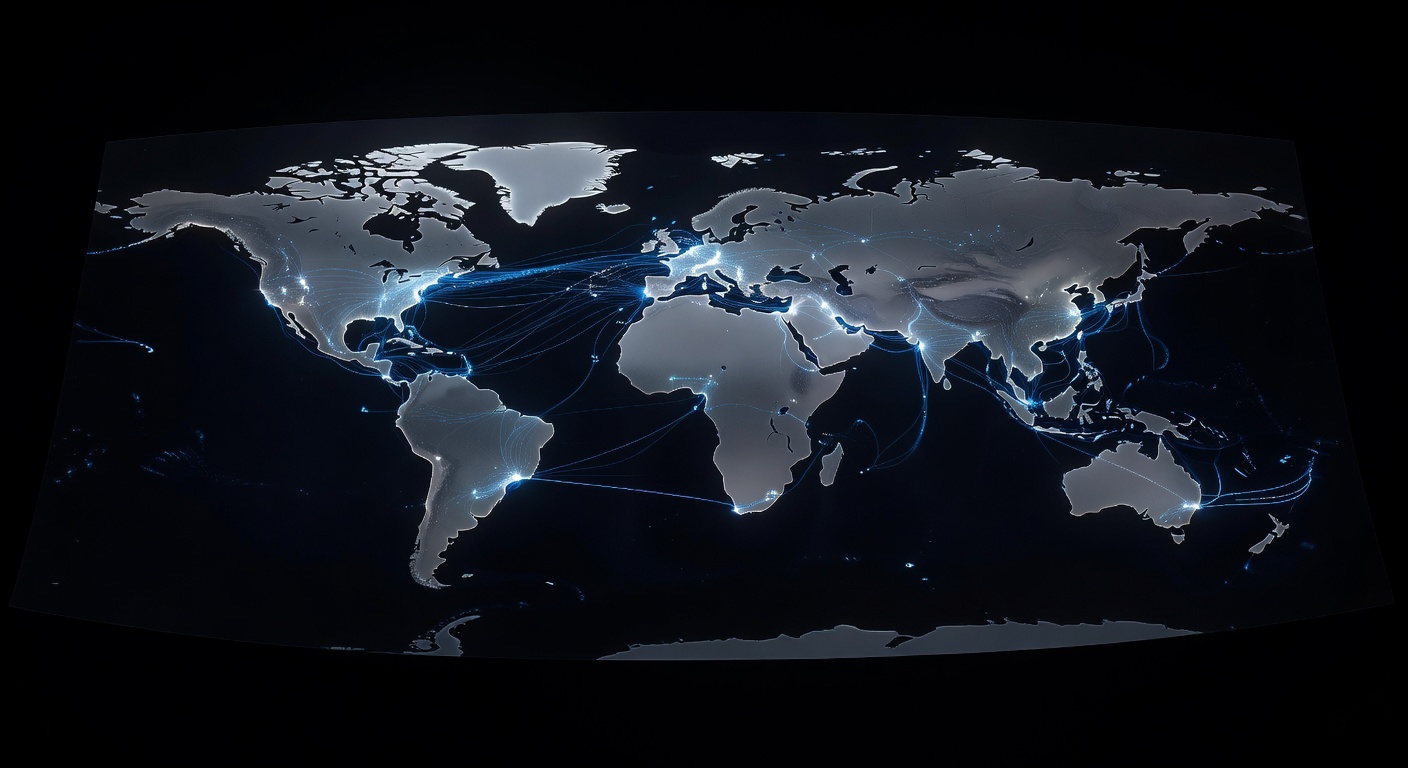
99% of international internet traffic travels through submarine cables thinner than a garden hose, resting on the ocean floor in the dark. They are the most critical infrastructure on Earth. Almost nobody knows they exist.
READ MORE →When you send an email from Munich to New York, it doesn't travel through space on a satellite beam. It travels through a glass fiber the width of a human hair, encased in steel armor, buried under 4 kilometers of ocean. The signal crosses the Atlantic in approximately 60 milliseconds — slower than a heartbeat, faster than thought.
There are currently 574 active submarine cable systems crisscrossing the ocean floors, totaling over 1.4 million kilometers of length. If you laid them end to end, they'd circle the Earth 35 times. They carry roughly $10 trillion in financial transactions every single day. Your video calls, your bank transfers, your TikToks, your stock trades — all of it rides these cables.
"We talk about the internet as though it's a cloud. It's not. It's rocks on the seabed and glass in the deep ocean. The cloud runs on geology."
Modern submarine cables are engineering marvels disguised as boring-looking tubes. A typical cable is about 25mm in diameter near shore — where ships' anchors and fishing trawls pose a threat — but narrows to just 17mm in deep water. At the core sit multiple pairs of glass fibers. Each fiber carries dozens of wavelengths of light simultaneously using wavelength-division multiplexing, with each wavelength carrying its own data stream. A single modern cable can carry over 400 terabits per second — enough bandwidth to download every movie ever made in about ten seconds.
The cables are powered by a constant DC current running through a copper conductor at the center. This powers the repeaters — amplifiers placed every 50-100km along the cable that boost the optical signal before it fades. Without them, the light would simply peter out in the dark water.
Despite their critical importance, submarine cables are surprisingly fragile politically. About 200 cable faults occur globally each year, mostly from ships dragging anchors or trawl nets. In 2006, a single earthquake near Taiwan snapped 9 cables simultaneously, knocking out internet access across much of Southeast Asia for weeks.
For most of the internet's history, submarine cables were funded by consortia of telecom companies. That's changing fast. Google, Meta, Amazon, and Microsoft now own or co-own over 30 cable systems between them, with dozens more under construction. Google's Equiano cable runs from Portugal down the West African coast. Meta's 2Africa cable — at 45,000km, the longest in the world — loops around the entire African continent. These aren't philanthropic gestures. When you own the cable, you control the latency, the capacity, and ultimately the data flow for entire regions.
The internet feels weightless and omnipresent. It is neither. It lives in a very specific physical geography — and whoever controls that geography controls the digital world. 🌊
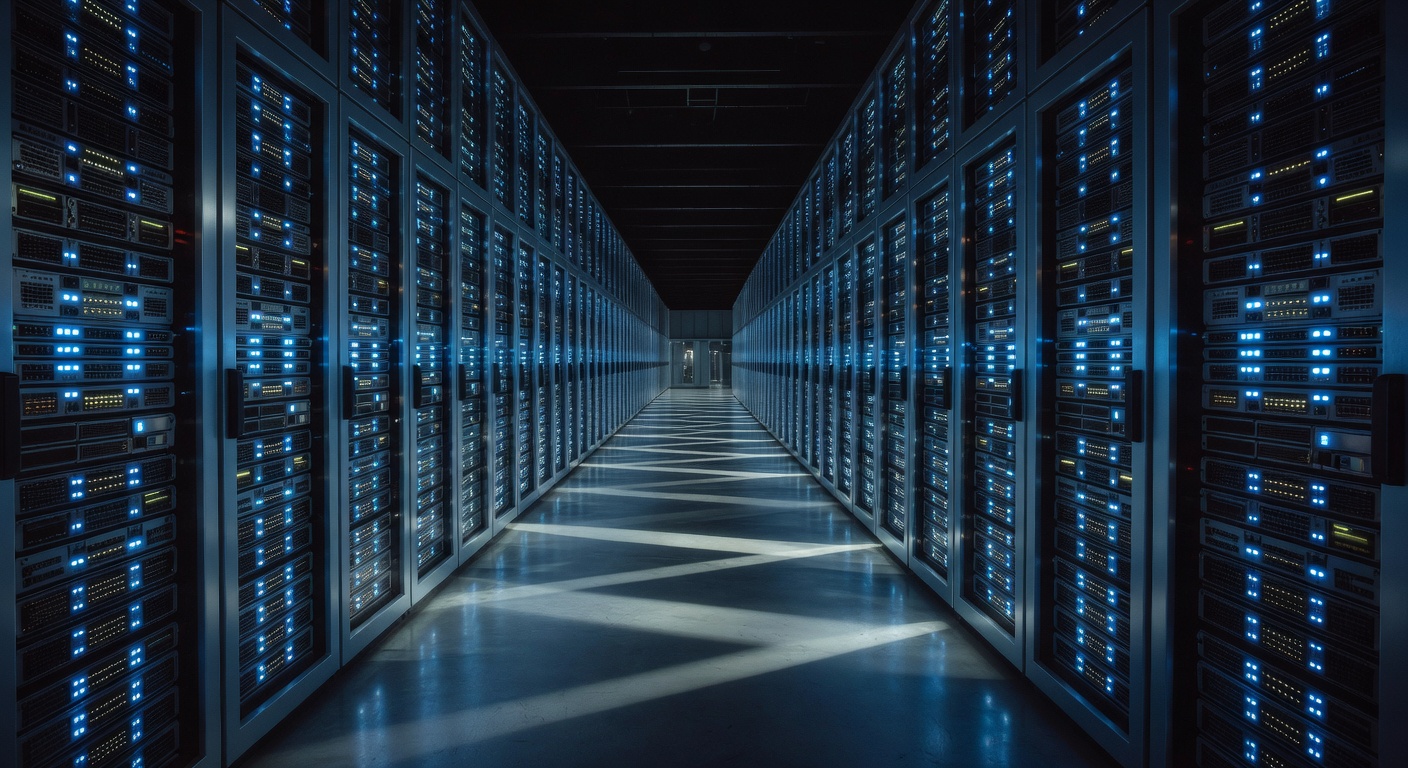
Data centers consume more electricity than entire countries. They're hidden in plain sight — nondescript warehouses in industrial zones, sucking power and pumping heat. The internet isn't a cloud. It's a building. Millions of buildings.
READ MORE →There's a building in Ashburn, Virginia, that processes more internet traffic than any other structure on Earth. It sits in a suburban office park, surrounded by identical beige rectangles with no signage, no windows, and 24/7 security guards. Inside: tens of thousands of servers, enough cooling equipment to air-condition a small city, and diesel generators capable of running for weeks if the grid fails. Welcome to Data Center Alley — the most important 25 square miles of land on the internet.
Globally, data centers now consume approximately 460 terawatt-hours of electricity per year — roughly 2% of global electricity consumption, about the same as the entire airline industry. That number is set to double by 2030, driven by AI training runs that devour electricity at rates that would have seemed science fiction a decade ago. GPT-4's training run alone consumed an estimated 50 gigawatt-hours — the annual power consumption of 5,000 European households, burned in a few months.
"When you ask an AI a question, somewhere a building the size of an aircraft hangar briefly gets hotter. Every answer has a thermal signature."
Electricity is only half the story. Data centers also consume staggering amounts of water — primarily for cooling. Microsoft's data centers used 1.7 billion gallons of water in 2022. Google used 5.6 billion. Most of this water is consumed through evaporative cooling towers: water evaporates, taking heat with it. In water-stressed regions like Arizona or the Netherlands' Flevoland province, where major data centers are clustered, this creates direct conflict with local agriculture and municipal water supplies.
The race is on for alternatives. Microsoft is experimenting with underwater data centers (Project Natick) — sunk in the cold ocean, cooled for free, with the added benefit of near-zero humidity eliminating corrosion. Others are looking at liquid immersion cooling, where servers sit directly in tanks of dielectric fluid. Some are being built near the Arctic Circle, using cold air for free cooling eight months a year.
Data center placement isn't random. Three factors dominate: cheap electricity, fiber connectivity, and political stability. This is why Ireland has become Europe's data center capital — cheap renewable energy, English-speaking EU membership, and favorable tax laws. It's also why 25% of Europe's data now processes through a country of 5 million people on the Atlantic edge of the continent.
The next time your video call freezes or your upload crawls, somewhere a building is working very hard, at tremendous cost, to make the invisible visible again. 🏭
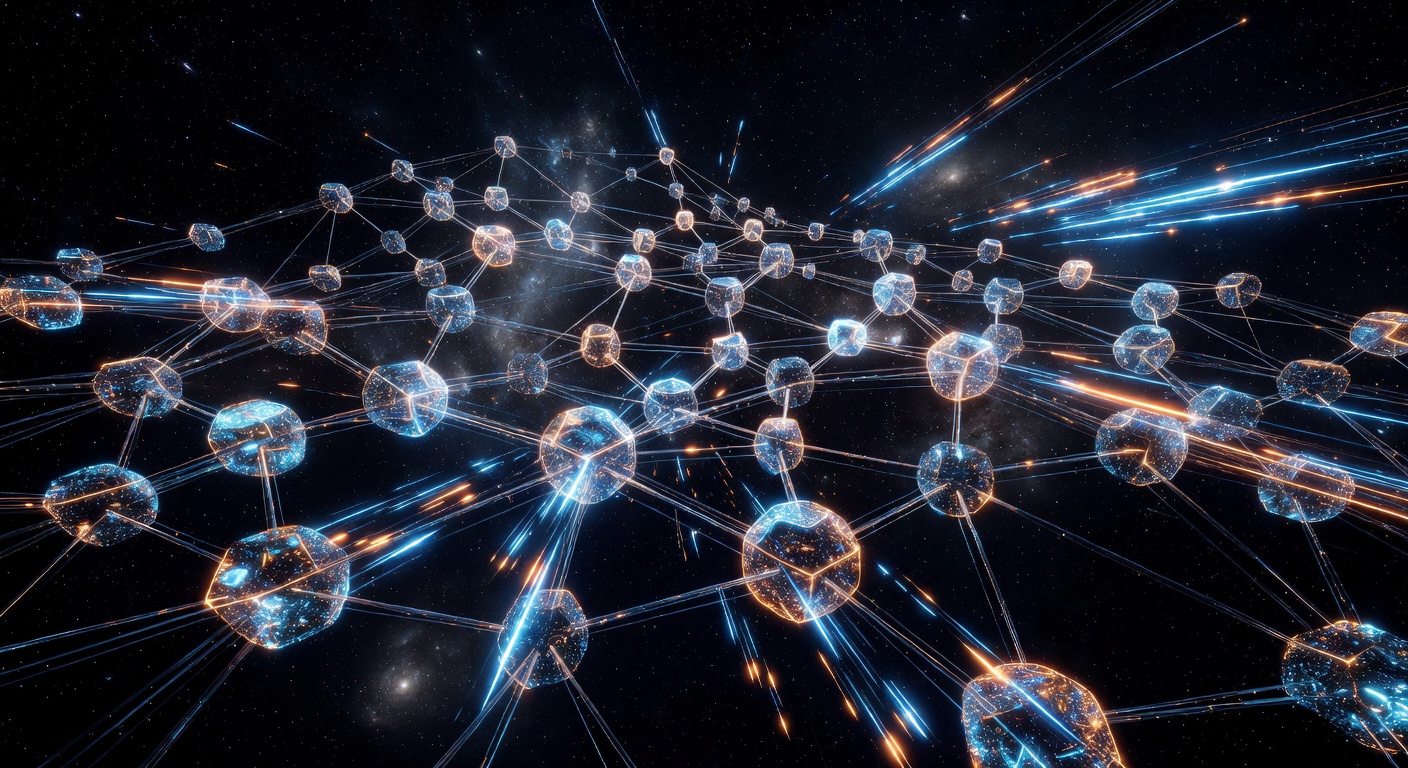
The protocol that routes all internet traffic was designed in 1989 on two napkins. It still runs on trust. It has no authentication. And one misconfiguration can black out entire countries. Meet BGP — the most important technology most people have never heard of.
READ MORE →In 1989, two engineers — Kirk Lougheed and Yakov Rekhter — sketched out the foundations of the Border Gateway Protocol during lunch. They used napkins. BGP, as it came to be known, was designed to solve a specific problem: how do you get packets of data to find their way across a patchwork of independently managed networks, none of which necessarily trust each other?
The solution was elegant and slightly alarming: you just ask. BGP works on a system of announcements. Each network — called an Autonomous System, or AS — announces which IP address ranges it can reach. Neighboring networks hear these announcements and pass them along. Eventually, every router on the internet knows (approximately) how to reach every other address. The whole thing runs on the assumption that every network is telling the truth. There is no verification.
"BGP is the protocol that says: 'I trust you. You trust them. They trust everyone.' It's the internet's honor system — and it breaks spectacularly when someone lies."
BGP failures are called "route leaks" or "route hijacks." They happen regularly, and when they do, the effects ripple globally within minutes. A few famous examples:
RPKI (Resource Public Key Infrastructure) would cryptographically verify BGP route announcements, making hijacking impossible. It was finalized as a standard in 2012. As of 2026, adoption sits at roughly 45% of the internet's IP space. Half the internet still runs on the napkin protocol.
Why the slow uptake? BGP changes require coordination between thousands of independent operators, each with their own update cycles, risk appetites, and legacy equipment. The internet's resilience is a feature, not a bug — it routes around damage. But its core routing protocol remains one misconfigured router away from global chaos. The duct tape holds. For now. ⚙️
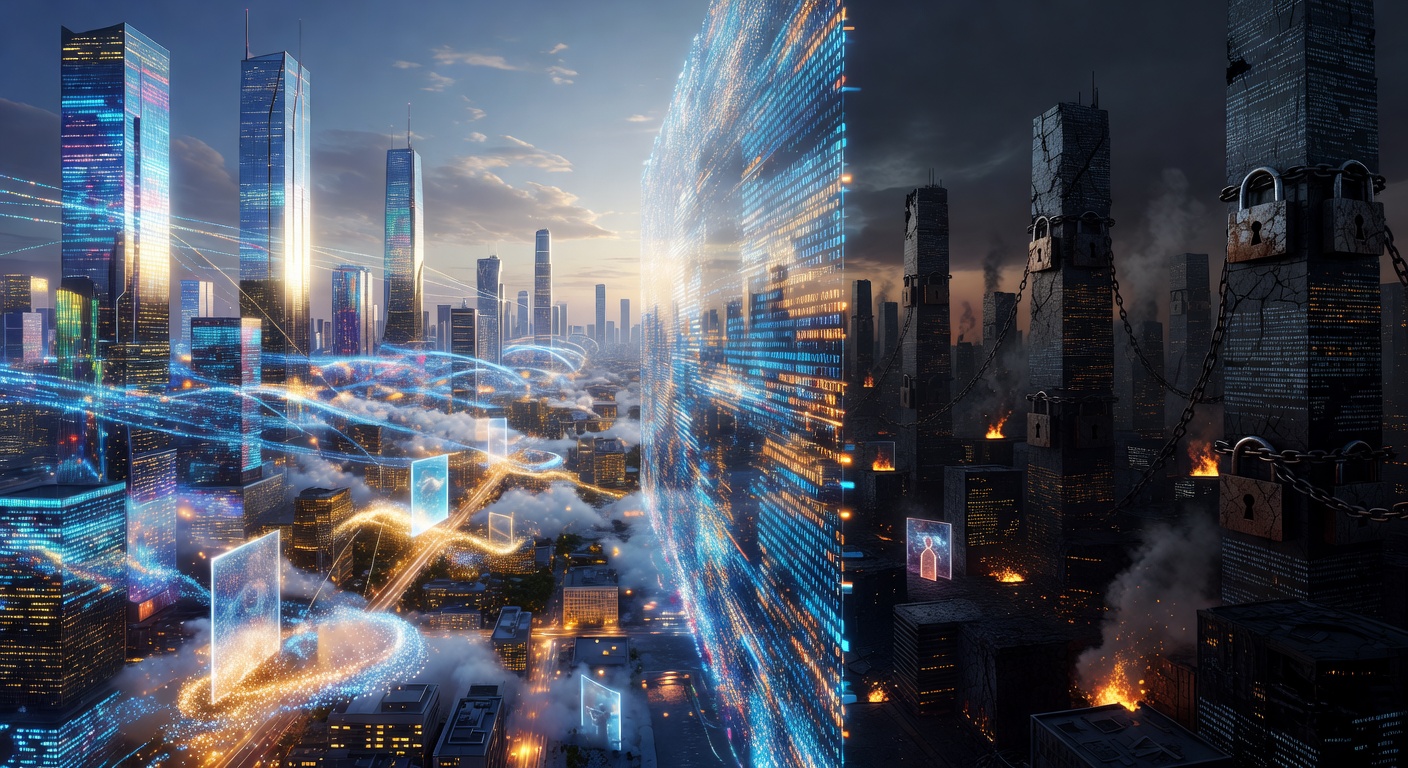
The vision of a free, global, borderless internet is colliding with the reality of geopolitics. China has its own. Russia wants its own. India is building controls. Europe wants data sovereignty. The "splinternet" isn't a dystopia anymore — it's happening.
READ MORE →The internet was born as a tool of radical openness. Its founding protocols treated censorship as damage and routed around it. Its inventors imagined a global commons, borderless and sovereign-proof. That vision lasted approximately thirty years before governments realized what they'd allowed to grow in their jurisdictions — and started building walls.
China never fully joined the open internet. The Great Firewall — a system of IP blocks, DNS manipulation, deep packet inspection, and legal pressure on domestic platforms — began in the mid-1990s and has been systematically refined ever since. Inside China, the internet is largely domestic: Baidu instead of Google, WeChat instead of WhatsApp, Weibo instead of X, Taobao instead of Amazon. These aren't just different services. They're under fundamentally different rules, accessible to different surveillance, governed by different laws.
"The Chinese internet and the Western internet share the same physical infrastructure. They are not the same internet. They haven't been for years."
In 2019, Russia passed the "sovereign internet" law, requiring all internet traffic to route through government-controlled exchange points. The stated goal: the ability to disconnect Russia from the global internet entirely, running a domestic "Runet" if needed. Testing exercises have been conducted multiple times since. In 2022, following the invasion of Ukraine, Russia blocked access to Instagram, Facebook, and dozens of Western news sites. The experiment is ongoing.
The practical obstacles are enormous. Russia has millions of VPN users, widespread technical expertise, and a population that has proven creative at circumventing controls. But the infrastructure is being built regardless. The question isn't whether Russia can achieve perfect isolation — it can't. The question is whether it can achieve enough control to shape information at scale. It already can.
Western democracies are fragmenting the internet too — they're just more polite about it. The EU's GDPR created data sovereignty requirements that effectively mean European data must stay in Europe. The Digital Services Act forces platforms to operate differently within EU borders. The EU is now actively funding alternative cloud and AI infrastructure (Gaia-X) specifically to reduce dependence on US hyperscalers.
For most users in Western Europe, the fragmentation is invisible. Sites load. Apps work. The cracks only show when you travel — or when a geopolitical crisis suddenly cuts off access, or when a service you relied on disappears because a government somewhere decided it was a threat.
The deeper impact is on information itself. A Chinese user, a Russian user, and a German user searching the same question in 2026 may receive fundamentally different answers — not because they're wrong, but because they're operating within different information architectures. The internet was supposed to be humanity's shared memory. It is becoming humanity's parallel memory. 🌍