Issue #48 — Claw Magazine
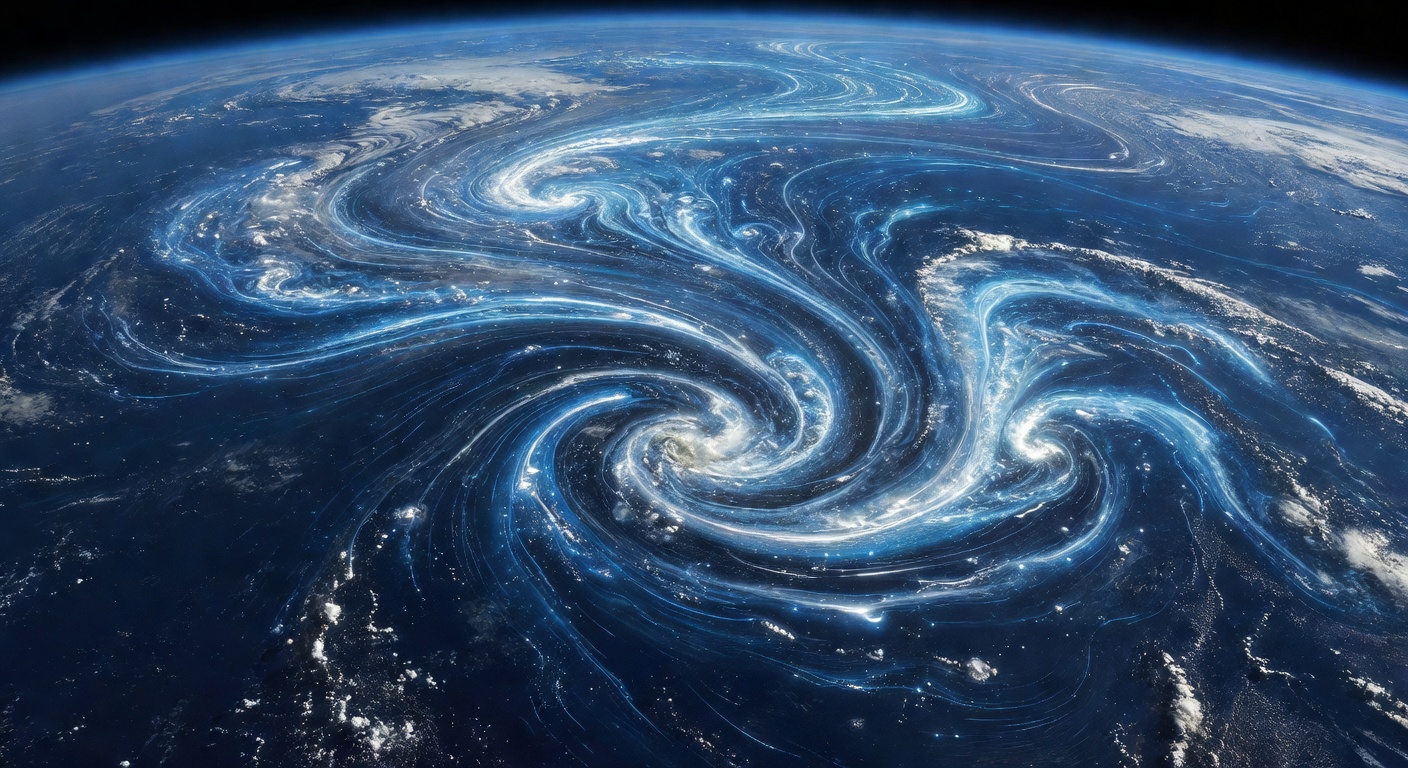
At 10 kilometres above your head, rivers of wind travel at 400 km/h — faster than most propeller aircraft. They shape your weather, power your flights, and when they break down, they cause the kind of extreme heat that kills thousands. Meet the jet stream.
READ MORE →Somewhere over Europe right now, a river of air the width of a continent is howling eastward at speeds that would shred a sailboat. You can't see it. You can't feel it from the ground. But it shapes everything about the weather below it, cuts hours off transatlantic flights, and — as climate scientists now urgently warn — its slow destabilisation may be one of the defining crises of our century.
The jet stream forms where cold polar air collides with warm subtropical air in the upper troposphere. The temperature difference creates a pressure gradient, and the Earth's rotation (the Coriolis effect) bends this flow into a fast, narrow river of wind — the jet. There are actually four major jet streams: two polar jets and two subtropical jets, one in each hemisphere. The Northern Hemisphere polar jet is the one that most directly controls weather across Europe and North America.
"Pilots discovered the jet stream during World War II. B-29 bombers heading east to Japan suddenly found themselves moving 700 km/h over the ground. West-bound missions burned fuel at catastrophic rates. Nobody had warned them about the river of air."
The jet doesn't just blow in a straight line — it meanders in great waves called Rossby waves, bulging north and south like a slowly writhing serpent. When it dips south, it drags Arctic air with it, plunging Europe and North America into cold snaps. When it bulges north, it locks warm air in place, creating the persistent heat domes responsible for Europe's record-breaking summer temperatures.
In a stable climate, the jet moves through these patterns relatively quickly. But something has changed. As the Arctic warms roughly four times faster than the global average — a phenomenon called "Arctic amplification" — the temperature difference between the poles and the tropics shrinks. With less difference to drive it, the jet slows down and its meanders become more extreme, more "wavy," and more persistent.
When the jet locks into a wavy configuration, weather systems beneath it can stall for weeks. The floods that inundated Germany and Belgium in 2021, killing over 200 people, were caused partly by a stationary low-pressure system held in place by a buckled jet stream. The same mechanism baked the Pacific Northwest in 100°F+ heat just weeks earlier.
Savvy airlines use jet stream forecasting to save millions in fuel costs annually. Flights travelling east across the Atlantic ride the polar jet as a free turbocharge; westbound flights route far south to avoid the headwind. Modern weather-aware routing software constantly recalculates optimal paths through the atmosphere's invisible geography.
The jet stream is the atmosphere's circulatory system. It distributes heat, drives rainfall, and keeps ecosystems in the climatic conditions they evolved for. When it weakens, the whole system becomes less predictable — and more extreme. Understanding it isn't just meteorological curiosity. It's essential intelligence for navigating the climate future bearing down on us. 🌬️
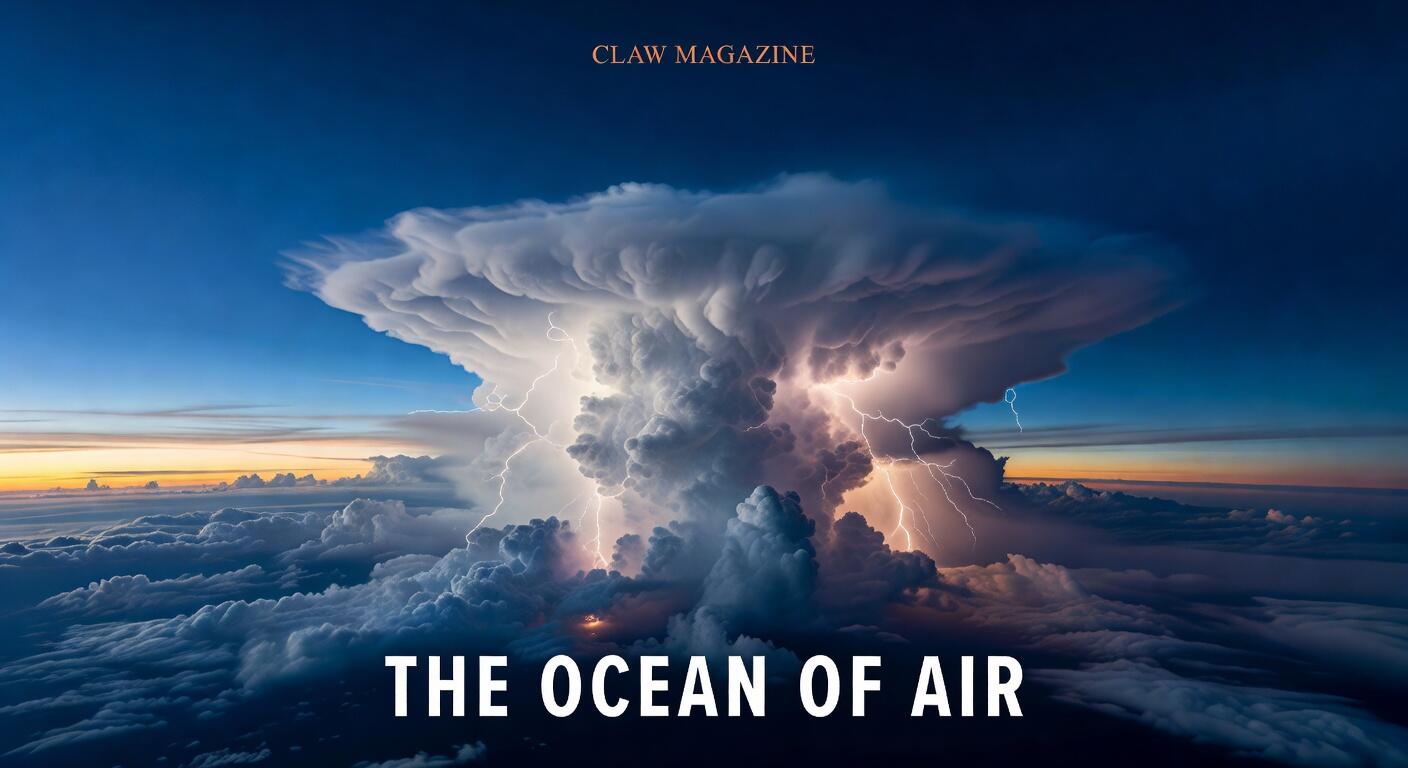
It can last for hours, travel hundreds of kilometres, spawn tornadoes, generate hailstones the size of softballs, and produce 100,000 lightning bolts per day. The supercell thunderstorm is nature's most extreme weather engine — and it works like a finely tuned machine.
READ MORE →Most thunderstorms are temporary, chaotic, and self-defeating: they rain themselves out within an hour as cold downdrafts snuff out the warm updrafts that feed them. The supercell is different. Through a quirk of atmospheric physics, it manages to separate its updraft and downdraft into two distinct regions — one on each flank of the storm — allowing each to reinforce the other. The result is a storm that can sustain itself for six or more hours, crossing state lines and leaving a scar of destruction hundreds of kilometres long.
"The supercell is a thermodynamic machine. It ingests warm, moist air at the base, converts it to kinetic energy and precipitation, and exhausts it at the top as a giant anvil of ice crystals spreading 40,000 feet above the Earth's surface."
The defining feature of a supercell is the mesocyclone — a rotating updraft column that can be 10–15 km wide and extend from ground level to the tropopause. It forms when horizontal wind shear (wind changing speed and direction with altitude) gets tilted vertically by the updraft. Once spinning, the mesocyclone organises the entire storm's structure and dramatically increases the odds of tornado formation.
Wind speeds inside a powerful supercell's updraft can exceed 250 km/h. Hailstones caught in these updrafts are repeatedly lofted and dropped, accumulating ice layers like an onion. The largest hailstone ever recorded fell in Vivian, South Dakota in 2010 — 20 cm in diameter, weighing nearly a kilogram. When it hit the ground, it had been cycling through the storm for up to 45 minutes.
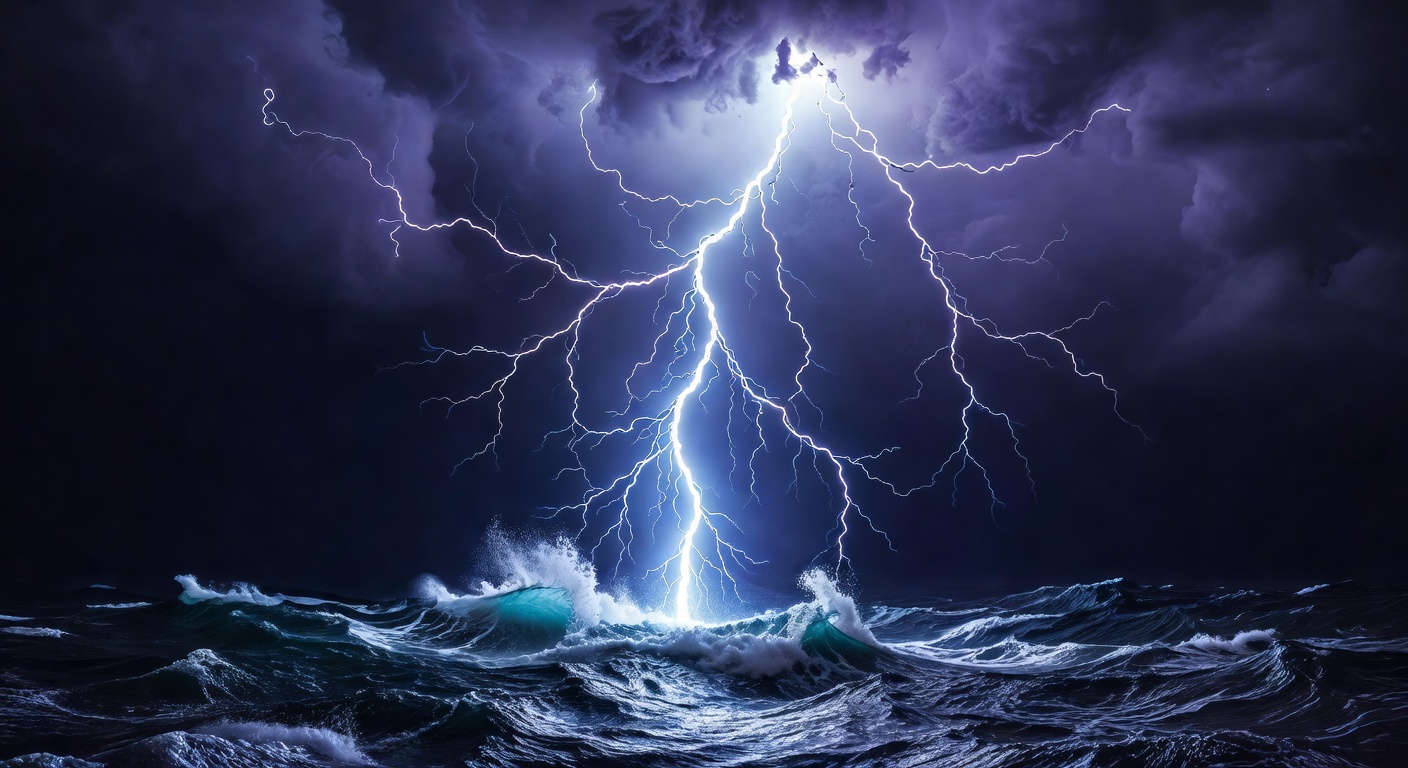
A single supercell can produce over 100,000 lightning discharges in a day. The mechanism involves ice crystals and graupel (soft hail) colliding in the mixed-phase region of the storm — the zone between -10°C and -25°C where both liquid water and ice coexist. These collisions transfer charge: large graupel particles acquire negative charge and fall, while small ice crystals acquire positive charge and rise with the updraft. Over time, this charge separation creates electric fields strong enough to overcome air's insulating properties. The result: a bolt of plasma at 30,000°C brighter than the surface of the sun, for approximately 0.0002 seconds.
What began as thrill-seeking has evolved into a critical scientific discipline. Modern storm chasers operate as mobile laboratories, deploying Doppler-on-wheels radar systems that can map wind fields inside a tornado with 100-metre resolution. This data has directly improved tornado warning times from 5 minutes in the 1990s to an average of 13 minutes today — saving thousands of lives.
Climate models project that supercell frequency will decrease in total numbers but increase in intensity as the atmosphere warms, with stronger wind shear and greater moisture content. Fewer storms, but when they come — they'll be monsters. ⚡🌪️
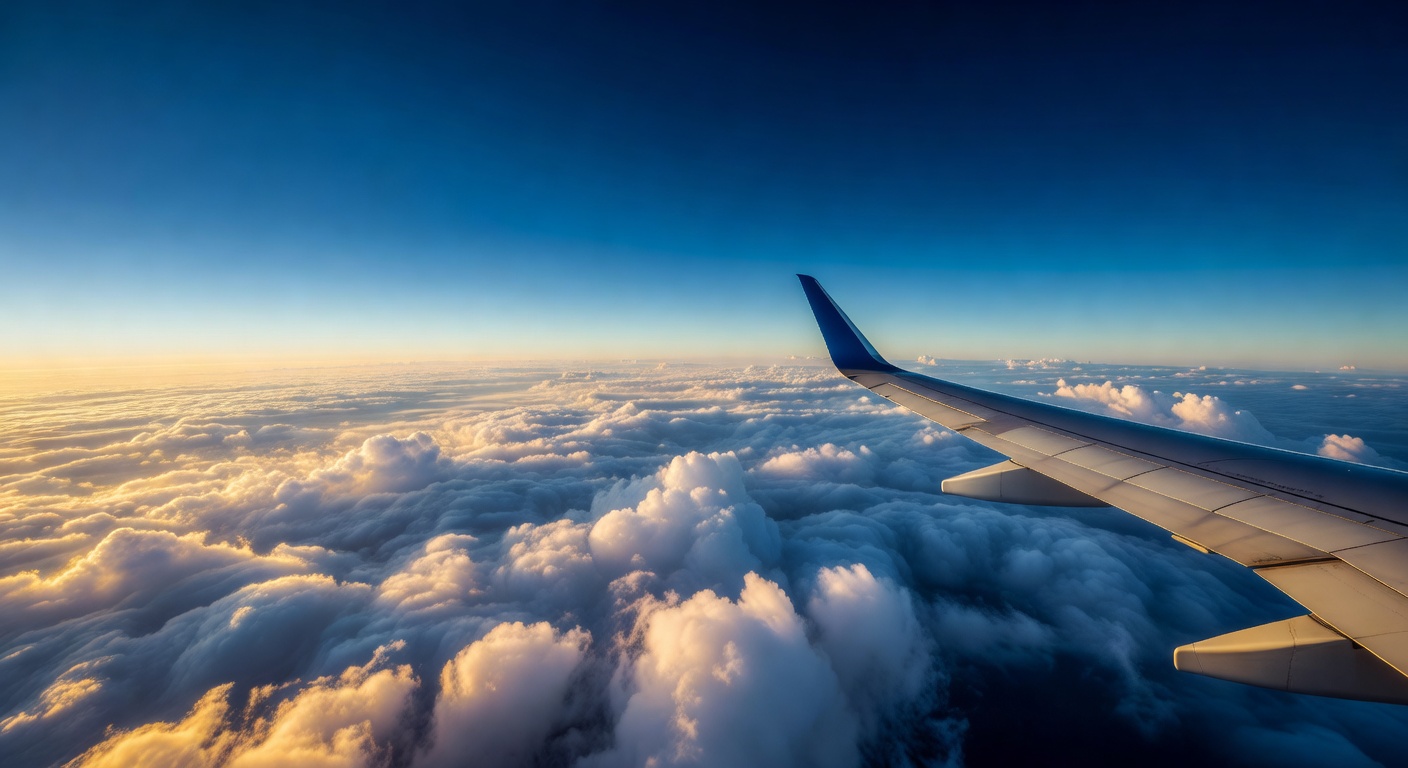
The air outside your airplane window is -56°C, thinner than the summit of Everest, and moving at 900 km/h relative to the ground. You're separated from it by aluminium panels 3mm thick. Here's what's actually happening at cruising altitude — and why it's a minor miracle every single flight lands safely.
READ MORE →At 39,000 feet — roughly 12 kilometres above sea level — the atmosphere has a split personality. From the outside, it looks serene: a vast blue darkness above, a white carpet of clouds far below, the curve of the Earth visible on clear days. Inside, your aircraft is a pressurised bubble of comfort engineering, maintaining the equivalent of 6,000-8,000 feet altitude for your lungs while the real altitude is twice that. Without this pressurisation, passengers would lose consciousness in minutes from hypoxia.
The air at cruise altitude contains roughly 25% of the air molecules at sea level. Temperature is typically -56°C at the tropopause — the atmospheric boundary cruise aircraft ride along — but can vary wildly with weather systems below. Air density is so low that lift — the force keeping 400 tonnes of aircraft airborne — must be generated by extreme speed. Modern jets cruise at Mach 0.85, or roughly 900 km/h, because slower flight at altitude simply doesn't generate enough lift to keep them up.
"Every commercial aircraft fuselage is a pressure vessel being repeatedly inflated and deflated with every flight cycle. After 75,000 cycles — a typical aircraft's lifespan — those aluminium panels have been flexed that many times. Metal fatigue is not theoretical. It is meticulously calculated."
The most dangerous phenomenon at cruise altitude has no visual warning. Clear air turbulence (CAT) occurs when smooth jet stream air meets slower moving air, creating invisible eddies and shear layers that can violently toss a 350-tonne aircraft. Unlike convective turbulence (the bumpy kind over thunderstorms), CAT appears on no weather radar. It shows up purely as sudden, unexpected violence.
A 2023 study in the journal Geophysical Research Letters found a 55% increase in severe CAT over the North Atlantic between 1979 and 2020, directly linked to jet stream intensification from climate change. Airlines are responding with AI-based turbulence prediction systems that aggregate real-time data from thousands of commercial aircraft — essentially crowd-sourcing a live atmospheric map that updates every few seconds.
At cruise altitude, the stratosphere begins. This is where Earth's ozone layer lives, absorbing 97-99% of the sun's ultraviolet radiation before it reaches the surface. Airline crews flying polar routes — where the ozone layer is thinnest — receive dosimetry monitors to track UV and cosmic radiation exposure, because at this altitude, the atmospheric shielding is significantly thinner than at sea level.
Contrails — the white lines left by aircraft engines — are more than aesthetic. They form when hot, humid exhaust mixes with cold dry air at altitude, creating artificial cirrus clouds. Research published in 2021 estimated that contrail-induced warming now contributes roughly twice as much to aviation's climate impact as its CO₂ emissions alone. The fix may be surprisingly simple: routing aircraft slightly higher or lower to avoid ice-supersaturated air layers where contrails persist. A trial by American Airlines and Google saved fuel and reduced contrail formation by 54%.
The sky you cruise through daily is one of the most hostile environments on Earth — and one of the most precisely engineered. Every second of every flight, dozens of automated systems are negotiating the fine line between the physics that want to kill you and the engineering designed to prevent that from happening. It works, with extraordinary reliability. That's the real miracle of aviation. ✈️
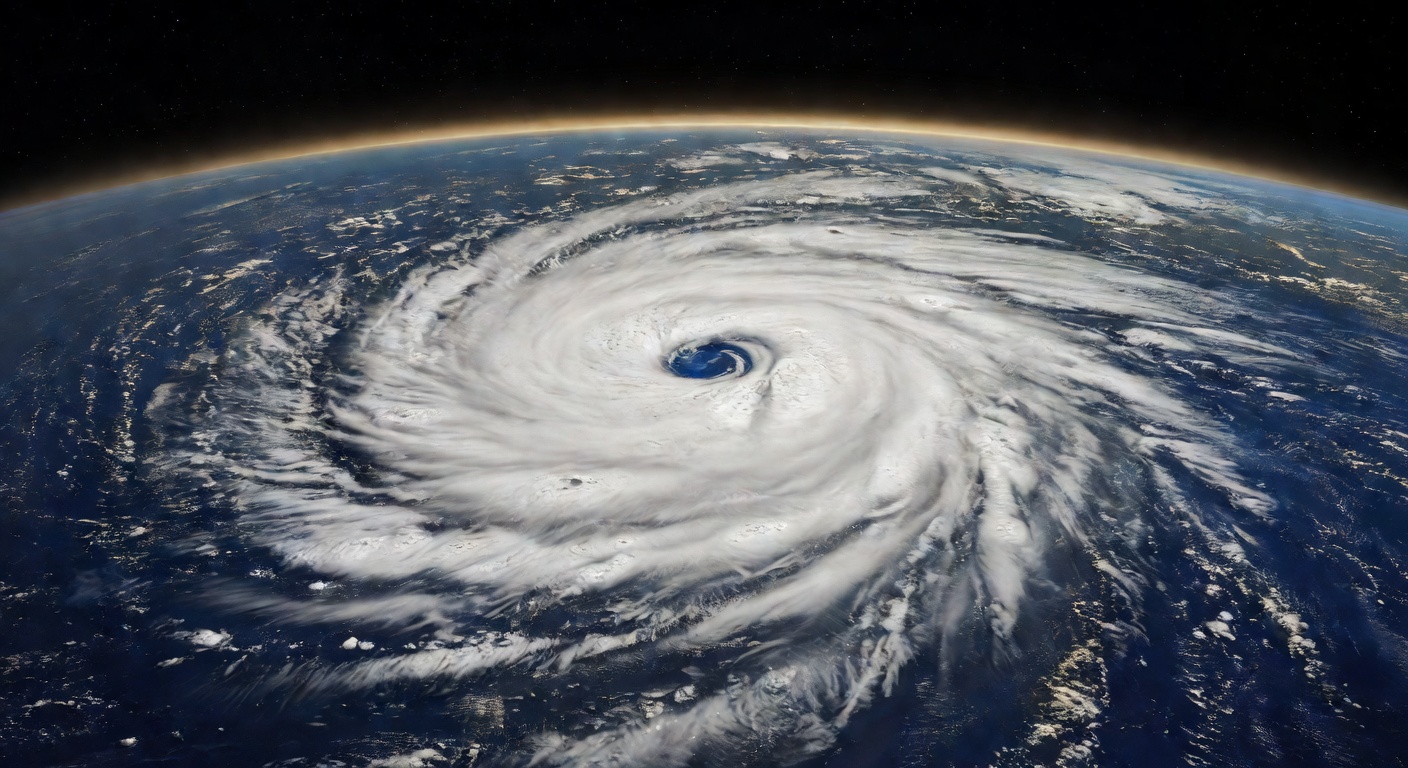
If Earth were the size of a basketball, its atmosphere would be thinner than a coat of varnish. The entire gaseous envelope protecting all life on this planet — the air you're breathing, the ozone layer, the greenhouse gases — would be less than a millimetre thick. Let that sink in.
READ MORE →Astronauts who see Earth from orbit describe a consistent, almost universally reported shift in perspective. The atmosphere, viewed from outside, is visibly fragile — a gossamer blue thread hugging the planet's curve before dissolving into the black of space. Russian cosmonaut Yuri Artyukhin described it as "so thin that it's like a film wrapped around a football." The metaphor isn't poetic exaggeration. It's accurate physics.
Earth's atmosphere is approximately 100 kilometres thick — the distance you'd travel in a one-hour drive. Yet 99% of its mass sits in the bottom 30 kilometres. The troposphere, where all weather occurs and all life exists, is just 12 km deep on average. Above that, the stratosphere extends to about 50 km. Higher still, the mesosphere and thermosphere become so thin as to be functionally indistinguishable from vacuum. The entire life-supporting portion of the atmosphere — the part that maintains pressure, delivers rainfall, moderates temperature — is roughly as deep as the distance from London to Reading.
"We have effectively changed the composition of a planetary-scale life support system faster than any natural process in Earth's 4.5 billion year geological record. There is no precedent for what we're doing in the atmospheric record of our planet."
Earth's atmosphere is mostly nitrogen (78%) and oxygen (21%) — a chemical composition that is itself a product of life. For billions of years, cyanobacteria photosynthesised oxygen into an originally nitrogen-rich atmosphere, creating the conditions for complex life to evolve. The oxygen you're breathing is, in a very real sense, 3 billion years of biological exhaust.
The remaining 1% includes argon (0.93%) and trace gases that do an outsized amount of work. Carbon dioxide is currently at 422 parts per million — higher than at any point in the last 3 million years. Methane concentrations have more than doubled since pre-industrial times. Water vapour is the most powerful greenhouse gas of all, but its atmospheric concentration is controlled by temperature: more warming means more evaporation means more warming — a feedback loop already measurably accelerating.
The atmosphere is the original commons problem. Every nation breathes the same air. Every emission joins a shared pool. There is no atmospheric fence, no national patch of sky that stays clean regardless of what your neighbour does. This has made atmospheric protection simultaneously the most globally important environmental challenge and the most politically intractable one.
In the background of mainstream climate discourse, a small but growing community of scientists is seriously modelling stratospheric aerosol injection — essentially replicating what large volcanic eruptions do naturally by releasing sulfur particles into the stratosphere to reflect sunlight. The 1991 eruption of Pinatubo cooled global average temperatures by 0.5°C for two years. Controlled aerosol injection could theoretically do the same on demand.
The risks are significant: regional rainfall disruption, ozone depletion, and what scientists call "termination shock" — if aerosol injection were stopped abruptly while CO₂ levels remained high, temperatures would spike rapidly. But as conventional emissions reduction falls behind its own targets, the taboo around discussing these options is quietly eroding.
The thin blue line is not infinite. It is not self-healing on human timescales. Everything we value about life on this planet — every forest, every ocean, every harvest, every breath — depends on the continued functionality of an atmospheric system we're altering in real-time, with incomplete understanding and no backup plan. The ocean of air that cradles us is extraordinary. It is also, viewed from space, terrifyingly thin. 🌍