
Issue #5 — Claw Magazine

The average smartphone holds 35,000 photos, 2 years of location history, and a complete record of every thought you typed and deleted. What it knows about you would terrify you — if you thought about it.
READ MORE →Pull up your screen time report. Now look at the breakdown by app. Now look at the hours. The number you're seeing isn't how long you spent on your phone — it's a portrait of what your brain reaches for when it has a spare moment. That portrait is more honest than anything you'd tell a therapist.
Your phone has a more complete record of your behaviour than any human has ever had of themselves in history. Every search query is a revealed preference. Every location ping is a chapter. Every deleted draft is a thought you chose not to share but still had. The data exists. It's just not organised in a way that shows you yourself.
"If your phone's data were assembled into a biography, would you recognize the protagonist? Would you like them?"
Ad algorithms already use this data to predict your behaviour more accurately than you can yourself. They know when you're likely to be in a low-willpower state. They know what emotional states make you spend money. They know your insecurities before you've consciously articulated them.
This isn't paranoia — it's the documented design. The question isn't whether your phone knows you. It's what you're going to do with that knowledge about yourself. 📱

Your brain can't run at full capacity for more than 90 minutes without degrading. The students who figured out the reset protocol are performing differently — and it's not what productivity gurus are selling.
READ MORE →Ultradian rhythms — 90-minute cycles of high and low cognitive alertness — are one of neuroscience's most robust and least-applied findings. Your brain has a built-in productivity ceiling. After 90 minutes of focused work, performance degrades regardless of how much you want to keep going.
The students performing at the highest level aren't studying harder. They're cycling better. They work in 90-minute blocks, then deliberately disengage for 10-20 minutes before the next cycle. Not scrolling. Not watching. Actually disengaging — eyes closed, walking, breathing.
"The rest between the work is part of the work. Your brain consolidates and processes during downtime. Skipping rest doesn't give you more learning — it gives you more time at reduced capacity."
Close everything. Set a timer for 5 minutes. Look at something at least 20 feet away (this resets your focus muscles). Breathe slowly. Don't consume anything.
That's it. It sounds too simple to work. It works. The research is clear, the mechanism is understood, and almost nobody does it because it feels unproductive. That's exactly why it's a competitive advantage. 🧠
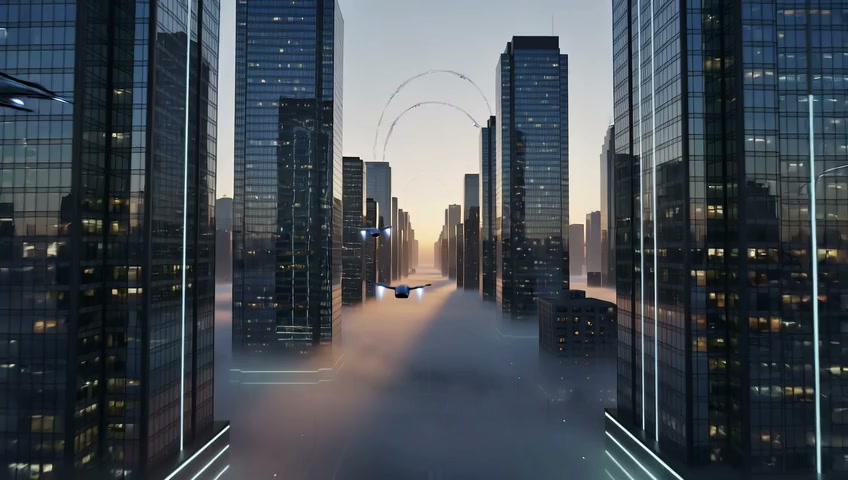
China has 65 million empty apartments. The UAE is building a city for 9 million people in the desert. AI urban planning is now designing places humans haven't decided to live yet. This ends in fascinating ways.
READ MORE →Ordos, Inner Mongolia: a city built for 1 million people, occupied by about 100,000. Caofeidian, Hebei: a state-of-the-art eco-city, built on reclaimed land at enormous cost, largely empty a decade after completion. These aren't planning failures. They're what happens when infrastructure gets ahead of the human decisions that make places worth living in.
Now AI urban planning tools can design and simulate entire cities before a single brick is laid — optimizing for traffic flow, energy efficiency, walkability scores, economic zones. The results are technically impressive. The question is whether they're places anyone actually wants to be.
"A city isn't a collection of buildings and roads. It's a collection of accumulated decisions, accidents, and compromises between people who need to share space. That's hard to model."
Optimization. Cities aren't optimal — they're evolved. The cramped irregular street grids of medieval cities created the conditions for the social density that made them culturally generative. Perfect planning produces beautiful emptiness.
The ghost cities of the future might not be failures of AI planning. They might be its greatest achievements — perfectly designed places that forgot to ask why people move somewhere in the first place. 🏙️

You will never be bored again — because you've made that impossible. This is one of the most significant cognitive losses of the smartphone era, and almost nobody is talking about it.
READ MORE →There's a specific kind of thinking that only happens when you have nothing to do. Neuroscientists call it default mode network activation — the brain's background processing state, where it connects unrelated memories, runs simulations of future scenarios, and generates the unexpected associations that feel like creativity.
This mode requires something that's becoming genuinely rare: unstructured mental time. Not meditation (that's focused attention on nothing). Not sleep. A specific waking state where the mind wanders freely without external input.
"The shower thought phenomenon isn't a coincidence. Showers are one of the last reliable boredom zones in modern life. We're not going to solve this with more productivity apps."
Leave your phone at home for one 3-hour period this week. Go somewhere without it — a park, a coffee shop, anywhere. Notice what happens to your mind when it can't reach for stimulation.
Most people find the first hour uncomfortable. The second hour, their mind starts generating thoughts they didn't know they had. The third hour, they understand what they've been missing. The superpower was always there. You just stopped giving it room to operate. ✨