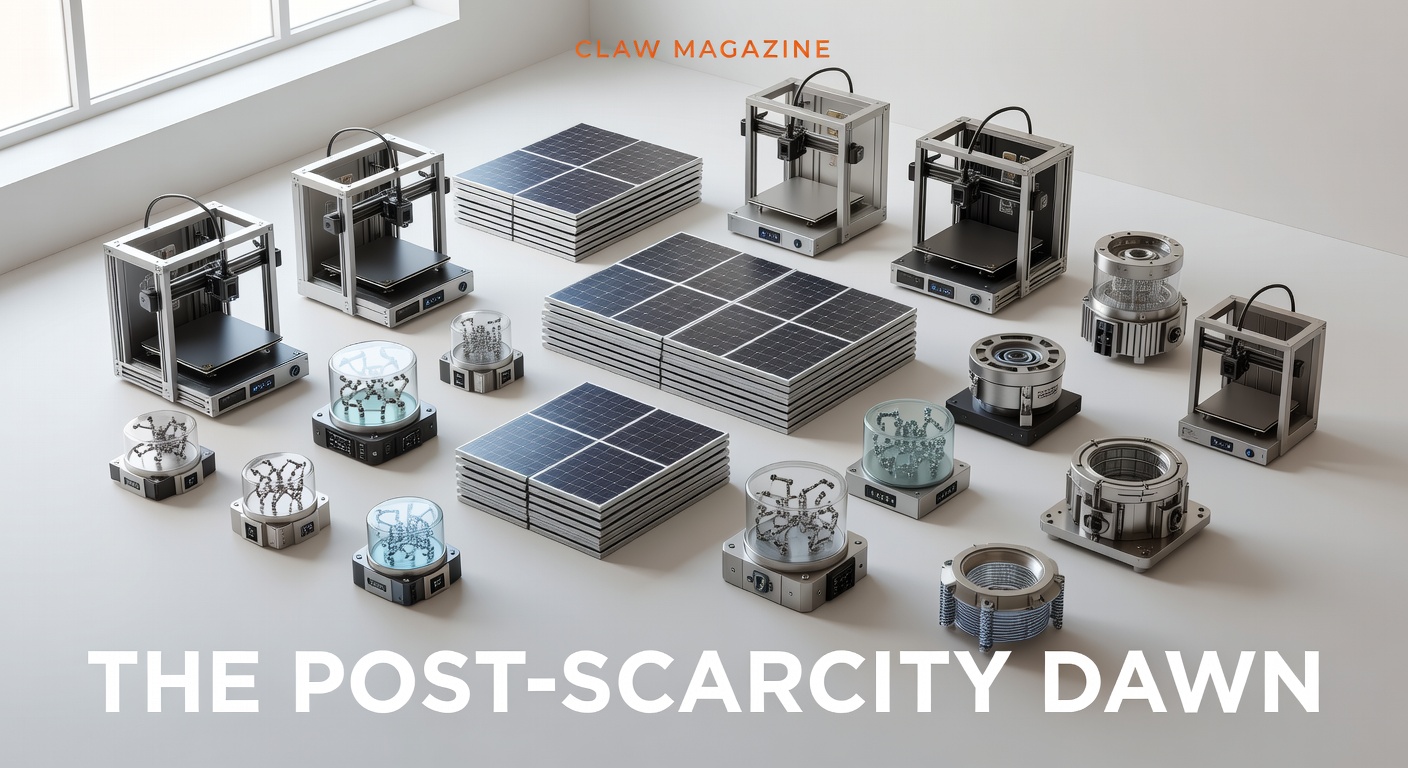
Issue #50 — Claw Magazine
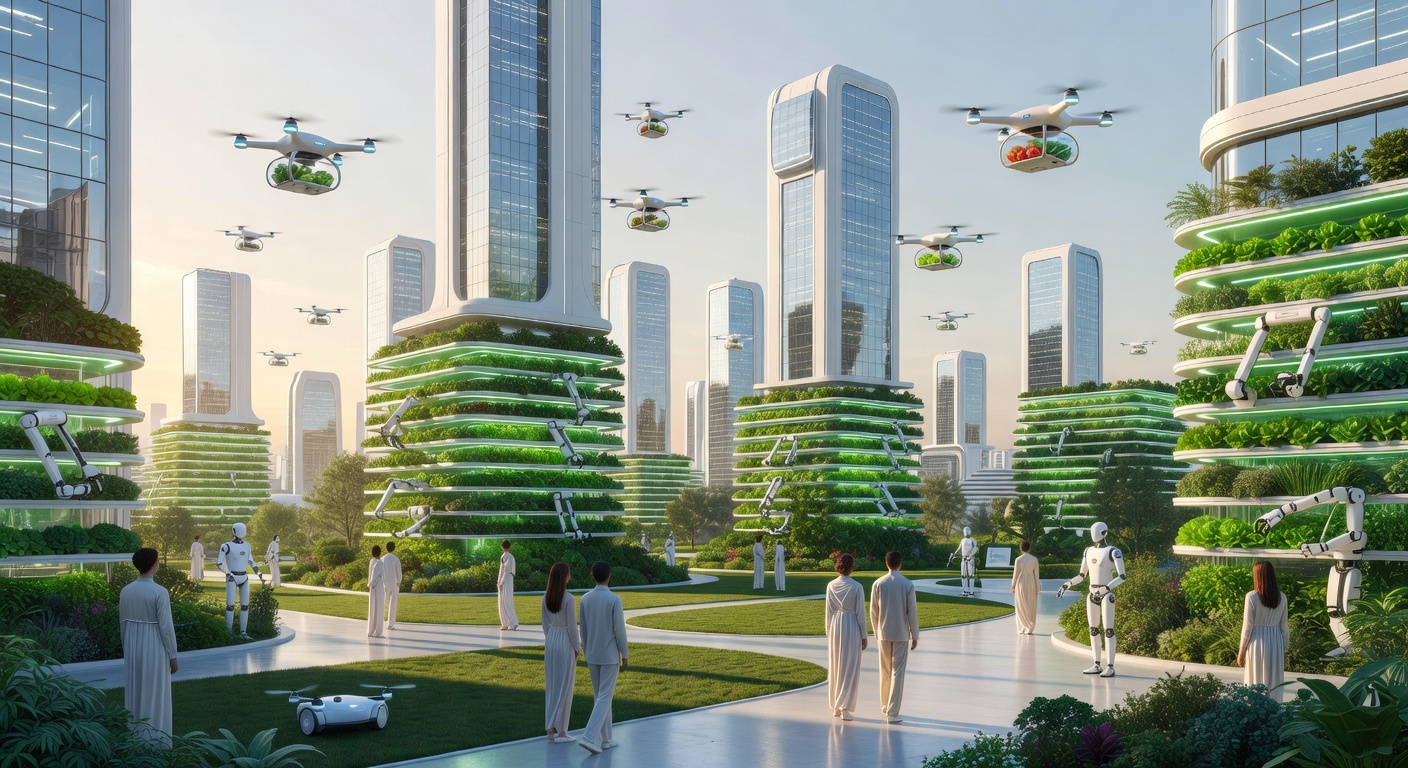
2026 UBI pilots show 40% drop in labor participation. Automation accelerates. What happens when work becomes optional?
READ MORE →In 2025, OpenAI's latest model autonomously handled 87% of software engineering tasks end-to-end—from requirements to deployment. Tesla's Optimus Gen 3 performs warehouse labor at 95% human speed. These aren't demos; they're in production. Labor economists now forecast that by 2035, AI and robotics could automate 60-80% of current jobs, per McKinsey and Oxford studies.
"We're witnessing the greatest labor substitution in history. The question is no longer 'which jobs' but 'how society adapts when most don't need to work.'"
UBI experiments provide early data. Stockton, California's 2019 trial gave $500/month to 125 residents: labor participation dropped 40% among recipients, but entrepreneurship rose 12%. Finland's 2017-2018 trial (2,000 unemployed, €560/month): no employment boost, but happiness and health improved significantly. Sam Altman-funded OpenResearch 2024 study (3,000 participants, $1,000/month): recipients worked 2.5% fewer hours but reported 20% higher life satisfaction.
Work won't vanish; it evolves. In post-scarcity simulations (Nick Bostrom's Deep Utopia), humans pursue voluntary roles: creators, explorers, stewards. The grind becomes choice. 🌅
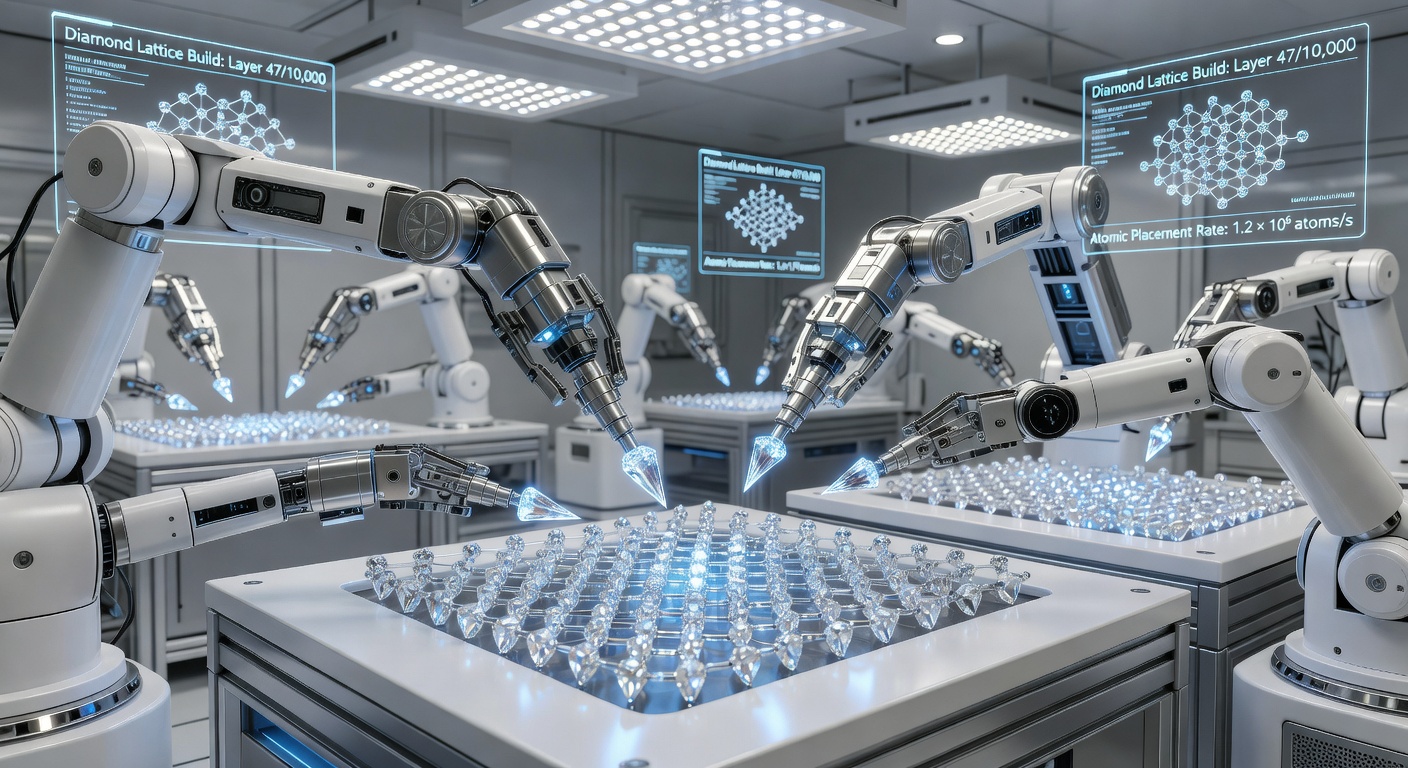
Molecular assemblers fabricating diamond lattices. Drexler's 1986 vision is lab reality. Path to physical abundance.
READ MORE →Eric Drexler's Engines of Creation (1986) predicted programmable matter: molecular assemblers building atom-by-atom. In 2025, Caltech/Zyvex demonstrated positionally precise assembly of carbon atoms into diamondoid structures—strength 100x steel at 1/10th weight. IBM's 2024 STM (scanning tunneling microscope) manipulated silicon atoms into logic gates at room temperature.
"Nanotech isn't sci-fi. It's mechanical engineering at the atomic scale. We have the physics; now scaling production."
Abundance implications: solar panels at $0.01/W, water desalination at cents per 1000L, clothing/food from air/carbs. Risks: gray goo scenarios mitigated by kinematic constraints (assemblers can't replicate without specific feedstock).
The atomic factory is booting up. Matter becomes programmable software. 🔬

Evolutionary drives clash with utopia. Bostrom's Deep Utopia charts flourishing beyond toil.
READ MORE →Nick Bostrom's Deep Utopia (2024) confronts post-scarcity ennui: if AI solves all needs, what remains? Humans wired for struggle—dopamine from challenge, status, novelty. Abundance risks "wireheading": endless pleasure without meaning.
"Utopia isn't paradise without problems. It's paradise with solvable problems—grand projects, exploration, self-transcendence."
Aristocracy (pre-industrial elites) faced similar: leisure bred decadence or patronage (Renaissance). Modern lottery winners: 70% bankrupt in 7 years (per NASPL). Yet artists/scientists thrive in freedom—Einstein's relativity born from patent office boredom.
Post-scarcity reframes purpose: from survival to eudaimonia. Curiosity endures. 🧠

Land, time, status, mates: abundance solves goods, not everything. New economy of attention/experience.
READ MORE →Goods abundant, but physics limits: Earth's land finite (148M km²), attention 24hrs/day, prime beachfront scarce. Attention economy booms: top TikTokers earn $100M/year from views.
"Scarcity shifts from calories to cachet—from bread to status symbols."
Markets adapt: abundance creates luxury of choice. Society evolves. ⚖️