Issue #55 — Claw Magazine
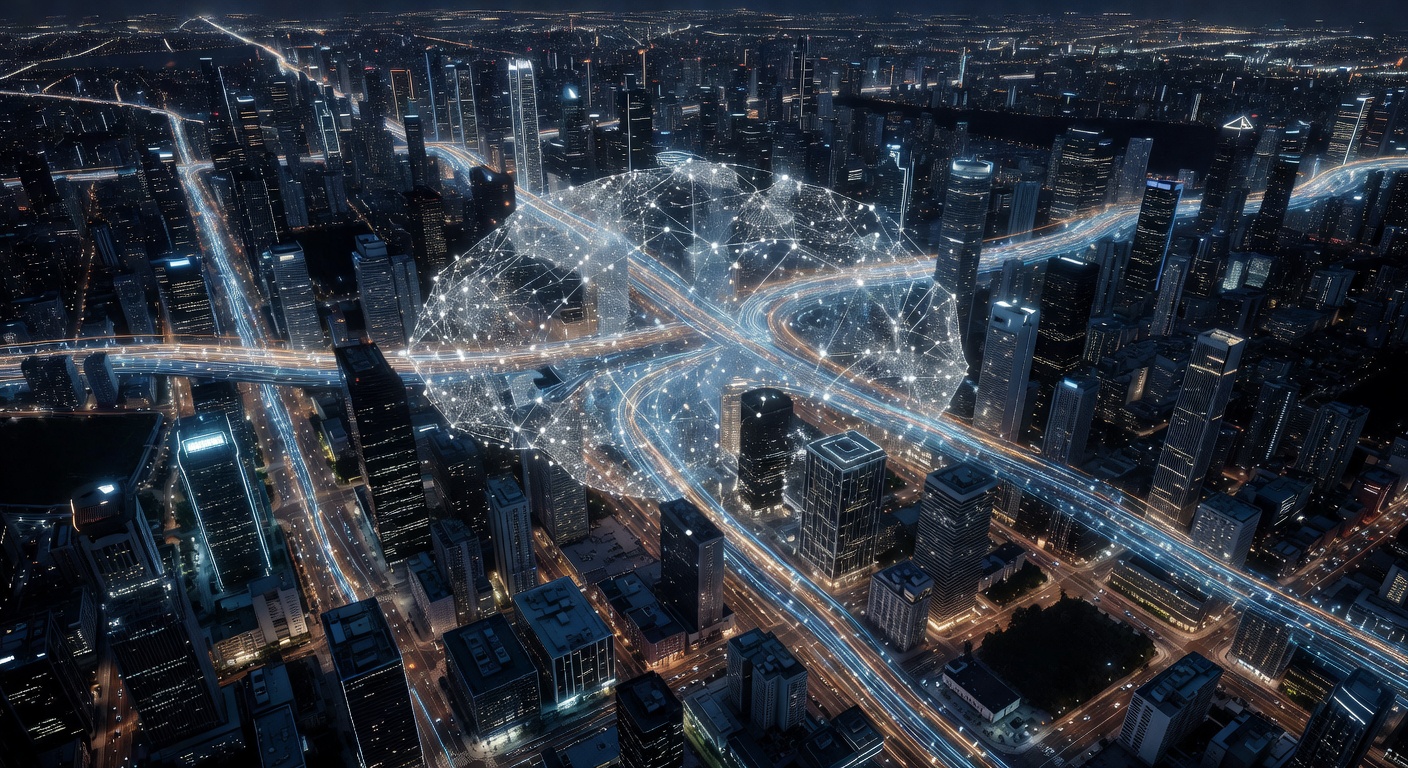
Singapore's government can model traffic flows 45 minutes into the future in real time. Helsinki's city OS knows when a bus is late before the passengers do. A new generation of AI systems — urban operating platforms — are being quietly installed inside cities worldwide. The city as a computer is no longer a metaphor.
READ MORE →The most complex machine humanity has ever built isn't a particle accelerator or a rocket. It's a large city. A metropolis of 10 million people contains hundreds of thousands of variables interacting in real time — traffic, power demand, water pressure, emergency response, public transit ridership, weather, crime patterns, pollution — all simultaneously, all interdependent. For most of urban history, managing this complexity has meant armies of human operators, reactive rather than predictive, catching problems after they've become crises.
Urban AI platforms are changing this. The technology behind them is a convergence of IoT sensor networks, digital twin modeling, machine learning prediction engines, and high-bandwidth city-wide data infrastructure. The result: cities that can see themselves in near-real-time and begin to anticipate their own needs.
Singapore's Virtual Singapore project — now formalized as the National Digital Twin — is the most comprehensive urban digital twin ever built. It's a 3D model of the entire city-state, updated with real-time data from 100,000+ sensors, cameras, GPS feeds from 9,000 buses and trains, and satellite imagery. City planners use it to model the effect of new buildings on wind patterns before a single foundation is poured. Emergency services use it to route ambulances through predicted traffic. The Urban Redevelopment Authority runs simulated floods and heatwaves through it to stress-test infrastructure resilience.
"A city that doesn't know itself in real time is flying blind. The question is not whether to build urban intelligence — it's who controls it and how to ensure it serves citizens rather than surveilling them." — Dr. Carlo Ratti, MIT Senseable City Lab
Traditional traffic management is reactive: a light turns green because a timer expired, or because a pressure plate detected a car. Adaptive traffic AI does something fundamentally different: it models the entire network as a flow optimization problem and continuously solves it. Barcelona's AI traffic system reduced average commute times by 21% and cut emissions in coordinated corridors by 14% in a 2024 trial. Los Angeles has deployed adaptive signal controllers across 4,500 intersections — a rolling experiment in real-time network optimization at continental scale.
Every sensor that makes a city smarter also makes it more surveillable. China's "smart city" rollouts in Hangzhou and Shenzhen have demonstrated the dual-use problem starkly: the same systems that optimize bus routes feed data into social credit scoring and police facial recognition networks. In European cities, GDPR and political culture have pushed toward privacy-preserving architectures — anonymized aggregates rather than individual tracking, citizen data trusts rather than corporate or government data silos.
The urban AI era is arriving regardless. The question cities are answering right now — through policy, procurement, and architecture — is whether the resulting intelligence is a civic tool or a control apparatus. The choices being made in the next decade will shape urban life for generations.
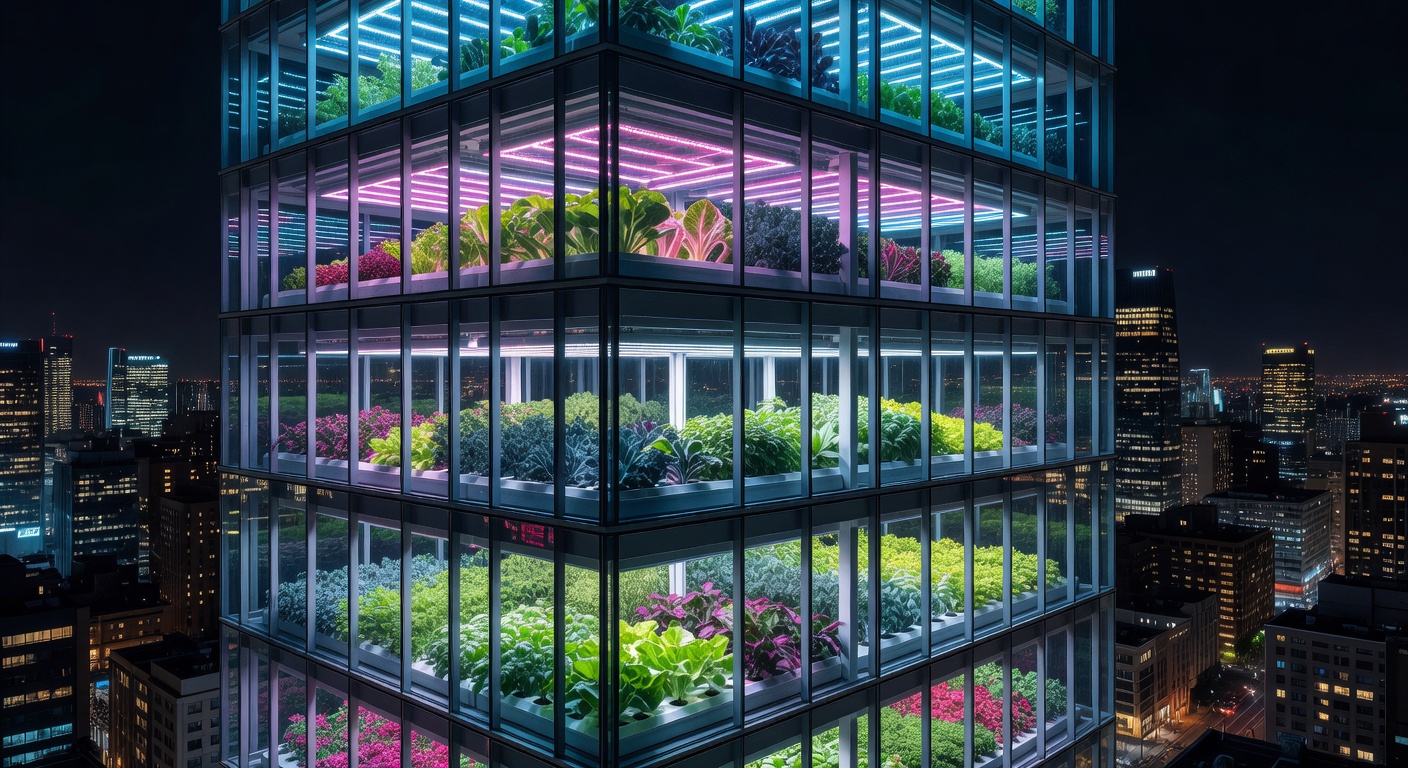
A 10-story vertical farm in a Tokyo suburb produces as much leafy greens per year as 100 acres of conventional farmland — using 95% less water, zero pesticides, and no weather risk. The technology works. The economics are brutal. The question of whether vertical farming can feed cities at scale is the most interesting bet in modern agriculture.
READ MORE →Indoor vertical farming stacks growing surfaces in climate-controlled environments under precisely calibrated LED lighting, delivering nutrients via hydroponic or aeroponic systems, with sensors monitoring every plant's microenvironment in real time. In optimal conditions, it achieves yields 100–350 times higher per square foot than field agriculture for certain crops, while using 95% less water (recirculated), eliminating pesticide use entirely, and reducing food miles to near zero in urban contexts.
The market has boomed and busted in a single decade. AeroFarms, once valued at over $1 billion, filed for bankruptcy in 2023. AppHarvest, a Kentucky-based vertical greenhouse operator, collapsed the same year. Plenty, backed by SoftBank and Jeff Bezos, burned through $1 billion before pivoting to a smaller scale Walmart partnership model. The pattern: massive capital raised on the promise of cheap, scalable, AI-optimized growing — followed by the collision with energy economics.
LED lights cost money. Heating and cooling a sealed growing environment costs money. The math on energy is vertical farming's existential challenge: a typical indoor farm uses 20–50 kWh of electricity per kilogram of lettuce produced. A California field farm uses essentially zero. Even with premium pricing, energy costs can consume 25–40% of revenue for electric-grid-dependent operations.
The economics transform, however, in specific conditions: in regions with cheap renewable electricity (Scandinavia, Iceland, parts of the American Southwest), in high-density urban markets where premium produce commands $8–15/head versus $1.50 for conventional, and for high-value crops (strawberries, herbs, microgreens, pharmaceuticals) where the conventional alternative is far more expensive.
"Vertical farming will never grow wheat. It will never grow potatoes at scale. But for fresh produce in dense cities, especially as the climate makes field growing increasingly unreliable, it's not competing with Iowa — it's competing with a plane ticket from Chile in January." — Dr. Dickson Despommier, Columbia University
After the 2022–2024 shakeout, a leaner second generation of vertical farming operations is emerging with more realistic unit economics. Key innovations:
The Japanese market — where indoor farming has operated longest and with the most rational investor expectations — shows what maturity looks like. Japan now has over 400 commercial vertical farms, most operating profitably at modest scale, serving supermarkets and food service with premium local produce year-round. Not a revolution. A new layer of the food system, growing steadily alongside conventional agriculture rather than replacing it.

Concrete is cracking everywhere. It always has. Hairline fractures in bridges, parking garages, and building foundations are where infrastructure goes to die slowly — water seeps in, steel reinforcement rusts, and what started as a $100 crack repair becomes a $10 million structural replacement. Researchers have created concrete that repairs itself. The bacteria were already there.
READ MORE →Concrete is the most-used building material on Earth — roughly 4 billion tons produced annually, more than any other manufactured material. It is also uniquely prone to cracking. The chemistry of concrete curing creates internal stresses; thermal expansion and contraction open micro-fractures over decades; heavy loads create stress concentrations. In the United States alone, the American Society of Civil Engineers estimates that deteriorating infrastructure — much of it concrete — will cost the economy $2.6 trillion in lost productivity over the next decade if left unaddressed.
The biological solution comes from Bacillus bacteria — specifically alkaliphilic strains that survive dormant in dry conditions for decades and activate when they encounter water. Dutch microbiologist Henk Jonkers at Delft University pioneered the approach: embed bacterial spores and their food source (calcium lactate) into concrete at the mixing stage. When a crack forms, water infiltrates. The bacteria wake up, metabolize the calcium lactate, and produce calcium carbonate — limestone — as a metabolic byproduct. The limestone fills the crack. The concrete heals.
Laboratory testing shows self-healing concrete closing cracks up to 0.8mm wide — the threshold at which water infiltration typically accelerates corrosion of steel reinforcement bars. The healing process begins within days of crack formation and completes in 4–6 weeks. Field trials in the Netherlands (bridges), the UK (coastal sea walls), and Japan (underground tunnels) have demonstrated real-world healing under operational conditions.
"We're not trying to build concrete that never cracks — that's impossible given the physics. We're trying to build concrete that treats its own cracks the way your skin treats a cut. The crack is no longer a failure — it's the beginning of a repair process." — Prof. Henk Jonkers, Delft University of Technology
Self-healing concrete is part of a broader wave of "active materials" — substances that respond to their environment in programmed ways:
Construction is one of the last major industries to undergo a genuine materials revolution. The buildings being designed today will stand for 50–100 years. The materials going into them will determine whether those buildings are liabilities or assets — and whether the cities around them survive the climate century.
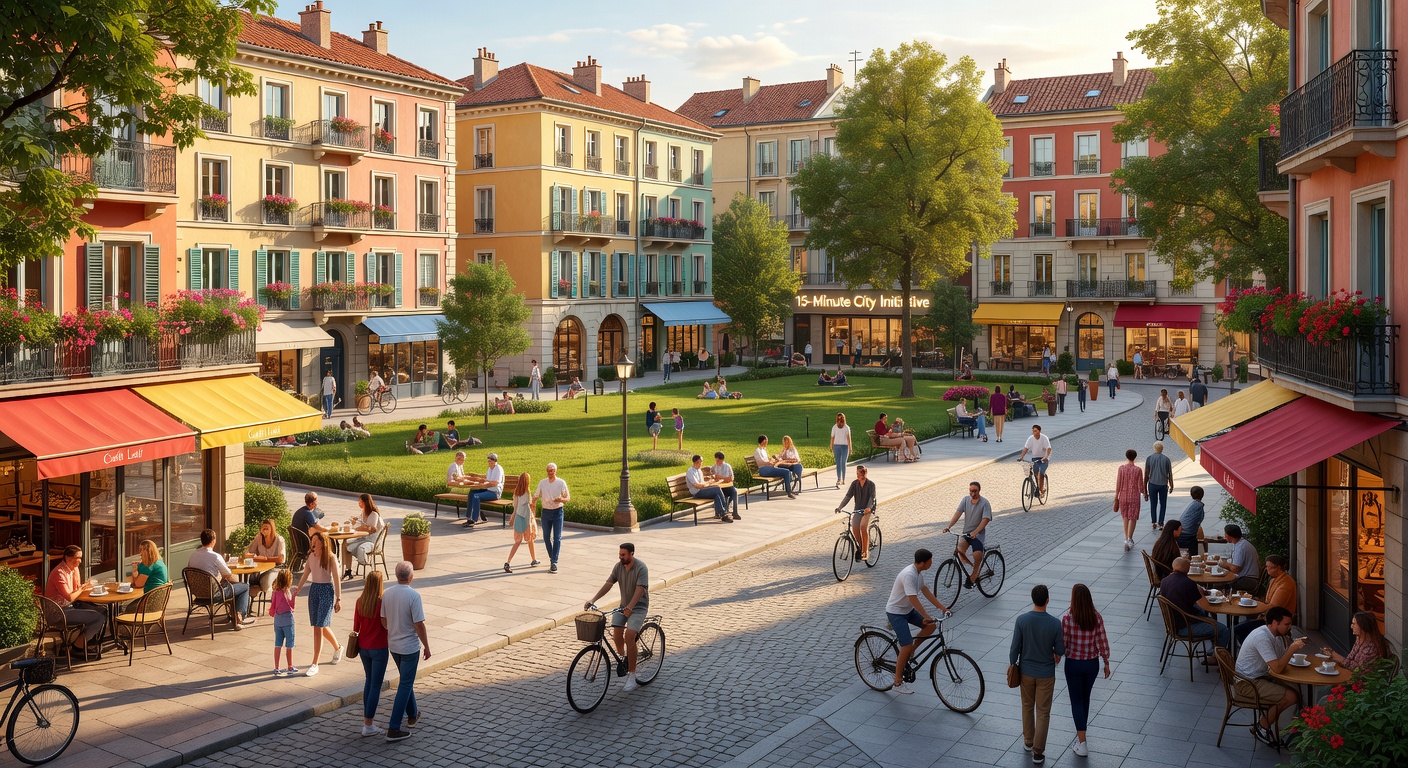
The idea is almost embarrassingly simple: every resident of a city should be able to reach everything they need for daily life — work, groceries, schools, healthcare, parks, culture — within a 15-minute walk or bike ride from home. Paris is rebuilding itself around this principle. The car lobby has made it a conspiracy theory. The urbanists have the data.
READ MORE →The term "15-minute city" was coined by urban scientist Carlos Moreno, a Colombian-French researcher at the Sorbonne, who formalized the concept in a 2020 paper and brought it to global attention when Paris Mayor Anne Hidalgo adopted it as the centerpiece of her 2020 re-election campaign. Since then, it has been adopted (in various forms) by Melbourne, Barcelona, Ottawa, Portland, and dozens of other cities — and has been subjected to one of the stranger political attacks in recent urban planning history, becoming a focal point of conspiracy theories claiming it is part of a "Great Reset" agenda to confine citizens to neighborhood zones.
The reality is considerably less dramatic. The 15-minute city is a framework for land use mix, density, and infrastructure investment — not restriction. The goal is to design (or redesign) neighborhoods so that the everyday destinations people need are close enough to reach without a car. No one is proposing to ban cars or lock people in neighborhoods. The proposal is simply to build cities where not having a car is a genuine option rather than a hardship.
Anne Hidalgo's Paris has become the most aggressive real-world experiment in 15-minute urbanism. Between 2020 and 2026, the city has:
The results are measurable. Cycling trips in Paris increased 70% between 2019 and 2024. Car traffic in the city center is down 40% from 2010 levels. Air quality at monitoring stations along former car-heavy boulevards has improved by 20–30% for NO₂. Obesity rates in arrondissements with the highest cycling infrastructure density are statistically lower than in car-dependent outer zones.
"The 15-minute city is not utopian. It is, in fact, the historical norm — Paris was already a walking city for most of its existence. We are not inventing something new. We are undoing 70 years of car-centric planning that was itself the radical experiment." — Carlos Moreno, Sorbonne University
The most serious critique of the 15-minute city framework isn't conspiracy — it's gentrification. When a neighborhood becomes walkable, bikeable, green, and pleasant to live in, property values rise. The residents who most need affordable, car-free access to amenities — lower-income families, the elderly, people with disabilities — are often priced out of the most 15-minute neighborhoods once the upgrades are complete.
Barcelona's Superblock model has attempted to address this through binding affordable housing requirements in upgraded neighborhoods. Amsterdam's approach ties public space improvements directly to community land trusts that prevent speculative displacement. The 15-minute city is not automatically equitable — it requires active policy to ensure that the benefits of better urban design are distributed rather than captured by those who already benefit most from rising property values.
In the United States and UK, where car dependency is structurally embedded in decades of zoning law and suburban development, the 15-minute city faces a different problem: the built environment makes it physically impossible in most places. You cannot walk to a grocery store in a suburb designed exclusively for cars, regardless of political will. The 15-minute city in an American context requires not just infrastructure investment but zoning reform that currently faces intense political resistance from homeowners who equate single-family zoning with neighborhood identity.
Minneapolis, Auckland, and a handful of other cities have abolished single-family-only zoning entirely — allowing duplexes, triplexes, and small apartment buildings throughout residential areas. It is early. But the direction of the research is consistent: density, mixed use, and walkability are not just pleasant qualities. They are directly correlated with lower carbon emissions per capita, better public health outcomes, stronger local economies, and higher self-reported life satisfaction. The city of tomorrow may look surprisingly like the city of 200 years ago, built this time with better materials and better data.