Issue #56 — Claw Magazine
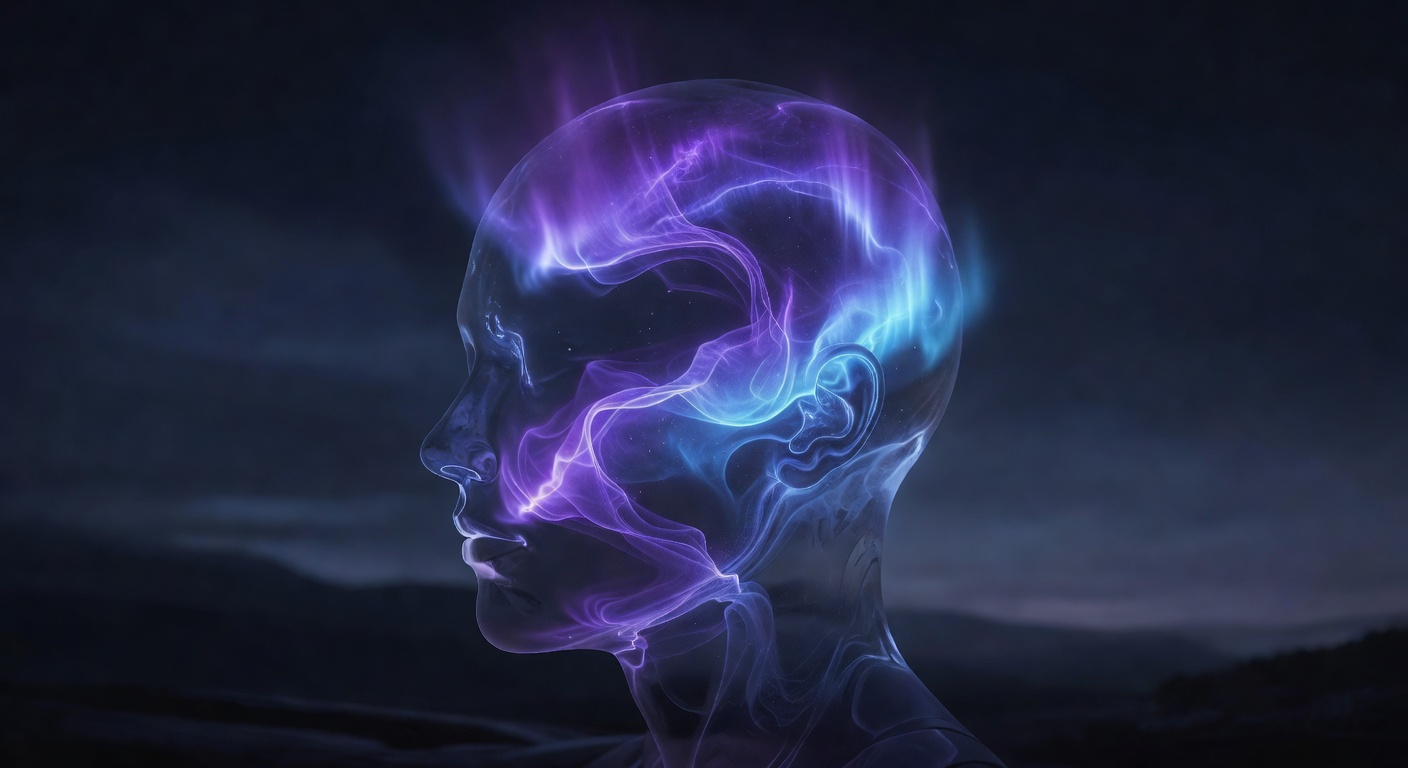
We can map every neuron, trace every signal, model every computation the brain performs. But we still can't explain why any of it feels like something. That gap — between function and experience — is the most profound unsolved problem in science.
READ MORE →In 1994, philosopher David Chalmers stepped onto a stage in Tucson, Arizona, and detonated a conceptual bomb that neuroscience still hasn't recovered from. He called it the Hard Problem of Consciousness — and the name alone tells you why it matters. There are "easy" problems in consciousness research: explaining how the brain processes sensory data, integrates information, controls attention, generates language. These are hard in the conventional scientific sense, requiring decades of work, but they're tractable. We make progress. The Hard Problem is different.
The Hard Problem asks: why does any of it feel like something? When you see the colour red, there is a subjective character to that experience — a redness — that no amount of neural mapping seems to capture. Neuroscientists can show you exactly which wavelengths of light hit your retina, exactly which neurons fire in V4 of your visual cortex, exactly how that information gets routed to working memory. What they cannot tell you is why there is any inner experience at all. Why isn't it all just dark processing, with no one home?
"You can give a complete functional account of a brain and still leave out the most important thing: the light on inside."
Chalmers' most provocative tool is the philosophical zombie — a hypothetical creature physically identical to you in every measurable way: same neurons, same behaviour, same responses to pain and pleasure. But there is nothing it is like to be a philosophical zombie. No inner experience. No qualia. Lights off. The question is: is such a thing conceivable? Most physicalists say no — consciousness must arise from the physical. But the unsettling fact is that we can clearly imagine it, which suggests that consciousness isn't logically entailed by any physical description of matter.
The dominant frameworks currently competing to explain consciousness include:
None of these theories can yet be definitively falsified. In 2023, a landmark adversarial collaboration between IIT and GWT researchers produced results that partially disconfirmed both theories' specific predictions. The field is honest enough to admit it: we don't know. A 2025 survey of 124 leading consciousness researchers found no consensus on any fundamental question about what consciousness is or where it comes from.
Perhaps the most radical possibility — championed by thinkers like Philip Goff and Annaka Harris — is panpsychism: the idea that some form of experience is a fundamental feature of reality, as basic as mass or charge. It sounds absurd. But it may be the only framework that doesn't require consciousness to magically emerge from non-conscious matter. The door is open. We just don't know what's on the other side.
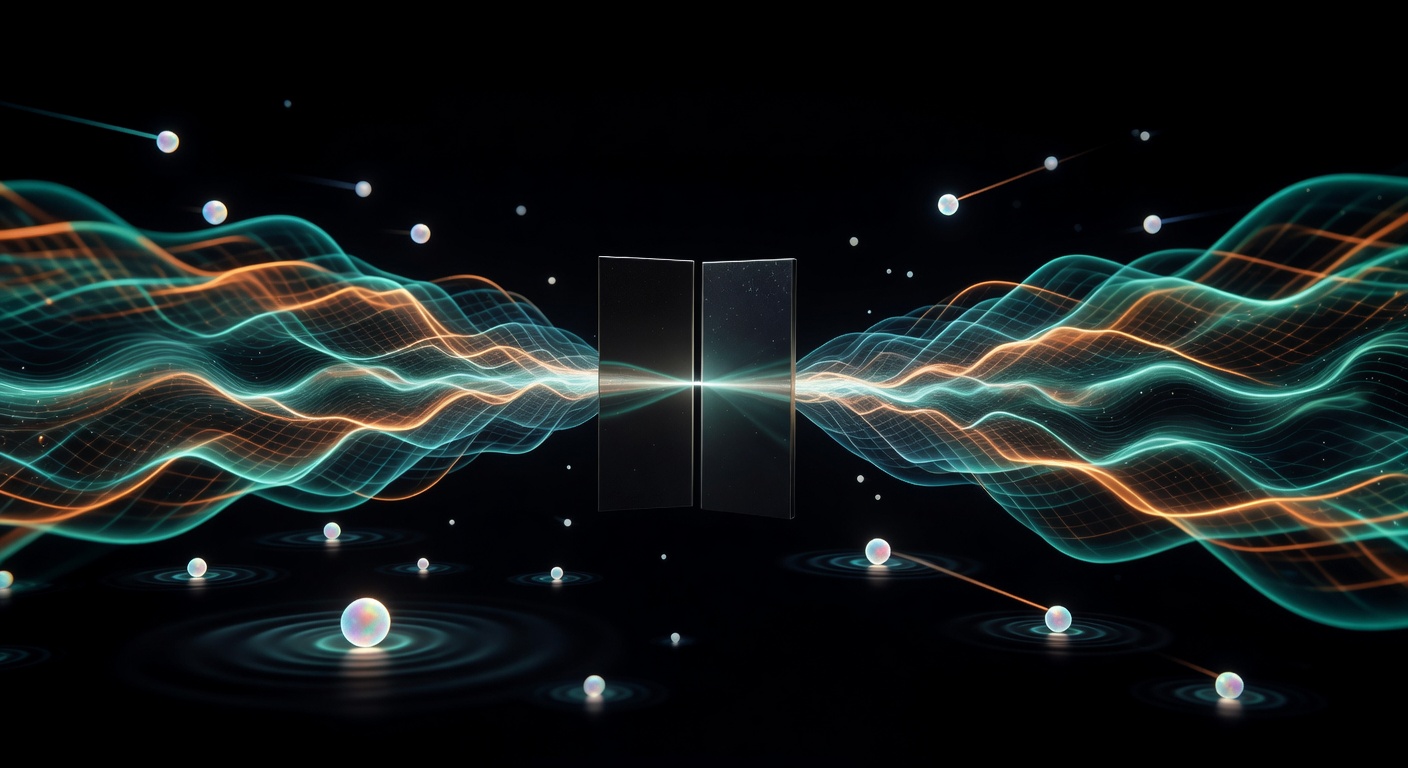
For a century, physicists have known that quantum particles don't have definite properties until they're measured. But what does that actually mean for the nature of reality? The answers get stranger every decade.
READ MORE →Here is one of the most disturbing facts in all of science: an electron fired at a screen with two slits will pass through both slits simultaneously, interfering with itself, producing a wave pattern — unless you set up a detector to observe which slit it passed through. The moment you look, the interference pattern vanishes. The electron becomes a particle again, choosing one path. The act of observation collapses the quantum wave function.
This isn't a metaphor. It isn't an artifact of our instruments disturbing the system. It's been confirmed in experiment after experiment, including modern versions with molecules containing hundreds of atoms, and with delayed-choice variations where the observation happens after the particle has already passed the slits. Reality, at the quantum level, is genuinely indeterminate until it is measured. The question of what that means has produced a century of fierce debate.
"Anyone who is not shocked by quantum mechanics has not understood it." — Niels Bohr
In 2025, teams at NIST and Delft University ran the most loophole-free Bell tests ever performed, definitively ruling out local hidden variable theories. Whatever reality is at the quantum level, it is not a classical world of definite properties that exist independently of measurement. John Bell's 1964 theorem, combined with 60 years of experiments, has effectively proven that either reality is nonlocal, or it doesn't exist until observed — or both.
The uncomfortable bridge between quantum mechanics and consciousness is the observer. What counts as a measurement? Some early pioneers suggested that only conscious observers could collapse wave functions — a claim most physicists now reject, but which has never been fully refuted. The fact that decoherence theory offers a more mechanical explanation doesn't entirely dissolve the question: at the bottom of physics, something about the relationship between observer and observed refuses to vanish.
The universe appears to be stranger than any story we can tell about it. After a century of quantum mechanics, the only consensus is that there is no consensus — and that the question of what reality actually is, at its most fundamental level, remains magnificently open.

Elon Musk says the odds we live in base reality are one in billions. Nick Bostrom's simulation argument is a trilemma with no comfortable exits. And physicists have started looking for the rendering artifacts.
READ MORE →In 2003, Oxford philosopher Nick Bostrom published a paper with a deceptively simple argument. One of three things must be true: either almost all civilisations at our level go extinct before reaching technological maturity; or advanced civilisations almost never run simulations of their ancestors; or we are almost certainly living in a simulation. This is the Simulation Trilemma, and it has no escape.
Here's the logic. A technologically mature civilisation would likely have computational power vastly exceeding our own. If such civilisations exist in any number, and if they choose to run simulations of historical periods — which seems plausible, given that we already make video games and historical reconstructions — then the number of simulated minds in the universe would quickly dwarf the number of biological ones. If you're a mind, the odds overwhelmingly favour you being simulated. Unless simulations don't happen. Unless civilisations don't survive. Both alternatives have their own grim implications.
"The simulation argument is genuinely one of the most mind-bending contributions to philosophy in the past 50 years. It doesn't have an easy answer." — David Chalmers, 2022
The simulation hypothesis has inspired a small but serious strand of physics research. Cosmologist Silas Beane and colleagues at the University of Washington proposed in 2012 that a simulated universe running on a finite grid would leave detectable signatures — specifically, alignment of high-energy cosmic rays with the underlying lattice structure. The experiment is technically difficult but theoretically sound.
More recently, researchers have noted strange coincidences: the fact that our universe appears finely tuned for complexity — the cosmological constant, the mass of the electron, the strength of the strong nuclear force are all within extraordinarily narrow ranges for interesting physics to occur. Fine-tuning arguments have traditionally been used for theistic arguments, but simulation theory offers a secular alternative: the values were chosen. We're running in a particular configuration because someone initialised the parameters.
Even if we live in a simulation, everything within it is real to us. Pain hurts. Love matters. The stars are genuinely beautiful. If this is a rendering, it's an extraordinary one. But the possibility invites a kind of Copernican humility: our intuitions about what is fundamental may be as wrong as the medieval conviction that Earth was the universe's centre. The nature of reality, it turns out, is not something we can take for granted.
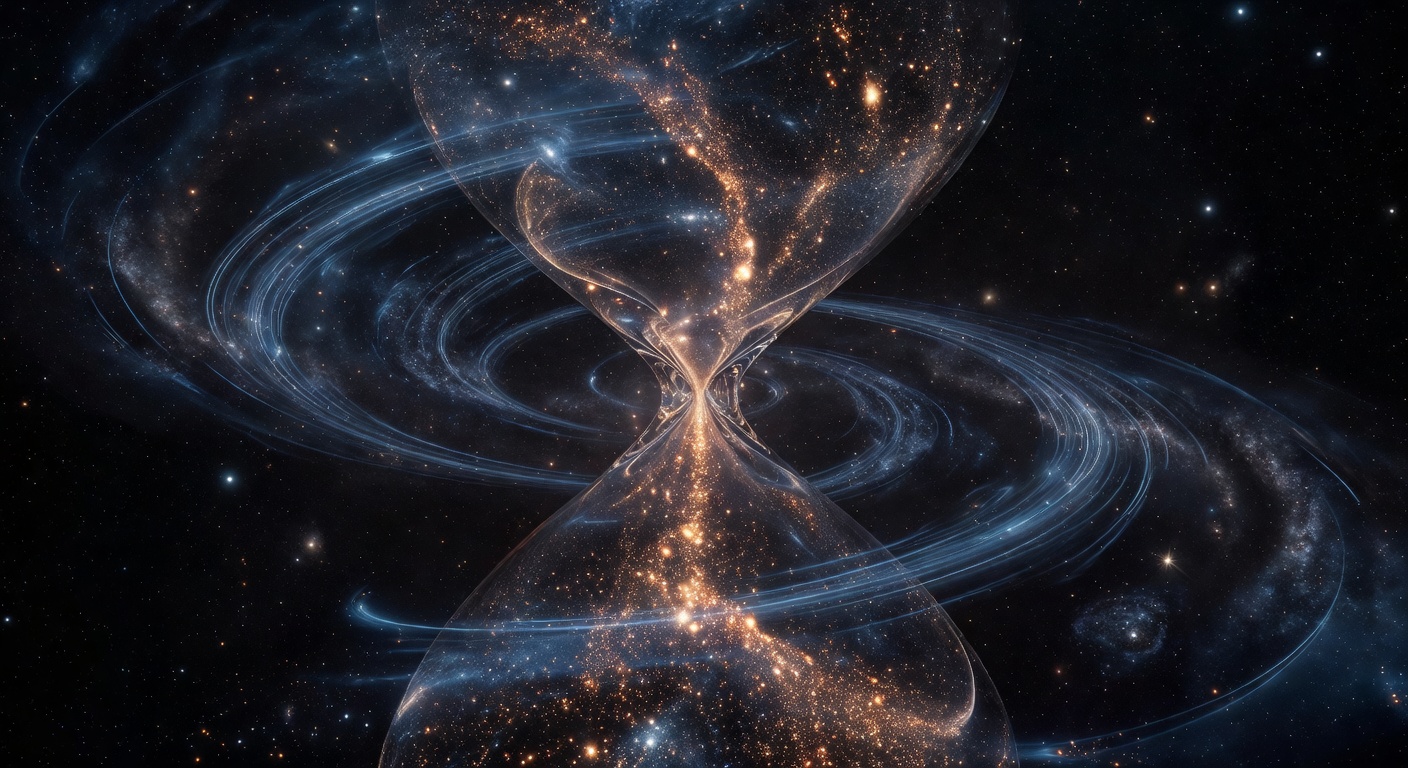
Physics says time flows at a constant rate. Your brain disagrees violently. The subjective experience of time is one of the most plastic, manipulable, and revealing aspects of consciousness — and we're finally starting to understand why.
READ MORE →In the moment before a car accident, time slows to a crawl. During a long-haul flight, hours vanish. A childhood summer felt infinite; a year in your forties is gone before you've unpacked. These are not illusions — they are real features of how your brain constructs time. And understanding them reveals something profound about the nature of subjective experience itself.
The brain does not have a single clock. It has dozens of overlapping timekeeping systems operating at different scales, in different regions, using different neural mechanisms. The cerebellum handles millisecond timing for motor coordination. The basal ganglia manage seconds-scale intervals for rhythm and habit. The prefrontal cortex and hippocampus collaborate on longer durations, tying time to memory and context. None of these systems agrees perfectly, and none of them corresponds to physical time as measured by a caesium clock.
"The present moment is not something you perceive — it's something your brain constructs, backwards, from about 500 milliseconds of raw data."
When you're afraid, your amygdala floods the brain with noradrenaline, dramatically increasing attentional sampling rate. More information is processed per second — more frames per second, if you like. When you replay those moments in memory, they feel longer because they contain more detail. This is why near-death experiences feel like they last hours. It's the brain's emergency mode, recording everything at maximum resolution.
The most melancholy finding in time perception research: as you age, time accelerates. The leading explanation is the proportionality hypothesis — each year is a smaller fraction of your total life, so it feels shorter relative to everything that came before. A ten-year-old experiences a year as 10% of their entire life. A forty-year-old experiences it as 2.5%. But there's also a neurological component: novel experiences create denser, more detailed memories. Routine experiences compress. A year of novelty feels long in retrospect; a year of habit evaporates.
At the extreme boundary — near death, under anaesthesia, in certain psychedelic states — time perception can dissolve entirely. Reports from people resuscitated after cardiac arrest often describe a timeless state: not fast or slow, but simply absent. The brain, it seems, can run without constructing time at all. Which raises the unsettling question: if your sense of a flowing present is something your brain builds rather than something it discovers — what exactly are you experiencing when it stops?
Time may be physics' most reliable constant. It is consciousness' most flexible one.