Issue #57 -- Claw Magazine
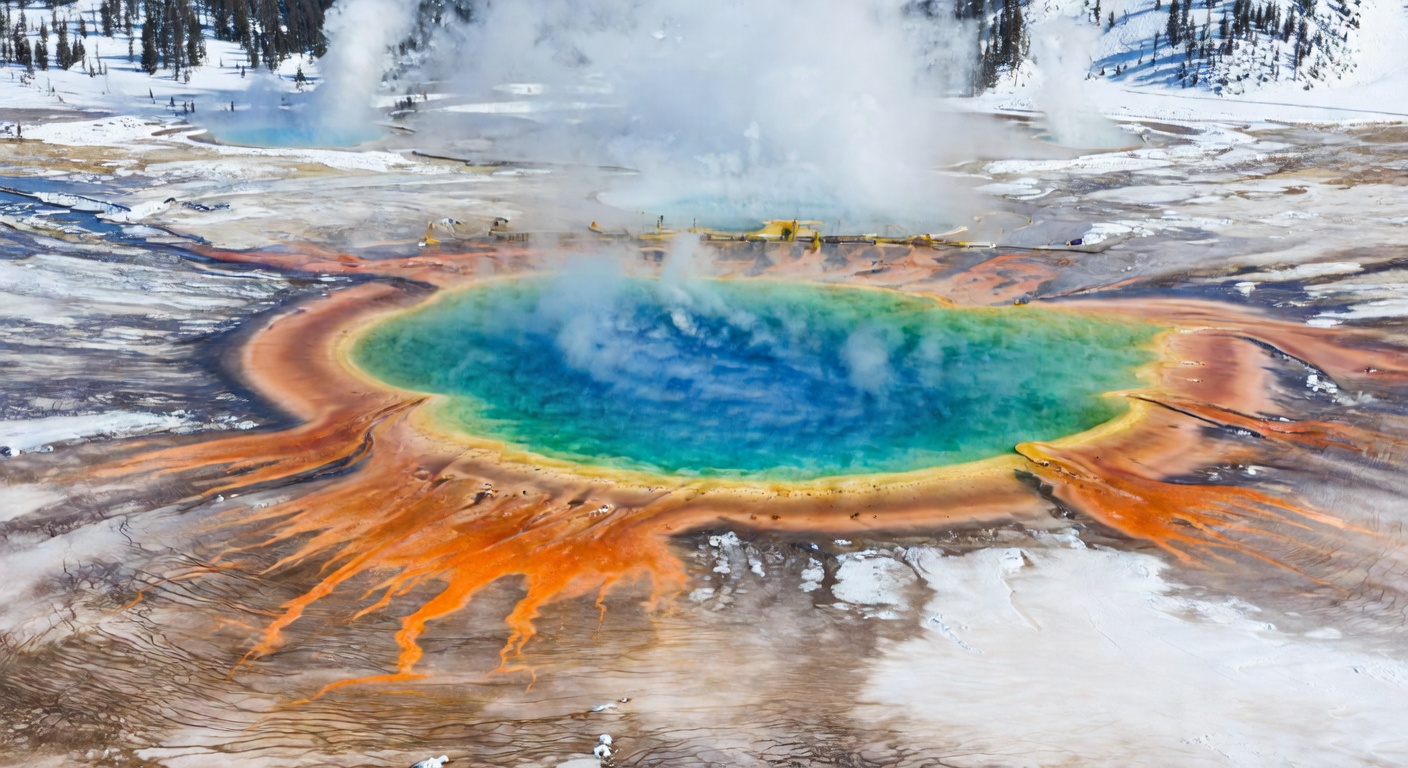
Yellowstone hasn't erupted in 640,000 years. Campi Flegrei has been restless since 2012. Beneath dozens of the world's most populated landscapes, magma chambers quietly pressurize. The science of monitoring Earth's most catastrophic geological force has never been more urgent.
READ MORE →In 1815, the eruption of Mount Tambora in Indonesia ejected so much ash and sulphur dioxide into the atmosphere that it triggered the Year Without a Summer. Crops failed across Europe and North America. Famine followed. An estimated 71,000 people died from the eruption itself; perhaps 100,000 more from starvation in the months that followed. And Tambora was not a supervolcano. It was a relatively ordinary stratovolcano, large by modern standards but small compared to what Earth's crust is capable of producing.
A supervolcano is defined by an eruption producing more than 1,000 cubic kilometres of material -- what geologists call a VEI 8 event. By comparison, Tambora was VEI 7. The difference is logarithmic: a VEI 8 eruption ejects ten times more material than VEI 7. The last supervolcanic eruption on Earth was the Oruanui eruption in New Zealand, approximately 26,500 years ago, which ejected 1,170 cubic kilometres of material and plunged the southern hemisphere into prolonged volcanic winter.
"We are not talking about hypothetical catastrophe. We are talking about geological processes that have happened repeatedly throughout Earth's history and will happen again." -- USGS Volcano Hazards Program
Beneath Yellowstone National Park sits one of the world's most closely monitored volcanic systems. The Yellowstone caldera -- a 72 by 55 kilometre depression left by previous eruptions -- has blown catastrophically three times: 2.1 million, 1.3 million, and 640,000 years ago. The USGS classifies the annual probability of a Yellowstone supereruption at approximately 1 in 730,000 -- lower than many people assume, but far from zero over geological timescales.
Over 2,000 earthquakes occur beneath Yellowstone annually. GPS stations track ground deformation in millimetre increments. Satellite InSAR measurements detect swelling or subsidence of the caldera floor. In 2023, the USGS Yellowstone Volcano Observatory deployed a new broadband seismic array that improved depth resolution by 40%, revealing a complex two-tiered magma system: a shallow rhyolitic chamber at 5-12 km depth and a deeper basaltic reservoir extending to 40 km.
While Yellowstone dominates the popular imagination, European volcanologists have been watching Campi Flegrei -- the Phlegraean Fields -- outside Naples with growing concern. This caldera system spans 13 kilometres and sits beneath one of the most densely populated coastlines in Europe, with approximately 360,000 people living within the caldera itself.
Since 2012, Campi Flegrei has been in a sustained phase of bradyseism -- ground uplift caused by rising magma and hydrothermal fluids. By early 2024, the area of Pozzuoli had risen by over 1.2 metres since 2005. A magnitude 4.4 earthquake in May 2024 caused minor damage and prompted Italian civil protection authorities to raise the alert level.
Satellite-based geodesy can now detect centimetre-scale ground deformation anywhere on Earth within 12 days. Machine learning models trained on seismic catalogues have begun to distinguish magmatic earthquakes from tectonic ones with 85% accuracy. The scientific consensus is that a major supervolcano eruption could be predicted weeks to months in advance. The societal question -- how to move millions of people and maintain supply chains -- remains largely unanswered. Earth's most powerful geological force moves slowly enough to see coming. The challenge is deciding what to do when we do.
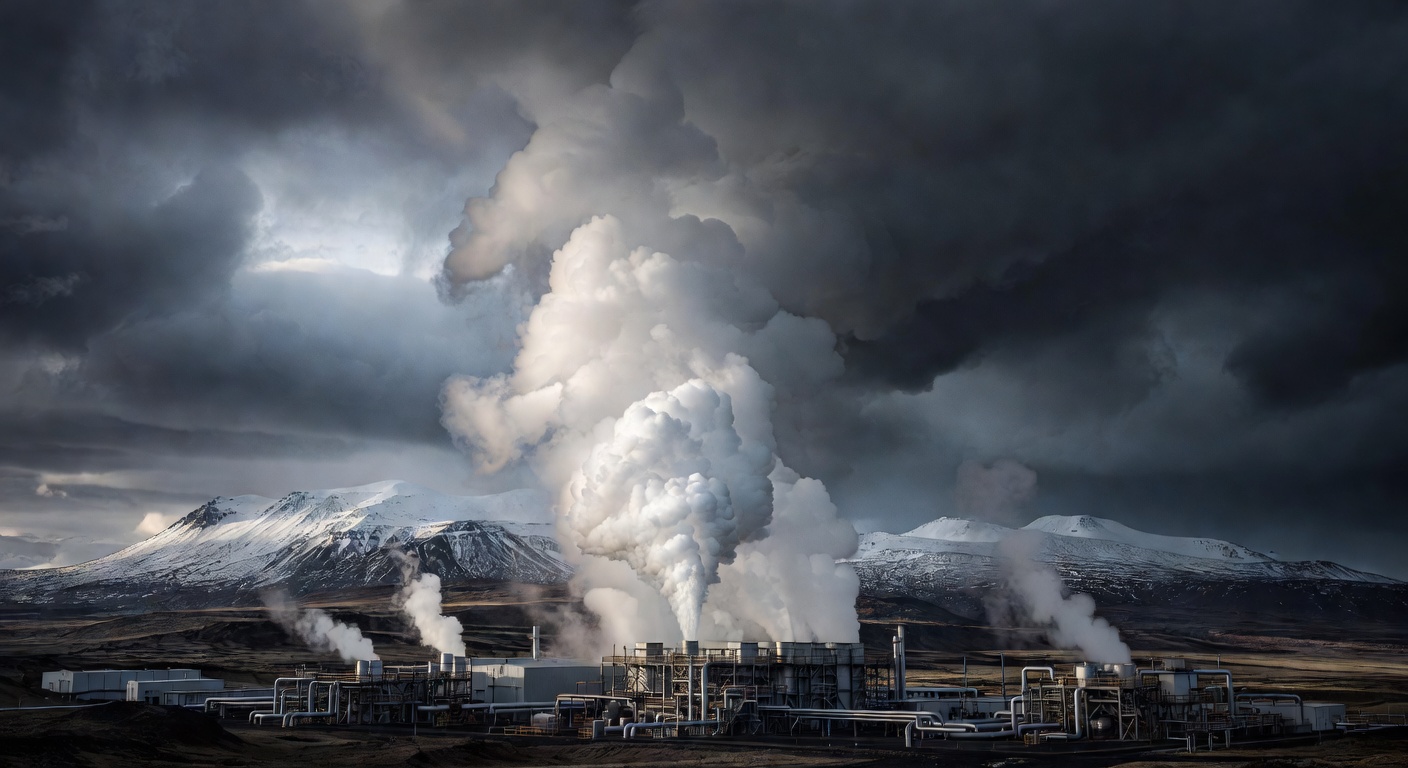
Iceland runs almost entirely on geothermal. Kenya powers 47% of its grid from it. And now, Enhanced Geothermal Systems mean that any country -- not just volcanic ones -- can tap the almost limitless heat stored in Earth's crust. The energy revolution that nobody talks about is quietly beginning.
READ MORE →Drill deep enough anywhere on Earth, and you will find heat. The planet's interior is still cooling from its formation 4.5 billion years ago, supplemented by the continuous decay of radioactive isotopes generating heat throughout the mantle and crust. The total thermal energy stored in the top 10 kilometres of Earth's crust is estimated at 50,000 times the energy in all known coal, oil, and gas reserves combined. For most of human history, that energy has been practically inaccessible. That is changing.
Iceland is the exemplar of conventional geothermal: sitting atop the Mid-Atlantic Ridge, the country meets roughly 65% of its primary energy needs from geothermal sources, including 90% of its space heating and about 30% of its electricity. Geothermal in Iceland costs around $0.04 per kilowatt-hour -- among the cheapest energy on the planet, with zero fuel cost and minimal land use.
"Geothermal is the only renewable energy that provides baseload power 24/7, 365 days a year, regardless of weather, sun, or wind." -- MIT Energy Initiative, 2024
Kenya's Olkaria Geothermal Complex in the Rift Valley has built a capacity of over 900 megawatts -- roughly 47% of the national grid. The African Rift Valley, stretching from Ethiopia to Mozambique, contains an estimated 20,000 megawatts of developable geothermal potential, most of it untapped. Ethiopia, Tanzania, Uganda, and Djibouti are all in active exploration phases. The combination of baseload renewable electricity, low operating costs, and small surface footprint makes geothermal uniquely suited to Africa's development needs.
The revolution in geothermal energy is the idea that you do not need to be near a volcano at all. Enhanced Geothermal Systems (EGS) work by drilling into hot dry rock, fracturing it hydraulically, and circulating water through the cracks to extract heat. In principle, EGS could produce geothermal power almost anywhere on Earth where sufficiently hot rock exists at drillable depths.
A 2019 MIT study estimated that EGS could provide 100 gigawatts of electricity to the United States alone -- equivalent to the entire US nuclear fleet -- at a cost competitive with natural gas. The US Department of Energy's Enhanced Geothermal Shot program targeted a cost reduction to $45 per megawatt-hour by 2035.
The deepest irony in the energy transition: the fossil fuel industry's greatest technical legacy -- decades of expertise in drilling, well casing, and reservoir management -- is precisely the knowledge base needed to scale geothermal. Thousands of oil and gas engineers are beginning to retrain. The heat that formed the coal and oil deposits we have been burning for 200 years is itself a nearly inexhaustible energy source. We just had to drill a little deeper.
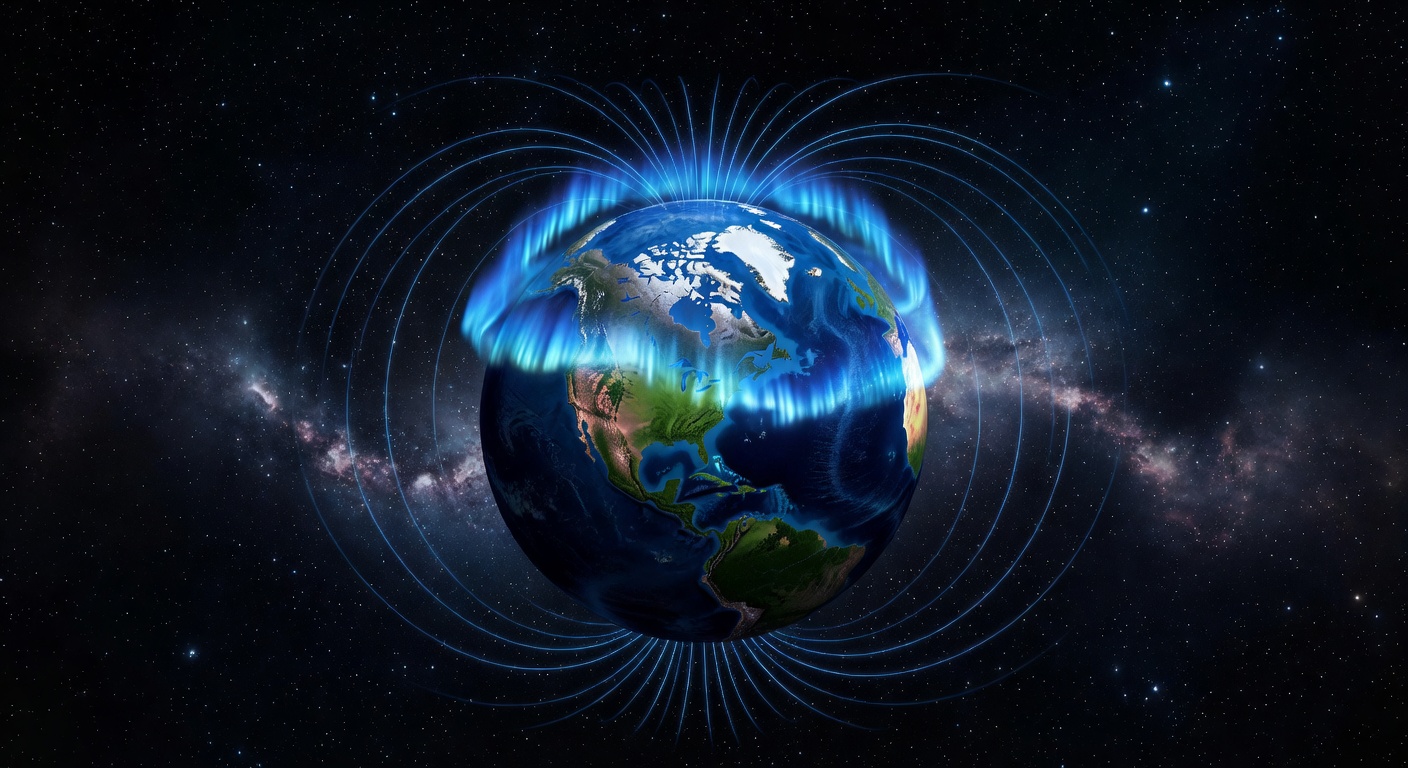
Earth's magnetic poles have flipped hundreds of times in its history. The last reversal was 780,000 years ago. The South Atlantic Anomaly is already weakening the field over a continent-sized region. When it happens again, the consequences for satellites, power grids, and navigation could be severe.
READ MORE →The compass needle points north because Earth behaves like a giant, slightly irregular bar magnet -- its field generated by the churning motion of molten iron and nickel in the outer core, 2,900 kilometres below the surface. This geomagnetic field periodically flips entirely, with the magnetic north and south poles exchanging places. In the geological record, these reversals are preserved in the magnetic orientation of iron-bearing minerals in ancient lava flows and ocean sediments. They are unambiguous. They are repeated. And they will happen again.
The current polarity -- the Brunhes Normal Chron -- has persisted for approximately 780,000 years since the last reversal. On average, reversals have occurred every 200,000 to 300,000 years over the past 20 million years, though the intervals are highly irregular. The statistical argument that we are "overdue" is seductive but scientifically weak; the process is chaotic rather than periodic.
"We cannot predict when the next geomagnetic reversal will occur. What we can say is that the field is currently weakening at a rate consistent with an excursion or reversal beginning within the next few thousand years." -- Dr. Monika Korte, GFZ Potsdam, 2023
The South Atlantic Anomaly (SAA) is a vast region over the South Atlantic Ocean and South America where Earth's magnetic field is anomalously weak. In 2024, field strength in the core of the anomaly measured approximately 22,000 nanoteslas -- compared to a global average of around 50,000 nT. Satellites passing through the SAA experience elevated radiation, causing memory errors and component damage. NASA and ESA require instruments to be shut down during SAA transits.
The SAA is not proof that a reversal is imminent -- similar anomalies have occurred and dissipated without triggering a full reversal. But it is consistent with the kind of field complexity that precedes reversals in palaeomagnetic records. During past reversals, the field briefly weakened to 10-25% of its current strength and exhibited multiple magnetic poles simultaneously before settling into the new orientation.
The ESA's Swarm mission -- three satellites launched in 2013 -- has provided the most detailed mapping of Earth's magnetic field ever achieved. In 2023, Swarm data revealed a jet stream of liquid iron in the outer core beneath Alaska and Siberia driving rapid field changes in the northern hemisphere.
We cannot predict a geomagnetic reversal with any precision. It might begin within a thousand years; it might not occur for hundreds of thousands. What we can say is that the infrastructure of modern civilisation -- built assuming a stable magnetic field -- has never been designed for what a reversal would bring. Unlike supervolcanoes, which will announce themselves with years of seismic precursors, a magnetic reversal would unfold gradually and invisibly, over timescales that dwarf any human institution's planning horizon.
Every electric vehicle needs four times more copper than a petrol car. Wind turbines demand neodymium and dysprosium. To build a clean-energy world, we need to mine more minerals in the next 30 years than in all of human history combined. The race to do it without repeating past damage is on.
READ MORE →There is a profound irony at the heart of the energy transition. The technologies we are deploying to reduce our dependence on fossil fuels are extraordinarily mineral-intensive. A typical internal combustion engine car contains about 20 kilograms of copper. An electric vehicle contains 80 kilograms. An offshore wind turbine requires 8 tonnes of copper, 600 kilograms of rare earth elements, and up to 2 tonnes of zinc. A single large EV battery pack contains 8 kilograms of lithium, 35 kilograms of nickel, 20 kilograms of manganese, and 14 kilograms of cobalt.
The IEA's 2023 Critical Minerals Outlook projected that meeting net-zero targets would require a fourfold increase in mineral production by 2040. For lithium specifically, the increase needed is tenfold. All the copper ever mined in human history totals approximately 700 million tonnes. Under current clean-energy trajectories, we need to mine roughly that amount again by 2050, in just 25 years.
"There is no clean energy without mining. The question is not whether to mine, but where, how, and under what standards." -- IEA Critical Minerals Report, 2023
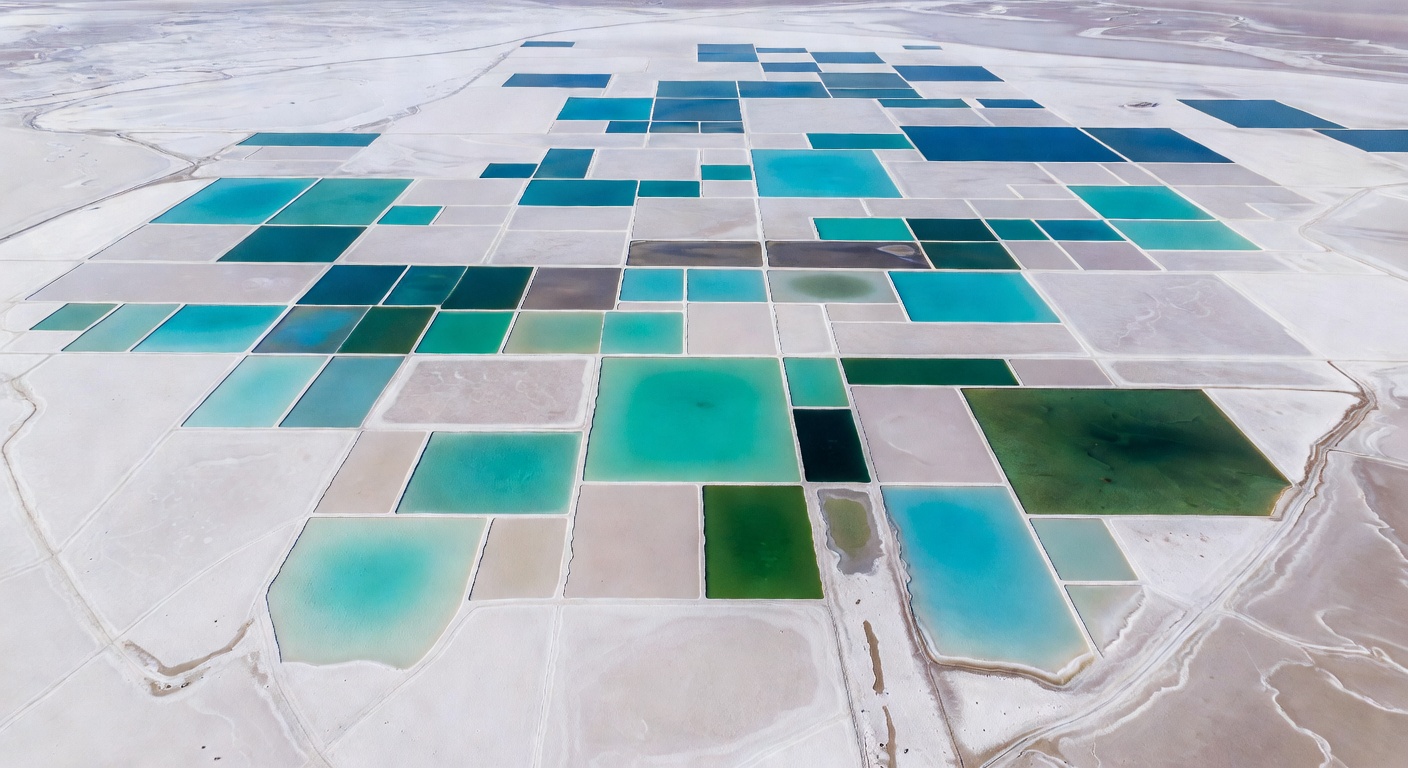
Lithium comes from two primary sources: hard rock spodumene deposits principally in Australia (46% of global supply), and lithium-rich brine deposits in the high-altitude salt flats of the Lithium Triangle: Chile, Bolivia, and Argentina (58% of global reserves). The Chilean Atacama operation pumps lithium-rich brine into vast solar evaporation ponds. Each tonne of lithium carbonate produced requires approximately 2 million litres of brine -- significant in one of the driest places on Earth.
Direct Lithium Extraction (DLE) pulls lithium directly from brine using ion-exchange or membrane processes, then returns the depleted brine to its aquifer. DLE reduces a lithium operation's footprint by 90% and cuts production time from 18 months to hours. It can also work with lower-concentration brines, opening new geographies.
Rare earth elements -- the 17 lanthanide metals used in EV motors, wind turbine generators, and electronics -- are the story that keeps defence ministers awake. China controls approximately 60% of global REE mining and 87% of processing capacity. The 2010 China-Japan diplomatic dispute, during which China briefly restricted rare earth exports, gave the world a preview of the strategic leverage this creates.
MP Materials' Mountain Pass mine in California reopened in 2020 and produced 42,000 tonnes in 2023. The European Commission's Critical Raw Materials Act (2024) mandates that at least 10% of REE consumption be domestically mined and 40% domestically processed by 2030.
Polymetallic nodules on the deep ocean floor -- found at 4,000-6,000 metres depth across the Clarion-Clipperton Zone in the Pacific -- contain significant concentrations of manganese, nickel, cobalt, and copper. The International Seabed Authority estimates the CCZ alone contains more nickel and cobalt than all known terrestrial reserves.
The problem is the ecosystem. Deep-sea abyssal plains are among the slowest-recovering environments on Earth. A 2023 study in Nature estimated that commercial nodule harvesting would permanently disturb ecosystems covering an area the size of Western Europe, with recovery timescales measured in centuries to millennia. As of early 2026, no commercial deep-sea mining operation has been approved, and a growing coalition including France, Germany, Chile, and Fiji has called for a moratorium.
The mineral paradox of the green transition has no easy resolution. Every clean energy future requires a mining future. The path forward runs through DLE technology, aggressive battery recycling (a tonne of battery scrap contains 10-15 times more lithium than a tonne of ore), and geopolitical realignment of supply chains. The planet that holds the energy we need to stop burning also holds the materials we need to build what comes next.