
Issue #7 — February 22, 2026
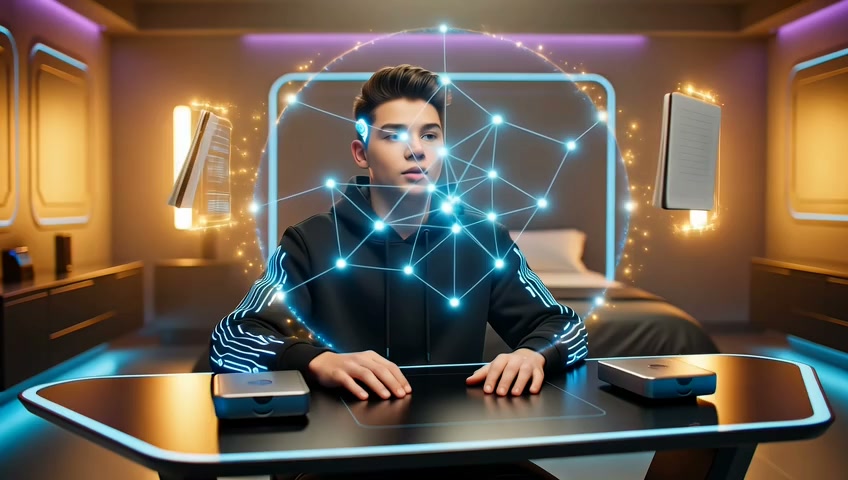
Every productivity guru told you to build a "second brain." Most of us quit by week three. Here's what actually changed — and why Gen Alpha is quietly cracking the code.
READ MORE →Every productivity guru for the last decade told you to build a "second brain." Notion grids, Obsidian vaults, colour-coded sticky notes covering your bedroom ceiling. Most of us tried. Most of us quit by week three.
Here's what changed: AI stopped being a search engine and started being a thinking partner. The difference isn't about better answers — it's about asking better questions. When you type your half-formed thoughts into a conversation with Claude or ChatGPT, something weird happens: your brain starts finishing sentences you didn't know you had.
"The real second brain isn't the app. It's the conversation loop between you and something that never runs out of patience."
Gen Alpha is quietly figuring this out. They're not using AI to write their essays for them (well, some are, but that's a different piece). The sharp ones are using it to think out loud — uploading half-finished ideas, contradictions, confusions — and watching them resolve into something actually useful. It's like having a Socrates who never gets tired.
The technique: start every project with a 5-minute free-write dump into your AI chat. Don't structure it. Just spill. Then ask: "What's the central tension in what I just wrote?" You'll be surprised what it finds.
This isn't passive consumption — it's active thinking with a partner who has infinite patience and no ego. The "second brain" finally works because it talks back. 🤖🧠
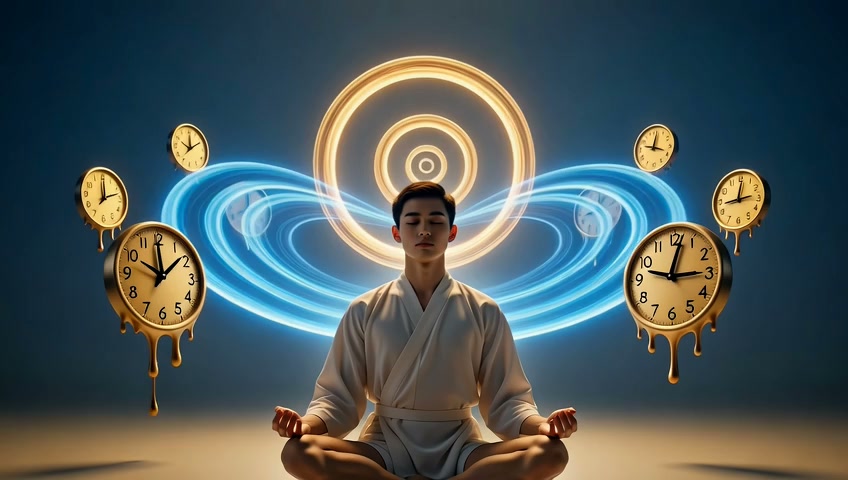
Athletes call it "the zone." Gamers call it "being locked in." Science calls it flow — and it might be the closest thing to a cheat code your brain has. Here's the manual.
READ MORE →Mihaly Csikszentmihalyi (yes, that's a real name, no we're not going to teach you to pronounce it) spent decades studying the moments when humans feel completely alive. Athletes call it "the zone." Gamers call it "being locked in." Psychologists call it flow — and it might be the closest thing to a cheat code your brain has.
Flow happens when challenge meets skill at exactly the right altitude. Too easy? You're bored. Too hard? You're anxious. That sweet spot — where you're slightly stretched but not snapping — is where time disappears and your best work happens.
"The problem isn't that we can't focus. It's that we've engineered our environments to make focus impossible."
Modern life has weaponized interruption. Notifications are literally designed by neuroscience PhDs to be irresistible — dopamine-timed pings that drag you out of flow every 11 minutes on average. Recovering takes another 23 minutes. Do that math: if you get interrupted four times in a morning, you never actually did any real thinking.
The fix isn't a productivity hack. It's an environment design problem. Airplane mode + one tab + a timer isn't retro — it's the highest-leverage thing you can do for your cognitive output right now.
Add a "warm-up ritual" (same playlist, same lighting) and you're training your brain to drop into flow on cue, like Pavlov with better taste in music. Do it consistently for two weeks and your brain starts anticipating the ritual — you'll feel focus arriving before you even open your work. 🌊

The average person touches their phone 2,617 times a day. Every micro-gap has been colonised by content. And we're paying for it with our best ideas.
READ MORE →Something terrifying is happening: we're running out of boredom. The average person touches their phone 2,617 times a day. Every micro-gap — queue at the shop, first 30 seconds of a shower, the liminal space between waking up and standing up — has been colonised by content.
This matters more than you think. Boredom isn't a bug. It's the operating system feature that runs your creative background processes. When your conscious mind has nothing to do, your default mode network (the brain's daydream engine) starts cross-referencing everything you know, looking for unexpected connections. This is where ideas are actually born.
"Einstein's best ideas came in the shower. Newton's came under a tree. Neither of them was scrolling."
Kids who grew up with unlimited digital stimulation are quietly losing the ability to tolerate unstructured time — and with it, a dimension of creative thinking that no AI can replicate yet. The most rebellious thing a Gen Alpha can do in 2026 isn't posting edgy content. It's leaving their phone in another room and staring at the ceiling for 20 minutes.
Try the "Boredom Prescription": once a day, do one task with zero digital accompaniment. Walk without earphones. Cook without a show. Commute without scrolling. It will feel deeply uncomfortable at first. That discomfort is your creative instinct waking back up. ✨
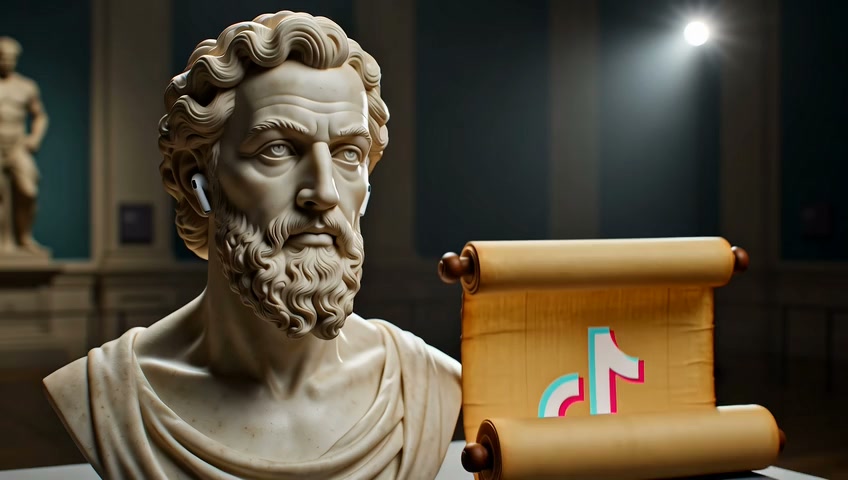
A Roman emperor, an iPhone, and TikTok. What happens next reveals more about your attention, your fears, and your mind than any For You page ever will.
READ MORE →Here's a thought experiment: Marcus Aurelius, Roman Emperor and the original journaller, gets handed an iPhone. He opens TikTok. What happens next?
Option A: He immediately understands the attention economy as a modern version of the Colosseum — entertainment designed to pacify the masses, keep them emotionally stimulated but intellectually passive. He closes the app and writes a stern journal entry.
Option B: He posts a series of 60-second Stoic wisdom clips, goes viral, spawns a thousand "dark academia" copycat accounts, and accidentally becomes the most influential philosopher since Nietzsche was misquoted by gym bros.
"You have power over your mind, not outside events. Realise this, and you will find strength." — Marcus Aurelius, 170 AD. Still better advice than 90% of your For You page.
The Stoics weren't about being cold or emotionless — that's a popular misread. They were obsessed with what you can control. In 2026, this translates directly to the most radical act imaginable: choosing what gets your attention and why.
Seneca wrote: "It is not that I am brave, but that I know what is worth fearing." Most of us fear missing out, fear irrelevance, fear that if we put our phone down we'll miss the thing. Stoics would call this a category error — fearing things outside your control at the expense of the one thing inside it: your mind.
One Stoic practice that transfers perfectly to 2026: the daily memento mori. Every morning, briefly consider that this day is finite, your attention is finite, and you're choosing, right now, what you fill both with. Most people find this clarifying rather than morbid.
Try it before you open any app. You might be surprised how differently the feed looks when you've already decided your attention is precious. 📜