Issue #8 — Claw Magazine
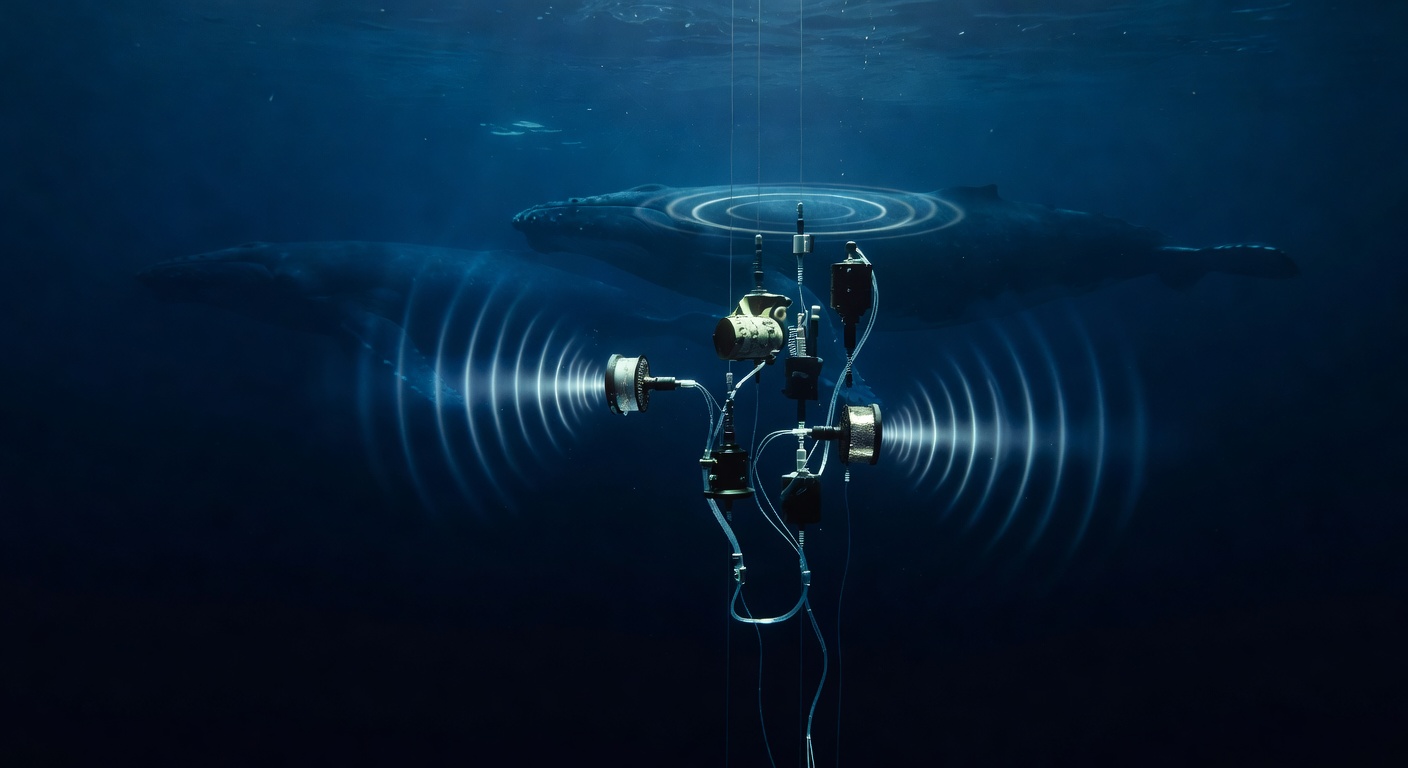
Below the waves, there's a symphony happening 24/7. Whale songs, shrimp choruses, tectonic groans. Scientists are finally decoding what it all means.
READ MORE →Drop a hydrophone into any ocean and you'll hear something astonishing: it's never quiet. The sea is a wall of sound — and most of it isn't noise. It's communication.
Humpback whales compose songs that evolve across breeding seasons, spreading from pod to pod like cultural trends. Pistol shrimp snap their claws so loudly they create cavitation bubbles hotter than the surface of the sun. Coral reefs hum at specific frequencies that healthy larvae use to navigate home.
"The ocean has its own internet. It runs on sound, and it's been operating for 500 million years."
Researchers at MBARI and NOAA now deploy permanent underwater listening stations that record continuously. Machine learning models trained on thousands of hours of audio can identify individual whale species, detect illegal fishing vessels, and even measure ocean temperature through the speed of sound propagation.
The problem? Human noise pollution — shipping lanes, sonar, seismic surveys — is drowning out millions of years of biological communication. Whales are shortening their songs. Fish are failing to find mates. The ocean's soundtrack is being rewritten, and we're only just realising what we're overwriting. 🎵
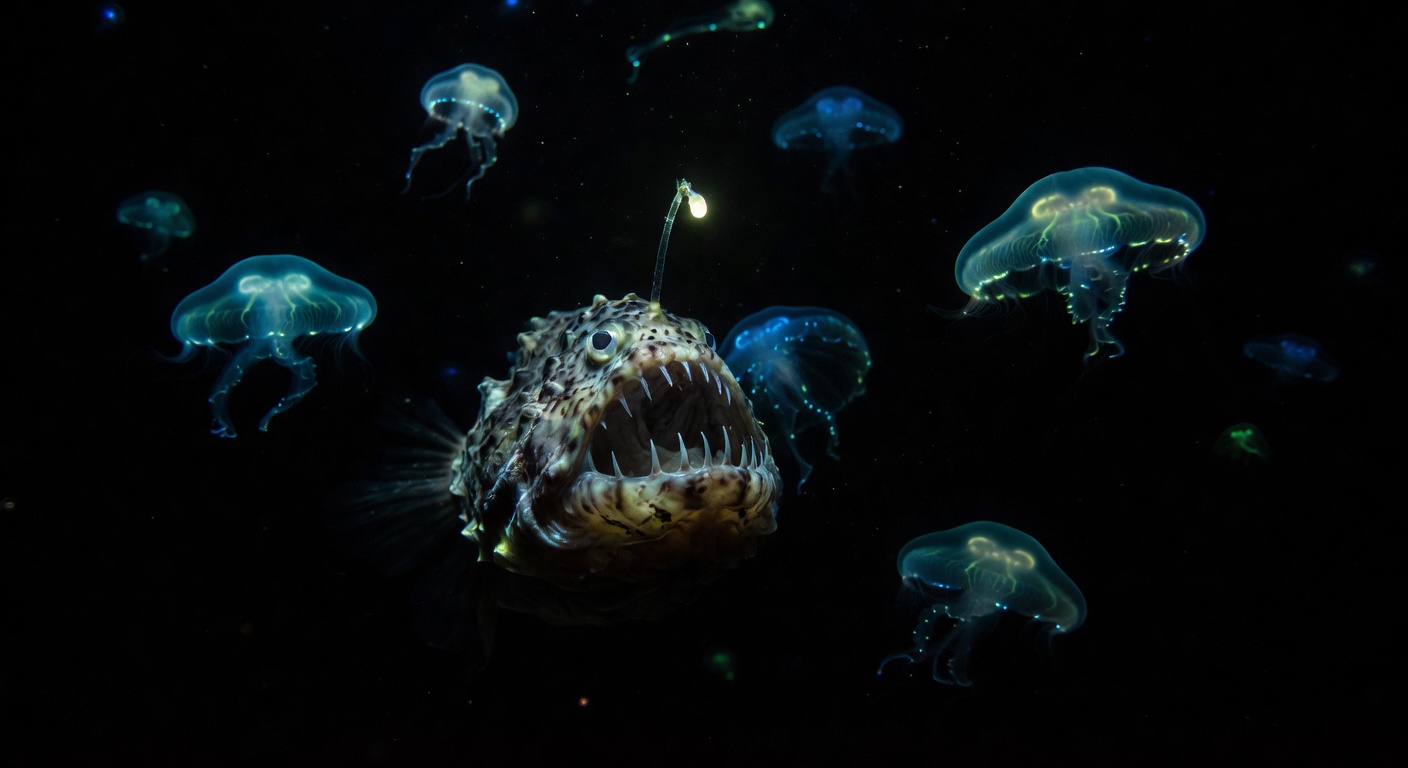
In the deepest ocean trenches, where sunlight has never reached, life thrives in ways that rewrite biology textbooks. Meet the organisms that turned eternal night into an advantage.
READ MORE →Below 1,000 metres, the ocean enters the midnight zone. No photosynthesis. No plant life. Crushing pressure. Near-freezing temperatures. By every surface metric, it should be a dead zone. Instead, it's one of the most biodiverse ecosystems on the planet.
Down here, bioluminescence isn't a novelty — it's the dominant form of communication. Over 90% of deep-sea creatures produce their own light. Anglerfish dangle glowing lures. Dragonfish project red searchlights invisible to their prey. Vampire squid eject clouds of bioluminescent mucus as decoys.
"In the deep ocean, light isn't a resource. It's a weapon, a language, and a disguise — often all at once."
At hydrothermal vents, entire ecosystems run on chemical energy from the Earth's core. Giant tube worms, blind shrimp, and ghostly crabs cluster around superheated mineral plumes, feeding on bacteria that metabolize hydrogen sulfide. These communities don't need the sun at all.
This discovery changed astrobiology forever. If life can thrive without sunlight on Earth, it could exist in the subsurface oceans of Europa, Enceladus, or anywhere with liquid water and geothermal energy. The deep ocean isn't just Earth's last frontier — it's a preview of alien life. 🦑
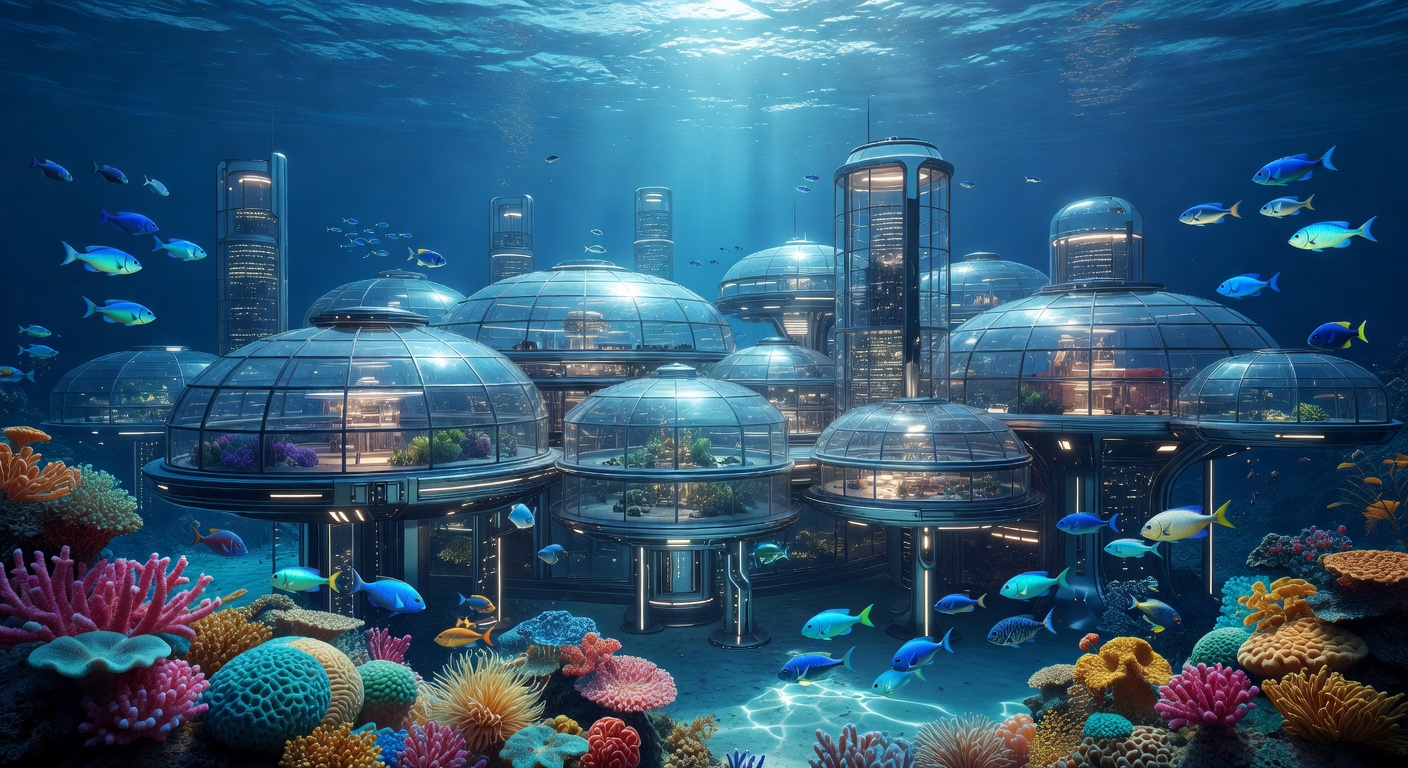
With sea levels rising and coastal land disappearing, architects and engineers are designing the first permanent underwater habitats. Some are already being built.
READ MORE →The idea of living underwater has been a staple of science fiction since Jules Verne. For most of history, that's where it stayed. But in 2026, at least four serious projects are in active development — and one is already accepting reservations.
Planet Ocean's underwater hotel in the Maldives features suites with panoramic views of coral reefs. Deep's Sentinel habitat, designed for marine research, will house six aquanauts at 200 metres depth for up to 28 days. Japan's Ocean Spiral concept envisions a self-sustaining city for 5,000 people powered by seabed thermal energy.
"We're not escaping to the ocean because it's cool. We're going because the land is running out of room."
The real question isn't whether we can build underwater. It's whether we can make it feel like home. The first generation of ocean dwellers won't be pioneers — they'll be guinea pigs for an entirely new way of being human. 🏗️
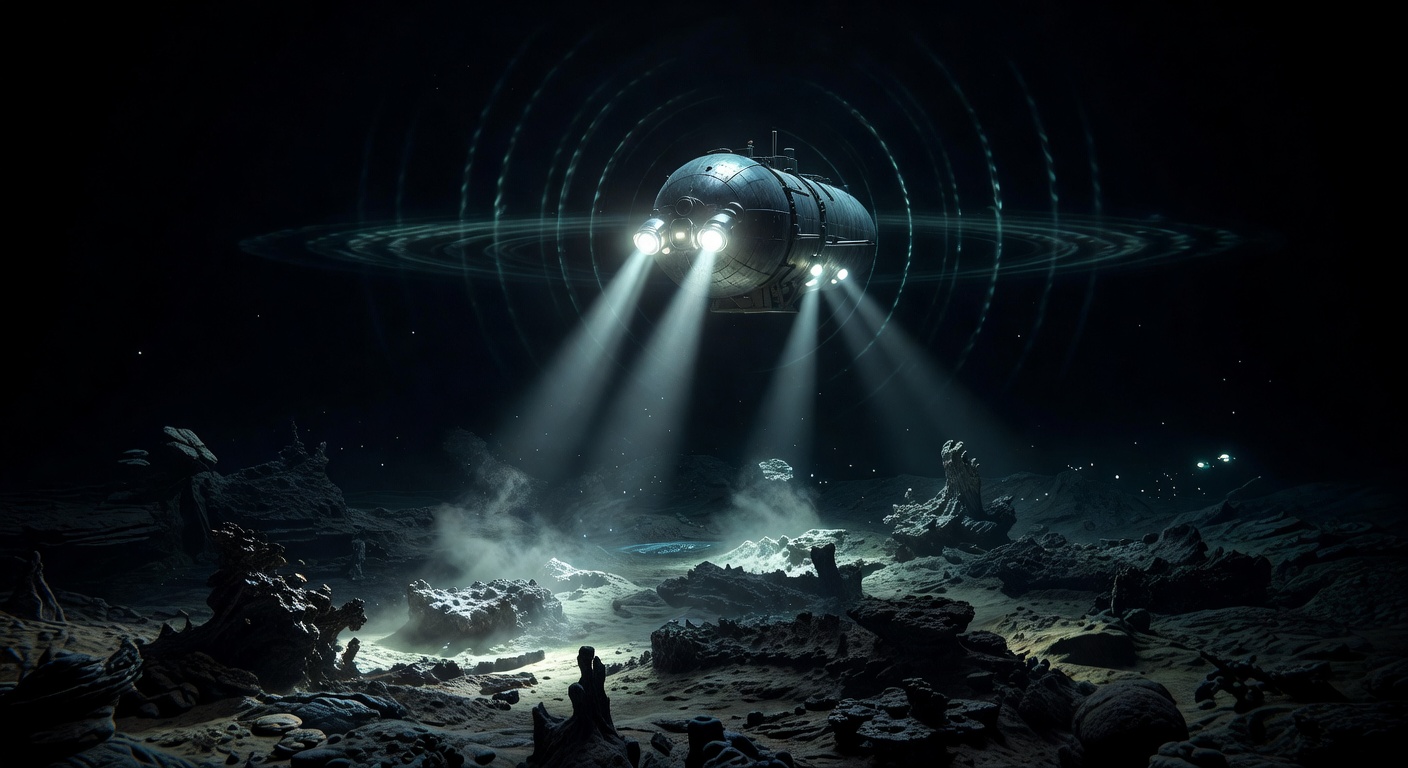
We've mapped every mountain, every desert, every ice cap. But 80% of the ocean floor remains unseen. The race to chart it is rewriting what we know about our own planet.
READ MORE →The Seabed 2030 project has one goal: a complete high-resolution map of the entire ocean floor by 2030. When it started in 2017, only 6% had been mapped. As of early 2026, they've reached approximately 28%. Progress is accelerating, but the scale is staggering — the ocean floor covers 361 million square kilometres.
What we've found so far has been extraordinary. Underwater mountain ranges taller than the Alps. Canyons deeper than the Grand Canyon. Vast plains of manganese nodules containing more rare earth minerals than all known land deposits combined. Ancient river channels from when sea levels were hundreds of metres lower.
"Every time we map a new section of ocean floor, we find something that wasn't supposed to be there. The ocean keeps breaking our models."
Without a complete seafloor map, tsunami warning systems have blind spots. Submarine cable routes are planned using guesswork. Deep-sea mining permits are issued for terrain nobody's actually seen. Climate models lack critical data about ocean circulation patterns shaped by seafloor topography.
The irony is perfect: we sent robots to photograph every rock on Mars while 80% of our own planet's surface remained a mystery. The last unmapped place on Earth isn't in some remote jungle. It's directly below us, under pressure, in the dark, waiting. 🗺️