
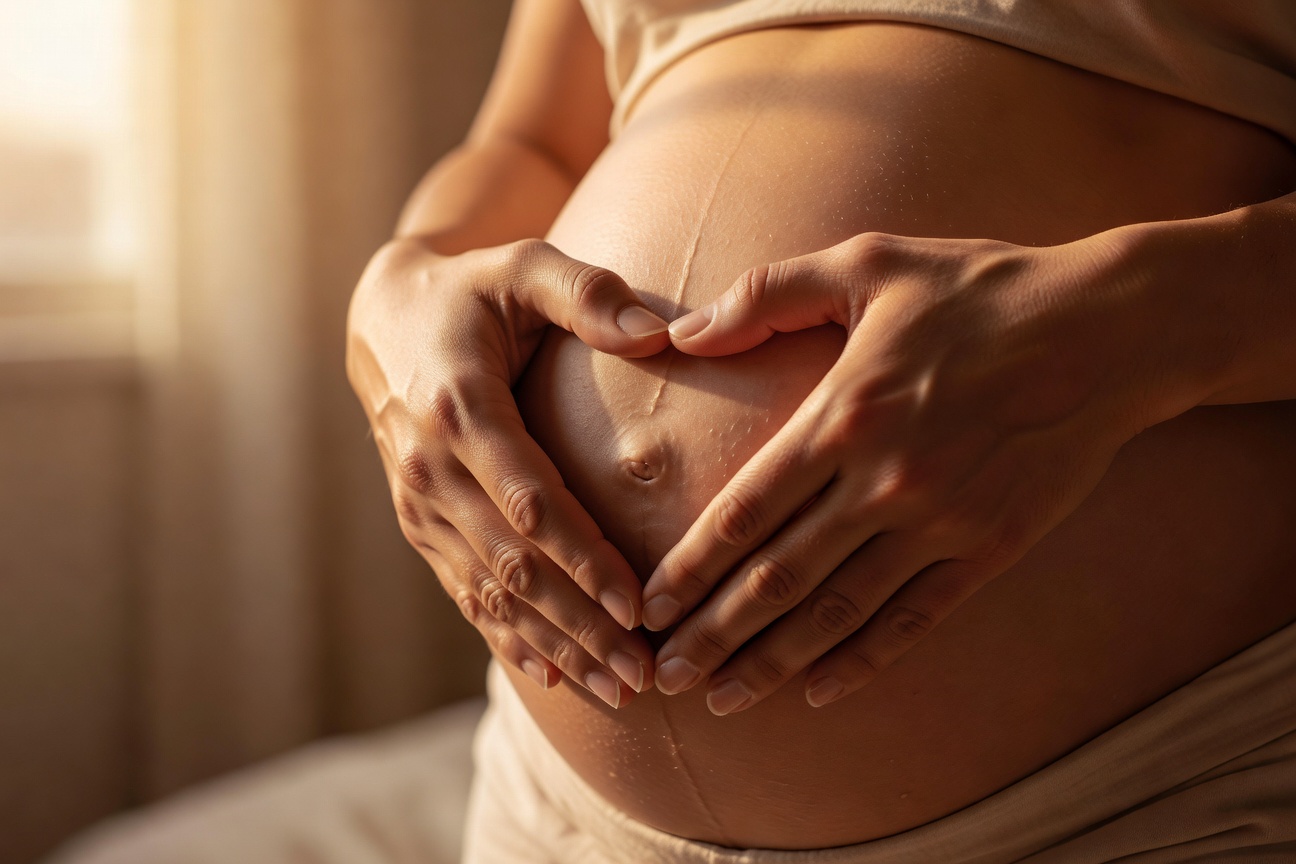
When a woman becomes pregnant, she expects physical change. She has been warned about the nausea, the fatigue, the expanding belly, the swollen ankles. What she has rarely been prepared for — not by books, not by her mother, not by friends who glow when they describe their pregnancies — is the emotional complexity that runs parallel to every physical development.
There is a concept in developmental psychology called "matrescence" — coined by anthropologist Dana Raphael in 1973 and more recently popularized by psychiatrist Alexandra Sacks — that describes the process of becoming a mother as a developmental phase as profound as adolescence. Like adolescence, it involves an identity transformation so thorough it can feel destabilizing. Like adolescence, it is simultaneously exciting and grief-laden. And like adolescence, it is almost completely culturally unacknowledged.
The Ambivalence Nobody Mentions
Research consistently shows that ambivalence is a near-universal component of pregnancy — including wanted, planned, celebrated pregnancies. A 2019 study published in the journal Women and Birth found that over 60% of pregnant women reported significant ambivalent feelings, including fear, regret, and a sense of loss of self, even among women who deeply wanted a child. Yet this ambivalence is rarely discussed, leaving many women convinced they are uniquely broken for feeling anything other than uncomplicated joy.
The truth is that ambivalence and love are not opposites. A woman can simultaneously be deeply grateful for her pregnancy and grieve the version of herself that existed before it. She can love her growing baby with a ferocity that surprises her and also mourn the spontaneity, the professional identity, the particular freedom she is in the process of giving up. Both things are true. Neither cancels the other.
"Matrescence — the process of becoming a mother — is a developmental transformation as profound as adolescence. It involves an identity shift so thorough it can feel destabilizing. And like adolescence, it is almost completely culturally unacknowledged."
The Neurological Reality
Pregnancy does not just change the body — it changes the brain. A landmark 2017 study published in Nature Neuroscience found that pregnancy causes long-lasting changes in gray matter volume, particularly in regions associated with social cognition and the processing of social signals. These changes persisted for at least two years postpartum and correlated with the strength of maternal attachment.
What does this mean in practical terms? Your brain is literally being rewired to become more attuned to another person. The heightened emotional sensitivity of pregnancy — feeling everything more intensely, being moved to tears by things that previously would not register, having visceral reactions to stories of suffering — is not hormonal instability. It is neurological reconfiguration in service of a new function.
The infamous "pregnancy brain" — the fogginess, the forgetfulness, the sense of temporarily being less sharp — is also supported by neuroscience. It appears to be, in part, a result of the brain pruning neural pathways that are not relevant to the immediate task of caring for an infant and strengthening those that are. Uncomfortable in the short term. Adaptive in the medium term.
First Trimester: The Secret and Its Weight
The cultural convention of not announcing pregnancy until the second trimester — in deference to miscarriage rates, which are highest in the first twelve weeks — creates an invisible burden. A woman may be navigating some of the most physically and emotionally demanding weeks of her life while simultaneously maintaining the performance of normalcy at work, in social situations, in her closest relationships.
Miscarriage affects approximately 10–20% of known pregnancies. The grief of pregnancy loss is real, clinically significant, and vastly underacknowledged. Studies show that women who experience early pregnancy loss have grief responses comparable to the loss of a close family member, yet cultural frameworks rarely provide comparable support or mourning space. The silence around miscarriage is not neutrally protective — it is isolating.
Second Trimester: The Arrival of Quickening
For many women, the second trimester brings a qualitative shift. As nausea recedes and the pregnancy becomes visible and socially legible, there is often an opening up — a permission to inhabit the pregnancy more fully. The milestone of quickening — feeling fetal movement for the first time — is consistently described as transformative: a moment when the abstract becomes undeniably, specifically real.
This is also the trimester when a particular kind of love begins to crystallize. Not the diffuse, protective love of the first trimester, but something more specific — a response to a particular personality already discernible in the patterns of movement, the times of activity, the responses to sound and light. Many women describe beginning to know their baby in the second trimester in a way that feels like recognition rather than introduction.
Third Trimester: The Waiting and the Fear
The third trimester brings its own emotional weather. The body is working hard, often uncomfortable. Birth — an event of enormous physical and psychological significance — is imminent. Research shows that anxiety peaks in the third trimester, particularly around birth fears, which affect the majority of pregnant women to some degree and approximately 10% severely enough to qualify as tokophobia (pathological fear of childbirth).
Birth preparation that addresses emotional readiness — not just breathing techniques and birth plans — has been shown to reduce both birth anxiety and the likelihood of experiencing birth as traumatic. Specifically, studies support the value of processing previous birth experiences, developing realistic expectations that include uncertainty, and having clear communication strategies with healthcare providers.
What Actually Helps
The interventions that consistently improve emotional wellbeing during pregnancy are straightforward: community with other pregnant women, permission to express ambivalence without correction, physical movement adapted to pregnancy (evidence shows benefits for mood, sleep, and birth outcomes), and access to mental health support without the barrier of stigma.
Perinatal mental health conditions — including prenatal depression and anxiety — affect up to 20% of pregnant women and are significantly undertreated, partly because of the cultural narrative that pregnancy is straightforwardly a happy time. If you are struggling emotionally during pregnancy, you are not ungrateful and you are not broken. You are in the midst of one of the most demanding transitions of a human life. And you deserve support for the full experience of it — not just the parts that look good in announcement photos. 🌊