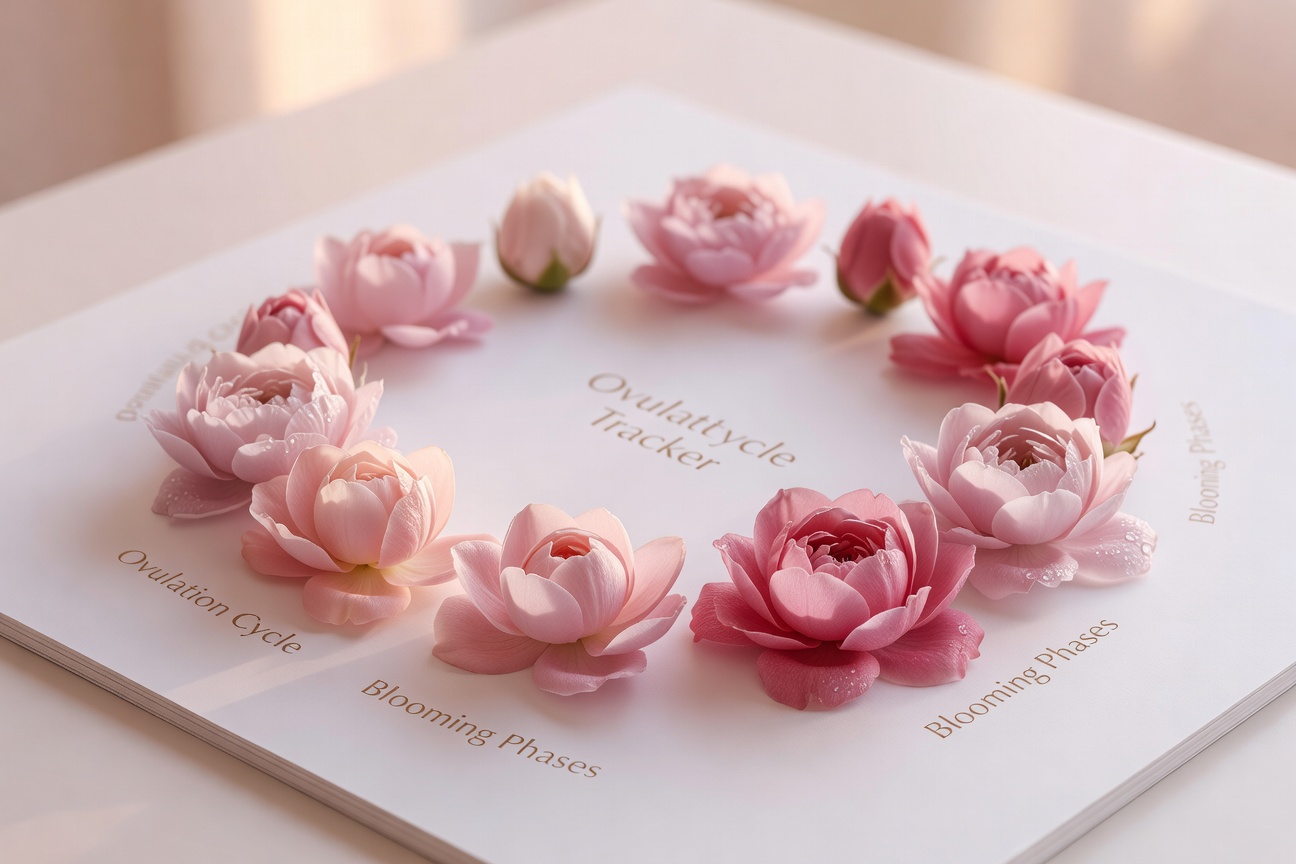

Every month, somewhere between days 12 and 16 of your cycle, a cascade of hormonal events culminates in the release of a single egg — an event that lasts approximately 24 hours. That's ovulation. And for most women who aren't trying to conceive, it's barely a blip in their awareness. A tracker notification, maybe. A faint twinge of mittelschmerz if they're paying attention.
But here's what the fertility app doesn't tell you: ovulation doesn't just affect your reproductive capacity. It affects your brain chemistry, your physical strength, your social confidence, your voice, your immune function, and your creative output. The ovulatory phase — roughly days 12–18 of a 28-day cycle — is not just about fertility. It's about being at your most biologically powered.
The Hormonal Surge and What It Does
The ovulatory phase is driven by a dramatic surge in luteinizing hormone (LH) and a peak in estrogen. These aren't passive background processes — they actively reshape how your brain and body function. Estrogen at its cycle peak increases dopamine activity in the prefrontal cortex, the part of your brain responsible for executive function, strategic thinking, and goal pursuit. Testosterone, which also peaks at ovulation, contributes to drive, assertiveness, and physical power.
The practical effects are measurable: multiple studies have found that women perform better on tasks requiring verbal fluency, spatial reasoning, and social cognition during the ovulatory phase. Research published in Hormones and Behavior found that women rate their own attractiveness higher and are rated by others as more attractive, more confident, and more socially present around ovulation — a finding that holds across cultures. Your voice literally changes — it becomes higher-pitched and more melodic, a shift detectable even in blind audio experiments.
At the same time, your immune system is slightly suppressed during ovulation (a feature, not a bug — it prevents your body from attacking sperm as a foreign invader). This means ovulation week, while energetically powerful, is not ideal for high-stress situations that already strain immunity. It's a week for connection and output, not for burning yourself to the ground.
Physical Power at Its Peak
If you do any form of strength training, you've probably noticed that some weeks feel invincible and others feel like moving through concrete. A significant part of that variation is hormonal, and the ovulatory window is generally your strongest week. Research indicates that peak muscle activation and neuromuscular efficiency are highest when estrogen and testosterone are simultaneously elevated — which happens precisely around ovulation.
This is also, however, the phase where injury risk is highest. Estrogen affects ligament laxity — the elasticity and flexibility of connective tissue. Higher estrogen means more flexible joints, which sounds good until it means less joint stability. ACL injuries in female athletes cluster disproportionately in the ovulatory phase of the cycle. This doesn't mean you should avoid intensity — it means warming up thoroughly, being mindful of your landing mechanics in high-impact activities, and not pushing joint-compromised positions to maximum range in this particular window.
The Social and Creative Peak
Perhaps the least discussed but most practically useful aspect of ovulation: it's your social brain's best week. Oxytocin sensitivity increases. Threat-detection in social situations decreases. You're more naturally willing to take social risks — to speak up in meetings, to ask for what you want, to initiate difficult conversations, to network authentically rather than anxiously.
Creatives often notice that the ovulatory phase brings a rush of ideas and energy — the follicular phase builds steadily toward this peak, and ovulation is often where concepts crystallise into conviction. Many women find this their most effective week for pitching, presenting, negotiating, and collaborating.
"The ovulatory phase is your biological superpower window — peak cognitive clarity, physical strength, social confidence, and creative output, all at once. Most women spend it apologizing for needing rest the week before. What if you planned for it instead?"
The Myth of Uniformity
The reason most women don't know this about their cycle is rooted in a deeper cultural problem: the assumption that women's bodies and brains should function identically across all four cycle phases, and consistently with male hormonal patterns (which fluctuate primarily within a 24-hour cycle rather than a monthly one). Medical research was historically conducted almost exclusively on male subjects; the variability introduced by cycling hormones was treated as a confounding variable to be excluded rather than a biological reality to be understood.
This means that the nutritional, training, and cognitive performance research most of us have internalized is largely based on male physiology — and applied wholesale to female bodies that operate on a fundamentally different hormonal rhythm. The work of researchers like Stacy Sims has been instrumental in beginning to redress this, particularly in exercise science, but the larger field of applying cycle-phase awareness to everyday life is still emerging.
How to Actually Use This
Start by tracking accurately enough to identify your personal ovulation window. This means more than just counting days — it means noting cervical mucus changes (the classic "egg white" texture that accompanies the estrogen peak), potentially using LH test strips if you want precision, or tracking basal body temperature to confirm ovulation after the fact. Apps like MyDaysX can help you log these signals over multiple cycles until your own pattern becomes clear.
Once you can identify your window with reasonable reliability, begin scheduling intentionally. The high-stakes presentation — book it for ovulation week. The difficult conversation you've been avoiding — ovulation week. The creative sprint, the workout PR attempt, the social gathering you actually want to show up fully for — these belong in the days around your peak.
This isn't superstition or cycle-mysticism. It's applied biology. You have a monthly power window built into your physiology. Using it isn't gaming the system — it's finally working with your body instead of against it. And that, in the end, is what cycle awareness is actually for.