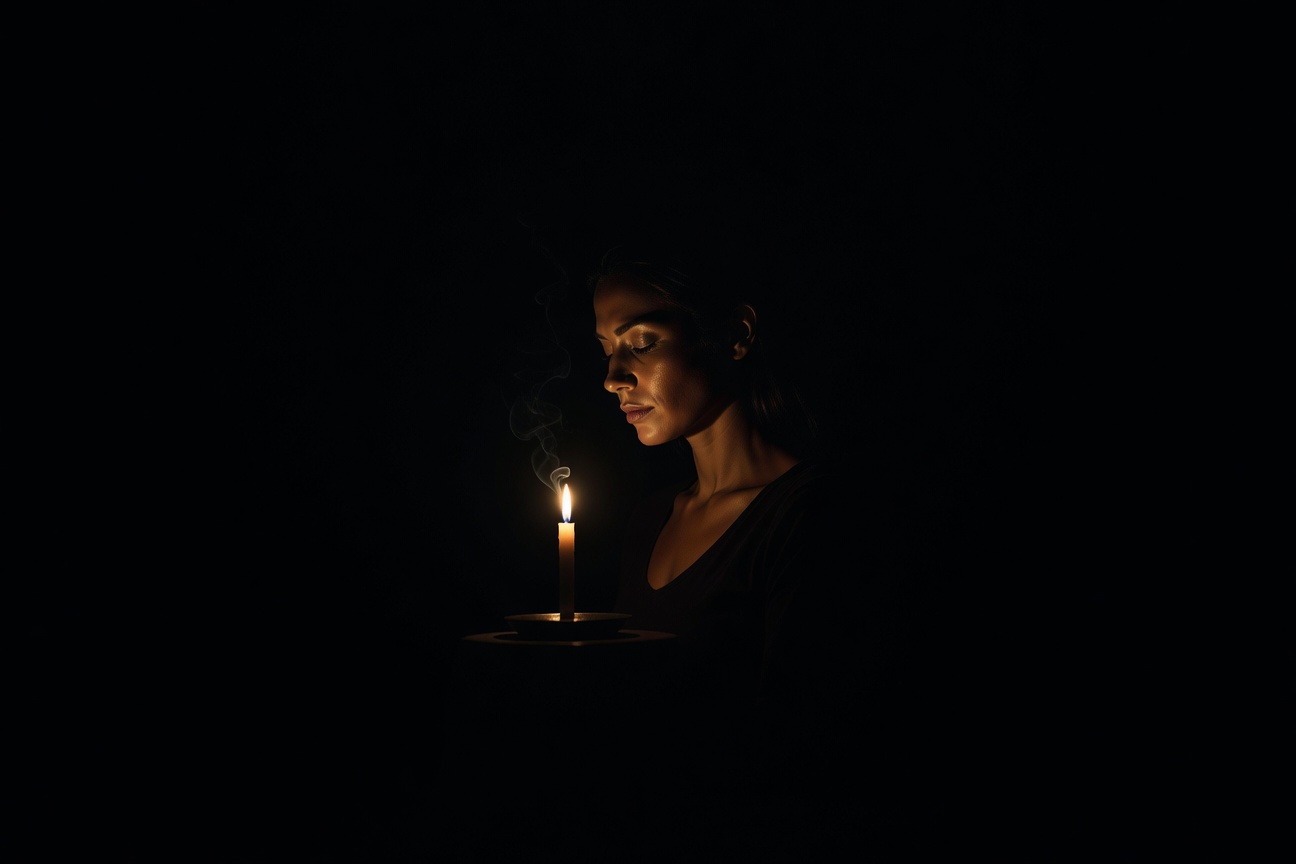

MyDaysX Mag Issue #29 โ€” The Reckoning
๐Ÿ–ค MyDaysX Mag โ€” Issue #29

The Reckoning

Some truths don't wait to be invited. Menopause's hidden story. The wound beneath the silence. Your cycle as sacred knowledge. The dark night that cracks you open.

There are seasons in a woman's life that don't ask permission. They arrive โ€” sometimes like a slow tide, sometimes like a wave you didn't see coming โ€” and they demand that you pay attention. That you stop managing and start reckoning.

Issue #29 is for those seasons. For the menopause that no one adequately prepared you for. For the wound in your closest relationship that you've been circling around for years. For the pain in your body that deserves to be understood, not just endured. And for the dark night of the soul โ€” that terrifying, transformative spiritual passage โ€” that is, quietly, one of the greatest gifts your life will give you.

Four long, honest reads. No softening. No fixing. Just the truth that changes things. ๐Ÿ–ค

This Issue ยท 4 Articles ยท 37 min total

The Menopause Nobody Warned You About: Rage, Memory, and the Brain on Fire

Menopause โ€” brain and body transformation

Hot flashes. Night sweats. The end of periods. That's roughly what most women are told to expect. But the menopause experience that's reshaping lives involves something far more complex โ€” a neurological rewiring that affects memory, rage, identity, and the very architecture of who you thought you were.

Read More

There's a particular kind of anger that perimenopausal women describe โ€” not the irritability of a bad week or the frustration of a difficult situation, but something rawer and more volcanic. A fury that arrives without warning, that feels disproportionate to its trigger, that leaves the woman experiencing it shaken and, often, deeply ashamed. "What is wrong with me?" is the question she asks herself afterward, in the quiet. The answer, rarely provided by her doctor or her culture, is: nothing. Her brain is on fire.

Estrogen is not merely a reproductive hormone. Across the entirety of a woman's brain โ€” in the hippocampus (memory), the amygdala (emotional processing), the prefrontal cortex (impulse regulation), the serotonin and dopamine systems โ€” estrogen receptors are distributed widely, playing regulatory roles that medicine is still working to fully understand. When estrogen begins its volatile fluctuations of perimenopause, these systems are disrupted simultaneously and unpredictably. The result is not simply "mood swings." It is a neurological environment in genuine flux.

The Rage Nobody Names

Studies estimate that between 40% and 50% of perimenopausal women experience significant irritability and anger โ€” making it one of the most common symptoms of this transition. Yet it remains one of the least discussed, most stigmatized, and most inadequately treated. Women who present to their doctors with intense, uncharacteristic anger are frequently misdiagnosed with depression (a condition with different neurochemistry and different treatments) or advised to "reduce stress" โ€” advice that, offered without further support, can feel like being told to simply want less.

The neurological reality is that declining progesterone โ€” which has calming, GABA-modulating effects โ€” often precedes estrogen decline in perimenopause. The loss of progesterone's calming influence, combined with volatile estrogen fluctuations affecting the emotional processing centers, creates a brain that is genuinely less able to regulate emotional intensity. This is not a personality defect. It is a biological reality that deserves acknowledgment, investigation, and treatment.

"The anger of perimenopause is not a character flaw. It is information โ€” the signal of a neurological system in profound transition, asking to be understood rather than suppressed."

When Memory Betrays You

Perhaps even more frightening for many women than the emotional changes is the cognitive disruption. "Menopause brain fog" is a phrase that has entered common use, but the underlying reality is more specific than the label suggests. Women in perimenopause and early menopause frequently report: difficulty finding words mid-sentence โ€” specifically proper nouns, names, and words that should be automatic; reduced working memory, making it harder to track multi-step tasks or hold information while performing another operation; impaired verbal recall in contexts (meetings, presentations) where it previously felt effortless; and a general sensation of cognitive slowing that can feel terrifying to a woman whose identity has been built, in part, on her intellectual sharpness.

A landmark 2021 study published in the journal Menopause found that women in perimenopause showed measurably lower performance on verbal learning and memory tasks compared to premenopausal women โ€” but critically, these differences resolved in postmenopause. This finding is important: for most women, the cognitive disruption of perimenopause is transitional, not permanent. The brain is adapting. But the adaptation takes time, and it is genuinely disorienting while it is happening.

Sleep: The Hidden Collapse

Sleep disruption is both a symptom and an amplifier of every other menopausal challenge. Night sweats โ€” often severe enough to require changing bedding multiple times per night โ€” are among the most commonly reported perimenopausal symptoms, affecting up to 80% of women. But the sleep disruption goes beyond heat: estrogen's role in regulating sleep architecture means that women in perimenopause often experience reduced slow-wave (deep) sleep and more fragmented REM cycles, independent of sweating.

Chronic sleep deprivation has cascading consequences: worsened mood regulation (feeding the rage cycle), reduced cognitive performance (feeding the brain fog), increased cortisol and insulin resistance (affecting weight and metabolic health), and reduced immune function. The treatment of sleep disruption in menopause is therefore not a lifestyle nicety โ€” it is a health priority. If night sweats are the cause, addressing them (through hormone therapy, environmental adjustments, or targeted supplements under medical guidance) is a medical necessity, not a cosmetic preference.

What Actually Helps

For women with moderate to severe symptoms, hormone therapy โ€” specifically transdermal estrogen (patches, gels, sprays), which does not carry the same cardiovascular and clotting risks as oral estrogen โ€” has the strongest evidence base. The Women's Health Initiative study that alarmed a generation of women used oral, synthetic hormones in women who were primarily postmenopausal and older. More recent evidence, including the KEEPS and ELITE trials, suggests a significantly different risk-benefit profile for transdermal estrogen used in early perimenopause and menopause in healthy women.

This isn't an argument that HRT is right for every woman. It's an argument that every woman deserves a full, current, evidence-based conversation about her options โ€” not a reflexive "HRT is dangerous" dismissal that was never fully supported by the evidence even when it was first circulated.

For those who cannot or choose not to use hormones: cognitive behavioral therapy for insomnia (CBT-I) has strong evidence for sleep disruption; structured aerobic exercise has demonstrable effects on hot flashes, mood, and cognitive function; and certain SSRIs (specifically venlafaxine and paroxetine) have FDA approval for hot flash management with evidence for mood benefits.

What does not help: waiting it out alone, convinced that what you're experiencing is not serious enough to merit care. The menopause reckoning, when it comes, deserves your full attention โ€” and the full resources of a medical system that is, slowly, catching up to what women have always known they were experiencing.


The Wound Beneath the Fight: Why Couples Keep Having the Same Argument

Relationships โ€” the wound beneath the fight

Every couple has that argument โ€” the one that never fully resolves, the one that surfaces in slightly different forms across years of a relationship. The content changes. The intensity rarely does. Because it was never really about the dishes, the schedule, the tone of voice. It was always about something older and much more tender.

Read More

Here is a pattern that relationship therapists encounter with such regularity it has become almost predictable: a couple presents describing a specific recurring conflict. Maybe it's about one partner's working hours. Maybe it's about how they handle conflict in front of the children. Maybe it's about money, or sex, or the distribution of domestic labour. They've had this fight thirty times. Fifty times. They can both script it from memory โ€” know exactly which sentences will trigger which escalations, how it will end, what will be said that can't quite be unsaid.

What they cannot do, usually, is identify what the fight is actually about. Because on the surface, it appears to be about the thing they say it's about. And sometimes it is, partly. But beneath the presented conflict โ€” almost always โ€” is a wound. And wounds, unlike arguments, do not respond to logic, compromise, or the resolution of the surface issue. They respond to recognition.

The Architecture of Recurring Conflict

John Gottman's research at the University of Washington โ€” spanning more than four decades and involving thousands of couples โ€” produced a finding that should fundamentally change the way we think about relationship conflict: approximately 69% of relationship problems are "perpetual problems" โ€” meaning they will never be fully resolved. They are rooted in fundamental differences in personality, needs, values, or attachment style that no amount of compromise will eliminate.

The couples who thrive, Gottman found, are not those who resolve these problems. They are those who develop what he calls "dialogue" around them โ€” who can engage with the unresolvable differences with humour, affection, and acceptance, rather than treating every recurrence as a failure of the relationship. The couples who suffer are those who treat perpetual problems as solvable, and therefore treat every reappearance as evidence that their partner is willfully choosing not to solve them.

This distinction matters enormously. If you enter an argument believing it is solvable, and your partner appears not to be solving it, the narrative you construct is: they don't care enough. If you enter understanding it as perpetual โ€” rooted in a genuine difference that requires ongoing navigation, not a one-time fix โ€” the narrative becomes: we are learning, again, how to hold this difference together.

"The couples who thrive don't resolve their perpetual problems. They develop a dialogue around them โ€” holding the difference with curiosity instead of treating every recurrence as proof of failure."

What Wounds Actually Look Like

Beneath most recurring relationship conflicts, there is a core emotional wound โ€” usually originating before the relationship, often in childhood โ€” that the conflict activates. Common wound patterns include: the wound of abandonment (triggered by a partner's emotional withdrawal, busyness, or independence, interpreted through the lens of "you don't need me / you will leave"); the wound of inadequacy (triggered by criticism or perceived disappointment, interpreted as "I am fundamentally not enough"); the wound of control (triggered by a partner's decisions or plans made without consultation, interpreted as "my agency is not respected"); and the wound of invisibility (triggered by a partner's inattention or preoccupation, interpreted as "I don't matter to you").

None of these wounds are usually communicated directly in the fight, because naming them feels too vulnerable and too exposing. Instead, they are expressed through the surface content โ€” the complaint about working hours, the criticism of domestic management โ€” which carries the emotional charge of the wound without naming it. And so your partner responds to the surface content, which does nothing to address the wound, which means the fight continues to recur.

The Intervention That Changes Everything

The therapeutic technique that most consistently interrupts this pattern is deceptively simple: learning to identify and name your own wound during conflict rather than expressing it through accusation. This requires two things โ€” knowledge of your wound, and enough emotional regulation in the moment to access that knowledge rather than flooding.

Sue Johnson, developer of Emotionally Focused Therapy, offers a framework she calls "the demon dialogue" โ€” the negative interaction cycle that couples repeat โ€” and teaches couples to identify what she calls "raw spots": the specific sensitivities that, when activated, make a person respond as if they are under existential threat, even when the trigger is, on the surface, minor. Finding your raw spot, and being able to say to your partner "I just got activated โ€” this is about my fear that I'm not important to you, not about the thing we were arguing about" is one of the most relationship-transforming skills that exists.

When Your Partner's Wound Activates Your Wound

The particular cruelty of recurring relationship conflict is that partners' wounds often interlock in ways that make both people's worst fears come true simultaneously. Classic pattern: Person A has an abandonment wound. When stressed or threatened, they seek more contact and reassurance โ€” pursuing, escalating, wanting to talk it out. Person B has an inadequacy wound. When criticized or pressured, they withdraw to avoid confirming the feared verdict of not-enough-ness. Person A experiences the withdrawal as confirmation of abandonment. Person B experiences the pursuit as confirmation of inadequacy. Both retreat further into their respective defenses, each making the other's fear come true, with neither understanding that they are each responding to an old wound that the other person is accidentally poking โ€” not deliberately wounding.

Naming this cycle โ€” not in the heat of the fight but in a calmer moment โ€” can shift everything. "I think I pursue when I'm scared, and I think that makes you withdraw because you feel criticized. And then I pursue more because your withdrawal scares me more. Can we talk about that?" This is not a comfortable conversation. It is an honest one. And honest, in a relationship that matters, is always worth the discomfort.

When to Seek Help

If the same fight has been happening for years without any shift in understanding โ€” if it has begun to feel hopeless or contemptuous, if there is stonewalling that lasts days, if either person feels genuinely unseen by the other โ€” couples therapy with an EFT-trained or Gottman-method therapist is not a last resort. It is an investment in something you have already invested significantly in. The research on EFT in particular shows a 70โ€“75% success rate in moving couples from distress to recovery. That is not a small number. Going to therapy is not failure. It is the decision to stop having the same fight alone.

Pain Is Not a Character Flaw: Reclaiming Your Cycle from the Culture of Silence

Cycle โ€” reclaiming menstrual truth

For generations, women have been handed the same advice about menstrual pain: take ibuprofen, push through, it's normal. But "common" and "normal" are not the same word. And the culture of silence around cycle pain has cost women their health, their diagnoses, and years of unnecessary suffering.

Read More

The average time from first symptoms to diagnosis for endometriosis โ€” a condition that affects an estimated 190 million women worldwide โ€” is 7 to 10 years. In some countries, including the UK and Australia, the average diagnostic delay is closer to 8 years. In Germany, studies suggest an average of 10 years between onset of symptoms and confirmed diagnosis. During those years, women are often told that their pain is "normal," that they are "overreacting," or that they simply need to manage their stress better.

This is not a historical problem. It is happening now. And it is not an isolated failure โ€” it is a systemic one, rooted in a centuries-long pattern of medical dismissal of women's pain that has only recently begun to be scientifically documented and challenged.

The History of Dismissal

The modern medical literature on sex differences in pain treatment is striking. A 2001 study published in the Journal of Law, Medicine & Ethics found that women in emergency rooms were significantly less likely to receive opioid analgesics for pain than men โ€” and waited longer for the medication they did receive. A 2014 study published in Academic Emergency Medicine found that women presenting with abdominal pain waited 16 minutes longer than men with similar presentations to receive any analgesic.

Women are more likely to have their pain attributed to psychological causes. More likely to be told their symptoms are stress-related. More likely to leave medical appointments with no diagnosis and no treatment plan. The medical term for this pattern โ€” the tendency to attribute women's symptoms to emotional rather than physical causes โ€” is "Yentl Syndrome," named after a 1991 New England Journal of Medicine paper by cardiologist Bernadine Healy. Nearly 35 years later, its legacy persists.

"Endometriosis affects 190 million women worldwide. The average time to diagnosis is 7โ€“10 years. That delay is not a medical mystery. It is the result of a culture that has taught women to manage pain rather than investigate its source."

What "Normal" Period Pain Actually Means

Dysmenorrhea โ€” painful periods โ€” is categorized as primary (period pain without underlying pathology, caused by prostaglandin-driven uterine contractions) or secondary (pain caused by an underlying condition such as endometriosis, adenomyosis, fibroids, or pelvic inflammatory disease). Primary dysmenorrhea is genuinely common and typically begins within a year or two of the first period. But its presence does not rule out secondary causes โ€” and severe pain, pain that worsens over time, or pain that occurs outside of menstruation (during sex, bowel movements, or ovulation) are red flags for underlying conditions that require investigation.

The clinical red flags that warrant further evaluation include: pain rated 7/10 or above that significantly impairs function; pain that does not respond to standard NSAIDs; pain that has worsened over time rather than remaining stable; dyspareunia (painful intercourse); dysuria or dyschezia during menstruation (painful urination or bowel movements); and infertility or difficulty conceiving. None of these symptoms should be normalized. All warrant a thorough clinical workup, including a pelvic examination and possibly transvaginal ultrasound, and โ€” if clinical suspicion for endometriosis is high โ€” laparoscopy, which remains the gold standard for diagnosis.

Understanding Endometriosis โ€” The Basics You Were Never Given

Endometriosis occurs when tissue similar to the endometrium (the lining of the uterus) grows outside the uterus โ€” on the ovaries, fallopian tubes, bowel, bladder, or other pelvic structures. Each month, this tissue responds to hormonal signals as if it were inside the uterus: thickening, breaking down, and bleeding. But unlike menstrual blood, which exits through the cervix, this tissue and blood have nowhere to go. The result is inflammation, adhesions (scar tissue that can bind organs together), and pain โ€” often severe.

Endometriosis is not just a "bad period" condition. It is a systemic inflammatory disease with whole-body effects. It is associated with increased rates of autoimmune disease, bladder disease, and certain cancers. It is a leading cause of infertility. And yet, awareness remains shockingly low โ€” among the general public and, still, among many healthcare providers.

Reclaiming the Narrative

Cycle tracking โ€” consistently, longitudinally โ€” is one of the most powerful tools a woman has in advocating for her own health. When you track pain intensity, timing, and characteristics across multiple cycles, you transform anecdotal reports ("I sometimes get really bad cramps") into clinical data ("For 18 months, on days 1 and 2 of my cycle, my pain consistently reaches 8/10 and is accompanied by lower back pain and nausea"). That data is significantly harder to dismiss.

Apps like MyDaysX exist precisely to make this tracking accessible and consistent. The symptom log you build over months is not hypochondria. It is evidence. And evidence, presented clearly to a healthcare provider who takes women's pain seriously, is the bridge between years of unexplained suffering and finally having a name โ€” and a treatment plan โ€” for what has been happening in your body.

The culture of silence around cycle pain was not built in a day, and it will not be dismantled in a day. But every woman who tracks her symptoms, advocates at her appointment, refuses a dismissal without investigation, and shares her experience with another woman who needs to hear it โ€” is part of dismantling it. Pain is not a character flaw. It is information. And you deserve to know what it's saying.

The Dark Night of the Soul: What It Is, Why It Comes, and What It's Trying to Give You

Spiritual โ€” the dark night of the soul

You didn't choose this. The ground gave way without warning โ€” the faith you had, the certainty, the sense of a self you recognized. The dark night of the soul is not depression, not crisis, not breakdown. It is something older and stranger and, ultimately, kinder than any of those words suggest.

Read More

The phrase comes from the 16th-century Spanish mystic and poet St. John of the Cross, who wrote a poem โ€” "Noche Oscura del Alma" โ€” describing a soul's passage through radical spiritual darkness on its way toward union with the divine. For John, the dark night was not the opposite of spiritual progress. It was the mechanism of it. The old structures of certainty, comfort, and familiar identity had to dissolve before something truer could emerge.

Stripped of its specifically Catholic theology, this framework has proved extraordinarily durable across spiritual traditions and psychological frameworks, because it maps onto an experience that is, apparently, universal: the moment when what you thought you knew about yourself, your life, your beliefs, or your purpose simply stops making sense. When the map you've been using fails to match the territory. When the prayer feels like speaking into a void. When the thing that used to sustain you โ€” your faith, your relationship, your work, your identity โ€” no longer does.

Dark Night vs. Depression

The distinction matters. Clinical depression is a medical condition characterized by persistent low mood, loss of pleasure (anhedonia), disrupted sleep and appetite, cognitive impairment, and โ€” in severe cases โ€” suicidal ideation. It responds to medication, therapy, and biological interventions. It is not chosen, not meaningful in itself, and not something to be mystically reframed when it requires treatment.

The dark night of the soul, as described by those who have moved through it, shares surface features with depression โ€” the flatness, the withdrawal, the loss of former meaning โ€” but differs in crucial ways. It is typically spiritually or existentially triggered rather than biochemically dysregulated. It is frequently accompanied by a quality of profound searching rather than the absence of inner life. And it almost always involves what can only be described as a deepening โ€” a move toward greater truth, greater honesty, greater authenticity โ€” even as it feels like loss.

Many people experience both simultaneously: a genuine depressive episode triggered by or accompanying a genuine existential passage. If you are in significant darkness, please pursue medical and psychological support alongside any spiritual framing. The two are not mutually exclusive, and seeking both is not inconsistency โ€” it is wisdom.

"The dark night is not punishment. It is not abandonment. According to everyone who has passed through it and found words for what came after, it is the most efficient way the soul has found to remove what was never really you."

Why It Comes

The dark night tends to arrive at threshold moments โ€” the death of a parent or partner, the ending of a marriage or relationship that was central to your identity, a career loss or failure that dismantled the story you'd been telling about your worth and purpose, a health diagnosis that removes the comfortable assumption of ongoing normalcy, a crisis of faith that makes the beliefs you were raised in suddenly feel hollow or insufficient. Sometimes it arrives with no obvious external trigger at all โ€” a slow uncoupling from a life that, from the outside, looks fine, but from the inside has quietly stopped fitting.

Thomas Moore, who wrote extensively on the subject in his book "Dark Nights of the Soul," describes it as the soul's insistence on depth. "The soul," he writes, "demands something from us that the ego is not prepared to give. That demand is what the dark night feels like from the inside." The structures we've built โ€” our certainties, our identities, our familiar consolations โ€” are not destroyed maliciously. They are revealed as insufficient for the next version of who we are becoming.

What Makes It Worse

The single thing most reliably reported to extend the dark night unnecessarily is the attempt to end it prematurely. The cultural pressure to fix, resolve, reframe positively, and return to functional optimism as quickly as possible treats the dark night as a problem to be solved rather than a passage to be moved through. The frantic spiritual shopping โ€” the crystals, the new framework, the self-help book that promises to return you to yourself in six steps โ€” can become a form of resistance to the very process that is trying to happen.

Carl Jung identified something similar in his concept of the "shadow" โ€” the parts of the self that are rejected, hidden, and denied โ€” and in his warning against what he called "spiritual bypassing": using spiritual practice to avoid rather than engage with the difficult psychological work of integration. The dark night cannot be bypassed. It can only be moved through. And moving through it requires a quality of willingness โ€” not passive resignation, but active surrender โ€” that most of us find extraordinarily difficult.

What Accompanies the Passage

Those who have moved through the dark night consistently describe certain practices and presences as having sustained them โ€” not fixed the darkness, but made it navigable. Silence. The company of those who have passed through their own dark places and can sit with yours without trying to fix it. A single practice, however simple, maintained as a thread of continuity when everything else has dissolved โ€” a morning walk, a journal, a weekly call with someone who knows you. Honesty with yourself about what is no longer working, no longer true, no longer you.

And time. The dark night does not typically respond to urgency. It has its own timeline, which cannot be negotiated. What can be negotiated is how you hold the waiting โ€” whether you fight it or, gradually, learn to be present within it.

What Comes After

This is where the universal testimony becomes striking in its consistency. Across traditions, across centuries, across the individual accounts of people who have no framework for what they experienced โ€” those who have passed through the dark night describe what comes after as a kind of aliveness they did not have before. Not happiness exactly, not the resolution of all problems, not a return to the person they were before. Something different: a greater tolerance for ambiguity, a lesser grip of the ego, a more honest relationship with what actually matters.

The things that the dark night removes โ€” the false certainties, the identities built on performance, the beliefs that were inherited rather than genuinely owned โ€” turn out, in retrospect, to be things that were ready to go. The self that emerges is not diminished. It is more honestly itself. And it is โ€” this is the gift that was trying to reach you through all that darkness โ€” free in ways it was not before.

If you are in the dark right now, this may not be consolation. It may not even be believable. That's okay. You don't have to believe it yet. You just have to stay with it a little longer, and trust โ€” even without evidence โ€” that it is going somewhere.