
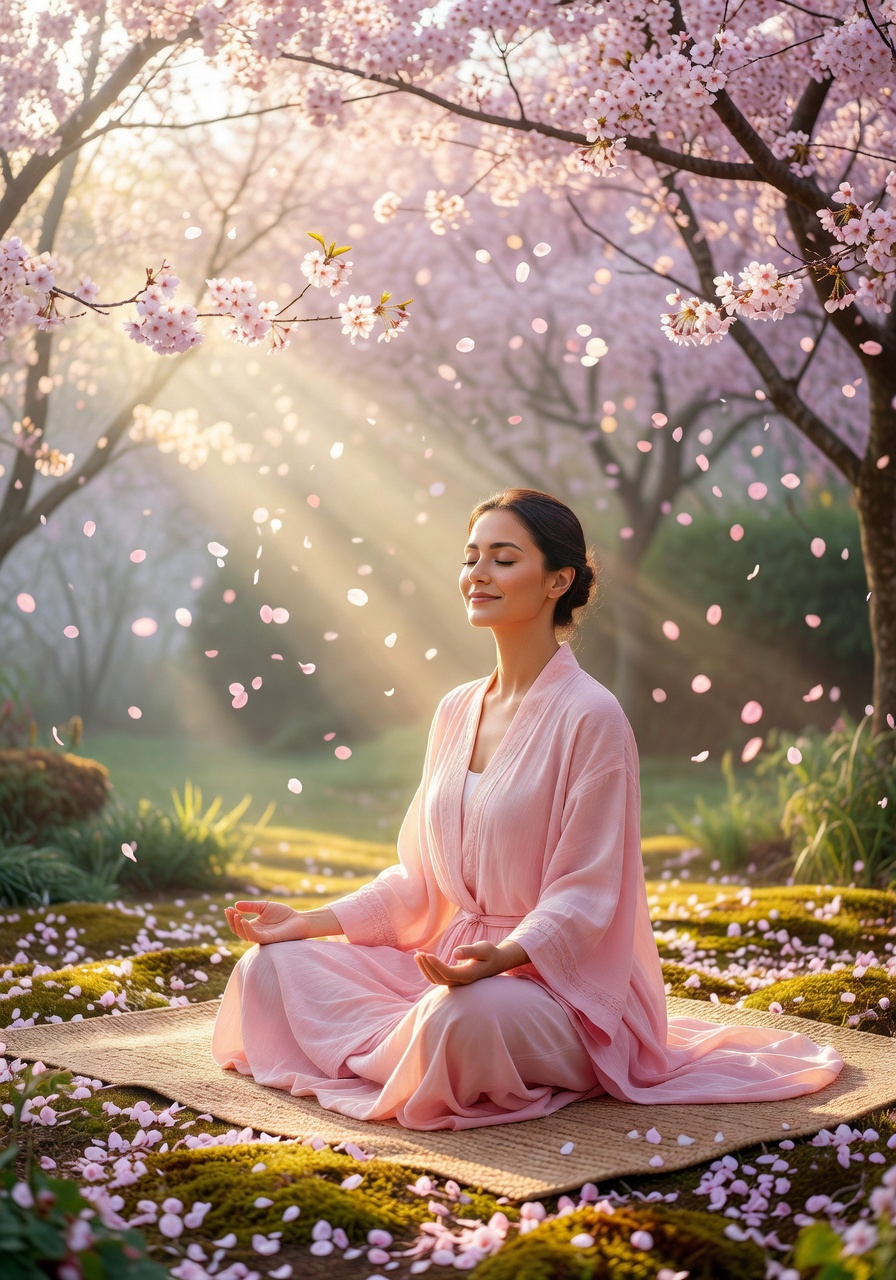
On March 21st, 2026, the sun crosses the celestial equator. Day and night balance perfectly — for exactly one moment, the world is in equilibrium. To the ancient Celts, this was Ostara, the festival of the dawn goddess, of eggs and hares and the electrifying return of green. To the Persians, Nowruz — Persian New Year, a 3,000-year-old celebration of rebirth. In Chinese medicine, spring is the season of the liver, of Wood energy, of growth and vision and the courage to begin. Across cultures, continents, and centuries: spring means something.
Modern secular life has largely stripped away our relationship with seasonal rhythms. We live in climate-controlled spaces, eat strawberries in January, work under artificial light at midnight. The seasons still happen, but we've stopped feeling them as events that require our participation. And something is lost in that disconnection — not just aesthetically, but physiologically and psychologically.
The Science of Seasonal Sensitivity
Research in chronobiology — the study of biological timing — confirms that our bodies respond measurably to seasonal change. Melatonin production shifts as days lengthen; serotonin synthesis increases with sunlight exposure; circadian rhythms recalibrate. Studies have found that people report significantly higher energy, motivation, and positive affect in spring compared to winter, and that this isn't purely psychological — it reflects genuine neurochemical change.
A 2016 study published in the Proceedings of the National Academy of Sciences found that immune gene activity varies by season, with specific genes related to inflammation and immune activation showing different expression patterns across the year. Our bodies are not constant machines. They are seasonal creatures, tuned to environmental cues that have been part of human life for 200,000 years.
When you align your internal practices — rest, effort, intention, release — with these rhythms rather than fighting against them, you're not being mystical. You're being biologically intelligent.
"Spring is not an instruction to perform productivity. It's an invitation to participate in aliveness — to let what was dormant in you start reaching toward the light."
The Spiritual Framework: What Spring Is Asking Of You
In most seasonal wisdom traditions, spring has two complementary movements. The first is release: just as trees drop the dead leaves of autumn to allow new growth, spring asks us to continue releasing what no longer serves — the winter heaviness, the stories that kept us contracted, the habits that formed in the dark. The second movement is intention: with the released space, what do you want to plant?
This isn't abstract metaphor. Our psychological states do carry inertia. The depression or numbness or low-grade resignation of a long winter doesn't automatically lift when the temperature rises. It requires active participation — a decision to meet the new season with openness rather than carrying the old season's weight unchanged into it.
Many spiritual traditions use the equinox as a natural checkpoint for intention-setting, similar to the New Year but arguably more powerful because it's backed by actual biological and environmental change. What you commit to in spring, when your energy is genuinely returning and your neurochemistry is shifting toward optimism and action, is more likely to take root than resolutions made in the cold dark of January.
Practical Equinox Rituals (Without Any Spiritual Bypass)
You don't need to believe in anything in particular to engage with the equinox meaningfully. These practices work through psychology, intention, and the simple power of marking moments.
The Balance Audit: The equinox is a moment of balance — use it to assess yours. Where in your life is there too much? Too little? Where has winter left imbalance that spring can correct? Write it down, specifically. Not "I want to be healthier" but "I haven't moved my body in six weeks and I can feel the stagnation." Naming accurately is the first act of change.
The Release Ceremony: Write what you're leaving behind on paper. This sounds like journaling, and it is, but the physical act of writing — rather than typing — creates a different kind of psychological commitment. Some people burn the paper (safely); others bury it in soil. The ritual matters less than the intention behind it.
The Seed Setting: Identify three areas where you're planting something new this season. Be specific and time-bounded. "By the summer solstice, I will have started one creative project" is plantable. "I want to be more creative" is a wish.
Spring as a Body Practice
Traditional Chinese Medicine's seasonal wisdom for spring includes: moving the body (liver energy supports and is supported by movement), eating lighter and greener (bitter spring greens support liver function — asparagus, dandelion, watercress), going to bed slightly later as daylight extends, and allowing anger that has been compressed through winter to express itself constructively rather than suppressing it further.
That last one is rarely mentioned in wellness circles, but it's clinically interesting. Research on emotional processing suggests that spring's energy surge can amplify emotions that were numbed during winter. Irritability, frustration, or sudden strong feelings that arise in early spring aren't dysfunction — they're often the healthy emergence of what was frozen. The practice is not to suppress them but to channel them: into movement, creative output, honest conversations, decisive action.
The Invitation
You are not the same person you were last spring. And you are not the person you were in November. Between those versions of yourself, something was stripped away and something is now reaching up. Spring doesn't ask you to have everything figured out. It asks you to be willing to grow. To turn, even slightly, toward the light. To plant something — even small — in the faith that the season knows what to do with a seed.
That's enough. That's always been enough. The equinox has arrived. What are you planting?