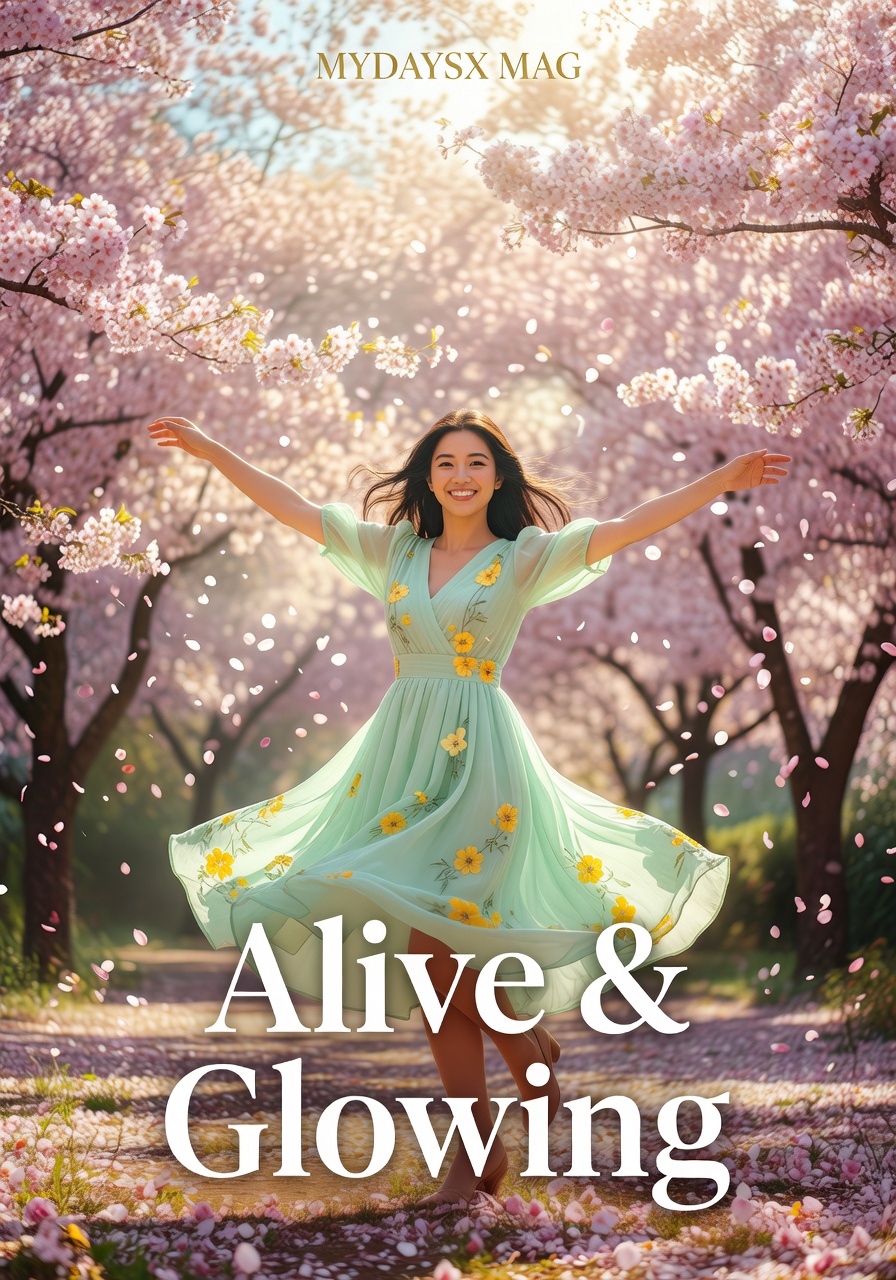

Let's talk about a superpower you've probably been ignoring. Not because it's obscure or hard to access — it's built into your biology, recurring every month, completely free, and backed by an increasingly robust body of research. The ovulation window: roughly days 12–16 of a 28-day cycle (adjusted for your own rhythm), during which your body reaches the hormonal summit of its monthly journey.
Here's what's happening physiologically. Estrogen peaks just before ovulation — and estrogen isn't just about reproduction. It directly influences serotonin uptake (better mood), dopamine sensitivity (higher motivation and reward), acetylcholine activity (sharper memory and verbal fluency), and cortisol response (more resilience to stress). Simultaneously, a brief testosterone spike boosts confidence, assertiveness, and libido. Luteinising hormone (LH) surges to trigger the release of the egg — and interestingly, LH itself has been linked to increased sociability and attraction.
The result: a 3–5 day window in which you are, on multiple measurable dimensions, operating at your biological best.
What the Research Says
The science on the ovulation effect is fascinating and surprisingly underexplored in mainstream wellness. A 2007 study published in the journal Hormones and Behavior found that women at peak fertility (around ovulation) rated their own attractiveness higher, spent more time on grooming, and chose more colourful, flattering clothing — not from vanity, but driven by unconscious hormonal shifts in self-perception and social motivation.
Studies tracking verbal fluency across the cycle consistently find peaks during the follicular and ovulatory phases. Research from the University of Texas found that women's voices were rated as more attractive by both men and women during ovulation. Cognitive studies show faster processing speed and stronger verbal memory during this window compared to the luteal phase.
More practically, studies of negotiation and assertiveness find that women around ovulation are more willing to advocate for themselves, hold their ground in disagreement, and initiate difficult conversations. The hormonal cocktail essentially dials up your confidence and social confidence simultaneously.
"You have a built-in monthly window of peak energy, confidence, and connection. Most women spend it on routine tasks. The ones who use it intentionally report a profound shift in what they're able to create and achieve."
The Four Phases as a Creative Calendar
If you start to think of your cycle not as a monthly inconvenience but as a recurring rhythm of capability, everything shifts. The menstrual phase calls for rest, reflection, and completion. The follicular phase (days 1–12 roughly) is a rising arc of energy, curiosity, and new-idea generation — excellent for starting projects, learning, and planning. Ovulation is your peak expression window — social, confident, vocal, persuasive. The luteal phase (post-ovulation to pre-bleed) is a time for focused, deep, detail-oriented work, and for editing and refining.
When you map your work and social calendar to these rhythms, you stop fighting your biology. You schedule important presentations, negotiations, first dates, difficult conversations, and creative pitches during your ovulatory window. You use your follicular rise to brainstorm and plan. You lean into the luteal phase's depth for concentrated solo work. And you protect your menstrual phase for rest and review.
This isn't rigid prescription — your cycle length varies, your symptoms vary, your life doesn't pause for hormones. But even broad awareness of where you are in your cycle can profoundly shift how you relate to your own capacity on any given day.
Tracking for Awareness, Not Just Fertility
The most accessible way to identify your ovulation window is through a combination of methods. Basal body temperature (BBT) tracking — taking your temperature each morning before getting up — shows a characteristic rise of about 0.2°C after ovulation. Cervical mucus changes to a clear, stretchy, egg-white consistency in the days leading up to ovulation. Ovulation predictor kits (OPKs) detect the LH surge with reasonable accuracy.
But even without these tools, many women notice the ovulation window through subtle cues: a slight increase in energy, a greater desire for social interaction, more vivid dreams, a subtle shift in how they feel in their own body. Some notice a very brief one-sided pelvic twinge (mittelschmerz) when the follicle releases.
Apps like MyDaysX can help you track these signals and build a picture of your personal pattern over several cycles. The first few months are about calibration — establishing your baseline. After three to four cycles of consistent tracking, most women start to see their rhythms emerge with real clarity.
Using the Window Intentionally
Once you know when your ovulatory window typically falls, you can start making simple, intentional choices about how to use it. Schedule the performance review. Have the conversation you've been putting off. Make the pitch. Accept the social invitation that requires you to be fully present and energised. Do the creative work that requires inspiration rather than discipline.
The shift here isn't about forcing anything or performing wellness. It's about alignment. When you work with your hormonal tide instead of against it, you expend less energy achieving more. You stop wondering why some days feel effortless and others feel like wading through wet concrete — and you start planning accordingly.
Your cycle is not a problem to manage. It's a rhythm to learn. And the ovulation window, in particular, is one of the most generous gifts your biology offers you. Use it. 🌸