
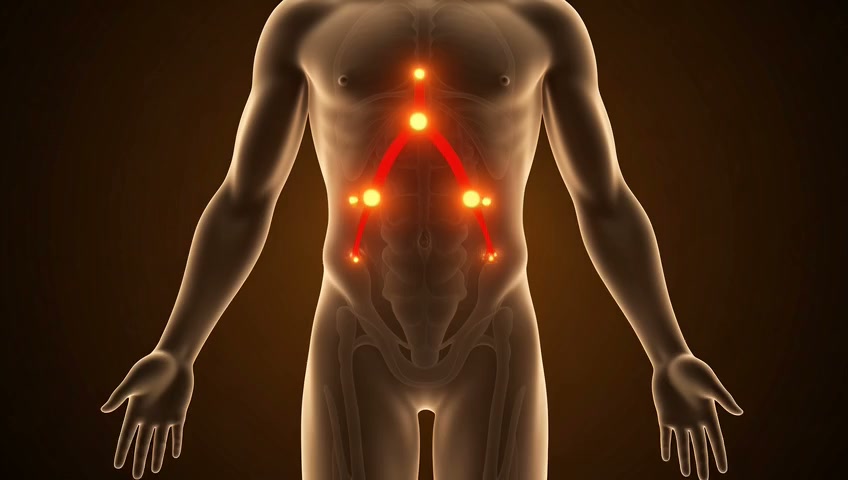
The Silent Fire: How Chronic Inflammation Hijacks Your Cycle
Painful periods, brain fog, exhaustion that sleep won't fix — they're not "just part of being a woman." They're often signals of chronic low-grade inflammation. And the connection to your hormones runs deeper than most doctors will tell you.
Read moreInflammation gets a bad name, but the acute kind — the redness and swelling when you cut your finger — is your immune system doing exactly what it should. The problem is when that fire never goes out. When your immune system stays on low alert, pumping out inflammatory cytokines day after day, it begins to interfere with everything: your gut, your brain, your skin, and critically, your hormones.
This is chronic low-grade inflammation, and it's increasingly being recognized as the root driver behind many conditions women face — from endometriosis and PCOS to PMS, painful periods, and unexplained infertility.
The Estrogen-Inflammation Loop
Estrogen and inflammation have a complex, bidirectional relationship. In moderate amounts, estrogen is actually anti-inflammatory — it helps protect blood vessels, joints, and brain tissue. But when estrogen is in excess relative to progesterone (a state called "estrogen dominance"), it can fuel inflammation instead of calming it.
Here's the loop: excess estrogen stimulates the release of inflammatory mediators like prostaglandins. These prostaglandins cause the uterine cramping, heavy bleeding, and clotting many women experience. The inflammation, in turn, impairs your liver's ability to metabolize and clear estrogen — so levels stay high, and the cycle reinforces itself.
Inflammation Markers You Can Actually Test
If you suspect chronic inflammation, these blood markers give you real data:
- hs-CRP (high-sensitivity C-reactive protein): The gold standard. Levels below 1.0 mg/L are ideal. Between 1–3 is moderate risk. Above 3 signals significant systemic inflammation. A 2020 study in The Lancet linked elevated hs-CRP in women to worse PMS, heavier periods, and higher rates of depression.
- Homocysteine: An amino acid that rises with B-vitamin deficiency and inflammation. Optimal is below 7 μmol/L. Elevated homocysteine is associated with increased menstrual pain and cardiovascular risk.
- Ferritin: While primarily an iron storage marker, ferritin is also an acute-phase reactant — it rises with inflammation. Very high levels (above 150 ng/mL in premenopausal women) without anemia treatment may signal underlying inflammation.
- Omega-3 Index: Measures the ratio of omega-3 fatty acids in your red blood cells. Below 4% is deficient and pro-inflammatory. Above 8% is optimal and strongly anti-inflammatory.
The Gut-Hormone Connection
Your gut contains a collection of bacteria called the estrobolome — microbes specifically responsible for metabolizing estrogen. When your gut microbiome is disrupted (from antibiotics, processed food, chronic stress, or alcohol), the estrobolome can't do its job properly.
The result: an enzyme called beta-glucuronidase reactivates estrogen that your liver had already packaged for excretion. Instead of leaving your body, that estrogen gets recycled back into your bloodstream. This is one of the primary mechanisms behind estrogen dominance — and it starts in your gut, not your ovaries.
A 2021 study in Microbiome found that women with endometriosis had significantly different gut bacteria profiles compared to healthy controls, with lower diversity and higher levels of inflammatory species.
Anti-Inflammatory Protocol That Actually Works
Forget generic advice about "eating clean." Here's what the research supports:
1. Omega-3 Fatty Acids (2–3g EPA/DHA daily)
The most evidence-backed anti-inflammatory intervention. A meta-analysis of 42 trials found omega-3 supplementation significantly reduced menstrual pain intensity, comparable to ibuprofen but without the gut-damaging side effects. Wild-caught fatty fish (salmon, sardines, mackerel) 3x per week, or a quality fish oil supplement.
2. Turmeric/Curcumin (500mg curcumin + black pepper extract)
Curcumin blocks NF-κB, the master switch of inflammatory gene expression. Studies show it reduces hs-CRP by an average of 6 mg/L in inflamed individuals. Must be taken with piperine (black pepper) or a lipid formulation for absorption — raw turmeric powder barely makes it past your gut.
3. Magnesium (300–400mg glycinate or threonate)
Involved in over 600 enzymatic reactions. Deficiency (affecting ~50% of the Western population) promotes inflammation, muscle cramping, anxiety, and poor sleep — all of which worsen PMS. Glycinate for muscle relaxation and sleep. Threonate for brain fog and cognitive function.
4. Cruciferous Vegetables Daily
Broccoli, cauliflower, Brussels sprouts, kale, and cabbage contain DIM (diindolylmethane) and sulforaphane — compounds that support estrogen detoxification through your liver's Phase II pathways. Aim for 2+ cups per day, lightly cooked (raw broccoli sprouts are the sulforaphane champions).
5. Blood Sugar Stability
Blood sugar spikes → insulin spikes → inflammatory cascades. This isn't about cutting carbs entirely. It's about pairing them with protein, fat, and fiber. Eating your vegetables first, protein second, and starches last can reduce glucose spikes by up to 73%, according to a Cornell study. This alone can dramatically reduce period pain and PMS mood swings.
"Inflammation is the fire alarm, not the fire. Finding the source means looking at your gut, your stress, your sleep, and your plate — not just reaching for the ibuprofen." — Dr. Will Cole, functional medicine specialist

The Art of Saying No: Why Boundaries Are the Foundation of Every Good Relationship
We're taught that love means sacrifice. That good partners compromise endlessly. That saying "no" is selfish. But the research says the opposite — and the healthiest relationships are built on clear, respected limits.
Read moreHere's an uncomfortable truth: most relationship problems aren't about communication, compatibility, or even love. They're about boundaries — the invisible lines that define where you end and another person begins. When those lines are blurry, resentment grows. When they're respected, intimacy deepens.
Dr. Henry Cloud, author of Boundaries, puts it simply: "Boundaries define us. They define what is me and what is not me. A boundary shows where I end and someone else begins." Yet most of us were never taught how to set them — especially women, who are culturally conditioned to prioritize other people's comfort over their own needs.
Why Boundaries Feel Wrong (But Aren't)
If setting a boundary makes you feel guilty, anxious, or mean — congratulations, you're normal. That guilt is a conditioned response, not a moral signal. It usually comes from one of three places:
- Childhood programming: If you grew up in a household where saying "no" was punished, questioned, or met with emotional withdrawal, your nervous system learned that boundaries = danger. You adapted by people-pleasing, a survival strategy that served you then but suffocates you now.
- Cultural messaging: Women especially receive relentless messaging that their value lies in being accommodating, nurturing, and self-sacrificing. Setting a boundary can feel like breaking a social contract.
- Attachment style: Those with anxious attachment often fear that boundaries will push people away. Ironically, the absence of boundaries is what actually erodes relationships — because unspoken needs eventually become unspoken resentment.
The Four Types of Boundaries
Not all boundaries look the same. Understanding the types helps you identify which ones need work:
1. Physical Boundaries
Your body, your space, your possessions. "I don't like being hugged without warning." "I need 30 minutes alone when I get home from work." These are often the easiest to set because they're concrete and visible.
2. Emotional Boundaries
Protecting your emotional energy. "I can listen to your frustration, but I can't be your only outlet." "I won't take responsibility for your feelings about my decision." These are harder because they require you to tolerate someone else's discomfort without rushing to fix it.
3. Time Boundaries
How you allocate your hours and attention. "I'm not available after 9 PM for work calls." "I need one evening a week for myself." Time boundaries are where people-pleasers struggle most — because every "yes" to someone else is a "no" to yourself.
4. Digital Boundaries
Increasingly critical in modern relationships. "I don't share my phone password." "I won't respond to texts during focused work time." "I need you to ask before posting photos of me." A 2024 Pew Research study found that 43% of adults in relationships reported conflict over digital privacy and availability expectations.
How to Set a Boundary Without Starting a War
The formula is simpler than you think. It has three parts:
- Name the behavior (not the person): "When plans change last minute without checking with me…"
- State the impact: "…I feel unimportant and anxious."
- Make the request: "I need at least a few hours' notice when plans change."
What you don't do: justify, over-explain, or apologize. "No" is a complete sentence. "I'm not comfortable with that" doesn't require a five-paragraph essay. The more you explain, the more negotiable it sounds.
The other person's reaction is not your boundary's report card. Some people will respect it instantly. Others will push back — and how they handle your boundary tells you everything about whether this relationship is healthy.
Boundaries and Your Cycle
Your hormonal phase actually affects your boundary-setting capacity. During the follicular and ovulatory phases (high estrogen), you may feel more socially generous and flexible — sometimes too flexible. During the luteal phase (rising progesterone), you're more likely to feel where your limits truly are. That "irritability" before your period? It's often suppressed boundary violations finally surfacing.
Dr. Julie Holland, psychiatrist and author of Moody Bitches, argues that premenstrual "moodiness" is actually heightened emotional truth-telling. Your hormones are lowering the filter that keeps you accommodating — revealing what actually bothers you.
"Daring to set boundaries is about having the courage to love ourselves, even when we risk disappointing others." — Brené Brown

The Side Hustle Reality Check: What Actually Makes Money (And What Doesn't)
Everyone's selling the dream of passive income and laptop freedom. But the data on what actually works — and what quietly drains your time and money — tells a very different story.
Read moreThe side hustle economy is booming. According to a 2025 Bankrate survey, 44% of working adults now have a side gig — up from 28% in 2019. Among women aged 25–40, the number is even higher: 52%. The motivation is clear — inflation, stagnant wages, and the quiet recognition that a single income source is a single point of failure.
But here's what the Instagram ads and TikTok gurus won't tell you: most side hustles fail. Not dramatically — they just slowly bleed time and energy until you quit. The difference between the ones that work and the ones that don't usually comes down to three factors that have nothing to do with "hustle."
The Three Factors That Actually Matter
1. Skill Leverage, Not Time Trading
The worst side hustles trade your time directly for money at a rate that doesn't scale. Driving for rideshare, completing surveys, doing microtasks — these have a hard ceiling. You can never earn more than the hours you put in, and the hourly rate often works out below minimum wage after expenses.
The best side hustles leverage a skill you already have into a format that can reach more people without proportionally more effort. A physical therapist who creates an online course about desk posture reaches thousands instead of one patient at a time. A graphic designer who sells Canva templates earns while sleeping. A data analyst who builds automated reports sells the same work repeatedly.
2. Demand First, Product Second
The most common mistake: building something and then looking for customers. The side hustles that actually generate income start with demand validation. Before you spend weeks creating that course, printable, or app — find out if anyone is actively searching for it.
Free tools for demand validation:
- Google Trends: Is search interest growing, stable, or declining?
- AnswerThePublic: What questions are people asking about your topic?
- Reddit/Facebook groups: What problems do people complain about repeatedly?
- Competitor analysis: Are others selling something similar? (This is good — it means there's a market. Zero competition usually means zero demand.)
3. The 10-Hour Test
Before committing to any side hustle, ask: "Can I get my first paying customer within 10 hours of work?" If the answer is no — if it requires months of building, learning a new platform, or creating extensive content before anyone can pay you — the failure rate skyrockets. Start with the smallest viable version and iterate.
What's Actually Working in 2026
High success rate:
- Freelance services on existing platforms (Upwork, Fiverr, Toptal) — if you have a marketable skill (writing, design, development, bookkeeping, translation), this is the fastest path to income. Average time to first client: 2–3 weeks.
- Digital templates and tools (Notion, Canva, Excel) — low creation cost, infinitely scalable. Top sellers on Etsy and Gumroad report €500–5,000/month from template bundles.
- Cohort-based workshops — teach what you know to small groups (8–15 people). Higher perceived value than courses. Typical pricing: €97–297 per person. One workshop per month with 10 attendees = €970–2,970.
- Content monetization (newsletters, YouTube) — slower to build but compounds over time. Newsletter sponsorships for niche audiences (5,000+ subscribers) can earn €200–1,000 per issue.
Low success rate (despite hype):
- Dropshipping: Razor-thin margins, brutal competition, customer service nightmare. The people making money from dropshipping are selling courses about dropshipping.
- Print-on-demand: Unless you have an existing audience, your designs drown in a sea of millions. Average Merch by Amazon seller earns less than €50/month.
- Crypto/NFT trading as "income": This is gambling, not a hustle. Entertaining, sometimes profitable, but never reliable.
- MLM/Network Marketing: The FTC found that 99% of participants in studied MLMs lost money. Full stop.
The Tax Reality Nobody Mentions
In Germany, side income up to €410/year is tax-free ("Härteausgleich"). Above that, it's fully taxable. If you earn more than €22,000/year from self-employment, you need to register a business and charge VAT. Set aside 25–30% of every euro earned for taxes from day one — future you will thank present you.
"The best side hustle isn't the one that makes the most money. It's the one you'll actually do consistently for 12 months while holding down everything else in your life." — Khe Hy, creator of RadReads

Breathe Like You Mean It: The Science of Controlled Breathing
It's free. It takes 5 minutes. And it can lower cortisol, reduce anxiety, improve HRV, and shift your nervous system from fight-or-flight to rest-and-digest in real time. Here's the evidence — and the exact protocols that work.
Read moreBreathing is the only autonomic function you can consciously control. Your heart beats on its own. Your digestion runs without permission. But breathing sits at the intersection of voluntary and involuntary — which means it's a direct remote control for your nervous system.
This isn't wellness woo. It's neuroscience. A 2023 study from Stanford, led by Dr. Andrew Huberman and Dr. David Spiegel, compared four different stress-reduction techniques: mindfulness meditation, cyclic sighing (a specific breathwork pattern), box breathing, and body scan meditation. The result? Cyclic sighing outperformed all three alternatives in reducing self-reported anxiety, improving mood, and lowering resting respiratory rate — in just 5 minutes per day over 28 days.
How Breathing Controls Your Nervous System
Your autonomic nervous system has two branches:
- Sympathetic (fight-or-flight): activated by stress, short shallow breaths, perceived danger. Increases cortisol, heart rate, muscle tension.
- Parasympathetic (rest-and-digest): activated by safety signals, deep exhales, relaxation. Lowers cortisol, slows heart rate, activates digestion and repair.
The key insight: your exhale activates the vagus nerve, the main parasympathetic highway running from your brainstem to your gut. When you make your exhale longer than your inhale, you're essentially pressing the brake pedal on your stress response. This is measurable in real time via heart rate variability (HRV) — a metric that elite athletes, military operators, and increasingly, everyday people use to track nervous system resilience.
Four Protocols That Actually Work
1. Cyclic Sighing (The Stanford Protocol)
The winner of the Stanford study. Do it for 5 minutes:
- Inhale through your nose until your lungs are about half full
- Take a second, shorter inhale through your nose to completely fill your lungs
- Slow, extended exhale through your mouth (as long as comfortable)
- Repeat
That double inhale maximally inflates the tiny air sacs (alveoli) in your lungs, which increases the surface area for CO2 offloading. The long exhale activates the vagus nerve. It's essentially a physiological sigh — the same pattern your body does naturally when you need to calm down (after crying, for example).
2. Box Breathing (Navy SEAL Protocol)
Used by military special operations for acute stress management:
- Inhale: 4 seconds
- Hold: 4 seconds
- Exhale: 4 seconds
- Hold: 4 seconds
- Repeat for 4–5 rounds
Best for: moments of acute anxiety, before presentations, during conflict, when you feel your heart racing. The holds create CO2 tolerance, which paradoxically reduces the feeling of breathlessness and panic.
3. 4-7-8 Breathing (Dr. Andrew Weil)
Specifically designed for sleep onset:
- Inhale through nose: 4 seconds
- Hold: 7 seconds
- Exhale through mouth: 8 seconds
- Repeat 4 cycles
The extended exhale-to-inhale ratio creates a strong parasympathetic shift. Many users report falling asleep before completing the fourth cycle. A 2019 study in the Journal of Clinical Sleep Medicine found it reduced sleep onset time by an average of 12 minutes in adults with mild insomnia.
4. Wim Hof Method (Controlled Hyperventilation)
The exception to the "slow breathing" rule — and not for everyone:
- 30–40 deep, fast breaths (in through nose, out through mouth)
- On the last exhale, hold your breath as long as comfortable (1–3 minutes typical)
- Inhale deeply, hold 15 seconds
- Repeat 3 rounds
This creates a temporary alkaline blood state that suppresses the inflammatory response. A landmark 2014 study published in PNAS showed that practitioners of this method could voluntarily influence their immune response — something previously thought impossible. But it's intense, can cause lightheadedness, and should never be done in water or while driving. Not recommended during pregnancy or for those with cardiovascular conditions.
Breathwork and Your Cycle
Your breathing pattern naturally changes across your cycle. During the luteal phase (after ovulation), progesterone stimulates your brain's respiratory center, making you breathe slightly faster. This is why some women feel more breathless or anxious premenstrually — it's not "all in your head," it's in your brainstem.
Adjusting your breathwork to your phase can be powerful:
- Follicular/Ovulatory (Days 1–16): Higher energy — try Wim Hof or energizing pranayama (Kapalabhati). Your body handles the intensity well.
- Luteal (Days 17–28): Progesterone is rising, anxiety may increase. Stick to calming protocols — cyclic sighing, 4-7-8, extended exhale ratios. Your nervous system needs the downregulation.
- Menstrual (Days 1–5): The lowest energy phase. Gentle 4-7-8 before bed. No need to push. Rest is the protocol.
"The breath is the bridge between the body and the mind. When the breath wanders, the mind is unsteady. When the breath is still, the mind is still." — Hatha Yoga Pradipika, 15th century