

MyDaysX Mag Issue #46 โ€” Into the Light
โœจ MyDaysX Mag โ€” Issue #46

Into the Light โœจ

Soul rituals that carry you through. The emotional truth of late pregnancy. Menopause as a second sunrise. And the love languages nobody ever taught you.

Sundays have a particular quality โ€” a hush between what was and what comes next. They invite you to slow down, to look inward, to ask not just "what did I accomplish?" but "who am I becoming?" That quality is at the heart of this issue.

We're going into the light together: exploring the spiritual practices that actually change how you move through your days, the emotional reality of preparing to meet a new life, the unexpected gifts that arrive with the hormonal transition of midlife, and the deeper currents of love and longing that run beneath every close relationship.

Four deep reads. One for each of the women you are โ€” the seeker, the mother-to-be, the one in transformation, and the one who loves and is loved. Grab your Sunday coffee. This one takes its time. โœจ

This Issue ยท 4 Articles ยท 38 min total

The Sunday Ritual Reset: How Intentional Stillness Changes Everything

Spiritual Sunday ritual

Most of us treat Sunday as the tail end of the weekend โ€” a day for chores, errands, and low-grade anxiety about Monday. But what if Sunday could be something else entirely? What if it could be the hinge your entire week turns on?

Read More

There's a quality to Sunday mornings that feels, even in the most secular life, almost sacred. The light is softer somehow. The pace of the street slows. Something in the collective body of a neighbourhood seems to exhale. And yet most of us spend this window scrolling, consuming leftover work anxiety, doing laundry, or numbing out on screens โ€” anything, really, except the one thing Sunday seems designed for: genuine stillness.

Intentional stillness is not the same as doing nothing. It's active, directed, purposeful โ€” an engagement with the inner life that most of us are too busy or too uncomfortable to sustain during the week. The research on this kind of quiet is compelling. A 2018 study published in Frontiers in Psychology found that people who regularly practised solitude with intention โ€” not isolation, not avoidance, but chosen quiet โ€” reported significantly higher life satisfaction, better emotional regulation, and more authentic social connection when they did engage with others.

The Science of the Weekly Pause

The concept of a Sabbath โ€” one day in seven deliberately set apart from productivity โ€” appears across cultures and millennia, from the Hebrew tradition to the ancient Greek custom of apophrades (days of rest from business), to the Confucian emphasis on periodic withdrawal for self-cultivation. These traditions arrived independently at the same conclusion: the human mind and spirit need a regular interval of non-doing to process, integrate, and regenerate.

Modern neuroscience supports this intuition. The default mode network โ€” the brain region active during rest, daydreaming, and self-reflection โ€” is not idle when we're not working. It's processing emotional experience, consolidating memory, generating creative insight, and building the sense of narrative self-continuity that allows us to function coherently across time. It needs periods of low external stimulation to do this work. When we never give it that space, we experience the creeping disconnection, flat affect, and creative stagnation that so many people report feeling but can't quite explain.

"Intentional stillness isn't a luxury or a reward for the finished to-do list. It's a maintenance practice โ€” as non-negotiable as sleep, as restorative as good food."

Building Your Sunday Architecture

A meaningful Sunday ritual doesn't require a cabin in the woods or a meditation retreat. It requires boundaries and intention โ€” two things you can apply anywhere. The structure matters more than the content. Here's a framework that draws from research on effective recovery and spiritual practice:

First hour: protected quiet. Before your phone, before news, before anyone else's agenda enters your awareness. This is the hardest part for most people and the most important. It might mean waking slightly earlier than the household. It might mean putting your phone on do-not-disturb until a specific time. The boundary isn't about avoidance โ€” it's about claiming the first hour of consciousness for yourself.

Physical grounding. Walk, stretch, move slowly. The body holds the week's tension and needs something other than more sitting to release it. Even fifteen minutes of slow, mindful movement โ€” not exercise for performance, just movement for presence โ€” creates a noticeably different mental state. Studies on what researchers call "restorative environments" consistently show that natural settings (parks, water, trees) produce the fastest reduction in cortisol and the most significant mood improvement, even in brief exposures.

A practice of reflection. This could be journalling, prayer, meditation, or simply sitting with a cup of something warm and consciously reviewing the week โ€” not to assess productivity, but to notice your inner weather. What felt aligned? What felt like friction? What do you want to carry forward, and what do you want to set down? Five minutes of this kind of honest inner inventory does more for self-awareness than hours of passive self-improvement content.

The Intention-Setting Practice

One of the most consistently reported benefits of a Sunday ritual is the feeling of authorship โ€” of choosing, rather than simply reacting to, the shape of your life. A simple practice: on Sunday, write down (not type โ€” write) three things that genuinely matter to you in the coming week. Not tasks. Not goals. Values in action. "I want to be fully present when my daughter talks to me." "I want to cook one meal that feels like an act of love." "I want to say no to one thing that doesn't serve me."

These intentions function differently in the brain than task lists. They activate the prefrontal cortex's capacity for value-based decision-making rather than simply habit execution. And when you return to them the following Sunday and notice which you honoured and which slipped โ€” without judgment โ€” you begin to develop genuine self-knowledge rather than just self-surveillance.

What You're Actually Protecting

The resistance most people feel to a Sunday ritual is usually some variation of "I don't have time" or "I'll feel guilty not being productive." Both of these deserve examination. The time argument: a Sunday ritual doesn't require the whole day. It requires protected hours โ€” maybe two or three โ€” that are non-negotiable. The guilt: productivity culture has convinced many of us that our value is our output, making rest feel like theft from some imagined creditor. But you are not a machine, and a machine metaphor for human life is one of the most damaging ideas of our era.

What you're protecting with a Sunday ritual is your capacity to be present, to feel, to create meaning, to connect authentically. These are not peripheral concerns. They are the point. Everything else โ€” the work, the relationships, the parenting, the striving โ€” is sustained by them. When the well is empty, you know it. The Sunday ritual is how you keep it full.

Your Sunday, Your Way

There's no correct version of this. For some women, it's an hour of yoga followed by journalling and a long bath. For others, it's attending a religious service that reconnects them to something larger than themselves. For others still, it's a solitary walk, cooking a slow meal, reading something that has nothing to do with work, or sitting with a friend in unhurried conversation. The content is personal. What matters is the intention: this time belongs to me, to my inner life, to the practices that keep me whole. Protect it like the sacred thing it is.
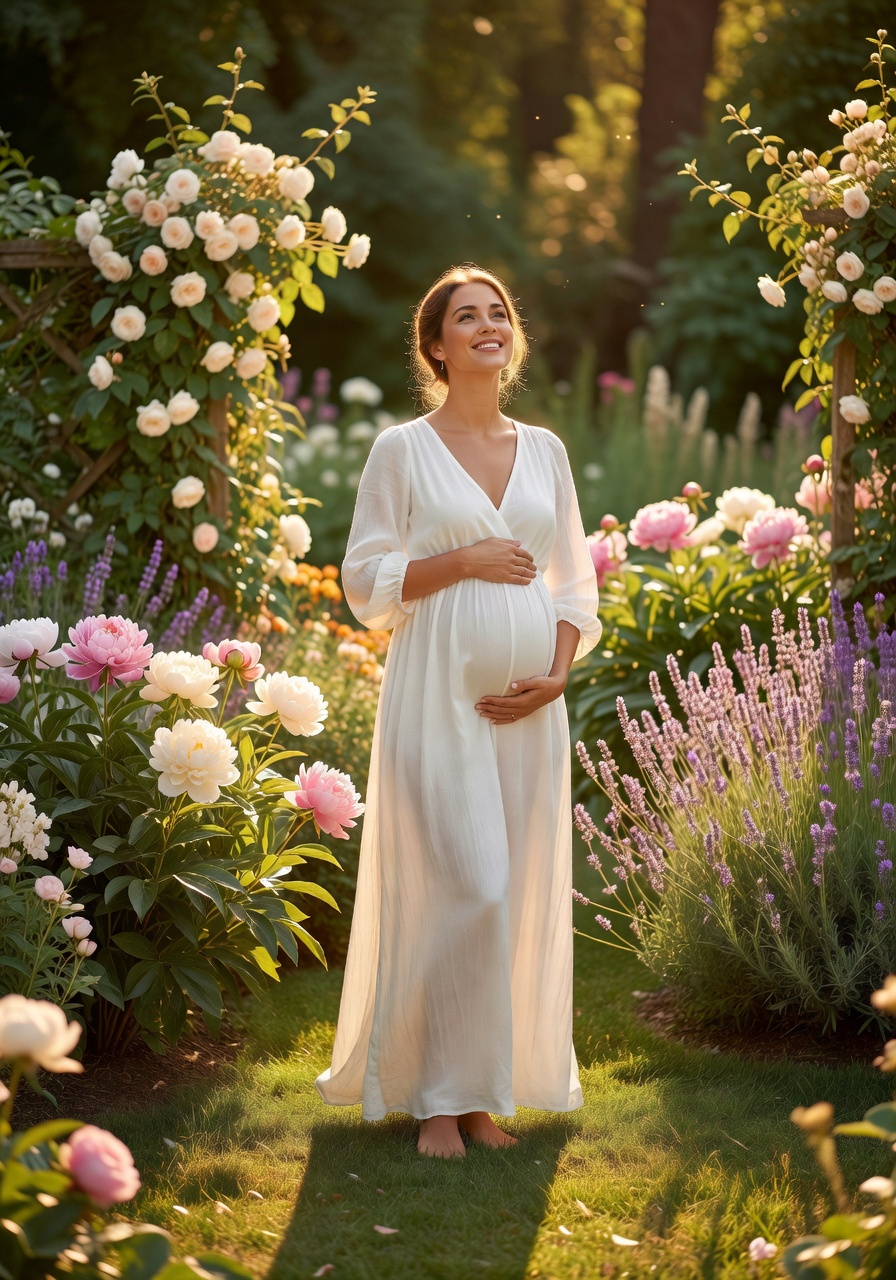

The Feelings No One Warns You About in the Third Trimester

Third trimester emotional truth

Everybody warns you about the swollen ankles, the sleepless nights, the Braxton Hicks. Nobody prepares you for the grief, the identity vertigo, the complicated love, the existential weight of knowing everything is about to change forever.

Read More

The third trimester is a physical marathon that everyone acknowledges. Your body is doing something extraordinary โ€” maintaining and preparing to birth a full-term human being while you continue, somehow, to function. The exhaustion is real. The discomfort is real. The need to sleep at 7pm while simultaneously being unable to find a comfortable position is an experience that defies adequate description.

But the emotional terrain of the third trimester is just as complex, and far less mapped. Women who expected to feel purely joyful and radiantly maternal often find themselves experiencing something much stranger and more complicated โ€” and then feel guilty about it, which adds another layer of difficulty to an already demanding time. Let's talk about what's actually happening.

The Identity Dissolution

Psychologists use the term "matrescence" โ€” coined by anthropologist Dana Raphael in 1973 and significantly developed by researcher Alexandra Sacks in recent years โ€” to describe the developmental process of becoming a mother. Just as adolescence involves a fundamental reorganisation of identity, so does the transition to parenthood. And like adolescence, it's messy, disorienting, and underacknowledged in the culture.

In the third trimester, this identity reorganisation becomes viscerally real. The life you have lived until now โ€” your freedom of movement, your singular selfhood, your unmediated relationship with your own body and time โ€” is visibly, irreversibly ending. This is not a small thing. Even when the pregnancy is wanted, planned, deeply desired, the recognition that you will never be solely yourself again can produce something that feels uncomfortably close to grief.

This grief is not a sign of ambivalence about your baby. It is the natural response to a genuine loss โ€” the loss of a self and a life that you loved, even amid the joy of what's coming. Both things can be true simultaneously, and naming this is not ingratitude. It's emotional honesty.

"Matrescence โ€” the transformation into a mother โ€” is as seismic as adolescence. The grief you feel for your former self is not ambivalence. It is the honest recognition that a beloved version of your life is ending, even as a new one begins."

The Fear Underneath

Third trimester anxiety takes many forms. There is the fear of birth itself โ€” rational in its way, given that birth is a major physical event with inherent unpredictability. There is the fear of something being wrong with the baby โ€” which can intensify in the final weeks as the protective distance of "it's not quite real yet" collapses into the imminence of an actual person. There is the fear of being an insufficient mother โ€” of not having what it takes, of repeating the wounds of your own childhood, of failing someone so completely dependent.

A 2020 meta-analysis published in BJOG found that approximately 15-20% of pregnant women experience clinically significant anxiety during pregnancy, with rates increasing in the third trimester. And yet perinatal mental health screening still disproportionately focuses on the postpartum period, leaving many women navigating significant anxiety in the final weeks without support or recognition.

If the anxiety you're experiencing is pervasive, intrusive, or significantly affecting your sleep and daily function โ€” please tell your midwife or OB. This is exactly what they need to know. Antenatal anxiety is real, common, and treatable, and you do not have to perform calm while internally struggling.

The Complicated Love

Perhaps the strangest emotional experience of the third trimester is the complicated relationship many women have with the baby they carry. Some women feel intensely bonded and connected throughout pregnancy. Others feel a strange disconnect โ€” the baby is real, movements are felt, but the full emotional reality of this person hasn't quite crystallised. Neither experience predicts what will happen when the baby is born. Maternal bond strength at birth has minimal correlation with prenatal emotional connection.

Many women also feel ambivalence โ€” genuine mixed feelings about the baby, the timing, the relationship with the other parent, the career implications, the financial reality, the ways in which this will change every relationship they have. Ambivalence is not the same as not wanting the baby. It's the honest emotional response to a complex situation with consequences that span decades. Acknowledging it privately or with a trusted person is far healthier than performing uncomplicated joy.

What Your Body Is Preparing

From a physiological standpoint, the third trimester is a masterpiece of preparation. Prolactin levels rise in anticipation of breastfeeding. Relaxin loosens the pelvic joints and ligaments to facilitate birth. The baby's lungs mature and practice breathing with amniotic fluid. Oxytocin receptors in the uterus proliferate, preparing it to respond to labour signals. The baby descends (in many cases) into the pelvis โ€” a process called "engagement" or "lightening" โ€” in preparation for birth.

Your brain is also changing. Research by neuroscientist Elseline Hoekzema and colleagues has shown that pregnancy produces lasting changes in grey matter in regions involved in social cognition, particularly the ability to understand and respond to another person's mental and emotional states. These changes persist for at least two years postpartum and are thought to support the rapid social attunement to a newborn that most mothers develop. Your brain, literally, is reorganising itself to meet this person you're about to become the world for.

How to Actually Prepare

The most useful preparation for the third trimester's emotional reality is not reading more books. It's building your support infrastructure before you need it. Know who you can call at 3am if you're struggling. Have a conversation with your partner about how roles will change and what you both actually need (not what you think you're supposed to need). Consider speaking with a therapist who specialises in perinatal mental health โ€” not because anything is wrong, but because having that relationship established before the birth means you're not building it during the crisis.

And give yourself permission to feel what you actually feel. The journey into motherhood is one of the most profound transitions a human being can make. It deserves more than a scan photo and a positive affirmation. It deserves your full, honest, complex, sometimes-grieving, sometimes-terrified, often-overwhelmed, occasionally-transcendent self.

Your Second Sunrise: What Menopause Is Really Inviting You Into

Menopause second sunrise

The cultural story of menopause is almost entirely about loss: the end of fertility, the fading of youth, the body's slow rebellion. But there's another story โ€” older, wiser, and far more interesting โ€” about what becomes possible when the hormonal tides of reproductive life finally quiet down.

Read More

Let's be honest about the losses first, because the "empowered menopause" narrative sometimes glosses over real difficulties in a way that can make women feel they're failing if they're struggling. Menopause does involve loss โ€” of a hormonal environment you may have taken for granted for decades, of the fertility that defined biological possibility, of a physical ease in your skin that estrogen maintained. Perimenopause can be genuinely gruelling. Brain fog, sleep disruption, mood volatility, physical changes that feel out of your control โ€” these are real and they deserve real acknowledgement.

And also: the story doesn't end there. For many women, once through the transition, the postmenopausal years bring something unexpected and profound โ€” a quality of clarity, self-knowledge, and freedom that they've never experienced before. This isn't universal, and it's not magic. But it's real enough, and reported often enough, to be worth exploring as more than wishful thinking.

The Hormonal Architecture of Freedom

Throughout the reproductive years, estrogen and progesterone cycle in ways that influence not just the uterus, but mood, cognition, motivation, appetite, social behaviour, and the experience of desire itself. These hormones create a kind of monthly emotional weather system that most women navigate so automatically they may not fully recognise its influence until it's gone.

The cyclical nature of reproductive hormones means that moods, confidence levels, social energy, and even the quality of thinking vary significantly across the month. Some women find this variability energising โ€” the creativity of the follicular phase, the social ease of ovulation, the introspective depth of the luteal phase. Others find the hormonal rollercoaster exhausting, and the arrival of a more stable (if different) baseline after menopause comes as a relief.

Postmenopause, many women report a consistency of mood and energy that they didn't have during their reproductive years โ€” not a flatness, but a stability. The absence of the premenstrual emotional amplification that could make small frustrations feel devastating and small joys feel transcendent also means an absence of the cycle-driven vulnerability to others' emotional states. Many women in their 50s and 60s report feeling, for the first time, genuinely uninterested in people-pleasing โ€” not angry, not defensive, just done with it in a way that feels clean and self-respecting.

"Many women describe the postmenopause years not as a fading, but as a clarifying โ€” as if the static that had always been in the background finally switched off, leaving a silence in which it's possible to hear yourself clearly."

The Research on Wellbeing and Menopause

A 2012 study published in Menopause journal followed over 2,000 women through the menopausal transition and found that a significant proportion reported increased wellbeing, self-confidence, and sense of purpose in the postmenopausal phase compared to their reproductive years. The women most likely to report positive experiences were those who had developed strong social connections, a sense of meaning beyond the roles of partner and mother, and an active relationship with physical health.

A 2021 study in the Journal of Women's Health found that postmenopausal women were more likely to report high levels of life satisfaction than perimenopausal women, suggesting that the transition itself is the most difficult phase โ€” and that the other side of it looks brighter for many. This doesn't erase the difficulty of the transition; it contextualises it.

The Indigenous and Cross-Cultural Perspective

Across many Indigenous cultures, the postmenopausal woman is culturally designated as an elder, a wisdom-keeper, a person whose accumulated life experience makes her particularly valuable to the community. This is not just a nice story โ€” it reflects a functional reality. The grandmother hypothesis in evolutionary biology suggests that postmenopausal women provided a significant survival advantage to their grandchildren's generation, and that human longevity well beyond the reproductive years evolved precisely because of the value of older women's knowledge and caregiving.

In cultures where this role is culturally recognised โ€” where the older woman is not rendered invisible or past her prime but is accorded a specific and valuable social identity โ€” women report significantly less distress around menopause. The experience of menopause is not purely biological. It is always cultural. And the culture you're in, which tends to equate female value with youth and fertility, is not the only possible story.

Rebuilding the Body You'll Have for Decades

The postmenopausal body has different needs than the reproductive-age body, and meeting those needs proactively determines a significant portion of your quality of life in the decades ahead. Bone density, which declines faster in the years immediately following menopause due to the loss of estrogen's protective effects, responds well to resistance training โ€” which needs to be prioritised above other forms of exercise in this phase. Cardiovascular health, previously partly protected by estrogen, now needs active protection through regular aerobic exercise, dietary attention, and regular monitoring.

Vaginal health โ€” the thinning and drying of vaginal tissue that affects the majority of postmenopausal women โ€” is treatable and does not have to simply be endured. Topical estrogen, which acts locally and is absorbed minimally into the bloodstream, is safe for most women and highly effective. Yet studies consistently show that only a small fraction of women experiencing vaginal atrophy receive or ask for treatment, largely because the symptoms feel too intimate or embarrassing to raise. They are not. They are medical. And you deserve the information.

The Invitation

The word "menopause" contains within it a pause โ€” a caesura. Many women describe it that way after the fact: a moment of stopping, forced or chosen, that allowed them to ask what they actually wanted from the second half of their lives. The answers are often surprising. Many women in their 50s and 60s describe a new willingness to pursue the creative work they postponed, the ambitions they set aside for family, the friendships they neglected during the busy middle years.

Your second sunrise isn't guaranteed. It requires intention, support, and a willingness to rewrite the story you've been given about what this phase means. But it is available. And the women who have found it โ€” who have walked through the difficulty of the transition and arrived somewhere that feels, remarkably, like more rather than less โ€” are worth listening to. Not because their experience negates the hard parts, but because they prove that the hard parts are not the whole story.

Beyond the Five Love Languages: What We're Still Getting Wrong About Love

Relationships love languages

Gary Chapman's framework gave millions of people a useful vocabulary for how they give and receive love. But nearly 30 years later, we're using it in ways that create new misunderstandings โ€” and missing some of the most important things about how love actually works.

Read More

If you've been in a relationship in the past two decades, you've almost certainly encountered the concept of love languages. Words of Affirmation. Quality Time. Receiving Gifts. Acts of Service. Physical Touch. Gary Chapman's 1992 book introduced the idea that people have different "primary love languages" โ€” ways of experiencing love that matter most to them โ€” and that mismatched languages explain much of the friction in close relationships.

The framework has been genuinely helpful for millions of people. Naming the thing gives couples a shared vocabulary for conversations that previously went in circles. "I don't feel loved" becomes "I need more quality time, not more gifts" โ€” and suddenly the problem has both language and direction. This is not nothing. In fact, it's a lot.

But the framework also has limitations that, in the decades since its publication, we've been slow to acknowledge. And some of the ways the love languages concept is commonly used today are actively unhelpful โ€” sometimes even counterproductive.

The Problem with Fixed Identity

The most common misuse of love languages is treating them as fixed, unchanging personality traits โ€” as if a person is categorically a "Words of Affirmation person" in the same way they're left-handed. In reality, what makes us feel loved is contextual and dynamic. It changes with life phase, mental health, physical health, the specific relationship, and the specific moment.

A woman recovering from a serious illness may suddenly need Acts of Service from a partner who primarily needs Words of Affirmation. A new parent may need Quality Time more intensely than at any previous point in the relationship. Someone going through grief may need Physical Touch more than they've ever needed it, even if they've always identified primarily as a Words person. People are not static, and treating love languages as permanent categories can become a shorthand that excuses you from actually paying attention to the person in front of you right now.

"The most loving thing isn't always to give your partner their love language. Sometimes it's to notice that what they need today isn't what they needed last year โ€” and to stay curious about who they are becoming."

The Missing Languages

Researchers who have studied the love languages framework empirically have found that while the five categories have intuitive appeal, they don't fully capture the range of meaningful ways people experience love. A 2016 study in PLOS ONE found moderate support for Chapman's categories but noted several additional dimensions of loving behaviour that didn't fit neatly into any of the five.

Among the most significant: emotional presence โ€” the experience of being truly seen and held in your full complexity by another person โ€” is consistently rated as one of the most important dimensions of felt love in qualitative research, and it doesn't fit cleanly into any of Chapman's five categories. You can spend Quality Time together while remaining emotionally absent. You can use Words of Affirmation that don't actually reflect that you've seen the person accurately. Presence is something deeper than the vehicle through which it's delivered.

Acceptance โ€” the experience of being loved without having to earn it, without conditional clauses attached, without the constant low-level anxiety that love might be withdrawn โ€” is another dimension that the love languages framework doesn't fully address. For many people, particularly those who grew up in environments where love was contingent on performance, the primary experience of feeling loved is not any particular gesture but the repeated, embodied sense that they are acceptable as they are.

The Reciprocity Problem

Here's a dynamic the love languages framework can inadvertently enable: using your love language as a reason not to give your partner theirs. "I'm a Words person โ€” I can't help it if I'm not demonstrative physically." "I show love through Acts of Service โ€” I don't understand why they need me to say it out loud." The framework was intended as a tool for bridging differences, not for entrenching them. But for many couples, it becomes an excuse for staying in their comfort zone rather than expanding their capacity to love in the ways their partner actually experiences.

Relational growth requires the willingness to sometimes love in a language that doesn't come naturally to you. Not constantly, not at the expense of your own needs, but with enough flexibility that the relationship isn't permanently structured around one person's default mode. Couples who thrive long-term are typically not those who have perfectly matched love languages โ€” they're those who have developed the curiosity and generosity to stretch.

What the Research Actually Shows About Lasting Love

John Gottman's four decades of observational research on couples has produced a richer and more nuanced picture of what sustains love than any single framework can capture. Some of the most important findings: couples who stay connected and satisfied long-term are those who maintain what Gottman calls "turning toward" โ€” the habit of responding to small bids for connection (a comment, a gesture, a question) with attention rather than dismissal. This happens dozens of times a day, and the cumulative effect is either a growing sense of connection or a gradual emotional distance.

Gottman also found that a ratio of approximately five positive interactions to every one negative interaction predicted relationship stability โ€” suggesting that love is maintained not primarily through grand gestures (the gift, the romantic weekend away) but through the daily accumulation of small moments of warmth, humour, appreciation, and attention. These small moments don't require a particular love language. They require showing up.

Loving Better, Not Correctly

The most honest thing that can be said about love languages, and about love itself, is that there is no formula. The frameworks โ€” Chapman's, Gottman's, Sternberg's triangular theory, attachment theory โ€” are all maps, and all maps simplify the territory. The territory is another person: specific, evolving, sometimes contradictory, always more complex than any model.

What the love languages framework got right is the core insight: how you experience love may not be how your partner experiences it, and this difference is worth understanding explicitly rather than just blundering through. What it underemphasises is the ongoing nature of that understanding. You don't learn your partner's love language once and file it away. You keep learning them โ€” through curiosity, through mistakes, through the willingness to ask "what do you actually need from me right now?" and to genuinely listen to the answer.

Love isn't a language you learn once. It's a conversation you keep having, for as long as you choose to keep showing up for it.