
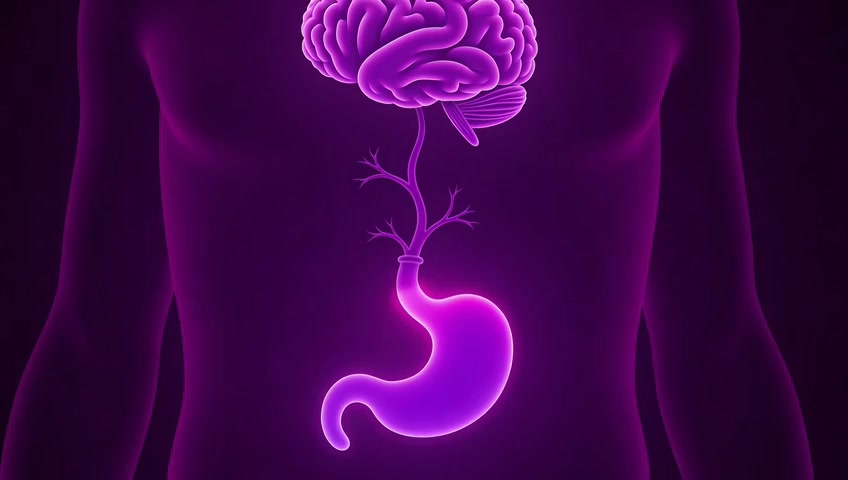
Your Second Brain: How Your Gut Secretly Controls Your Cycle, Mood, and Energy
You have 500 million neurons in your gut — more than your spinal cord. This "second brain" produces 95% of your serotonin, metabolizes your estrogen, and talks to your actual brain 24/7. When it's off, everything is off. Here's what the science says.
Read moreThe gut-brain axis isn't a metaphor. It's a physical, bidirectional communication highway — the vagus nerve — running from your brainstem to your intestines. And in the last five years, research has revealed that this connection shapes your hormonal health far more than anyone realized.
The Estrobolome: Your Gut's Hormonal Control Center
Inside your gut lives a collection of bacteria called the estrobolome — microbes specifically responsible for metabolizing estrogen. When your microbiome is healthy and diverse, the estrobolome keeps estrogen levels in balance. When it's disrupted — by antibiotics, processed food, chronic stress, or alcohol — an enzyme called beta-glucuronidase reactivates estrogen your liver had already packaged for removal.
The result: estrogen gets recycled back into your bloodstream instead of leaving your body. This is one of the primary drivers of estrogen dominance — and it starts in your gut, not your ovaries.
Signs Your Gut Is Affecting Your Hormones
- PMS that won't quit: Bloating, mood swings, breast tenderness, and cramps that worsen despite lifestyle changes often point to estrogen not being cleared properly through the gut.
- Irregular cycles: Gut dysbiosis can disrupt the HPO (hypothalamic-pituitary-ovarian) axis through inflammatory signaling. A 2023 study in Cell Reports Medicine found that women with PCOS had significantly less microbial diversity than controls.
- Brain fog around your period: When gut inflammation is high, the vagus nerve sends alarm signals to the brain, reducing cognitive function. This is measurable — fMRI studies show decreased prefrontal cortex activity during active gut inflammation.
- Skin breakouts that track your cycle: The gut-skin axis is real. Disrupted gut bacteria increase systemic inflammation, which shows up as hormonal acne, particularly along the jawline and chin.
The Gut-Cycle Connection: Phase by Phase
Menstrual phase (Days 1–5): Prostaglandins that cause uterine cramping also affect gut motility. This is why "period poops" happen — it's not in your head, it's prostaglandin-driven diarrhea. Gentle, warm, easy-to-digest foods help.
Follicular phase (Days 6–12): Rising estrogen increases gut motility and improves microbial diversity. You may notice better digestion and less bloating. This is a good time to introduce new fermented foods.
Ovulatory phase (Days 13–15): Peak estrogen means peak gut function for most women. Appetite may decrease slightly. Nutrient absorption is optimized.
Luteal phase (Days 16–28): Progesterone slows gut motility significantly. This is why constipation, bloating, and water retention spike before your period. Magnesium, fiber, and movement become critical.
What Actually Helps
- Diversity over supplements: Eating 30+ different plant species per week (vegetables, fruits, herbs, spices, nuts, seeds, grains) is the single most evidence-backed way to improve microbial diversity. The American Gut Project found this was a stronger predictor of gut health than any other dietary factor.
- Fermented foods daily: A Stanford study found that 6+ servings of fermented foods per week increased microbial diversity and reduced 19 inflammatory markers. Kimchi, sauerkraut, kefir, yogurt, miso, kombucha — variety matters.
- Prebiotic fiber: Feed the good bacteria. Garlic, onions, leeks, asparagus, bananas, oats, and flaxseeds contain prebiotic fibers that selectively nourish beneficial species like Bifidobacterium and Lactobacillus.
- Reduce ultra-processed foods: Emulsifiers (polysorbate 80, carboxymethylcellulose) found in processed foods literally strip the protective mucus layer from your intestinal wall. A single ingredient to avoid if you do nothing else.
"The gut is not Las Vegas. What happens in the gut does not stay in the gut. It affects your brain, your hormones, your immune system, your skin — everything." — Dr. Emeran Mayer, UCLA gut-brain researcher

Micro-Romance: Why the Smallest Gestures Save Relationships (And Grand Ones Don't)
Forget the surprise trips and jewelry. The Gottman Institute's 40 years of research says the couples who last aren't the ones with the biggest gestures — they're the ones who respond to the tiniest bids for connection.
Read moreDr. John Gottman can predict whether a couple will divorce with 94% accuracy. Not by analyzing their fights — by watching how they respond to what he calls "bids." A bid is any attempt one partner makes to connect: a sigh, a comment about the weather, pointing at something out the window, reaching for a hand.
In his "Love Lab" studies, couples who stayed together responded to bids 86% of the time ("turning toward"). Couples who divorced responded only 33% of the time ("turning away"). The difference between lasting love and divorce isn't passion or compatibility — it's attention to the mundane.
What Micro-Romance Looks Like
- Texting "this made me think of you" with a song, meme, or article
- Asking "how was that meeting you were nervous about?" (remembering)
- Making their coffee without being asked
- Looking up from your phone when they walk into the room
- Saying "I noticed you seemed tired today — are you okay?"
- A 6-second kiss goodbye (Gottman's specific recommendation — long enough to feel intentional)
None of these cost money. None require planning. All of them say the same thing: I see you. You matter. I'm paying attention.
Why Grand Gestures Often Backfire
A surprise vacation sounds romantic in theory. In practice, it often creates stress (logistics, work disruption, expectation pressure) and can feel controlling rather than caring. Research from the University of Virginia found that experiences partners plan together create more lasting happiness than surprises — because the anticipation and collaboration are themselves forms of connection.
Grand gestures also set an unsustainable standard. If your partner brings you flowers once and you're delighted, but they don't do it again for months, the absence becomes more noticeable than the original gesture. Small, consistent acts build a baseline of care that never has to disappoint.
The 5:1 Ratio
Gottman's most famous finding: stable relationships maintain at least a 5:1 ratio of positive to negative interactions. Not 1:1. Not even 3:1. Five positive moments for every negative one. This means that after a disagreement, you need five instances of kindness, humor, affection, or interest to rebalance the emotional bank account.
Micro-romance is how you effortlessly maintain that ratio. You don't need five grand gestures. You need five moments of genuine attention.
"It's not about the big things. It's about turning toward your partner in the small, seemingly insignificant moments. That's where love lives or dies." — Dr. John Gottman
Intermittent Fasting: The Truth About What It Does to Women's Hormones
IF is everywhere. The weight loss claims are bold. But the research on women tells a more complicated story — and blindly following a protocol designed for men can backfire badly on your cycle, cortisol, and thyroid.
Read moreLet's start with what's true: intermittent fasting can improve insulin sensitivity, reduce inflammation, and support cellular repair through autophagy. The evidence for these benefits is strong — in men. In women, particularly premenopausal women, the picture is far more nuanced.
What the Research Actually Shows for Women
A 2022 study in Obesity Reviews analyzed 18 clinical trials of IF in women and found that while fasting improved metabolic markers in postmenopausal women comparably to men, premenopausal women showed:
- Increased cortisol levels (stress hormone) after just 2 weeks of daily 16:8 fasting
- Disrupted LH and FSH pulsatility (the hormones that trigger ovulation)
- Decreased thyroid hormone (T3) output by an average of 11%
- Higher rates of sleep disruption and anxiety compared to non-fasting controls
Why? Because the female reproductive system is exquisitely sensitive to energy availability signals. When the hypothalamus detects insufficient caloric intake — even intermittently — it can downregulate GnRH (gonadotropin-releasing hormone), the master switch for your entire menstrual cycle. This is the same mechanism behind hypothalamic amenorrhea in athletes who under-eat.
When IF Can Work for Women
This doesn't mean fasting is off-limits. It means the approach needs to be different:
- 12:12 instead of 16:8: A 12-hour eating window (e.g., 7 AM to 7 PM) gives most of the metabolic benefits without stressing the HPO axis. This is really just "not eating after dinner" — which most health traditions have recommended for centuries.
- Cycle-synced fasting: Fasting during the follicular phase (Days 1–14) when estrogen is rising and your body handles caloric restriction better. Avoiding fasting during the luteal phase (Days 15–28) when progesterone increases caloric needs by 100–300 calories/day.
- 2–3 days per week max: The 5:2 approach (eating normally 5 days, restricting 2) is better tolerated by women than daily time-restricted eating. It gives the body enough "fed" signals to maintain hormonal function.
- Postmenopausal women: Without the reproductive axis to disrupt, postmenopausal women generally tolerate IF protocols similarly to men. The metabolic benefits are more straightforward.
Red Flags to Stop
If you're doing IF and notice any of these, your body is telling you to stop:
- Period becomes irregular, lighter, or disappears
- Sleep quality deteriorates (especially waking at 3–4 AM)
- Hair loss or thinning increases
- You feel wired but tired — elevated cortisol pattern
- Cold hands and feet (thyroid downregulation)
- Increased anxiety or irritability, especially in the morning
"Intermittent fasting isn't bad for women. But the same protocol that works for a 30-year-old man can tank a 30-year-old woman's thyroid and fertility. Context is everything." — Dr. Stacy Sims, exercise physiologist

Forest Bathing: The Hard Science Behind Why Trees Actually Heal You
Shinrin-yoku isn't hippie woo. Japanese researchers have spent 40 years measuring what happens to your cortisol, NK cells, blood pressure, and nervous system when you spend time among trees. The results are striking — and specific.
Read moreIn 1982, the Japanese Ministry of Agriculture, Forestry and Fisheries coined the term "shinrin-yoku" — forest bathing. Not hiking. Not exercising in nature. Simply being among trees, with intention and attention. What started as a public health campaign has since become one of the most researched nature-health interventions in the world.
What the Numbers Say
Dr. Qing Li, immunologist at Nippon Medical School and the world's leading forest bathing researcher, has documented the following effects from 2–3 hours among trees:
- Cortisol drops 12.4% compared to urban walking (measured via salivary cortisol)
- Blood pressure decreases by an average of 5.6 mmHg systolic — comparable to some hypertension medications
- Heart rate variability improves significantly, indicating a shift from sympathetic to parasympathetic nervous system dominance
- NK (Natural Killer) cell activity increases 50% and remains elevated for 7+ days after a single forest visit. NK cells are your immune system's first line of defense against cancer and virally infected cells
Phytoncides: The Invisible Medicine
The key mechanism isn't visual beauty or exercise — it's chemistry. Trees emit volatile organic compounds called phytoncides (wood essential oils like alpha-pinene and d-limonene) as part of their immune defense. When you breathe forest air, you inhale these compounds, and your body responds:
- Phytoncides directly increase NK cell activity and the production of anti-cancer proteins (perforin, granzyme, granulysin)
- They decrease cortisol and adrenaline levels
- They activate the parasympathetic nervous system
- Coniferous forests (pine, cedar, cypress) have the highest phytoncide concentrations
This isn't a small effect. Li's controlled studies — where participants inhaled phytoncides in hotel rooms via essential oil diffusers — showed NK cell increases even without being in an actual forest. The molecules themselves are medicine.
Forest Bathing and Your Cycle
Nature exposure has specific benefits across your menstrual cycle:
- Menstrual phase: Cortisol reduction helps with cramping and fatigue. Gentle forest walks reduce perceived pain intensity by up to 25% in studies.
- Luteal phase: When progesterone-driven anxiety peaks, nature exposure is one of the most effective non-pharmaceutical interventions. A 2021 study found that 20 minutes in green space reduced anxiety scores by 30% in women in their luteal phase.
- Any phase: Morning sunlight through trees helps regulate circadian rhythm and melatonin production, improving both sleep quality and hormonal cycling.
The Minimum Effective Dose
You don't need a weekend retreat. Research suggests:
- 120 minutes per week in nature (total, not per session) is the threshold for significant health benefits. A 2019 study of 20,000 people in Scientific Reports found this was the minimum dose for improved wellbeing — below 120 minutes, the effect was minimal.
- 20 minutes is enough to significantly drop cortisol levels. A "nature pill" study from the University of Michigan prescribed 20-minute outdoor sessions 3x per week and measured cortisol drops of 21%.
- Parks count. You don't need an ancient forest. Any green space with trees produces phytoncides. Urban parks, tree-lined streets, even a backyard with mature trees provide benefits.
"When we walk in the forest, we breathe in the same substances trees release to protect themselves. In a real sense, the forest is sharing its immune system with us." — Dr. Qing Li